• Home
  • About Us
  • Contact Us
  • Cookies Policy
  • Disclaimer
  • DMCA
  • Privacy Policy
  • Terms and Conditions
Dr Crypton
Secure Your Future in Crypto
Artificial Intelligence & Tech

DevFest is back

by admin September 14, 2026
written by admin

The Evolution of the DevFest Ecosystem

Since its inception, DevFest has grown from a localized series of meetups into a sprawling international network. The 2026 season represents the most ambitious iteration of the conference to date, featuring more than 800 individual events. Historically, these gatherings have focused on the dissemination of Google’s latest tooling, ranging from mobile development frameworks to cloud infrastructure. However, the 2026 edition signals a strategic shift in focus, moving beyond traditional software development to address the emerging landscape of artificial intelligence and agentic systems.

The structure of these events is decentralized by design. While Google provides the overarching theme and technical resources, the individual agenda for each city is curated by local community leads. This model ensures that the content remains relevant to the unique challenges of regional tech ecosystems, whether that involves high-scale cloud deployment in major financial hubs or mobile-first web optimization in emerging markets.

The Agentic Era: A New Technical Paradigm

This year’s theme, "Build, Secure, Scale: Developers and Builders in the Agentic Era," reflects the current industry pivot toward autonomous agents. For the past decade, developer conferences focused largely on APIs and microservices. In 2026, the focus has shifted toward the orchestration of AI models. Attendees are expected to engage deeply with the Google AI stack, specifically focusing on the integration of Gemini, Google AI Studio, and Web MCP (Model Context Protocol).

Industry analysts note that the emphasis on "agentic" workflows—systems that do not merely execute commands but perform complex, multi-step tasks autonomously—represents the next phase of digital transformation. By hosting workshops on these topics, Google is positioning its community to lead in the development of AI-driven enterprise solutions. The technical curriculum for 2026 includes:

  • Gemini Integration: Advanced prompt engineering and fine-tuning models for specific business logic.
  • Google Cloud & Firebase: Streamlining the backend infrastructure required to support high-concurrency agentic tasks.
  • Android and Flutter: Leveraging AI-assisted coding to reduce development cycles for cross-platform applications.
  • Web MCP: Exploring standardized protocols that allow AI agents to interact with external data sources and tools securely.

A Chronology of the 2026 DevFest Season

The event operates on a three-month cadence, designed to maximize engagement through the end of the calendar year. The schedule is segmented as follows:

  • October 1 – October 31 (The Kick-off Month): Focuses on foundational workshops and introductory codelabs. Many chapters host "launch parties" to introduce the local community to the theme of the year.
  • November 1 – November 30 (The Scaling Phase): The core of the conference season, featuring large-scale hackathons, "agent-athons," and advanced technical deep dives. This period is historically when the highest volume of code commits and community projects are documented.
  • December 1 – December 31 (The Synthesis Month): Final showcases, regional community awards, and retrospectives. Chapters reflect on the year’s growth and begin discussions for regional priorities for the upcoming year.

Economic and Industry Implications

The sheer scale of DevFest—reaching nearly one million participants—serves as a barometer for the health of the developer ecosystem. By facilitating these interactions, Google effectively lowers the barrier to entry for its proprietary tools. Data from previous years suggest that participation in DevFest correlates with higher adoption rates of Google Cloud and Firebase services among professional developers.

Furthermore, the focus on "Secure" in this year’s theme is a direct response to the increasing threats associated with AI implementation. As developers integrate more autonomous agents into production environments, security vulnerabilities—such as prompt injection and unauthorized data access—have become primary concerns. By dedicating a core pillar of the conference to security, Google is attempting to standardize best practices for building safe, enterprise-ready AI.

Community Perspectives and Global Outreach

The success of DevFest is largely attributed to its volunteer-led structure. GDG organizers act as the connective tissue between Google’s product teams and the local developer base. This decentralized approach allows for a level of agility that traditional corporate-led conferences cannot replicate.

"The strength of the program lies in its diversity of thought," says a spokesperson familiar with the organization. "When you have a developer in Tokyo collaborating on the same open-source challenge as a student in Lagos, you create a shared standard for how these technologies should be built and scaled."

The inclusive nature of the event is reflected in the wide range of expertise represented. While the conference attracts seasoned software architects, it also prioritizes the entry-level builder. Through codelabs designed for beginners, the GDG network aims to bridge the skills gap, ensuring that the next generation of developers is equipped to work with modern generative AI tools.

Strategies for Attendees

For those planning to attend, the DevFest Event Directory serves as the primary hub for scheduling. Organizers recommend that attendees arrive with a clear objective: to transition from passive learning to active experimentation. The "agent-athon" format, in particular, is designed for those who wish to build a functional prototype within a limited timeframe.

To maximize the experience, participants are encouraged to:

  1. Engage with the Stack: Familiarize themselves with the documentation for Gemini and Google AI Studio prior to the event.
  2. Participate in Workshops: Prioritize hands-on sessions over lecture-based presentations.
  3. Network Locally: Utilize the event to find collaborators for long-term projects, as many successful startups have originated from connections made at previous DevFests.
  4. Follow the Discourse: Monitor the #DevFest social media tag to share findings, troubleshoot common issues, and connect with global peers who may be tackling similar technical challenges.

Looking Toward the Future of Development

The 2026 DevFest season is more than a series of meetings; it is an orchestrated effort to define the standards of the "Agentic Era." As artificial intelligence moves from the experimental phase to core business utility, the role of the developer is evolving into that of an architect of intelligent systems. By providing the tools, the community, and the platform for this evolution, Google continues to maintain a dominant influence over the trajectory of modern software engineering.

The global reach of the event—spanning from major metropolitan technology hubs to smaller regional centers—ensures that the benefits of these advancements are distributed broadly. As the 2026 season progresses through December, the results will likely be measured not only by the number of attendees but by the quality of the applications, security protocols, and scaling strategies that emerge from the collective work of a million participants. The legacy of this year’s DevFest will be written in the codebases of the companies and individual projects that adopt these agentic workflows in the months and years to come.


September 14, 2026 0 comment
0 FacebookTwitterPinterestEmail
Cryptocurrency News

Beyond the Chip Shortage: How Clichmont is Rewriting the Economics of AI Infrastructure

by admin September 14, 2026
written by admin

The global artificial intelligence boom has triggered a frantic, multi-billion-dollar race for advanced hardware, with technology giants and specialized cloud providers alike hoarding prized graphic processing units (GPUs). Yet, as data centers strain against local power grids and energy markets face unprecedented volatility, industry executives are realizing that chips alone are no longer the ultimate bottleneck. The true limiting factor of the AI revolution has shifted from the silicon itself to the heavy physical infrastructure required to energize, cool, and connect it.

While market leaders adopt capital-light rental models or rush toward public listings to fund massive GPU fleets, European infrastructure firm Clichmont is executing a radically different playbook. Rather than participating in the hyper-competitive market for rented cloud capacity, the company is prioritizing the ownership of the underlying real estate, power grids, and cooling systems. In an exclusive interview, Clichmont CEO Alexis Cathalifaud breaks down the company’s contrarian strategy, detailing why physical infrastructure ownership reigns supreme, the rigorous calculus behind site selection—spanning from solar-powered facilities in Alicante to heavy-duty builds in Bodø, Norway—and the strategic, long-term utility of the ecosystem’s native digital asset, the $CLAI token.

The Shifting Landscape of AI Compute and the Infrastructure Deficit

To understand Clichmont’s operational philosophy, one must examine the macro-level pressures currently reshaping the data center industry. Over the past three years, generative AI models have expanded exponentially in parameter size and computational requirements. Training and running these massive workloads requires dense clusters of accelerators capable of drawing unprecedented amounts of electricity.

Historically, data centers were engineered for standard cloud computing and web hosting, where power densities rarely exceeded 5 to 10 kilowatts per rack. Modern AI infrastructure, by contrast, frequently demands densities ranging from 40 to over 100 kilowatts per rack, necessitating advanced liquid cooling systems and direct, high-capacity ties to electrical grids. Consequently, a widening gap has emerged between the demand for AI compute and the availability of grid-connected, power-ready land.

Industry analysts estimate that global data center power consumption could double by the end of the decade, placing immense strain on regional utility providers. In major technology hubs across Northern Virginia, Dublin, and Frankfurt, power moratoriums and multi-year waiting lists for electrical substation connections have become commonplace. Against this backdrop, companies that rely entirely on rented GPU capacity find themselves at the mercy of hyperscalers and third-party infrastructure providers, absorbing volatile pricing models, rigid deployment schedules, and external power constraints.

GPU Access vs. Infrastructure Ownership: The Clichmont Thesis

Addressing the core differentiator of his company’s business model, CEO Alexis Cathalifaud argues that the conventional race for GPU access misses a fundamental economic truth.

"Because GPU access gives you compute; infrastructure ownership gives you control over the economics of compute," Cathalifaud states.

When enterprises lease GPU capacity from traditional cloud providers, they inherently inherit those providers’ limitations, including fixed networking architectures and arbitrary pricing structures. More importantly, hardware depreciation cycles move at a staggering pace. A state-of-the-art GPU deployed today may experience significant market depreciation within three to four years as newer, more efficient silicon architectures hit the market.

Conversely, power-ready data center capacity represents a long-lived, highly durable strategic asset. Land acquisitions, grid interconnections, heavy-duty electrical substations, cooling systems, and fiber-optic network pathways retain their value across multiple generations of computing hardware. By focusing on owning the facility rather than just the chips inside it, Clichmont positions itself to continuously upgrade its hardware fleets—swapping older accelerators for newer models—without destabilizing its foundational business model.

"A company can buy chips and still have nowhere suitable to deploy them," Cathalifaud notes. "Securing 10,000 GPUs is one problem; securing the tens of megawatts of reliable electricity, cooling, and network infrastructure required to operate them is another."

Challenging the Status Quo: Navigating a Market of Giants

Clichmont enters a rapidly maturing market populated by well-funded competitors such as CoreWeave, Crusoe, and Lambda, several of which have achieved massive valuations and pursued aggressive public market strategies. Rather than disputing the success or viability of these enterprises, Cathalifaud acknowledges that they have successfully validated the immense global appetite for specialized AI compute.

However, Clichmont’s structural divergence lies in its philosophical definition of scarcity. While competitors have largely focused on accumulating massive fleets of rented or financed GPUs to capture immediate cloud-rental revenues, Clichmont is betting that the ultimate long-term moat will be physical asset ownership. In a market where every enterprise is chasing the latest silicon, Clichmont aims to control the physical environments where that silicon must inevitably reside.

This approach introduces distinct operational challenges, most notably the high capital intensity required to build physical assets from the ground up. While rental models offer corporations a high degree of financial flexibility—allowing them to scale down or shift providers if market conditions sour—data center ownership locks capital into long-duration assets. For Clichmont, mitigating this risk relies entirely on rigorous site selection, disciplined financial sequencing, and deep integration with regional energy markets.

Energy as the Primary Filter: Site Selection in Bodø and Alicante

As energy constraints increasingly dictate the geographical expansion of the tech sector, Clichmont’s site selection criteria reflects a fundamental industry adage: chips can be shipped anywhere in the world, but megawatt capacity cannot.

The company’s diverse portfolio highlights a strategic approach to geography and climate. Clichmont operates a solar-powered facility in Alicante, Spain, while simultaneously developing a new build in Bodø, Norway. According to Cathalifaud, these locations were not chosen based on a single attractive variable, but rather on how completely the local infrastructure equation balances out.

"Power is the first filter: how many megawatts can we secure, at what cost, how reliable is that supply, and—critically—how quickly can it actually be delivered?" Cathalifaud explains.

Once power availability and time-to-market are established, the company evaluates cooling architectures, regional climate conditions, fiber-optic connectivity, regulatory permitting processes, and long-term expansion capabilities. Northern Norway offers an advantageous environment characterized by cold ambient temperatures that naturally facilitate highly efficient air and liquid cooling, alongside a robust, renewable-heavy energy grid. Alicante, meanwhile, provides a distinct energy profile that allows the company to integrate solar power directly into its operational strategy.

This localized adaptability ensures that Clichmont’s facilities are not cookie-cutter designs, but rather custom-engineered infrastructure solutions tailored to the unique resource endowments of their host regions.

The Role of $CLAI Within the Broader Ecosystem

Beyond physical real estate and power engineering, Clichmont’s ecosystem incorporates a digital economic layer via its native token, $CLAI. In an industry where token-based models frequently draw skepticism—often viewed as speculative additions tacked onto traditional businesses—Cathalifaud addresses criticisms head-on.

"The skeptical view is completely fair," he notes. "A token shouldn’t exist just because a company operates in AI. If $CLAI were simply a financing wrapper around our data centers, I wouldn’t consider that a compelling reason to create it."

Instead, Clichmont operates strictly as the foundational infrastructure business, building and operating physical compute capacity. The $CLAI token is designed to function as an adjacent digital economic layer supporting on-chain participation, treasury management, and community governance—functions that conventional corporate equity structures are not inherently optimized to handle.

Cathalifaud emphasizes that the token must continually earn its utility independently of market speculation. The underlying physical infrastructure must remain fully viable on its own merits, while the token must demonstrate transparent, measurable utility that cannot be replicated by a standard corporate database. This dual standard establishes a clear benchmark for accountability as the ecosystem matures.

The Realities of Scaling Physical Infrastructure

For entrepreneurs and executives transitioning from software-based ventures to physical infrastructure development, the learning curve can be punishing. Software systems scale at digital speeds; if user demand doubles overnight, cloud engineers can typically provision additional virtual machines with a few keystrokes.

Physical infrastructure, by contrast, operates on the unforgiving timeline of the physical world. Every additional megawatt of data center capacity is bound to tangible dependencies: electrical grid approvals, heavy-duty transformers, specialized switchgear, advanced cooling loops, municipal permits, and heavy construction timelines.

"You can have the land and not have the power," Cathalifaud points out. "You can have the power allocation and wait months for electrical equipment. You can have the building ready and still be waiting for a grid connection. One missing component can delay an entire deployment."

Furthermore, software errors can be patched overnight via code updates, whereas structural mistakes in a multi-million-dollar electrical system are exceptionally costly and difficult to reverse. Building a 50-megawatt facility requires making capital allocation decisions today based on speculative forecasts of what power densities, cooling mechanisms, and GPU architectures will look like three to five years down the road.

Consequently, the core competency of an infrastructure operator is not merely construction, but precise timing. Building too early leaves expensive capital sitting idle; building too late means missing critical market windows as clients migrate to faster competitors.

Strategic Outlook and Long-Term Positioning

Looking ahead over a three-year horizon, Clichmont does not harbor ambitions to outscale hyperscale behemoths like CoreWeave or Nebius. Instead, the company has carved out a targeted, highly disciplined niche.

The overarching goal is to establish Clichmont as one of the most efficient independent AI infrastructure operators in Europe, distinguished by secure power assets, high-density GPU capacity, and a proven track record of rapidly bringing compute online. By focusing on favorable energy economics, future-proof facility design, and diversified service offerings catering to enterprise AI, high-performance computing (HPC), and private workloads, the company aims to insulate itself from the boom-and-bust cycles of pure GPU rental markets.

As the artificial intelligence sector matures, the ultimate victors may not necessarily be the companies that hold the most fleeting hardware leases, but those that successfully master the complex intersection of power, engineering, and physical asset ownership. Clichmont’s calculated gamble is that long-term control over the foundational mechanics of compute will ultimately outlast any individual silicon cycle.

September 14, 2026 0 comment
0 FacebookTwitterPinterestEmail
Blockchain Technology

Bank of Japan CBDC pilot reaches performance milestones as structural changes signal a shift toward broader digital asset integration

by admin September 14, 2026
written by admin

The Bank of Japan (BoJ) has reached a significant technical threshold in its ongoing investigation into a central bank digital currency (CBDC), reporting that its experimental system has successfully processed 50,000 transactions per second (TPS). This performance benchmark, disclosed in a progress report published on September 11, 2026, marks the most tangible development in the central bank’s multi-year effort to evaluate the feasibility of a digital yen. Despite this technical progress, the BoJ maintains a cautious posture, asserting that no definitive decision regarding the issuance of a retail CBDC has been finalized.

The report, issued by the Bank’s Payment and Settlement Systems Department, provides a detailed analysis of the pilot program’s performance under a mixed-workload scenario. The testing environment successfully synchronized 10,000 active payment transactions with 40,000 simultaneous balance inquiries. By demonstrating that the system can handle such volume without a "technical knockout factor"—a term the Bank uses to describe insurmountable structural impediments—the BoJ has effectively cleared a major hurdle in its initial R&D phase. However, the path from a controlled laboratory environment to a nationwide, resilient, and secure financial infrastructure remains complex and uncertain.

A Chronology of the Digital Yen Investigation

The trajectory of Japan’s CBDC project has been marked by a transition from theoretical research to rigorous technical experimentation. The following timeline outlines the evolution of the initiative:

  • 2021–2022: The Bank of Japan conducted two phases of Proof of Concept (PoC) testing. These early stages focused on the fundamental technical requirements for a ledger-based system and the core functionalities required for a central bank-issued digital asset.
  • April 2023: Having completed the initial PoC stages, the BoJ formally launched its CBDC pilot program. This move shifted the focus toward a broader "CBDC Forum," which brought together 64 private-sector firms to collaborate on design requirements and potential use cases.
  • December 2023: A BoJ-appointed panel of academic experts and industry representatives released a high-profile statement urging the Japanese government to expedite the introduction of a digital yen. The panel argued that the nation’s technological competitiveness depended on early adoption.
  • May 2025: A progress report highlighted the initial challenges of "record locking" during peak transaction volume, particularly in scenarios where high-frequency payments were directed toward single, high-traffic accounts.
  • September 2026: The current progress report serves as a validation of new database architectures, specifically "record splitting," which has successfully mitigated previous bottlenecks.

Technical Breakthroughs and Scaling Challenges

The core of the BoJ’s recent success lies in its resolution of the "single-account concentration" problem. In early tests, the system struggled when multiple users attempted to make payments to a single entity simultaneously, causing record-locking delays that limited throughput to approximately 50–100 TPS per account.

To overcome this, the BoJ implemented a technique known as "record splitting." By partitioning account balances into multiple database records, the system allows for parallel processing of debits and credits. When properly tuned, this method elevated single-account performance to 6,000 TPS. Desktop simulations suggest that if each account is partitioned into 600 individual records, the system could theoretically reach 18,500 TPS for a single user.

While these results are promising, the BoJ acknowledges that a production-grade system requires far more than raw throughput. The Bank is currently designing a theoretical framework intended to support a total of 500,000 TPS nationwide. Building a system capable of such scale while maintaining constant synchronization across distributed ledgers, ensuring disaster recovery, and providing seamless accessibility for all citizens remains a daunting engineering task.

The Evolving Landscape of Japan’s Digital Finance

Perhaps more significant than the performance metrics themselves is the concurrent organizational restructuring of the BoJ’s CBDC Forum. The Bank has consolidated its seven existing working groups into three primary clusters: CBDC Architecture, CBDC Ecosystem, and New Technologies.

Latest Blockchain News, BSV Insights, and AI Web3 Trends from CoinGeek

The inclusion of a "New Technologies" group, which specifically focuses on stablecoins, tokenized deposits, and distributed ledger technology (DLT), indicates a pivot in the BoJ’s strategy. Rather than viewing a retail CBDC as a standalone solution, the central bank is increasingly framing its research within the context of a wider digital ecosystem. This shift appears to be a direct response to the rapid maturation of the private sector in Japan.

Since the launch of the JPYC stablecoin in October 2025, the landscape of Japanese digital payments has changed. JPYC has transitioned from experimental pilots to practical application, including its utilization for payroll distribution at logistics companies. Furthermore, the Financial Services Agency (FSA) has demonstrated a more favorable regulatory environment for private digital assets, having recently removed the 1 million yen transaction cap for stablecoin operators.

Comparative Analysis: CBDCs vs. Public Blockchains

The BoJ’s target of 500,000 TPS, while ambitious for a centralized, permissioned system, has already been exceeded by existing public blockchain infrastructure. For instance, the BSV blockchain’s Teranode software, which was released in 2025, has demonstrated the ability to sustain over 1 million TPS during globally distributed testing hosted on Amazon Web Services (AWS) infrastructure.

The discrepancy between the Bank’s bespoke approach and the capabilities of existing public networks raises fundamental questions regarding the future of national financial infrastructure. Central banks have traditionally favored private, permissioned systems due to concerns regarding control, oversight, and privacy. However, as the technical challenges of scalability and security are effectively solved on open, public networks, the argument for building expensive, proprietary systems from scratch becomes increasingly difficult to justify.

If a public blockchain can already process the volume required for a national currency at a fraction of the cost, a centralized CBDC may struggle to prove its value proposition to the public. If the digital yen is to be more than a "novelty token," it must provide distinct advantages over the existing, highly efficient private payment apps like PayPay, which have already achieved near-ubiquity in Japan.

Implications and Future Outlook

The BoJ’s report concludes that while no fatal technical barriers to a digital yen exist, the path forward is dictated by "public discussion" rather than purely technical milestones. This reflects a broader trend among G7 central banks, where the decision to issue a CBDC is increasingly framed as a social and political choice rather than a technical one.

As the central bank pivots to address wholesale payment systems and integrates the study of stablecoins into its formal agenda, it is clear that the BoJ is hedging its bets. By exploring how a CBDC might interact with tokenized deposits and private stablecoins, the Bank is positioning itself to be a regulator and facilitator of a multi-layered digital economy, rather than merely the sole issuer of a retail digital currency.

For now, the CBDC pilot will continue to focus on ledger management systems. The next phase of research will likely scrutinize the interplay between these new technologies and the traditional banking infrastructure. While the BoJ has avoided setting a firm launch date, the acceleration of private-sector stablecoin adoption in Japan ensures that the central bank remains under significant pressure to finalize its strategy. Whether the digital yen eventually arrives as a government-issued retail product or as an underlying settlement layer for private digital assets remains to be seen. In either scenario, the Bank of Japan’s recent progress report confirms that the foundational technology for a digital-first financial system is being rigorously stress-tested for a future where cash, while still respected, may no longer be the primary medium of exchange.

September 14, 2026 0 comment
0 FacebookTwitterPinterestEmail
Blockchain Technology

Investigation Reveals Polymarket Paid Creators to Post Deceptive Videos Featuring Fake Bets and Winnings

by admin September 14, 2026
written by admin

Popular decentralized prediction market Polymarket has found itself at the center of a major controversy following an investigative report published by The Wall Street Journal. According to the investigation, the platform enlisted online content creators to produce and publish misleading videos that falsely depicted individuals making highly lucrative financial bets and securing massive payouts on the platform. The revelations have cast a harsh light on aggressive crypto marketing tactics, regulatory compliance, and the ethical boundaries of influencer partnerships within the burgeoning decentralized finance (DeFi) and prediction market sectors.

The Wall Street Journal’s investigation relied on a comprehensive analysis of more than 1,100 social media videos referencing or promoting Polymarket. In addition to reviewing the public-facing content, journalists gained access to internal instructional materials and campaign guidelines provided by the platform—or its marketing contractors—to participating creators.

The findings indicate that a significant portion of the promotional material was not grounded in actual user activity. Instead, many creators filmed themselves interacting with near-perfect replica websites designed to mimic the official Polymarket interface. These mock platforms displayed simulated trades and exaggerated, fabricated winnings to entice prospective users. Once published, these deceptive clips were systematically amplified across various social media platforms by what investigators described as a coordinated social-media army deployed via a marketing contractor.

Furthermore, the investigation revealed that creators were explicitly instructed by campaign handlers to omit any disclosures indicating that they were being compensated for their content. This practice potentially violates advertising standards and consumer protection guidelines regarding sponsored content. However, the veneer of organic enthusiasm began to crack when media inquiries started rolling in; following questions from journalists, several participating creators abruptly updated their social media profiles to include designations such as @polymarket partner in their biographies.

Background and Context of the Prediction Market Boom

To understand the gravity of these recent revelations, one must examine the meteoric rise of prediction markets like Polymarket over recent years. Operating on blockchain infrastructure, these platforms allow users to wager on the outcomes of real-world events, ranging from global geopolitical elections and macroeconomic indicators to pop culture milestones and sports tournaments.

As prediction markets gained mainstream traction—particularly during major electoral cycles where they frequently outperformed traditional polling in terms of trading volume—competition among platforms intensified. To capture retail attention and drive user acquisition, companies increasingly turned to modern digital marketing strategies. While crypto and fintech firms have long relied on influencer marketing on platforms like TikTok, X (formerly Twitter), and Instagram, the use of entirely simulated financial outcomes to market a speculative trading platform represents a significant escalation in promotional tactics.

The mechanics of decentralized prediction markets inherently involve financial risk, making transparency a critical regulatory requirement. When platforms blur the line between real financial outcomes and manufactured success stories, vulnerable retail traders may be misled into underestimating the risks associated with speculative betting.

Chronology of the Campaign and the Investigation

The unfolding controversy follows a trajectory typical of modern corporate digital scandals, moving from quiet operational execution to sudden public scrutiny.

Polymarket reportedly paid creators to post deceptive videos about fake bets

In the months leading up to the investigation, marketing campaigns leveraging decentralized creator networks began saturating social media feeds. Short-form video platforms were inundated with content showcasing seemingly ordinary individuals celebrating extraordinary windfalls generated through Polymarket trades. Behind the scenes, marketing contractors coordinated the distribution of these assets, providing creators with scripts, instructional packets, and access to replica websites to streamline content production.

The turning point arrived when investigative journalists at The Wall Street Journal began scrutinizing the statistical anomalies and visual markers present within the promotional videos. By cross-referencing on-chain data, platform trading volumes, and creator statements, the investigation uncovered the systemic reliance on fake trades. When reporters reached out to Polymarket and individual creators for comment in June 2026, the architects of the campaign scrambled to alter disclosures, adding partnership disclaimers to creator bios in an effort to retroactively establish transparency.

Perspectives from Creators and Corporate Responses

Reactions from those involved in the campaigns highlight the widening ethical chasm between traditional advertising standards and the wild-west ethos of crypto marketing.

Razeen Khan, a college student and online content creator who participated in the promotional campaign until March, defended the practice by drawing a parallel to conventional commercial advertising. Comparing the deceptive betting videos to fast-food commercials that use styling tricks to make menu items look more appealing than they actually are, Khan remarked, "We’re depicting what actually happens." This defense underscores a common rationalization within the influencer economy, where dramatization and simulation are viewed as standard creative license rather than consumer deception.

For its part, Polymarket issued a formal statement addressing the findings of the investigation. The company maintained that it remains firmly committed to maintaining accurate, fair, and transparent markets. In response to the backlash, Polymarket leadership announced plans to conduct a comprehensive, independent audit of all past and present promotional content, signaling an intent to tighten oversight over third-party marketing contractors and align its promotional practices with accepted industry standards.

Broader Industry Impact and Regulatory Implications

The revelations surrounding Polymarket carry profound implications for the broader cryptocurrency, prediction market, and fintech ecosystems. As regulatory bodies globally increase their scrutiny of digital asset marketing—particularly concerning practices that target retail investors through social media influencers—this incident could serve as a major catalyst for regulatory enforcement.

Financial regulators, such as the U.S. Commodity Futures Trading Commission (CFTC) and the Securities and Exchange Commission (SEC), have consistently warned against misleading promotional campaigns in the digital asset space. The use of fake trading dashboards to induce participation could attract the attention of regulatory enforcers who view such tactics as inherently deceptive practices designed to manipulate retail sentiment.

Furthermore, the controversy threatens to erode public trust in prediction markets at a time when these platforms are striving for institutional legitimacy and broader mainstream acceptance. When consumers discover that the viral success stories driving platform adoption are artificially manufactured, confidence in the underlying market integrity naturally falters.

As Polymarket proceeds with its announced audit, the platform faces the formidable challenge of rebuilding its public reputation and proving that its commitment to transparency extends beyond regulatory compliance to every corner of its marketing operations. The outcome of this episode will likely set a crucial precedent for how prediction markets and decentralized platforms utilize influencer marketing in an increasingly regulated digital landscape.

September 14, 2026 0 comment
0 FacebookTwitterPinterestEmail
Cybersecurity & Hacking

DDRop Hardware Attack Exposes Critical Vulnerability in Modern Confidential Computing Architectures

by admin September 14, 2026
written by admin

A team of security researchers from KU Leuven, ETH Zurich, Durham University, and Google has disclosed a sophisticated new hardware-level attack, dubbed "DDRop," which compromises the memory protection mechanisms of major confidential computing platforms. By utilizing a low-cost, custom-built hardware interposer, the researchers successfully bypassed the security guarantees of Intel TDX, Intel Scalable SGX, and AMD SEV-SNP. The attack functions by intercepting and silently dropping memory write operations, effectively forcing the processor to rely on stale, encrypted data. This exploit highlights a fundamental architectural trade-off in modern cloud security: the omission of "freshness" checks in large-scale memory encryption designs.

Understanding the Mechanism of DDRop

Confidential computing aims to protect data in use by keeping it encrypted while residing in system memory. This ensures that even in scenarios where an attacker gains physical or administrative access to a server, the sensitive data remains obfuscated. However, these systems primarily focus on confidentiality and basic integrity, often failing to verify the "freshness" of the data being retrieved.

DDRop exploits this gap. When the processor requests data, the hardware encryption engine decrypts whatever is currently stored at that memory address. If the data is stale—meaning the latest update was never written due to the interposer’s interference—the processor accepts it as valid because the decryption process succeeds without error.

The attack requires an attacker to physically insert a small, custom-designed circuit board, known as an interposer, between the CPU and the memory module. Constructed for less than $200, this device operates at full DDR5 speeds. When the interposer identifies a targeted write command, it induces a deliberate error on the command bus and simultaneously severs the feedback wire the memory module uses to report the fault. The result is a "silent drop": the memory module discards the command, the processor remains unaware that the write failed, and the system continues operation using obsolete data.

New DDRop Attack Breaks Intel TDX and AMD SEV-SNP Confidential Computing

Chronology and Development

The discovery of DDRop follows a series of advancements in side-channel and physical hardware attacks. Earlier research, such as the "TEE.fail" exploit, focused on passive observation of memory buses. While effective at data leakage, passive attacks often required laboratory-grade equipment and caused noticeable latency, making them less practical for real-world deployment.

Previous active attacks, such as "Battering RAM," successfully manipulated memory on older DDR4 systems by leveraging address-swapping techniques. However, the introduction of DDR5 brought a redesigned command format that rendered those specific methods obsolete. DDRop represents a significant evolution in this field, as it is the first active interposer attack capable of operating at the high speeds required for modern DDR5-equipped cloud infrastructure, while simultaneously breaking the integrity of up-to-date Intel TDX environments.

The researchers are scheduled to present their findings at the ACM Conference on Computer and Communications Security (CCS) in November 2026. In the spirit of academic transparency and coordinated disclosure, the team has made the interposer’s schematics, controller firmware, and proof-of-concept attack code publicly available on GitHub.

Exploiting Intel TDX and AMD SEV-SNP

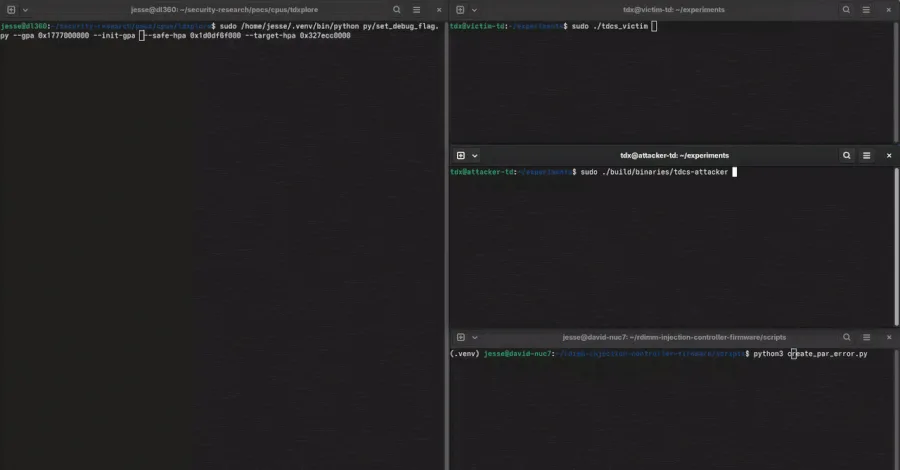
The impact of DDRop varies depending on the underlying architecture. On Intel TDX, the researchers demonstrated that write-dropping could be weaponized to gain full control over a protected virtual machine (VM). By dropping the writes that the trusted firmware uses to initialize empty page tables, the researchers forced the system to utilize attacker-chosen data that had been pre-positioned in memory. This allowed the attacker to map their own memory onto arbitrary physical addresses, effectively reading or modifying protected data belonging to other virtual machines.

Furthermore, the team successfully toggled a victim machine into "debug mode," a state that allows for the decryption and extraction of memory contents in plaintext. Once the data was exfiltrated, the researchers restored the original state, leaving no forensic footprint of the intrusion. In a separate test, they demonstrated the ability to forge the launch measurements that remote customers use to verify the integrity of a trusted execution environment.

New DDRop Attack Breaks Intel TDX and AMD SEV-SNP Confidential Computing

On AMD SEV-SNP systems, the attack surface is slightly more constrained. While the researchers successfully utilized write-dropping to manipulate the page-relocation process—enabling the copying of memory between pages—the specific debug-mode and attestation-forgery exploits were found to be unique to the Intel TDX implementation.

The Problem of Physical Access and Threat Modeling

Both Intel and AMD have maintained that physical attacks of this nature fall outside their defined threat models. In the industry-standard view of confidential computing, the server hardware is considered a "trusted" component. If an attacker has sufficient physical access to install hardware inside a data center, the security perimeter is already considered compromised.

Intel, in particular, has noted that its memory encryption frameworks are not designed to protect against physical interposition. The company has declined to assign a Common Vulnerabilities and Exposures (CVE) identifier to the findings, characterizing the research as "out of scope, but not out of mind." Intel representatives have pointed to their optional "cryptographic integrity" mode as a potential defense, which provides stronger protections than the default "logical integrity" mode, though it does not fully address the underlying lack of freshness verification.

AMD has also addressed the findings, emphasizing that the requirement for direct, physical access to the server hardware places the DDRop attack outside the scope of their published security guarantees for the SEV/SNP architecture.

Implications for Cloud Security

The existence of DDRop underscores a significant hurdle for the future of cloud computing. The industry currently faces a technical impasse: adding a full "freshness" check to every memory operation would require substantial redesigns of memory controllers and potentially impose significant performance overheads, which could negate the benefits of utilizing high-speed DDR5 memory.

New DDRop Attack Breaks Intel TDX and AMD SEV-SNP Confidential Computing

While there is no simple software patch for this hardware-level flaw, researchers suggest that companies could implement defensive measures to raise the bar for attackers. These include:

  • Enhanced Integrity Checks: Verifying that critical memory writes have successfully landed in physical storage.
  • Hardware Inspection: Implementing physical tamper-detection mechanisms within server chassis to identify the presence of unauthorized interposers during boot or maintenance cycles.
  • Restricted Memory Management: Reducing the attack surface by limiting the specific memory-management features that the DDRop attack relies upon.

The researchers remain cautious about the long-term viability of current encryption designs. They noted that even upcoming proposals, such as "cache-line versioning," which intends to introduce freshness checks, have yet to be proven effective against sophisticated active interposition.

Broader Landscape

DDRop is not currently known to be in use outside of controlled laboratory settings. The complexity involved in gaining physical access to a server, coupled with the precision required to install an interposer, makes this an attack vector primarily reserved for highly motivated actors, such as those with access to data-center facilities or the ability to compromise supply-chain logistics.

Despite the limited scope of the attack, the disclosure serves as a critical warning to the industry. As confidential computing becomes the standard for protecting sensitive enterprise workloads—ranging from financial records to proprietary AI models—the reliance on hardware-based security must be scrutinized. The research from the multi-university team provides a roadmap for hardware architects to address the "freshness" gap in next-generation silicon, ensuring that the promise of secure cloud computing remains robust against both remote and physical threats.

As of mid-September 2026, the global security community continues to analyze the implications of these findings. While major cloud providers, including AWS, Microsoft Azure, and Google Cloud, continue to offer their respective confidential computing solutions, the DDRop disclosure highlights the necessity for ongoing evolution in hardware security architectures to maintain the trust of enterprise customers in an increasingly hostile threat landscape.

September 14, 2026 0 comment
0 FacebookTwitterPinterestEmail
Bitcoin & Altcoins

Devcon 8 Tickets Are Officially Live As The Ethereum Community Prepares For A Milestone Gathering In Mumbai

by admin September 14, 2026
written by admin

The Ethereum Foundation has officially announced the commencement of ticket sales for Devcon 8, the eighth iteration of the premier global conference for the Ethereum ecosystem. Scheduled to take place this November in Mumbai, India, the event marks a strategic return to an in-person, high-intensity collaborative environment designed to foster deep technical dialogue, open-source innovation, and cross-disciplinary networking. As the primary event for builders, researchers, and core protocol maintainers, Devcon serves as the annual barometer for the health and trajectory of the decentralized web.

The Evolution of Devcon: A Historical Perspective

Since its inception, Devcon has functioned as the central hub for the Ethereum community. The event has traveled across the globe, hosted in cities such as Berlin, London, Shanghai, Cancun, Prague, Osaka, and Bogotá. Each iteration has mirrored the maturity of the Ethereum network itself. While early Devcons focused heavily on the theoretical underpinnings of smart contracts and the transition from Proof of Work to Proof of Stake, recent gatherings have pivoted toward scalability, Layer 2 solutions, privacy-preserving technologies, and the institutionalization of decentralized finance (DeFi).

By choosing Mumbai, the Ethereum Foundation underscores the critical role of the Indian developer ecosystem in the future of global technology. India has emerged as a significant incubator for Web3 talent, with one of the largest concentrations of blockchain developers in the world. This edition of Devcon is designed to be more intimate and focused, aiming to bridge the gap between global research initiatives and local grassroots development.

Ticket Tiers and Accessibility Strategy

The Ethereum Foundation has implemented a multi-tiered ticketing strategy to ensure the conference remains accessible to a diverse range of stakeholders. The current sale wave, which opened on July 14, provides General Admission tickets that are available to the public without eligibility requirements. Following the standard practice of prior years, the Foundation has adopted a wave-based pricing model, rewarding early registrants with the lowest entry fees.

Beyond the standard General Admission, the organizers have prioritized inclusivity through a robust community-based discount program. These tickets are specifically allocated for individuals who contribute significantly to the ecosystem, including core developers, researchers, students, and those focused on public goods. By providing subsidized entry for these groups, the organizers aim to maintain the conference’s identity as an academic and collaborative forum rather than a purely commercial trade show.

The application process for student, youth, and builder discounts is currently open and is managed through a rolling review process. This allows for a more personalized assessment of applicants’ contributions to the open-source community, ensuring that those who are actively building or maintaining the infrastructure of the network are prioritized for attendance.

Shaping the Conversation: Speaker Applications

Central to the mission of Devcon 8 is the democratization of knowledge sharing. Unlike traditional industry conferences that often rely on a curated list of high-profile speakers, the Devcon team maintains an open application policy. Any individual, regardless of institutional affiliation or seniority, can apply to present their research or project.

The program for Devcon 8 will encompass nine primary tracks, covering:

  • Core Protocol: Advancements in consensus mechanisms and Ethereum improvement proposals (EIPs).
  • Applied Cryptography: Real-world implementations of Zero-Knowledge proofs and MPC.
  • Privacy and Security: Protecting user data and enhancing network resilience.
  • Developer Experience: Tools and frameworks that simplify smart contract development.
  • Governance: The evolution of DAOs and on-chain decision-making.
  • Public Goods: Sustaining open-source infrastructure and funding mechanisms.

The deadline for speaker submissions is August 6, 2026. Given the historical volume of submissions, the selection process is rigorous, focusing on technical depth, originality, and relevance to the broader roadmap of the Ethereum ecosystem. Selected speakers are granted complimentary admission, reflecting the Foundation’s commitment to rewarding those who contribute intellectual capital to the community.

Community Hubs and Collaborative Spaces

One of the most notable features returning to Devcon 8 is the "Community Hubs" initiative. Recognizing that the most impactful breakthroughs often occur during informal, peer-led sessions, the organizers are designating specific spaces for self-organized groups. These hubs are intended to serve as micro-communities for specialized topics, such as privacy-tech, decentralized social media, or local developer growth.

To participate, groups must adhere to strict guidelines: the programming must be non-commercial, focused on a clear topic, and accessible to all attendees. By removing corporate branding and marketing pitches from these hubs, the Foundation ensures that the atmosphere remains centered on education and collaboration. This approach has historically proven successful in fostering long-term partnerships between disparate projects that share common technical hurdles.

Supporting the Ecosystem: The Supporters and Impact Programs

For organizations looking to engage with the developer community, the Supporters Program offers a structured way to participate. The Foundation is particularly interested in teams whose contributions align with the "CROPS" principles: Collaborative, Resilient, Open, Persistent, and Sustainable. These supporters are encouraged to demonstrate their commitment to the Ethereum ecosystem through technical demos and educational workshops rather than traditional advertising.

Simultaneously, the Impact Program provides a pathway for non-profits, FOSS (Free and Open Source Software) projects, and research collectives to secure a presence at the conference. This two-pronged approach ensures that the event remains balanced between commercial innovation and the non-profit, public-good ethos that defines the Ethereum Foundation’s broader mission.

Broader Implications and Market Impact

The selection of Mumbai for Devcon 8 is indicative of the "Global South" shift in the blockchain landscape. As regulatory environments in the West continue to evolve, the concentration of development activity in emerging markets has become a defining trend. Analysts observe that hosting major technical summits in these regions not only accelerates local talent development but also provides a necessary influx of capital and professional networks to areas previously underserved by global tech conferences.

Furthermore, the emphasis on a "more focused and intimate" gathering suggests a departure from the massive, festival-style conferences of the past. By capping attendance or curating the participant pool through the discount and application system, the Foundation aims to prevent the "dilution" of technical dialogue. This shift reflects a maturing industry that is moving away from speculative hype and toward the rigorous engineering challenges required to support global-scale decentralized applications.

Future Outlook and Next Steps

As the countdown to November begins, the Ethereum Foundation will continue to release updates regarding the technical agenda, speaker lineups, and venue specifics. Prospective attendees are encouraged to monitor the official Devcon website and the organization’s social media channels for real-time updates on ticket availability and logistical information.

For those planning to attend, early registration is strongly advised. Not only does it provide a cost-effective route to securing a spot, but it also allows the organizers to manage logistics and crowd control more effectively. As the industry faces critical inflection points—ranging from the scalability of Layer 2 solutions to the integration of quantum-resistant cryptography—Devcon 8 is poised to be the defining event of the year for those committed to the long-term success of the Ethereum network.

The collaborative nature of this year’s planning—seen in the open Request for Proposals for community hubs and the inclusive speaker application process—reinforces the decentralized ethos that serves as the foundation for the entire Ethereum project. Whether one is a seasoned researcher or a student new to the space, the opportunities provided by Devcon 8 represent a rare chance to engage directly with the architects of the future internet.

September 14, 2026 0 comment
0 FacebookTwitterPinterestEmail
Bitcoin & Altcoins

Large Bitcoin Movements by Metaplanet and Wintermute Trigger Market Speculation Amidst Institutional Volatility

by admin September 14, 2026
written by admin

The cryptocurrency markets are currently navigating a period of heightened sensitivity as significant on-chain movements involving major institutional players have sparked widespread speculation regarding potential sell-offs. According to real-time data provided by analytics firm Lookonchain, Metaplanet, the Tokyo-listed enterprise known for its aggressive Bitcoin treasury strategy, recently transferred 2,400 BTC to the institutional-grade platform Coinbase Prime. Simultaneously, prominent market maker Wintermute moved 5,100 BTC to the Binance exchange. While these transactions have fueled anxiety among retail and institutional traders alike, a deeper examination of the operational realities behind these entities suggests that the narrative of an imminent "dump" may be premature.

Chronology of Metaplanet’s Treasury Movements

Metaplanet’s recent activity has been characterized by a series of high-value transfers that have drawn significant scrutiny from market observers. On August 31, 2026, the company executed a transfer of 2,400 BTC, valued at approximately $186 million at the time of the transaction, into Coinbase Prime. This follows a clear pattern of movement observed throughout the latter part of August:

  • August 25: The company moved 1,000 BTC to exchange-linked infrastructure.
  • August 28: An additional 1,350 BTC was transferred.
  • August 31: A final tranche of 2,400 BTC was shifted to Coinbase Prime.

These consecutive movements have inevitably caught the attention of traders who view transfers from private corporate wallets to exchange-linked platforms as a traditional precursor to liquidation. However, it is essential to distinguish between a retail wallet move and an institutional treasury management process. Metaplanet is not a mining operation; it functions as a corporate treasury company that mirrors the "Bitcoin-standard" strategy pioneered by firms like MicroStrategy.

The discrepancy between the company’s reported holdings—which hover around 43,000 BTC—and the 38,650 BTC identified by Arkham Intelligence has further fueled public curiosity. While some observers interpret this gap as evidence of undisclosed sales, it is more likely attributable to the complexities of tracking multi-sig wallets, institutional custody partitioning, and the lag in real-time on-chain labeling.

The Role of Institutional Custody and Operational Strategy

To understand why these transfers are not definitive indicators of a sell-off, one must account for the specific nature of Coinbase Prime. Unlike a standard retail exchange, Coinbase Prime is designed for institutional-grade custody, high-volume over-the-counter (OTC) execution, and complex financing arrangements.

Depositing Bitcoin into a Prime account does not signify that the assets have been sold; rather, it often indicates a change in custody providers, the initiation of a yield-generating strategy, or the collateralization of assets for institutional financing. Simon Gerovich, the CEO of Metaplanet, has previously addressed these concerns directly. On August 12, following a similar wave of market chatter regarding a 5,014 BTC transfer, Gerovich stated via social media that the movements were strictly operational and custody-related. He emphasized that the firm’s long-term Bitcoin strategy remains unchanged and that no coins were sold during those transfers.

Furthermore, Metaplanet’s upcoming corporate restructuring plans provide context for these movements. The company has proposed a strategic contribution of 2,100 BTC and $2.5 million in cash to Superplanet, a joint venture treasury vehicle with Super League Enterprises. If approved by shareholders in the fourth quarter, this transfer would account for roughly 4.9% of Metaplanet’s total holdings, necessitating significant logistical movement of assets within their custody ecosystem.

Wintermute and the Mechanics of Market Making

The second pillar of the current market jitters involves Wintermute, a leading global algorithmic market maker. On-chain data from Onchain Lens indicates that wallets associated with Wintermute transferred approximately 5,100 BTC—worth roughly $399 million—to Binance over a 48-hour period. Unlike a singular, massive transfer, these assets were moved in multiple, fragmented transactions.

For the average market participant, a move to Binance is instinctively perceived as bearish. However, the business model of a market maker is fundamentally predicated on the constant movement of assets across exchanges. Market makers are responsible for ensuring liquidity, narrowing bid-ask spreads, and settling trades for a vast array of clients. They regularly shift inventory to rebalance positions, hedge exposure, and satisfy the demand for liquidity on high-volume venues like Binance.

Without a public disclosure of intent or subsequent on-chain evidence of these assets being moved into order books for liquidation, equating a market maker’s standard operational procedure with a "dump" is analytically flawed. Wintermute’s activity is a reflection of current trading volumes and market demand rather than an indication of a directional bet against Bitcoin’s long-term value.

Market Volatility and the Psychology of Whale Watching

The timing of these movements has amplified their impact, occurring against a backdrop of significant price volatility. Bitcoin recently experienced a downward swing from $79,000 to below $77,000, triggering a wave of liquidations that reached approximately $396 million in leveraged long positions. In a market environment defined by such volatility, participants are hyper-vigilant. When liquidations are elevated, any significant whale activity is amplified, leading to a feedback loop where rumor, fear, and market sentiment can temporarily decouple from the actual underlying data.

This phenomenon of "crypto detective work" is common in periods of price consolidation. When Bitcoin is trading within a tight range, on-chain data often becomes a primary driver of short-term volatility. The market’s reaction to these specific transfers highlights the ongoing tension between the transparency of the blockchain and the opacity of institutional intent.

The MicroStrategy Benchmark and Institutional Sentiment

The broader context of institutional Bitcoin adoption remains anchored by Michael Saylor’s Strategy (formerly MicroStrategy). Following a period of relative silence regarding new acquisitions, Saylor’s recent social media presence has signaled a renewed confidence in the corporate accumulation model. With holdings exceeding 840,000 BTC, Strategy remains the ultimate benchmark for institutional investors.

While Metaplanet and Wintermute’s movements have introduced short-term uncertainty, they exist in a different category than the consistent, transparent accumulation model championed by Saylor. Strategy’s ability to access capital markets to fund its purchases has created a stable, long-term expectation among investors. By contrast, the movements observed from Metaplanet and Wintermute represent the fluid, high-velocity nature of modern institutional treasury and liquidity management.

Analysis of Future Implications

Looking forward, the implications of these movements are twofold. First, they underscore the need for better data interpretation tools within the crypto-asset space. As more corporations adopt Bitcoin as a treasury asset, the distinction between "custodial movement" and "liquidation" will become increasingly critical to prevent unnecessary market shocks.

Second, the market’s reaction reveals a high level of fragility in current investor sentiment. The fact that standard institutional operations are capable of moving the market by billions of dollars in valuation suggests that the ecosystem is still maturing in its ability to process large-scale capital movements.

In conclusion, while the movements of 2,400 BTC by Metaplanet and 5,100 BTC by Wintermute are objectively large, they lack the definitive characteristics of a divestment event. Until public disclosures or on-chain data confirm a change in the long-term holdings of these entities, these transfers should be viewed as institutional management rather than an abandonment of the asset class. The "Bitcoin-standard" corporate movement is still in its infancy, and as such, operational transparency will be the most vital factor in maintaining investor confidence during future periods of volatility. Investors and analysts alike are advised to maintain a distinction between exchange-bound liquidity and the strategic liquidation of treasury reserves.

September 14, 2026 0 comment
0 FacebookTwitterPinterestEmail
FinTech Innovations

Arva AI Launches Dedicated Research Lab to Automate High-Stakes Financial Decisioning and Eliminate Human-in-the-Loop Bottlenecks

by admin September 14, 2026
written by admin

The global financial services sector is currently grappling with a dual challenge: an unprecedented surge in sophisticated financial crimes and a persistent, costly reliance on manual human intervention to mitigate risk. Arva AI, a pioneering fintech startup specializing in agentic artificial intelligence for business verification, has officially announced the launch of its dedicated Research Lab. This strategic expansion marks a significant milestone in the company’s mission to move beyond standard automation, aiming to replace the traditional "human-in-the-loop" model with proprietary, high-precision decisioning engines capable of handling the most complex fraud and compliance cases in banking.

The Genesis of High-Stakes Automation

Founded in 2024 and backed by high-profile investors including Google’s Gradient Ventures and Y Combinator, Arva AI has spent the past two years refining its approach to automated verification. The establishment of the Research Lab follows more than 5,000 hours of rigorous training, data engineering, and evaluation. This facility is tasked with the development of specialized models that move beyond the limitations of general-purpose Large Language Models (LLMs).

Unlike conventional AI tools that provide assistance to human analysts—often resulting in "hallucinations" or inconsistent outputs—Arva’s new infrastructure, dubbed AgentCore, is designed for reliability. AgentCore functions as a feedback loop, ingesting analyst corrections, case outcomes, and nuanced investigative insights to refine the system. Before any model update goes live, it is subjected to automated backtesting, evaluation, and versioning, ensuring that the system learns from its mistakes in a controlled, auditable environment.

Arva Intel: A New Benchmark for Precision

The flagship product emerging from this research is Arva Intel, a model purpose-built for the deep-web investigation of individuals and corporate entities. In independent evaluations against current frontier models, Arva Intel demonstrated a 13% improvement in precision. This metric is particularly critical in the banking sector, where a false positive can lead to customer attrition and a false negative can result in catastrophic regulatory fines or criminal infiltration.

The model’s benchmarking strategy is notably granular. Rather than simply evaluating the final output of a fraud investigation, the Research Lab assesses the accuracy of every individual component—data gathering, synthesis, evidence weighing, and final judgment—that contributes to the overall decision. By deconstructing the investigative process, Arva aims to provide a transparent, explainable path for every automated action, a core requirement for compliance with global financial regulations such as the Bank Secrecy Act (BSA) and Anti-Money Laundering (AML) directives.

Addressing the Human-in-the-Loop Dilemma

The necessity for the Research Lab stems from a fundamental realization in the fintech industry: general-purpose AI is currently inadequate for high-risk decision-making. Financial institutions are legally required to perform extensive Know Your Customer (KYC) and Enhanced Due Diligence (EDD) checks. Historically, these processes were handled by massive teams of analysts. As digital transaction volumes have grown exponentially, these manual processes have become a significant source of operational friction.

Rhim Shah, Founder and CEO of Arva AI, notes that the industry’s reliance on human intervention is a defensive measure born of necessity. "Banks keep humans in the loop because no AI has been accurate enough to remove them safely—that’s the problem the Lab solves," Shah stated. By providing a system that is both accurate and auditable, Arva AI is positioning itself to fundamentally alter the cost structure of compliance departments at global financial institutions.

Chronology and Growth Trajectory

The trajectory of Arva AI reflects the rapid acceleration of agentic AI integration in finance:

  • 2024: Company founded with a focus on streamlining business verification through AI.
  • Early 2025: Initial deployment of core verification technologies with pilot financial institutions.
  • Early 2026: Continued development of internal research protocols and infrastructure.
  • April 2026: Arva AI makes its formal public debut at FinovateEurope in London, showcasing its potential to the international banking community.
  • September 2026: Official launch of the Arva AI Research Lab, signaling a transition from early-stage development to institutional-grade model production.

The Financial Crime and Fraud Landscape

The scale of the problem Arva AI is tackling is vast. According to industry reports, financial institutions spend tens of billions of dollars annually on compliance-related operations. The emergence of real-time payment systems has further compressed the window for fraud detection, making human-only review teams obsolete. However, traditional machine learning models often lack the "reasoning" capabilities required to distinguish between legitimate high-risk activity and actual fraud.

Arva’s focus on "agentic" AI—systems that can perform tasks, reason through evidence, and adapt to new information—represents the next evolution in fintech. While the initial focus of the Research Lab is strictly on financial crime and fraud detection, the company has indicated a clear roadmap for expansion. Future applications are expected to include the automation of payment exceptions, dispute resolution, and broader, more complex customer-related investigations.

Implications for Regulatory Compliance and Transparency

One of the most significant hurdles for AI in banking is the "black box" problem. Regulators are often wary of black-box algorithms that cannot explain why a specific transaction was flagged or a customer denied. Arva’s emphasis on AgentCore addresses this by creating a versioned history of improvements. Because every change to the model is backtested and documented, financial institutions can theoretically provide regulators with a clear audit trail of how their decisioning logic has evolved.

Furthermore, the company has pledged to publish its benchmark methodology and research findings in academic venues. This commitment to transparency is intended to build trust with both regulators and risk-averse financial institutions. By subjecting their proprietary models to peer review and public scrutiny, Arva is challenging the secretive nature of the AI industry, aiming to establish a new gold standard for high-stakes decisioning.

Future Outlook: Beyond Verification

The launch of the Research Lab is not merely a product release; it is a strategic shift toward becoming an infrastructure provider for the banking sector. As financial institutions move away from fragmented, legacy systems toward unified AI-driven platforms, the demand for "model-as-a-service" solutions that can safely handle high-risk decisions will continue to grow.

The industry is watching closely to see if Arva’s 13% precision gain in a lab environment translates to similar results across the diverse and messy datasets of global retail and commercial banks. If successful, Arva AI could effectively redefine the operational requirements for compliance, shifting the burden of investigation from human labor to intelligent, self-correcting autonomous systems.

As the company scales its operations, it continues to benefit from its early-mover advantage and the high-level backing of its investors. By focusing on the "highest-risk parts of a decision," Arva AI is betting that the most significant value in the AI revolution will not be found in generative text or creative assistance, but in the reliable, automated processing of the critical decisions that underpin the global financial system. The coming months will be decisive as Arva integrates its latest research into live production environments, setting the stage for what may become a standard approach to institutional AI adoption.

September 14, 2026 0 comment
0 FacebookTwitterPinterestEmail
FinTech Innovations

Anthropic Launches Claude for Financial Advisors to Streamline Wealth Management and Compliance

by admin September 14, 2026
written by admin

Artificial intelligence developer Anthropic has officially rolled out a specialized suite of workflow skills and enterprise connectors tailored specifically for financial advisors. Announced in a blog post on Monday, September 14, 2026, the offering—marketed as Claude for Financial Advisors—is designed to drastically reduce the administrative burden historically associated with wealth management. By integrating directly into the technical architecture of financial practices, the platform aims to reclaim hours of lost productivity for advisors, allowing them to shift their focus from paperwork to client-facing advisory services.

This strategic product launch represents a major escalation in the race among foundational artificial intelligence providers to capture the lucrative, highly regulated financial services vertical. As artificial intelligence moves rapidly from generalized consumer utility to specialized enterprise execution, tech firms are betting heavily that domain-specific tools equipped with rigorous compliance guardrails will win over risk-averse institutions.

Technical Integration and Core Functionalities

The architecture of Claude for Financial Advisors is built around seamless interoperability with the existing technology stack deployed by modern registered investment advisors (RIAs) and wealth management firms. Rather than forcing practices to migrate to a proprietary ecosystem, the solution features native connectors that link Claude directly to major portfolio management platforms, third-party custodians, customer relationship management (CRM) systems, and comprehensive financial planning software.

Through these integrations, the AI model gains secure, contextual access to the underlying data streams necessary to execute complex operational workflows. Among the primary features highlighted by Anthropic are automated meeting preparation, granular portfolio analysis, and automated pipeline reviews. When an advisor prepares for a client review, for instance, Claude can rapidly synthesize historical performance data, recent portfolio adjustments, and notes from past interactions to generate a comprehensive briefing document within seconds.

Furthermore, the suite includes specialized skills tailored to the regulatory realities of the financial sector. Compliance features are woven directly into the operational workflow, including a specialized compliance screening module. This tool analyzes client-facing communications, drafts, and marketing materials to flag potential regulatory infractions, stylistic discrepancies, or compliance vulnerabilities before they reach the public or the client base.

Human Oversight and Regulatory Alignment

A central challenge for artificial intelligence adoption within the financial sector has been regulatory compliance, particularly concerning rules established by the Securities and Exchange Commission (SEC) and the Financial Industry Regulatory Authority (FINRA). Anthropic’s new product attempts to address these concerns by hardcoding human-in-the-loop validation protocols into the software.

Under the framework of Claude for Financial Advisors, the artificial intelligence functions exclusively as a sophisticated administrative and analytical engine; it cannot independently execute financial transactions, send unvetted client communications, or finalize regulatory filings. Critical tasks demand explicit review and approval from a licensed human advisor before completion.

To help firms satisfy SEC requirements regarding technology governance, the platform includes automated audit-trail documentation. This feature logs how and when the AI was utilized in the advisory process, generating verifiable records of review activities and algorithmic usage. By providing transparent documentation trails, Anthropic hopes to alleviate the liability concerns that typically plague technology adoption in wealth management.

Industry Implications and Capacity Expansion

The economic rationale behind the deployment of Claude for Financial Advisors is rooted in efficiency gains. Administrative friction—ranging from drafting post-meeting follow-up notes to compiling portfolio performance reports—consumes a substantial portion of an advisor’s working week. By automating these repetitive tasks, Anthropic estimates that wealth practices can significantly scale their operational capacity without a proportional increase in headcount.

In its official release, Anthropic underscored that reclaiming these administrative hours directly benefits the end client. Rather than spending valuable office hours buried in data entry and compliance paperwork, advisors can expand their customer base and deepen service offerings into specialized areas such as comprehensive tax planning, multi-generational estate structuring, insurance analysis, and sophisticated retirement income modeling.

The Broadening Frontier of Financial AI

Anthropic’s push into wealth management does not happen in a vacuum; it is part of a broader, aggressive campaign by artificial intelligence heavyweights to dominate the financial sector. The landscape has seen rapid developments throughout 2026, characterized by vertical-specific products designed to target distinct segments of banking, investing, and advisory services.

In May 2026, Anthropic debuted a suite of ten specialized AI agents targeting the broader financial services space. Those initial tools were constructed to automate some of the industry’s most notoriously time-consuming procedures, including the generation of pitchbooks and the execution of Know Your Customer (KYC) onboarding protocols. Monday’s release represents the natural evolution of that strategy, narrowing the focus to the specific daily workflows of independent advisors and wealth managers.

Concurrently, competitive pressures are intensifying. Just days prior to Anthropic’s announcement, rival artificial intelligence pioneer OpenAI revealed its own industry-specific initiative. On Thursday, September 10, OpenAI introduced a tailored ChatGPT Work experience specifically designed for financial institutions. While Anthropic’s latest product targets retail wealth management and independent advisory practices, OpenAI’s initial rollout of ChatGPT for Financial Services concentrated heavily on institutional investment banking and equity research. OpenAI’s toolset is engineered to assist junior bankers and analysts in developing complex financial models, drafting customized client pitch materials, and conducting rigorous market research.

The ecosystem is further populated by nimble, AI-native startups operating at the intersection of finance and machine learning. Innovative platforms such as Rogo and Hebbia have gained significant traction by translating natural language written instructions directly into complex financial models, comprehensive memos, and investment pitch decks. These specialized platforms operate by plugging directly into a bank’s proprietary files and secure paid data feeds, while often running on underlying foundational models provided by Anthropic, OpenAI, or Google.

Analysis: The Competitive Horizon for AI in Finance

The rapid proliferation of domain-specific artificial intelligence tools highlights a structural shift in how financial technology is procured and deployed. For decades, financial institutions relied on legacy enterprise software suites provided by established vendors. Today, the battleground has shifted to foundational AI layers capable of ingesting unstructured enterprise data and executing multi-step workflows.

For Anthropic, securing a foothold in wealth management represents a strategic counterweight to OpenAI’s inroads into investment banking. While investment banking deals with high-value, low-frequency transactions and elite institutional teams, the wealth management sector offers a massive, highly fragmented market of advisors serving millions of retail and high-net-worth individuals. If tools like Claude for Financial Advisors can successfully lower compliance friction and prove their reliability under SEC scrutiny, the adoption curve across independent advisory firms could accelerate rapidly.

However, challenges remain. Financial institutions are inherently conservative regarding data privacy, model hallucination, and cybersecurity vulnerabilities. The success of Anthropic’s new connectors will ultimately depend not just on their utility in drafting meeting notes, but on their absolute resilience against data leaks and regulatory penalties. As firms evaluate these competing ecosystems, the ability to balance raw computational capability with bulletproof audit trails and human oversight mechanisms will dictate which AI provider ultimately wins the trust of the global financial sector.

September 14, 2026 0 comment
0 FacebookTwitterPinterestEmail
NFT & Digital Assets

The Evolution of PFP Collections as Strategic Go-To-Market Infrastructure in Web3

by admin September 14, 2026
written by admin

In the fast-evolving landscape of decentralized technology, successful go-to-market strategies increasingly rely on the early establishment of robust, active communities. Brands, layer-1 blockchains, and layer-2 scaling solutions are rapidly shifting away from traditional marketing funnels, opting instead to utilize Profile Picture (PFP) non-fungible token (NFT) drops to activate user bases from day one. Far from being mere digital collectibles or speculative internet assets, modern PFP collections are functioning as sophisticated growth hacking instruments, cultural capital drivers, and technical stress tests for emerging blockchain infrastructure.

The Historical Context and Maturation of the PFP Sector

To understand the current utility of PFP drops, one must examine the trajectory of the digital asset market over recent years. Early iterations of avatar-based collections, popularized during the broad market expansion of 2021, primarily focused on speculative trading volumes and exclusive club memberships. However, as the industry matured through subsequent market cycles, web3 builders recognized the limitations of relying purely on financial speculation.

PFP collections as GTM Infrastructure

Pioneering projects demonstrated the tangible, real-world utility that could be derived from successful digital collections. For instance, Pudgy Penguins successfully transitioned from a purely online cryptographic asset into a mainstream retail powerhouse, leveraging intellectual property licensing to place physical merchandise on the shelves of major retail giants like Walmart. Similarly, World of Women constructed an intellectual property-centric platform, forging strategic partnerships with major consumer brands and entertainment conglomerates to expand its distribution footprint. Meanwhile, Doodles expanded from a foundational collection of 10,000 avatar images into a comprehensive multi-media entertainment brand, orchestrating high-profile musical collaborations and consumer product integrations with entities like Adidas and recording artist Pharrell Williams.

These milestones signaled a paradigm shift across the industry. Web3 founders and infrastructure providers began to view PFP drops not as isolated digital art projects, but as measurable, highly effective brand activation tools capable of driving distinct commercial outcomes.

Strategic Framework: What Modern PFP Drops Unlock

For emerging Layer-1 and Layer-2 networks, launching a PFP collection acts as a strategic wedge into a broader ecosystem roadmap. It provides a lightweight yet powerful mechanism to incentivize user acquisition, build enduring reputation, and empirically prove that underlying cryptographic infrastructure can handle high-throughput demands under live market conditions.

PFP collections as GTM Infrastructure

Market data and industry case studies consistently highlight several core objectives that a well-architected PFP drop can achieve:

  • Early User Acquisition: A targeted drop naturally attracts the pioneering cohort of ecosystem participants—individuals who are psychologically and financially inclined to invest early in a network’s long-term vision.
  • Kickstarting On-Chain Activity: By tying the acquisition of an asset to practical engagement, collections compel users to actively mint, trade, and interact with nascent decentralized applications and network protocols.
  • Momentum Signaling: High public engagement and rapid sell-out metrics serve as a powerful indicator to external developers, venture capitalists, and strategic partners that an ecosystem commands genuine attention.
  • Utility and Access Layer: Modern PFPs function as digital keys, systematically unlocking gated features, exclusive developer toolkits, liquidity incentives, and governance rights.
  • Long-Tail Retention: By blending financial upside with social community dynamics, these assets maintain user interest and participation long after the initial minting phase concludes.

Real-World Deployments: Case Studies in Ecosystem Bootstrapping

The practical application of this playbook can be observed in several high-profile launches facilitated by specialized launch infrastructure partners such as Rarible. These deployments illustrate how different networks adapt the PFP model to serve their specific technical and community-building mandates.

Building Brand Narrative: After School Club on the Scope Network

When building out the Scope network—a creator-focused NFT marketplace positioned as a fundamental application on the emerging Eclipse chain—developers faced the challenge of establishing deep, trust-based community engagement prior to mainnet deployment. The solution was the creation of the After School Club (ASC) collection.

PFP collections as GTM Infrastructure

The strategy hinged on an extended community-building phase that lasted over seven months prior to the official mint. According to project leadership, the team engaged daily with prospective users through dedicated audio-focused AMA (Ask Me Anything) sessions, actively soliciting user feedback and integrating community preferences directly into the collection’s design parameters. This methodology ensured that when the collection went live, it was backed by a fully aligned, highly motivated user base prepared to power the creator marketplace on Eclipse.

Cultivating Hype During Testnet Phases: TrailHeads by Camp Network

For Camp Network, a layer-2 blockchain focused on consumer applications and data integration, generating sustained enthusiasm during the testnet phase presented a distinct challenge. To address this, the network deployed a narrative-driven PFP collection known as TrailHeads.

Designed specifically to onboard values-aligned users into the broader Camp ecosystem, TrailHeads served as a foundational element of the network’s roadmap toward mainnet launch. Community leaders noted that the collection successfully sparked widespread creative content generation among holders, effectively bringing community members closer to the core protocol development team. The digital avatars became central fixtures across numerous pre-mainnet promotional campaigns, proving that a narrative-driven PFP drop can effectively sustain attention and engagement even before a network’s infrastructure is fully deployed to the public.

PFP collections as GTM Infrastructure

Stress-Testing Cross-Chain Technology: The Composables by Espresso Network

In contrast to collections focused primarily on social narrative or creator economies, Espresso Network utilized its PFP drop—titled The Composables—to actively showcase its sophisticated cross-chain sequencing and interoperability infrastructure.

The primary objective was to activate an early adopter community while simultaneously demonstrating Espresso’s technical capabilities in a live environment through a modular, narrative-driven asset collection. Uniquely, while standard digital collectibles often suffer from severe liquidity and migration friction when moving across different blockchain networks, The Composables were architected to leverage Espresso’s infrastructure for seamless cross-ecosystem mobility. Jill Gunter, Chief Strategy Officer at Espresso Network, emphasized that the initiative served as a practical proving ground for developer tools and interoperability features designed to ease cross-chain fragmentation. The resulting rapid sell-out of the collection provided immediate empirical validation of both the network’s technological thesis and its underlying community demand.

Replicating Success: The Standardized PFP Go-To-Market Playbook

Based on the empirical data and measurable outcomes of these high-profile deployments, industry strategists have distilled a repeatable framework for organizations planning a PFP-led go-to-market campaign:

PFP collections as GTM Infrastructure
  1. Align the Collection with Core Narrative: The artistic and thematic direction of the digital assets must directly reflect the underlying product or chain thesis. Whether emphasizing creator empowerment, developer contribution, or infrastructural interoperability, the drop must visually and conceptually communicate the project’s core value proposition.
  2. Incentivize Meaningful On-Chain Behavior: Minting should never be treated as the final destination. Successful campaigns utilize the acquired asset as a functional trigger for ongoing participation, such as granting access to exclusive developer channels, interactive quests, or future reward eligibility.
  3. Integrate Utility from Day One: Developers must carefully consider the functional capabilities of the NFT from inception. Whether the asset acts as a governance pass, evolves dynamically over time, or interacts natively with decentralized applications, demonstrable utility drives sustainable valuation.
  4. Plan a Post-Mint Retention Roadmap: Long-term viability requires a comprehensive strategy for the post-mint lifecycle. Integrating airdrops, strategic brand partnerships, and dynamic on-chain mechanics ensures that holders remain actively engaged long after initial market hype subsides.

Broader Implications and Industry Outlook

The transition of PFP collections from speculative web3 novelties into programmable go-to-market infrastructure marks a significant maturation point for the digital asset industry. By transforming passive spectators into active, incentivized stakeholders, these cryptographic assets provide early-stage networks and consumer brands with a powerful tool for navigating user acquisition challenges.

As blockchain ecosystems continue to scale and competition for developer mindshare and user liquidity intensifies, the strategic deployment of community-centric digital assets is poised to remain a cornerstone of digital expansion strategies. Organizations that successfully bridge technical infrastructure with compelling community narratives will likely find themselves best positioned to capture enduring market traction in the decentralized economy.

September 14, 2026 0 comment
0 FacebookTwitterPinterestEmail
Newer Posts
Older Posts

Recent Posts

  • The Evolution of the Web3 Wallet: From Private-Key Vault to the Command Center of the Agentic Web
  • Ethereum Foundation Announces Annual Protocol AMA Session Scheduled for September 16
  • Kraken Expands Its Digital Asset Offerings with the Official Listing of Doppler Finance (Xdp)
  • CSD BR and Ripple Collaborate to Integrate XRP Ledger into Brazilian Financial Market Infrastructure
  • Web3 Venture Funding Surges to Record $22 Billion in Third Quarter 2025 Driven by Institutional Adoption

Recent Comments

No comments to show.
  • Facebook
  • Twitter

@2021 - All Right Reserved. Designed and Developed by PenciDesign


Back To Top
Dr Crypton
  • Home
  • About Us
  • Contact Us
  • Cookies Policy
  • Disclaimer
  • DMCA
  • Privacy Policy
  • Terms and Conditions

We are using cookies to give you the best experience on our website.

You can find out more about which cookies we are using or switch them off in .

Dr Crypton
Powered by  GDPR Cookie Compliance
Privacy Overview

This website uses cookies so that we can provide you with the best user experience possible. Cookie information is stored in your browser and performs functions such as recognising you when you return to our website and helping our team to understand which sections of the website you find most interesting and useful.

Strictly Necessary Cookies

Strictly Necessary Cookie should be enabled at all times so that we can save your preferences for cookie settings.