
LG Electronics USA, a prominent global leader in home appliances and consumer electronics, announced a decisive policy shift this week, revealing its intent to suspend applications built for its smart TVs that convert these devices into always-on residential proxy nodes. This significant move by the South Korean conglomerate comes less than a month after alarming research surfaced, indicating that a substantial portion—over 42 percent—of games and other downloadable applications available on LG’s webOS store were found to facilitate the routing of unknown third-party internet traffic through a user’s television. The revelations have cast a spotlight on the often-overlooked privacy and security implications inherent in the rapidly expanding ecosystem of smart devices.
The underlying issue stems from the integration of residential proxy Software Development Kits (SDKs) within these applications. These SDKs effectively transform a user’s internet-connected television into an exit node in a vast, distributed network, allowing external parties to funnel their online activity through the user’s home IP address. While residential proxy networks have legitimate uses in areas like market research, ad verification, and content localization testing, their surreptitious integration into consumer devices without explicit, transparent, and ongoing consent raises profound concerns about bandwidth consumption, potential legal liabilities for illicit activities conducted through the proxy, and the broader erosion of user privacy and control over their own home networks.
Understanding Residential Proxy Networks and Their Risks
To fully grasp the gravity of LG’s announcement, it is crucial to understand what residential proxy networks are and why their presence in smart TVs is problematic. A residential proxy routes internet traffic through a genuine, user-owned IP address, typically assigned by an Internet Service Provider (ISP) to a home network. Unlike commercial proxies or Virtual Private Networks (VPNs) which use data center IP addresses, residential proxies offer a higher degree of anonymity and legitimacy in the eyes of many online services, making them attractive for various data-intensive operations. These operations can range from benign activities like comparing flight prices across different regions or verifying ad placements, to more dubious ones such as bypassing geo-restrictions for content access, scraping large volumes of public data from websites, or even facilitating credential stuffing attacks.
The business model often involves proxy service providers paying app developers to embed their SDKs. In exchange for this monetization opportunity, the app grants the proxy provider access to the device’s internet connection. For the end-user, this means their television, a device typically perceived as a passive entertainment hub, becomes an active participant in a global network, constantly relaying data traffic for others. The immediate impact on the user includes potential degradation of internet speed due to shared bandwidth, increased data usage (which can lead to exceeding data caps or higher bills depending on the ISP plan), and reduced device performance. More critically, the user’s IP address becomes associated with the third-party traffic. If this traffic involves illegal activities—such as copyright infringement, fraud, or cyberattacks—the legitimate homeowner whose IP address was used could inadvertently face legal scrutiny or become entangled in investigations, even if they were entirely unaware of the proxy activity.
Furthermore, the security implications extend beyond bandwidth and legal liability. While proxy providers often claim to implement stringent "Know Your Customer" (KYC) processes to vet their clients and deploy technological countermeasures to prevent proxy service customers from interacting with other devices on the proxy user’s local network, these assurances do not fully alleviate concerns. The very act of opening a device to external traffic, even if theoretically sandboxed, introduces an additional attack surface. Vulnerabilities in the SDK or the app itself could potentially be exploited, offering malicious actors a foothold within the user’s home network, thereby compromising other connected devices like computers, smartphones, or smart home gadgets. The lack of transparency surrounding these operations means users are deprived of the ability to assess these risks or implement their own protective measures.
The Spur Research: Unveiling the Extent of the Problem
The catalyst for LG’s recent policy shift was a comprehensive investigation conducted by the cybersecurity firm Spur. Published on July 2, 2026, and highlighted by KrebsOnSecurity, Spur’s research meticulously examined the prevalence of residential proxy SDKs within smart TV applications. The findings were stark and alarming: over 42 percent of applications available for download on LG’s webOS smart TVs were found to contain these SDKs, effectively turning users’ televisions into indefinite proxy nodes. The issue was not exclusive to LG; Spur’s report also indicated that more than a quarter of the apps developed for Samsung’s Tizen operating system, another dominant player in the smart TV market, incorporated similar residential proxy components.
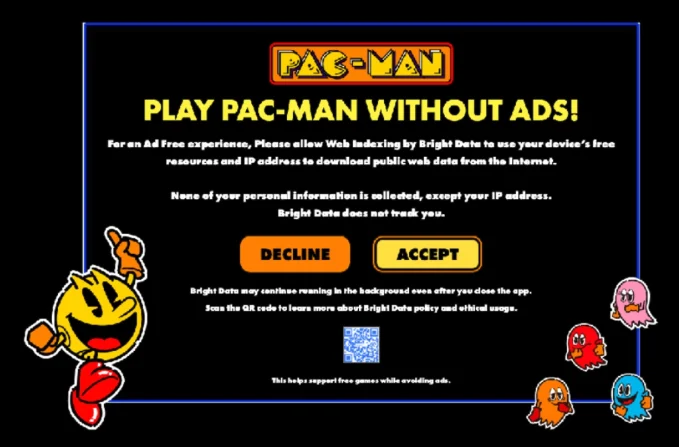
Spur’s investigation revealed that these residential proxy SDKs were not confined to obscure or niche applications. Instead, they were bundled with a wide array of popular and seemingly innocuous apps, ranging from simple games like the classic Pac-Man to various screensavers and essential file utility applications. This broad distribution meant that a significant number of smart TV users, irrespective of their app choices, were unknowingly contributing to these proxy networks. The research image, provided by Spur.us, visually depicted the widespread presence of these proxy SDKs across both LG (webOS) and Samsung (Tizen OS) televisions, underscoring the systemic nature of the problem within the smart TV app ecosystem.
The report specifically identified Bright Data, a major player in the residential proxy network industry, as accounting for a majority of the proxy SDKs found across both Samsung and LG smart TVs. Despite the findings, Bright Data did not respond to requests for comment regarding its integration practices at the time of the original report. While proxy providers like Bright Data typically assert their commitment to ethical practices, including rigorous KYC processes to ensure legitimate uses and technical safeguards to prevent unauthorized access to local networks, Spur’s research emphasized that these measures do not address the fundamental issue of user consent and transparency.
Trevor Sutter of Spur articulated this core concern, stating, "A one-time consent prompt buried in a TV app is not a substitute for meaningful transparency, ongoing control, and platform oversight." He further highlighted the amplified risk when consent is ostensibly granted by individuals within the household who use the device but lack the capacity or authority to give informed consent, such as minors. This points to a significant flaw in the current app monetization model, where the pursuit of revenue potentially overrides ethical considerations for user privacy and security, exploiting the often-passive interaction users have with their smart devices.
LG’s Proactive Response and Commitment to User Trust
In the wake of Spur’s compelling research, LG Electronics USA moved swiftly to address the identified vulnerabilities and concerns. Responding to direct inquiries, LG Senior Vice President John Taylor confirmed the company’s proactive stance. Taylor unequivocally stated that "a residential proxy network is not an intended use for LG smart TVs." This declaration underscores LG’s recognition of the deviation from its expected user experience and security standards.
Taylor detailed LG’s immediate course of action: the company is actively engaging with app developers to facilitate the removal of the residential proxy option from their applications hosted on the webOS platform. Crucially, LG has instituted a firm deadline, warning that developers who fail to comply with this directive will face severe consequences, specifically the suspension of their non-compliant apps from the LG app store. This strong stance signals LG’s commitment to enforcing its platform policies and protecting its user base.
Furthermore, Taylor outlined LG’s broader commitment to preventing similar incidents in the future. He affirmed that the company is "well underway" with its review of existing apps and is dedicated to keeping residential proxy networks out of its smart TV apps going forward. In an emailed statement, Taylor elaborated on these future-proofing measures: "As part of our ongoing efforts to enhance platform quality and the user experience, LG will continue to strengthen our evaluation process for developer-submitted apps, including those that incorporate residential proxy SDKs." This commitment suggests a more rigorous vetting process for new app submissions and potentially periodic audits of existing applications, aiming to establish a higher standard for security and privacy within the webOS ecosystem. This swift and decisive action by a major electronics manufacturer like LG is a significant development, setting a precedent for responsible platform management in the smart device industry.

The Broader Implications for the Smart Device Ecosystem
LG’s announcement carries profound implications that extend beyond its specific product line, resonating across the entire smart device industry and influencing various stakeholders.
For Users: The immediate impact for LG smart TV owners is a bolstered sense of security and privacy. However, the incident serves as a stark reminder of the hidden complexities and potential risks associated with increasingly connected home devices. It highlights the need for users to be more vigilant about the permissions granted to apps, even on devices not traditionally perceived as computers. The difficulty for the average consumer to audit their smart devices for such embedded functionalities underscores a critical gap in user control and transparency. This incident may prompt a broader consumer awareness campaign about the "smart home" privacy dilemma, encouraging users to scrutinize app installations and privacy policies more closely, or even consider network-level monitoring if technically capable.
For App Developers: This policy shift will undoubtedly impact the monetization strategies of app developers who have relied on integrating residential proxy SDKs. It necessitates a re-evaluation of business models and a pivot towards more transparent and user-consented revenue streams. While the lure of passive income from proxy providers can be strong, LG’s action signals a growing intolerance for practices that compromise user trust. Developers will face increased pressure to adhere to stricter platform guidelines, potentially leading to a more responsible and ethical development environment for smart TV applications. This could also spur innovation in alternative, privacy-respecting monetization methods.
For Smart TV Manufacturers: LG’s decision sets a critical precedent for other smart TV manufacturers, most notably Samsung, whose Tizen OS apps were also implicated in Spur’s research. It places increased pressure on these companies to conduct their own internal audits and implement similar protective measures. The incident underscores the moral and reputational imperative for platform gatekeepers to balance innovation and robust app ecosystems with user security and privacy. Failure to act could lead to consumer distrust, regulatory scrutiny, and a competitive disadvantage. This event could catalyze an industry-wide re-evaluation of app store policies and a push towards more standardized security and privacy protocols for smart devices.
For the Cybersecurity Landscape: This episode highlights a persistent vulnerability in the Internet of Things (IoT) landscape. As more everyday objects become "smart" and internet-connected, they also become potential targets for exploitation, often without the robust security features or user monitoring capabilities found in traditional computing devices. The incident serves as a powerful case study for how seemingly benign apps can be repurposed for covert activities, reinforcing the need for continuous vigilance, proactive security research, and strong vendor accountability in the ever-expanding IoT ecosystem. It further emphasizes that the line between legitimate data usage and privacy infringement is constantly being tested and redefined in the digital age.
A Pattern of Questionable Partnerships: The McAfee Controversy
The residential proxy controversy is not an isolated incident for LG, which has recently faced scrutiny for another questionable partnership involving its products. Earlier this week, the widely followed YouTube channel Gamers Nexus released a report highlighting that certain high-end LG LCD monitors were automatically installing an application promoting paid McAfee antivirus subscriptions. The report detailed that this McAfee app was being delivered through Windows Update without an explicit approval prompt from the user.
This separate but thematically related incident raises further questions about LG’s approach to third-party software integration and user consent. While the McAfee promotion does not involve the same level of security and privacy risk as a residential proxy network, it reflects a similar pattern: unwanted or unexpected software being introduced onto user devices without clear, upfront permission. In both cases, users are confronted with commercial arrangements that consume resources (bandwidth for proxies, system resources for McAfee, and attention for promotional pop-ups) and potentially compromise the user experience, without their informed consent.
The Gamers Nexus investigation specifically pointed out that the McAfee app, identified as "McAfee LiveSafe," would appear on Windows systems connected to these LG monitors, often after a driver update. Users reported frustration over the unsolicited installation and the difficulty in completely removing the software, which often requires more than a simple uninstall to eliminate all traces. This practice, often described as bloatware or adware, erodes user trust and suggests a revenue-driven strategy that prioritizes commercial partnerships over a clean, unadulterated user experience.
The parallel between the proxy SDK scandal and the McAfee bloatware is significant. Both scenarios involve LG devices acting as conduits for third-party commercial interests, with the user being an unwitting or inadequately informed participant. While one deals with the surreptitious use of network resources for external parties and potential legal liabilities, the other concerns the unsolicited installation of promotional software. Together, they paint a picture of a company navigating the complex landscape of hardware sales, software ecosystems, and third-party partnerships, sometimes at the expense of transparent user consent and control. These incidents underscore the critical need for comprehensive policies governing all software that interacts with or is installed on LG’s products, ensuring that user autonomy and privacy remain paramount.
Looking Ahead: The Future of Smart TV Security and Privacy
LG’s decisive action against residential proxy apps is a welcome development and a crucial step towards restoring user confidence in its smart TV platform. However, the broader challenge of ensuring privacy and security in the smart device era remains formidable. The incident serves as a powerful reminder that "smart" functionality often comes with hidden trade-offs, and that vigilance is required not only from consumers but also from manufacturers and regulators.
The coming months will reveal the effectiveness of LG’s enforcement and the extent to which other manufacturers, particularly Samsung, will follow suit. The industry as a whole may need to adopt more robust and transparent guidelines for app development and monetization, perhaps even pursuing independent auditing or certification programs for smart device applications. Regulatory bodies, which have increasingly focused on data privacy and consumer protection (e.g., GDPR in Europe, CCPA in California), may also take greater interest in the practices uncovered by Spur’s research, potentially leading to new legislation or enforcement actions.
Ultimately, the goal must be to empower users with true transparency and control over their devices. This includes clear, understandable consent mechanisms that go beyond buried terms and conditions, easy-to-access privacy settings, and a commitment from manufacturers to prioritize user trust over opportunistic monetization strategies. As our homes become increasingly saturated with connected devices, the integrity of these platforms will be paramount to their continued adoption and the overall health of the digital ecosystem. LG’s recent actions are a significant step, but they also mark the beginning of an ongoing dialogue and a call to action for the entire smart device industry.

