
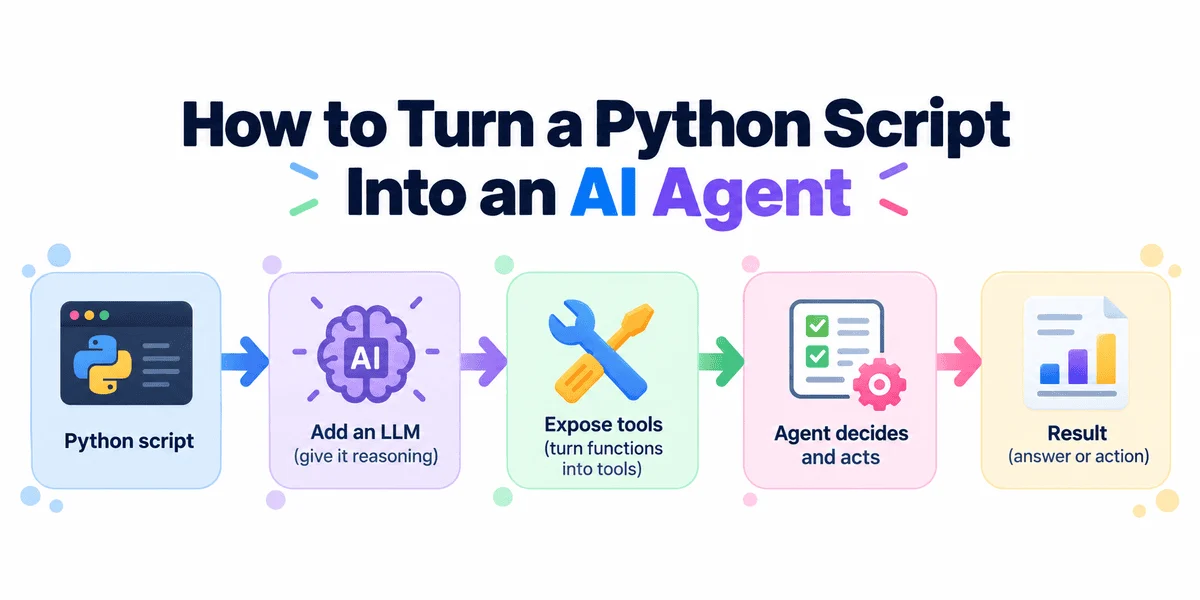
The landscape of software engineering is undergoing a fundamental shift as developers move away from rigid, linear automation toward dynamic, agentic workflows. For years, Python developers have relied on static scripts—sequences of instructions that execute in a predetermined order to achieve a specific task. However, the integration of Large Language Models (LLMs) into the development lifecycle has introduced a new paradigm: the AI agent. These agents are not merely chatbots; they are autonomous systems capable of interpreting natural language, reasoning through complex requirements, and orchestrating the execution of existing code. This evolution allows developers to transform legacy Python functions into intelligent tools that adapt to real-time inputs without the need for exhaustive, hard-coded logic.
The Shift from Linear Scripts to Agentic Workflows
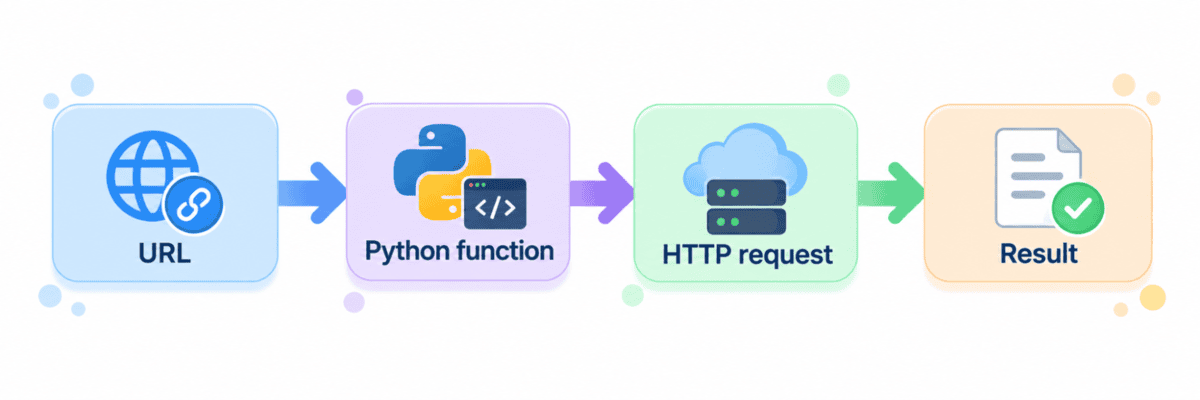
Traditional Python automation follows a procedural model. For example, a standard website-monitoring script is designed to perform a singular, repetitive action: ping a URL, wait for a response, and return the status. If a developer needs to monitor multiple websites, compare latency across different geographical endpoints, or trigger alerts based on specific error thresholds, the code must be manually updated with loops, conditional logic, and error-handling routines. This creates a high maintenance burden, as the developer must anticipate every possible edge case within the script’s architecture.
The emergence of the OpenAI Agents SDK signals a move toward a more flexible approach. By exposing existing Python functions as "tools," developers provide an LLM with the capability to perform tasks on demand. The model acts as the "brain," analyzing the user’s intent, determining which functions to invoke, managing arguments, and synthesizing the final output. This separation of concerns—where the Python function handles the heavy lifting of data collection and the AI agent handles the logic of decision-making—drastically reduces the need for complex, brittle codebases.
Chronology of the Development: From Manual Automation to LLM Integration
The history of software automation has progressed through several distinct stages. In the early 2000s, basic cron jobs and bash scripts served as the primary tools for system administrators to monitor infrastructure. By the 2010s, sophisticated Python libraries such as requests and BeautifulSoup allowed for more granular data collection, though these scripts remained fundamentally passive.
The release of GPT-3 and subsequent models marked a turning point in 2020. Developers began experimenting with "Prompt Engineering," attempting to use LLMs to generate code, though the execution of that code remained siloed from the model’s environment. The year 2023 saw the rise of the "Agent" concept—frameworks like LangChain and AutoGPT popularized the idea that models could use external tools. In early 2024, the release of native tool-use SDKs, such as the OpenAI Agents SDK, formalized this practice, providing a stable, production-ready environment for developers to bridge the gap between static scripts and intelligent agents.
Technical Implementation and Infrastructure
To transition from a static script to an agentic architecture, developers must first establish a standardized environment. Using modern package management tools like uv has become industry practice for maintaining lightweight, high-performance environments. The process begins with the installation of the necessary SDKs and the configuration of API credentials, which serve as the gateway to the model’s reasoning capabilities.
The core of this transformation lies in the decorator pattern. By wrapping an existing Python function in a @function_tool decorator, the developer exposes the function’s signature and docstring to the model. The SDK automatically performs a schema conversion, translating the Python code into a format—typically JSON—that the model can parse. When the agent receives a request, such as "Compare the response times of python.org, github.com, and openai.com," the model does not simply print an output; it decomposes the request into three distinct function calls, executes them, collects the latency data, performs the comparison, and returns a natural language summary.
Supporting Data and Industry Adoption
Recent analysis from industry analysts indicates that the adoption of agentic AI is accelerating within enterprise environments. According to recent surveys of software development teams, approximately 40% of organizations are currently exploring or implementing LLM-based orchestration for routine system maintenance tasks. The primary driver for this adoption is the reduction in "technical debt"—the time spent writing and updating boilerplate code for monitoring and reporting.
Furthermore, the introduction of more efficient, lower-latency models like GPT-5.6 Luna has addressed a significant barrier to entry: cost. Previously, running agentic loops—where the model might query tools multiple times—could become prohibitively expensive for high-frequency monitoring. With the optimization of these models, the cost-to-performance ratio has improved by an estimated 30-50% over the last fiscal year, making it financially viable to deploy agents that run continuously.
The Role of the Agentic Runtime
The "Runner" component within the OpenAI Agents SDK is responsible for the orchestration loop. This runtime acts as the connective tissue between the model’s reasoning and the execution of the Python function. It maintains a stateful session, ensuring that the model remembers previous tool outputs and can use them to inform subsequent decisions.
For instance, if an agent monitors a website and receives an HTTP 500 error, it can be programmed to automatically trigger a secondary function—such as checking the server logs or notifying an on-call engineer—without the developer having to write a specific if-else chain for that error. This behavior is emergent; the model learns to associate the error output with the appropriate corrective tool.
Broader Implications for Software Development
The transition to agentic workflows has profound implications for the future of programming. First, it democratizes access to complex automation. Junior developers or non-technical stakeholders can interact with sophisticated systems using natural language, lowering the barrier to managing infrastructure. Second, it shifts the developer’s role from "writer of sequences" to "architect of capabilities." Instead of detailing every step of a process, a developer’s primary task becomes defining the tools available to the agent and setting the parameters of its autonomy.
However, this shift also introduces new requirements for observability and security. As agents become more autonomous, the need for robust logging and "human-in-the-loop" checkpoints becomes critical. Organizations must implement strict guardrails to ensure that agents do not perform unauthorized actions, particularly when those agents have write-access to databases or deployment environments.
Analysis of Future Trajectories
Looking ahead, the integration of AI agents into Python environments is expected to expand beyond simple monitoring. Experts anticipate that future iterations of the SDK will support more complex "multi-agent" architectures, where specialized agents communicate with each other to complete multi-step business processes. For example, a "Researcher Agent" could gather data from the web, pass it to an "Analyst Agent" to generate a report, and then send the final document to a "Communication Agent" for dissemination.
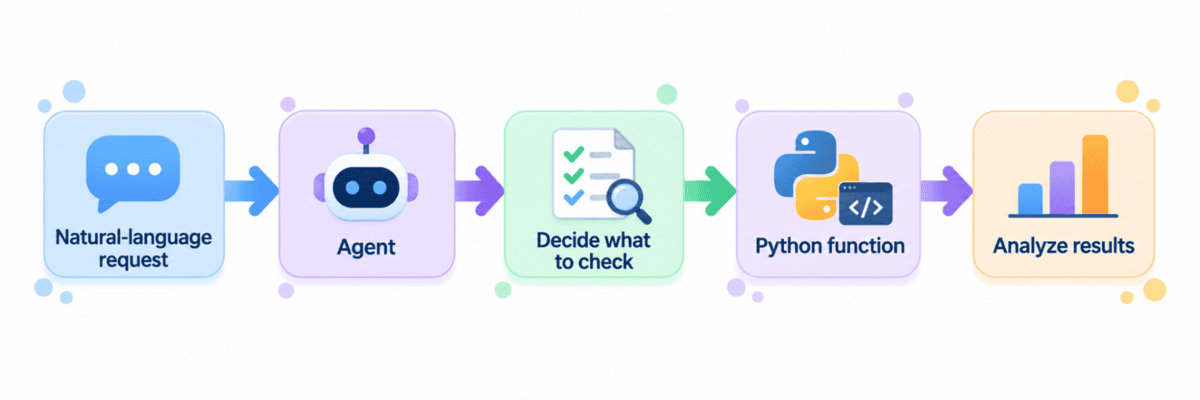
The foundational idea remains consistent: by giving a model a clear goal and the appropriate tools, the developer can delegate the mechanics of execution. This is not merely a change in syntax or tooling; it is a fundamental re-imagining of how software interacts with the physical and digital world. As the tooling matures, the distinction between a "program" and an "agent" will likely blur until the vast majority of software applications possess some level of agentic capability, fundamentally altering the developer’s workflow for the next decade of software innovation.
In conclusion, the ability to turn a standard Python script into an agent is a testament to the versatility of the language and the rapid evolution of generative AI. By leveraging existing functions and connecting them to the reasoning power of an LLM, developers can build systems that are more responsive, easier to maintain, and capable of handling a broader array of tasks than ever before. The future of development lies in this synthesis of human-defined utility and machine-defined execution.

