
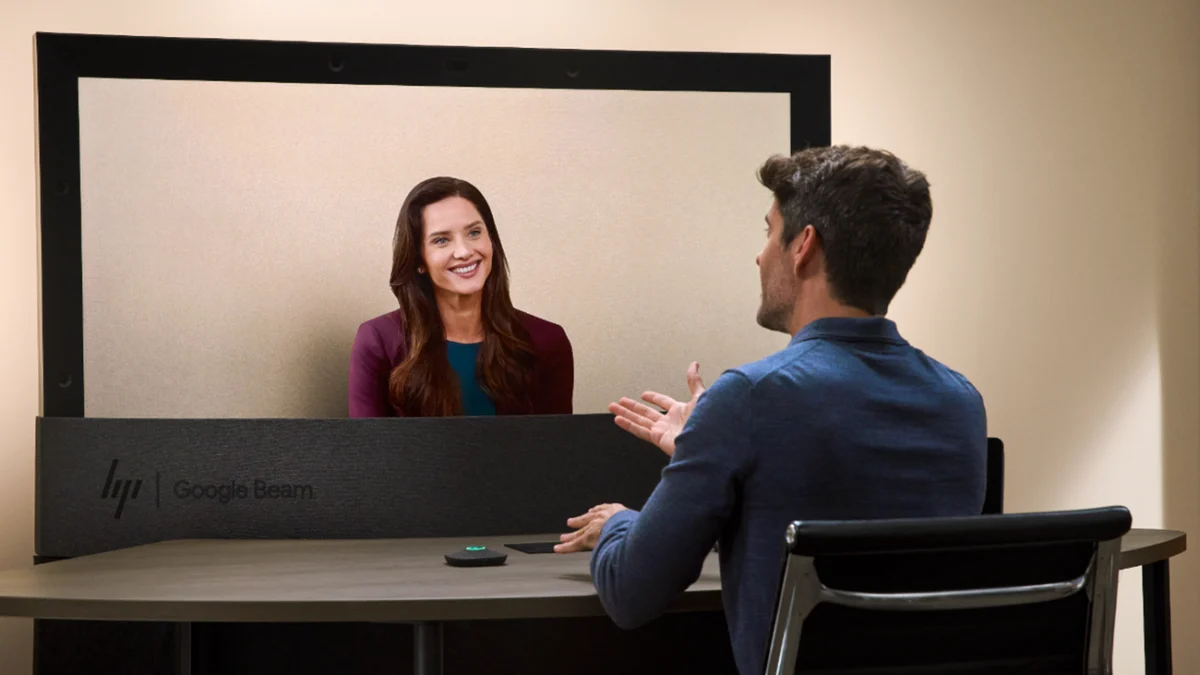
The Evolution of Distance Collaboration
Since its inception, the Google Beam project has sought to eliminate the psychological and physical barriers inherent in standard digital meetings. The core philosophy rests on the belief that meaningful human connection—defined by nuance, body language, and eye contact—is often lost in the flat, grid-like interfaces of conventional video software. By integrating with established ecosystems such as Google Meet and Zoom, the Beam initiative is positioning itself as a hardware-agnostic, enterprise-grade tool designed to bridge the gap between distributed teams.
The technology utilizes specialized displays and cameras to create a life-sized projection of remote participants, effectively mimicking the sensation of being in the same room. This is a significant pivot from the 2020-2022 era of video conferencing, where the focus was primarily on connectivity and stability; the current era focuses on the quality and intimacy of those interactions.
Global Expansion and Infrastructure
The current expansion phase is not merely a regional pilot but a robust, multi-country deployment. Google is officially launching support in six major markets: the United States, Canada, the United Kingdom, France, Germany, and Japan. This footprint is supported by a network of 18 dedicated channel partners, specifically selected for their expertise in audiovisual integration. These partners are tasked with the installation, maintenance, and ongoing support of the hardware, ensuring that enterprises can scale their deployments without internal technical bottlenecks.
This rollout represents a major logistical investment. By providing local support in diverse regulatory and technical environments, Google is signaling that Beam is intended for permanent, daily use in high-stakes corporate environments, rather than as a novelty tool.
Quantifying the Impact: A Data-Driven Approach
To justify the capital expenditure required for such hardware, Google has released findings from an internal eight-week study. The data suggests that Beam addresses several key pain points of remote collaboration:
- Enhanced Connectivity: Teams using the technology reported a 50% increase in feelings of interpersonal connection compared to traditional video platforms.
- Communication Clarity: Users noted a 33% improvement in ensuring their feedback was clearly understood, reducing the friction often caused by digital misinterpretations.
- Efficiency Gains: There was a 21% reduction in the necessity for follow-up meetings, suggesting that the "presence" offered by Beam allows for more decisive and effective communication during the initial engagement.
These statistics provide a compelling value proposition for corporations looking to optimize their real estate and travel budgets. If a technology can reduce the frequency of secondary meetings and improve decision-making speed, the cost of the hardware—while significant—can be offset by improved organizational velocity.
Case Study: Bain & Company
One of the most notable early adopters is the global consultancy Bain & Company. Their experience provides a template for how industries reliant on high-trust relationships can utilize telepresence. Keith Bevans, EVP and Partner at Bain, noted that the firm faced significant challenges in assessing candidate suitability during virtual interviews. The "nuance" of body language and the ability to maintain consistent eye contact are critical components of a consultant’s professional profile.
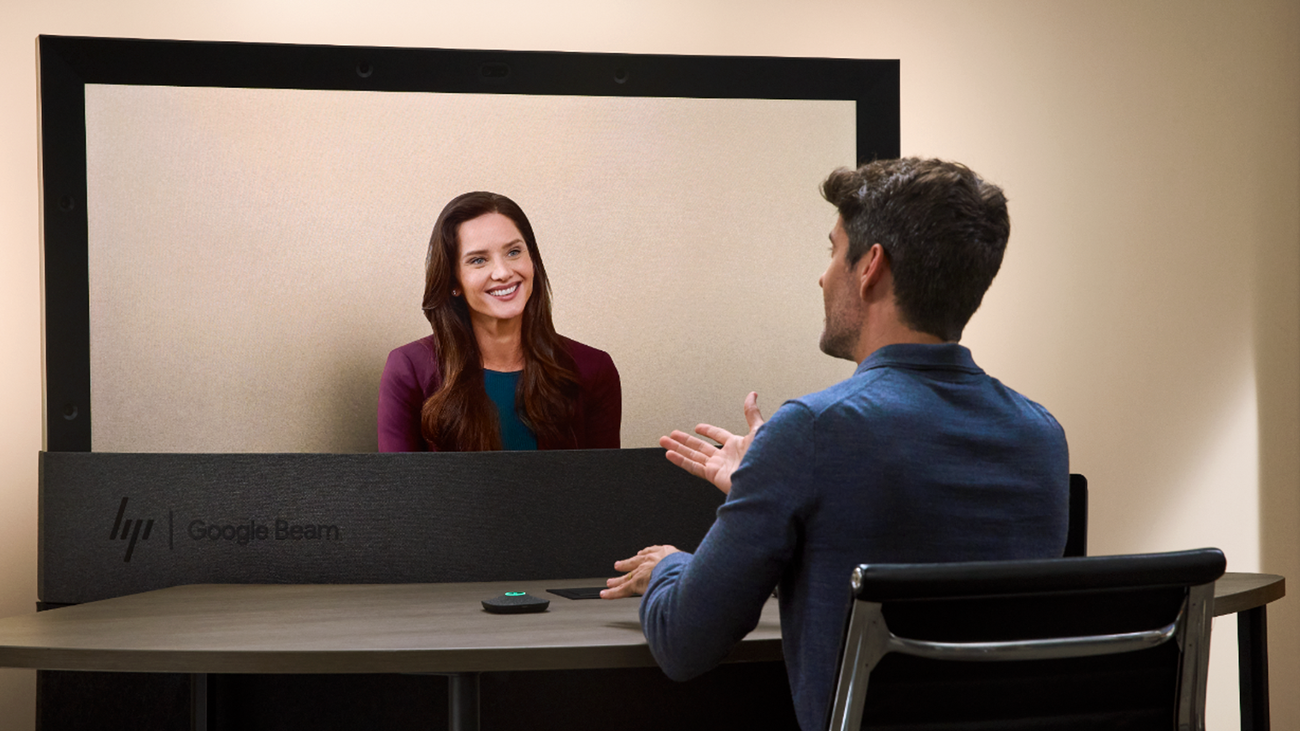
Bain utilized HP Dimension with Google Beam to conduct candidate screenings, effectively bringing remote talent into a "virtual office" space. By doing so, the firm was able to maintain its rigorous assessment standards without requiring the carbon footprint or time commitment of physical travel. This application serves as a proof-of-concept for other sectors, including high-end sales, executive coaching, and legal consultations, where the "in-person" feel is non-negotiable.
The Industrious Partnership and the "Extended Network"
Perhaps the most ambitious aspect of this rollout is the partnership with Industrious. By integrating Google Beam into a premium, flexible workspace environment, Google is effectively creating a "Beam-as-a-Service" model. This move acknowledges that many small-to-medium-sized businesses, or even large enterprises with decentralized hubs, may not want to invest in the hardware for every office.
Starting this October, businesses will be able to book Beam-enabled suites at select Industrious locations in major economic hubs, including Atlanta, Chicago, New York City, and Palo Alto. This creates an "extended network" that democratizes access to high-end telepresence. For a startup or a remote-first company, the ability to rent a Beam-enabled room for a crucial client pitch or a sensitive HR negotiation represents a significant shift in how professional infrastructure is consumed.
Implications for the Future of Work
The implications of the Google Beam expansion are far-reaching. First, it challenges the narrative that the office is dead. Instead, it suggests a hybrid future where the "office" is defined not by a specific zip code, but by the quality of the communication tools available to the staff. If a remote worker in Tokyo can engage with a team in London with the same physical presence as someone sitting across the table, the traditional geographic limitations on talent acquisition are fundamentally altered.
Second, the hardware-as-a-service model via Industrious could disrupt the commercial real estate market. Landlords and workspace providers who offer high-fidelity collaboration tools may see higher occupancy rates, as companies seek out "collaboration-ready" spaces rather than just empty desk space.
Finally, the success of this project will likely spur competition. As Google, HP, and other hardware manufacturers refine these systems, we can expect a convergence of AI-driven enhancements—such as real-time language translation, automated note-taking, and AI-moderated interactions—all layered on top of the physical telepresence experience.
A Sustained Commitment
The overarching strategy for Google remains consistent: to embed itself as the backbone of modern work. Whether through cloud-based software or physical hardware like the HP Dimension, the goal is to make the technology invisible. By moving away from the "window-into-the-room" feeling of a monitor and toward the "being-in-the-room" feeling of Beam, Google is attempting to solve the last remaining hurdle of the remote work revolution.
As the program expands throughout late 2025 and into 2026, the industry will be watching closely to see if this technology reaches a tipping point of adoption. For now, the combination of empirical performance data, high-profile corporate partnerships, and a flexible, location-independent access model suggests that Google Beam is not merely a research project, but a cornerstone of the company’s enterprise strategy for the next decade. Organizations interested in exploring these capabilities can find further documentation and case studies via the official portal at beam.google.

