
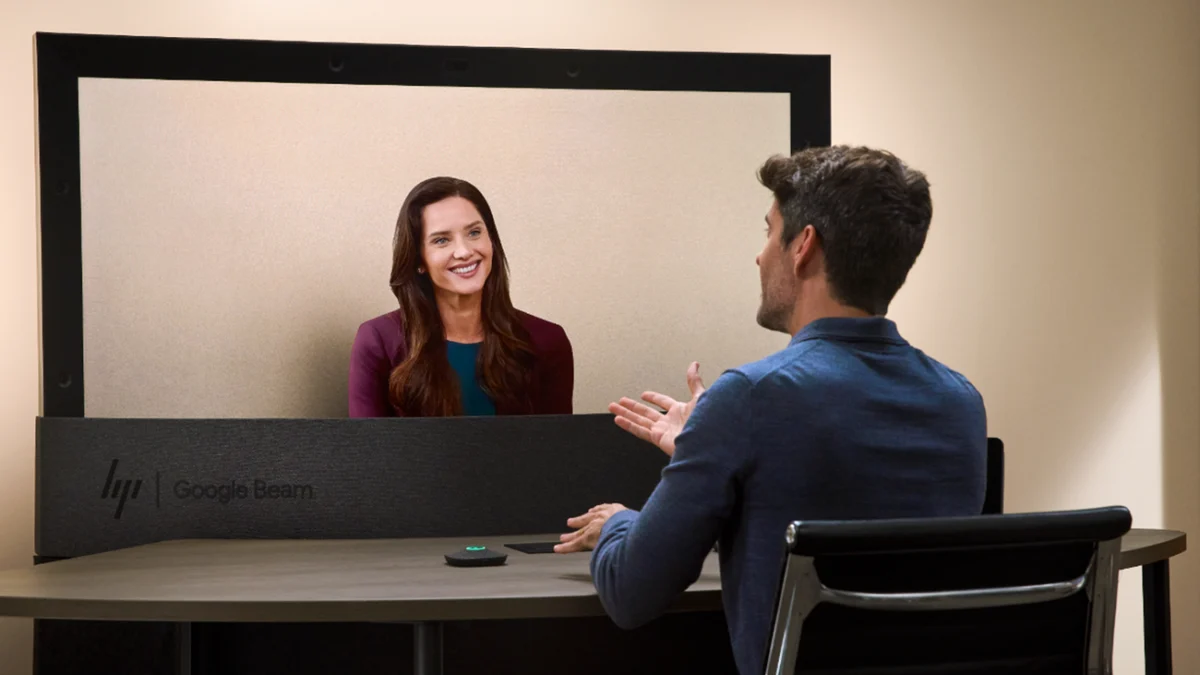
The Evolution of Presence: From Lab to Market
The development of Google Beam represents a multi-year effort to solve the "presence gap" that plagues traditional video conferencing. While standard video calls have become ubiquitous, they often fail to capture the subtle cues—eye contact, micro-expressions, and spatial awareness—that define human communication.
The project began as an internal experiment within Google’s labs, designed to foster deeper connections between team members separated by time zones and geography. After extensive iterative testing among Google employees, the company recognized that the technology’s utility extended far beyond internal collaboration. By partnering with hardware manufacturers, most notably through the "HP Dimension with Google Beam" initiative, the company began the transition from a proprietary tool to a scalable enterprise solution.
A Global Rollout Strategy
The current expansion phase is not merely an increase in unit availability; it is a full-scale logistical deployment. Google Beam is now shipping to customers across six key international markets: the United States, Canada, the United Kingdom, France, Germany, and Japan. To facilitate this, the company has established a robust ecosystem of 18 dedicated channel partners. These firms provide the specialized installation, technical support, and integration services required to maintain the high-fidelity audiovisual standards that Beam demands.
This deployment model is deliberate. By leveraging established audiovisual integrators, Google is ensuring that enterprise clients—ranging from multinational corporations to specialized service firms—receive consistent service quality. The hardware is designed for interoperability, supporting both Google Meet and Zoom, a strategic decision that acknowledges the reality of fragmented software environments within the modern corporate sector.
Quantifying the Human Connection: Data-Driven Insights
The impetus for this expansion stems from positive data collected during an intensive eight-week internal study at Google. The metrics gathered suggest that the technology addresses specific pain points in remote collaboration. Participants using the Beam interface reported a 50% increase in feelings of interpersonal connection compared to traditional flat-screen video conferencing.
Perhaps more importantly for business operations, the study noted a 33% improvement in clarity regarding feedback loops. Misunderstandings, which often proliferate in text-heavy or low-fidelity virtual environments, were significantly reduced. This resulted in a 21% decrease in the requirement for follow-up meetings, suggesting that the higher-fidelity "copresence" provided by the technology allows teams to reach consensus faster and more effectively.
Real-World Application: The Bain & Company Case Study
The practical implications of these findings were tested in a high-stakes environment through a partnership with Bain & Company. The consulting firm utilized HP Dimension with Google Beam to revolutionize its campus recruiting process. Candidate interviews, which traditionally require significant travel budgets and logistical coordination, were moved to the Beam platform.
Keith Bevans, Executive Vice President and Partner at Bain & Company, noted that the platform’s ability to facilitate natural eye contact and capture body language was instrumental in evaluating candidates. "One of the most challenging things for us to assess with candidates is how they’ll be with clients," Bevans stated. The ability to observe a candidate’s presence in a virtual space allowed recruiters to predict interpersonal success with higher accuracy, effectively digitizing the "in-person" interview experience.
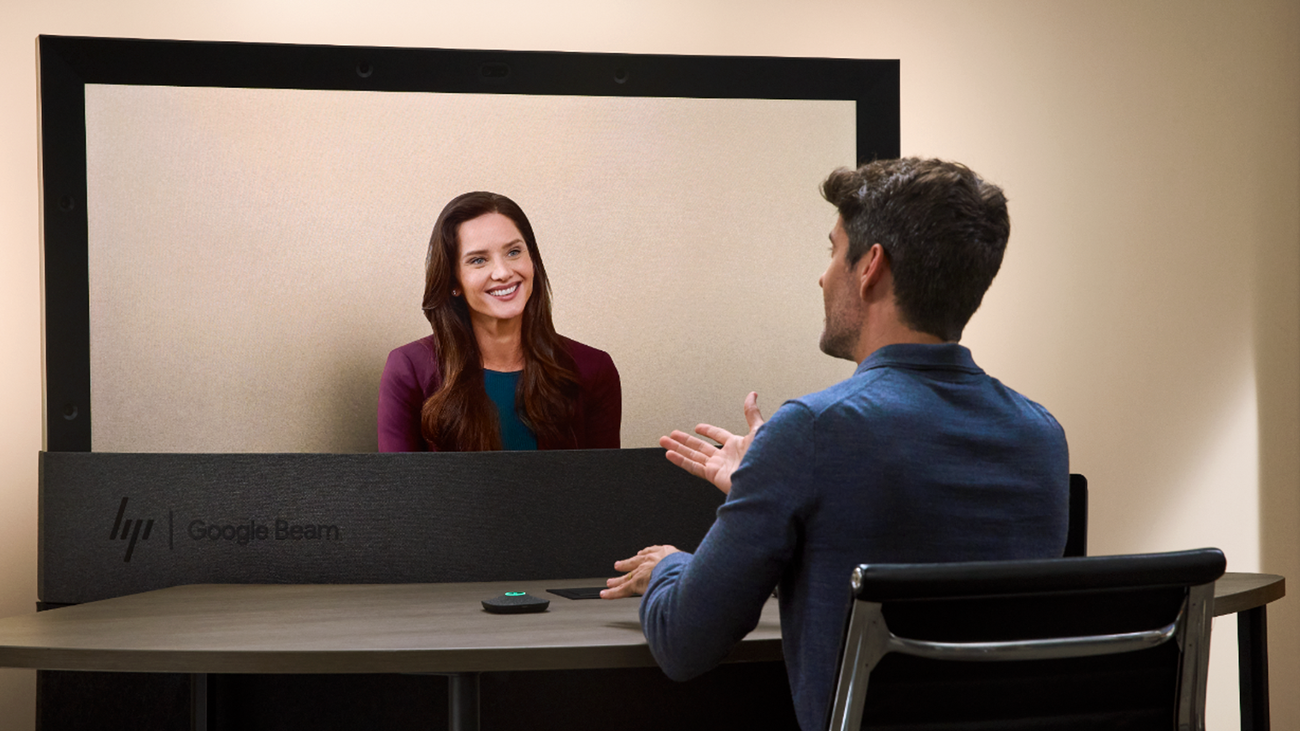
Strategic Infrastructure: The Industrious Partnership
One of the primary hurdles for adopting advanced telepresence technology is the requirement for dedicated space and hardware maintenance. To democratize access, Google has partnered with Industrious, a global operator of premium flexible workspaces. This collaboration serves as the foundation for the first-ever "Beam extended network."
Beginning in October, companies that do not wish to install dedicated hardware in their own offices can book Beam-enabled suites at select Industrious locations. Initial sites include high-traffic business hubs in Atlanta, Chicago, New York City, and Palo Alto. This "on-demand" approach is expected to lower the barrier to entry for startups and mid-sized enterprises, allowing them to host high-stakes client consultations or board meetings in a premium environment without the capital expenditure associated with purchasing hardware.
Broader Implications for the Future of Work
The rise of Google Beam and similar technologies signals a maturation in the "Work from Anywhere" era. For the past several years, the focus has been on accessibility and ubiquity. The current trend, however, is shifting toward quality and the restoration of traditional office-based social dynamics.
From an economic perspective, the reduction in travel costs—as demonstrated by the Bain & Company use case—is a significant driver for adoption. As companies look to balance their environmental, social, and governance (ESG) goals with the need for high-level collaboration, technologies that offer a viable alternative to long-haul travel become increasingly attractive.
However, the technology also presents new challenges. The integration of high-fidelity presence into the workplace requires a shift in corporate culture. As organizations move toward a hybrid model, the "Beam" approach suggests that the office of the future will be less about desk space and more about "connection nodes." The success of the Industrious partnership will likely be a litmus test for whether businesses are willing to pay a premium for high-fidelity connection in decentralized environments.
Looking Ahead
The expansion of Google Beam arrives at a time when the novelty of basic video conferencing has worn off, replaced by a demand for more sophisticated, less fatiguing digital interaction. By proving its value in high-performance environments like Google and Bain, the platform has successfully moved past the "experimental" phase.
As the platform scales, the key challenge will be managing the balance between proprietary hardware requirements and the software-first culture of most modern enterprises. If the initial data holds true—that better technology leads to fewer, more effective meetings—Google Beam may well become a standard feature in the modern office landscape.
For now, the company remains focused on increasing its footprint, with plans to gather more long-term data from its new partners, including major enterprises like Netflix and Capital Group. As these organizations integrate the technology into their workflows, the industry will be watching to see if the "Beam" effect—a measurable improvement in communication and connection—translates to broader organizational performance across diverse sectors. For companies struggling to maintain a cohesive culture in a distributed world, the return to "face-to-face" interaction via high-fidelity virtual presence may be the next necessary evolution in the modern professional experience.

