

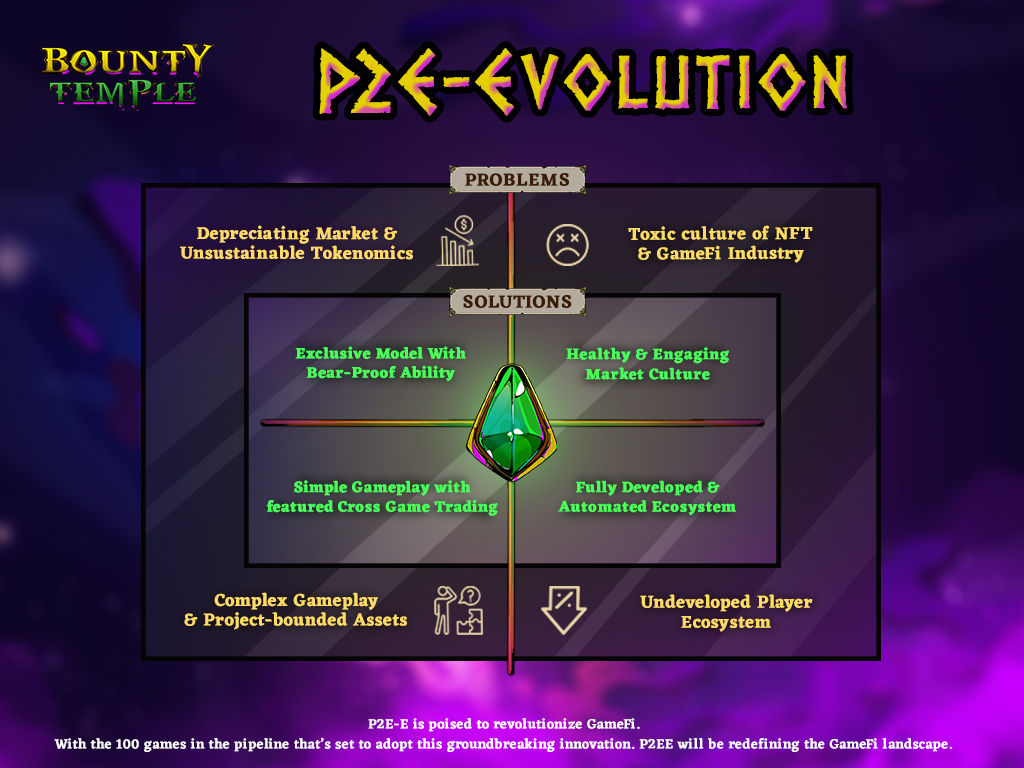
The intersection of blockchain technology and interactive entertainment has long grappled with structural limitations, economic volatility, and player fatigue. In the early developmental phases of what became known as GameFi, protocols frequently prioritized speculative financial mechanisms over sustainable entertainment value. Complex tokenomics, inflated yield expectations, and high barriers to entry ultimately led to declining user retention and fragmented communities across multiple layer-1 and layer-2 ecosystems. As the industry matures, developers and platforms are actively seeking sustainable paradigms that balance player agency, economic stability, and long-term engagement.
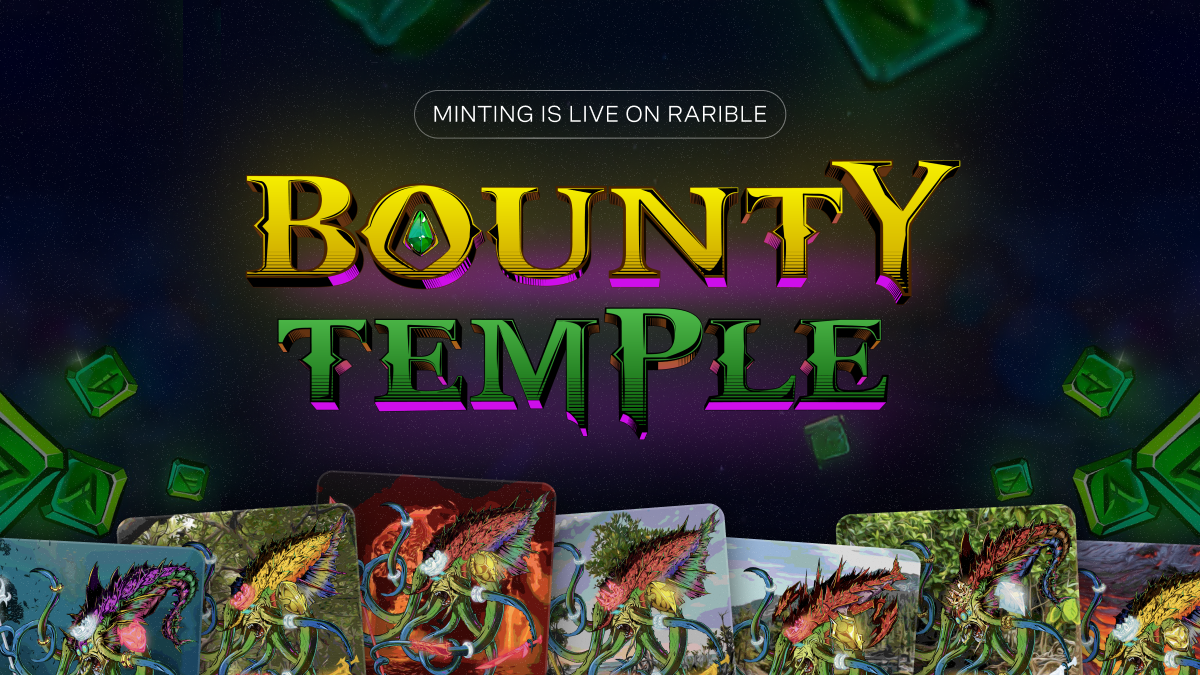
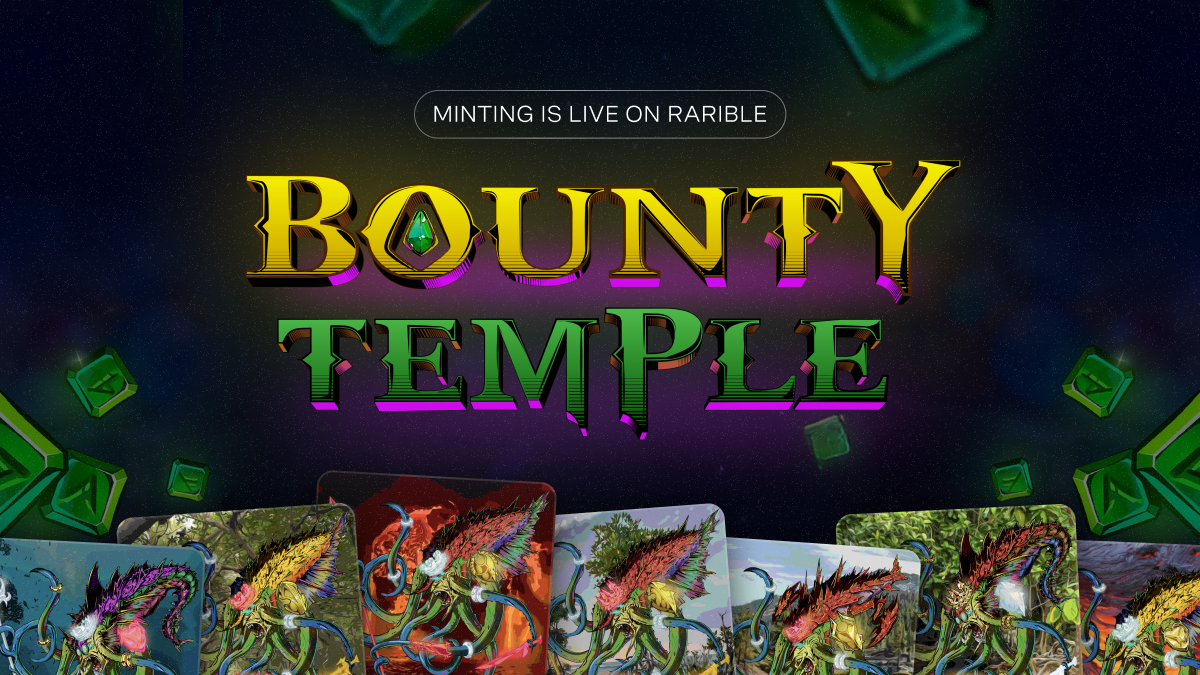
Against this backdrop, the emerging concept of Play-to-Earn Evolution (P2EE) has positioned itself as a structural response to early GameFi failures. At the forefront of this movement is Bounty Temple, a project designed to overhaul traditional play-to-earn mechanics through deliberate pacing, accessible session design, and player-centric safeguards. Signaling a significant milestone for the ecosystem, the official Bounty Temple K-Runes Box blind mint has launched on Rarible.com, offering participants direct access to utility-driven digital assets deployed on the Polygon network. This release underscores a growing industry shift toward long-term value creation rather than short-term market speculation.
The Structural Crisis of Early GameFi and the Shift Toward P2EE
To understand the significance of the P2EE model, industry analysts point directly to the architectural flaws that hobbled the first generation of blockchain games between 2020 and 2022. Early iterations heavily relied on dual-token economies that proved exceptionally vulnerable to hyper-inflation, speculative capital flight, and unsustainable rewards structures. When incoming capital slowed, token values plummeted, leaving dedicated players with devalued assets and diminished incentives to continue playing. Furthermore, many projects demanded significant upfront capital commitments, pricing out casual gamers and transforming interactive entertainment into high-risk financial speculation.
The resulting player fatigue prompted a period of severe contraction, forcing game studios to re-evaluate core design philosophies. P2EE emerged from this crucible as an architectural alternative. Rather than treating gameplay as a mere vehicle for token extraction, P2EE frameworks prioritize mechanical depth, balanced progression loops, and fair economic distribution. Bounty Temple has operationalized this philosophy by eliminating mandatory, capital-intensive onboarding hurdles and replacing them with systems tailored to retention, community collaboration, and genuine strategic decision-making.
Gameplay Mechanics and Daily Integration
A central tenet of the Bounty Temple ecosystem is the restructuring of time investment. Traditional blockchain titles frequently demanded exhaustive, multi-hour daily grinds to secure modest yields, effectively turning gaming into an uncompensated digital labor market. In contrast, Bounty Temple is engineered for high-efficiency engagement, requiring approximately 15 minutes per session. This streamlined approach allows participants to navigate dungeons, execute strategic maneuvers, and achieve measurable progression without compromising their daily routines.

The gameplay loop is continuously refreshed through periodic content deployments, including mini-games, thematic challenges, and community-driven events. By decoupling player progression from relentless, exhausting grinding, the development team aims to cultivate a healthy, resilient community. Strategy, tactical adaptation, and collaborative exploration take precedence over automated farming or exploit-driven resource accumulation, creating an environment where skill and creativity directly influence long-term success within the virtual world.
Innovative Economic and Protectionary Frameworks
To safeguard the ecosystem against the volatility that plagued previous generations of decentralized games, Bounty Temple has introduced structural mechanisms aimed at maintaining long-term economic equilibrium. Foremost among these are the proprietary Weather System and the Barrier Effect.
The Weather System operates as a dynamic, automated economic regulator. By modulating in-game production rates in response to real-time systemic activity, the mechanism prevents hyper-inflation of digital resources and protects the internal economy from sudden speculative shocks. This adaptive balancing act ensures that asset utility remains stable across various market cycles.
Simultaneously, the Barrier Effect addresses one of the most persistent inequalities in competitive gaming: the disparity between veteran participants and newcomers. By providing a structured 75-day grace window for newly onboarded players, the Barrier Effect shields participants from being immediately outpaced by established accounts. This protective buffer ensures that late entrants retain a fair, equitable opportunity to explore mechanics, accumulate utility assets, and establish a competitive footing, regardless of when they entered the ecosystem.
The K-Rune Mint and Polygon Integration
The operational gateway to the Bounty Temple ecosystem is marked by the introduction of the K-Rune collection. Functioning as cryptographic access passes, individual K-Runes carry randomized, unique traits that directly unlock specialized character features, enhanced gameplay capabilities, and distinct pathways within the virtual world.
The deployment of the K-Runes Box blind mint on Rarible.com leverages the high-throughput, low-fee infrastructure of the Polygon network. Rarible’s decision to host the collection reflects a selective curation strategy focused on projects demonstrating rigorous long-term planning, substantive utility, and technical resilience. By utilizing Polygon, participants benefit from rapid transaction finality and minimal gas expenditure, lowering the operational friction typically associated with digital asset acquisition on Ethereum-based mainnets.

Industry observers note that blind mint events integrated with established multi-chain marketplaces serve as a vital liquidity and distribution channel for emerging gaming ecosystems. The K-Rune collection not only initiates individual user journeys within Bounty Temple but also establishes a decentralized market for player-owned assets, fostering an open economy governed by supply, demand, and practical in-game utility.
Broader Implications and Outlook for the Industry
The introduction of P2EE principles and structured asset mints like the K-Runes Box signals a maturing trajectory for blockchain-integrated entertainment. As regulatory scrutiny increases and consumer expectations evolve, the tolerance for unsustainable, speculative models continues to wane. Game studios are increasingly required to demonstrate foundational economic resilience, engaging user interfaces, and robust protective safeguards before securing long-term adoption.
If projects like Bounty Temple successfully validate the P2EE framework at scale, the broader GameFi industry may witness a permanent pivot away from short-term yield farming toward durable, entertainment-first models. By successfully fusing accessible session lengths, automated economic balancers like the Weather System, and protective onboarding protocols such as the Barrier Effect, the ecosystem offers a blueprint for how decentralized gaming can reconcile financial ownership with traditional video game design.
As the K-Rune mint proceeds on Rarible, market participants and analysts alike will closely monitor user retention metrics, secondary market liquidity, and economic stability indicators. The success of this initiative could well determine whether P2EE transitions from a theoretical alternative into the definitive industry standard for the next generation of blockchain-enabled interactive media.

