
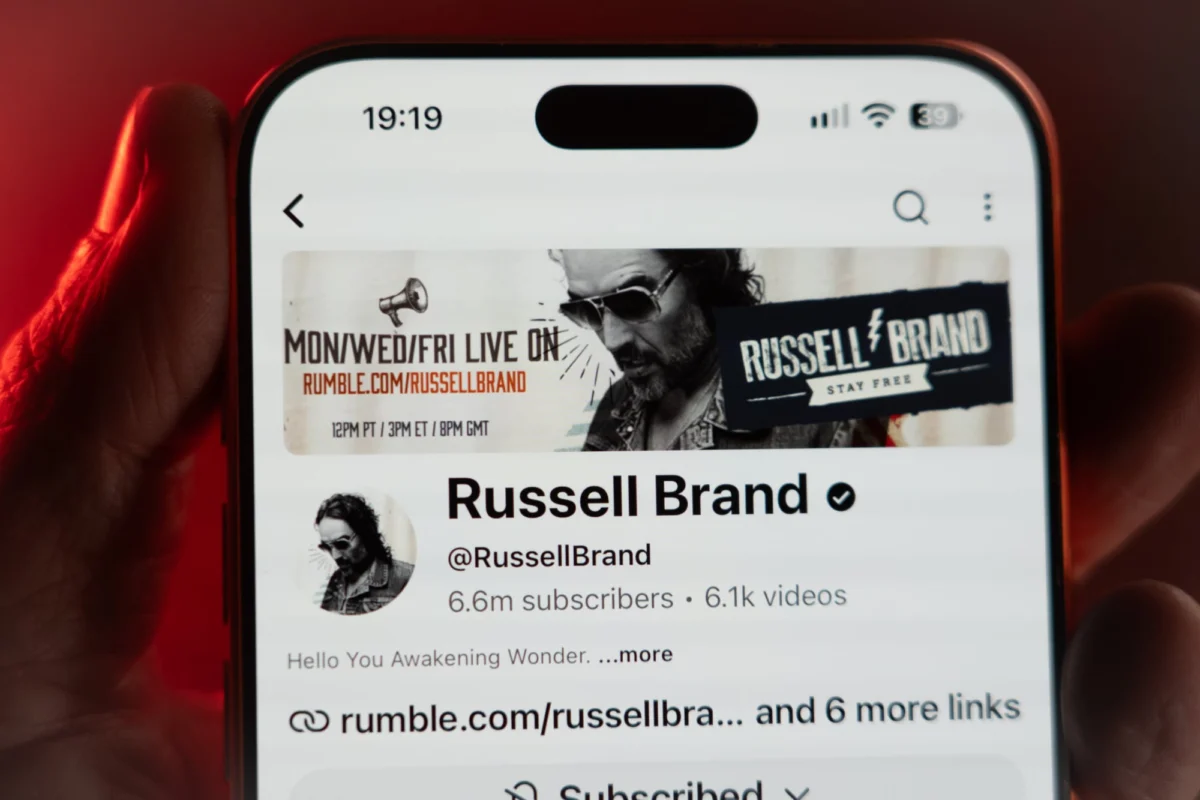
The intersection of digital media, criminal justice, and free expression has sparked an intense political and regulatory debate in the United Kingdom following the publication of a video message by imprisoned comedian and commentator Russell Brand. Six days after being sentenced to ten years and six months in prison for convictions of one count of rape and three counts of sexual assault, a one-hour video was uploaded to Brand’s monetized-restricted YouTube channel. The clip, featuring his wife Laura Gallacher reading a statement in which Brand maintains his innocence, has ignited a fierce multi-jurisdictional conflict involving the UK Prison Service, government ministers, digital rights advocates, and Google—the parent company of YouTube.
The controversy highlights a glaring regulatory loophole in the digital age: how existing media access laws and online safety regulations apply when high-profile convicts leverage massive pre-existing social media channels from behind bars. While UK authorities argue the broadcast inflicts unnecessary distress on victims and potentially violates strict prison communication rules, tech policy analysts and international commentators warn of a slippery slope regarding platform censorship, corporate overreach, and freedom of speech.
Anatomy of the Broadcast and the Content of the Message
The video in question, titled "The Good Work Continues," was posted to Brand’s primary YouTube channel on November 15. The channel boasts a substantial subscriber base exceeding six million followers. Despite YouTube suspending Brand from the YouTube Partner Program in September 2023—a punitive measure enacted following initial allegations of sexual misconduct that stripped the creator of his ability to monetize content directly through ad revenue—the infrastructure of his digital empire remained fully intact. His subscriber feeds, algorithmic recommendations, and sharing capabilities continued to function without interruption.
In the video, Gallacher addresses the audience before reading a prepared statement attributed directly to her husband. "So Russell has asked me to read something to you today," Gallacher states in the clip. "Beloved brothers and sisters in Christ, God bless you for your support. As you know, I am not guilty for the offenses I have been jailed for, so something strange is happening."
The statement continues with religious framing, touching upon the environment of the correctional facility. "I don’t know which other men here are not guilty, and the ones that are, they are people that Christ died to save, like you and me," the statement adds.
The publication of the video generated immediate public shockwaves, accumulating over one million views within days. More importantly, it triggered an immediate reaction from the Prison Service of England and Wales, which formally requested that Google remove the content, citing the potential to cause psychological harm and severe distress to Brand’s victims.
Chronology of Events and Escalating Tensions
The timeline surrounding the scandal maps a rapid escalation from a legal sentencing to an international debate on content moderation and prison governance:
- September 2023: Public allegations of rape and sexual assault emerge against Russell Brand. YouTube suspends his channel from the YouTube Partner Program, citing a severe violation of its creator responsibility policy, though the channel remains live.
- November 9, 2026: Russell Brand is formally sentenced in a UK court to 10 years and six months in prison following a jury trial finding him guilty of one count of rape and three counts of sexual assault.
- November 15, 2026: Laura Gallacher uploads the hour-long "Sunday Service" video to Brand’s YouTube channel, featuring his written statement denying the charges.
- November 16, 2026: The UK Ministry of Justice confirms it is actively investigating whether Brand violated prison communication regulations by having an external message regarding his active conviction published.
- November 18, 2026: Google initially declines a takedown request submitted by the Prison Service, stating that the video does not technically violate YouTube’s standard terms of service or content guidelines.
- November 19, 2026: Following severe public and political backlash, Google reverses its immediate refusal, announcing that company teams are actively reviewing the content. Concurrently, high-ranking government officials, including Prime Minister Andy Burnham and Housing Minister Matthew Pennycook, publicly pressure tech executives to remove the video voluntarily.
- November 20, 2026: Survivors and public advocates, including prominent survivor Mia Latter, speak out about the retraumatizing effect of the broadcast, while opposition and backbench politicians debate the adequacy of current legislation.
- November 21, 2026: The video remains accessible on the platform as legal experts, lawmakers, and civil liberties groups debate the boundaries of prison communication laws and digital free expression.
Prison Rules and the Legal Framework Governing Inmate Communication
Beyond the debate over platform moderation, the Ministry of Justice’s parallel investigation focuses on whether Brand infringed upon prison regulations. Under the legal framework governing prisons in England and Wales—specifically outlined in Prison Service Instruction (PSI) 37/2010 regarding prisoners’ access to the media—inmates are generally barred from discussing their ongoing legal cases, trials, or specific crimes in correspondence, interviews, or communications that are reasonably expected to be published or broadcast.

However, the policy contains a narrow exception for "serious representations about conviction or sentence," theoretically permitting an inmate to contest legal outcomes through official channels. The core of the Ministry of Justice’s current inquiry is determining whether Brand’s digital broadcast bypassed authorized legal channels, whether proper institutional permissions were secured prior to the transmission of the message, and whether the content violated guidelines designed to protect victims from targeted public campaigns by convicted offenders.
Justice Secretary Alex Norris publicly characterized the broadcast as "completely unacceptable," indicating that institutional repercussions could follow if Brand is found to have flouted internal guidelines.
Political Fallout and Government Reactions
The standoff has exposed deep divisions and policy gaps within the British political establishment regarding how to police online content generated by incarcerated individuals with pre-existing digital footprints.
Prime Minister Andy Burnham urged social media companies to exercise basic corporate citizenship and remove the material independently, appealing to corporate ethics rather than demanding immediate statutory changes. "Show some decency," Burnham remarked, while noting a personal hesitation to rush into hastily drafted legislative overhauls.
Conversely, Labour MP and former safeguarding minister Jess Phillips argued that the incident underscores a vital deficiency in the existing Online Safety Act. In interviews with domestic media outlets, Phillips pointed out that current regulations successfully mandate the removal of explicit illegal content and protect minors from online harms, but fail to anticipate scenarios where convicted criminals maintain massive, automated online distribution networks. Phillips suggested that lawmakers may need to consider targeted legislative updates to address prisoners who project their voices to millions of followers from behind bars.
Other political figures urged caution. Conservative leader Kemi Badenoch cautioned that the government should rigorously establish whether a statutory law has actually been broken before leaning on private corporations to censor lawful expression. Internationally, the debate drew polarized commentary, with prominent U.S. media figures like Megyn Kelly decrying the UK government’s pressure on Google as a manifestation of an authoritarian crackdown on free speech.
Fact-Based Analysis of Broader Implications
The controversy surrounding Russell Brand’s post-sentencing YouTube broadcast touches upon several foundational challenges for contemporary digital governance:
- The Decoupling of Monetization and Reach: Platforms like YouTube often view demonetization as an adequate penalty for policy violations. However, this case demonstrates that a creator with millions of subscribers can retain immense cultural influence, audience engagement, and distribution power entirely independent of advertising revenue.
- The Enforcement Gap in Prison Communications: Mid-20th-century prison communication guidelines assumed that prisoner outreach relied on physical mail, authorized journalistic interviews, or limited-access telephone calls. The emergence of encrypted messaging apps, visiting intermediaries, and pre-recorded digital audio or video files has rendered legacy enforcement mechanisms largely obsolete.
- The Clash Between Victim Welfare and Free Expression: Democratic societies continually struggle to balance the rights of individuals—even convicted felons—to proclaim their innocence against the psychological well-being of survivors of violent crime. When high-profile offenders possess direct channels to global audiences, traditional justice systems lose control over the narrative timeline of a criminal case.
As Google continues its internal review of the video and the UK Ministry of Justice finalizes its probe into prison rule infractions, the outcome is unlikely to be isolated to this single case. Instead, the incident serves as a critical test case for how regulators, tech monopolies, and judicial systems will navigate the intersection of incarceration and digital media in the years ahead.

