
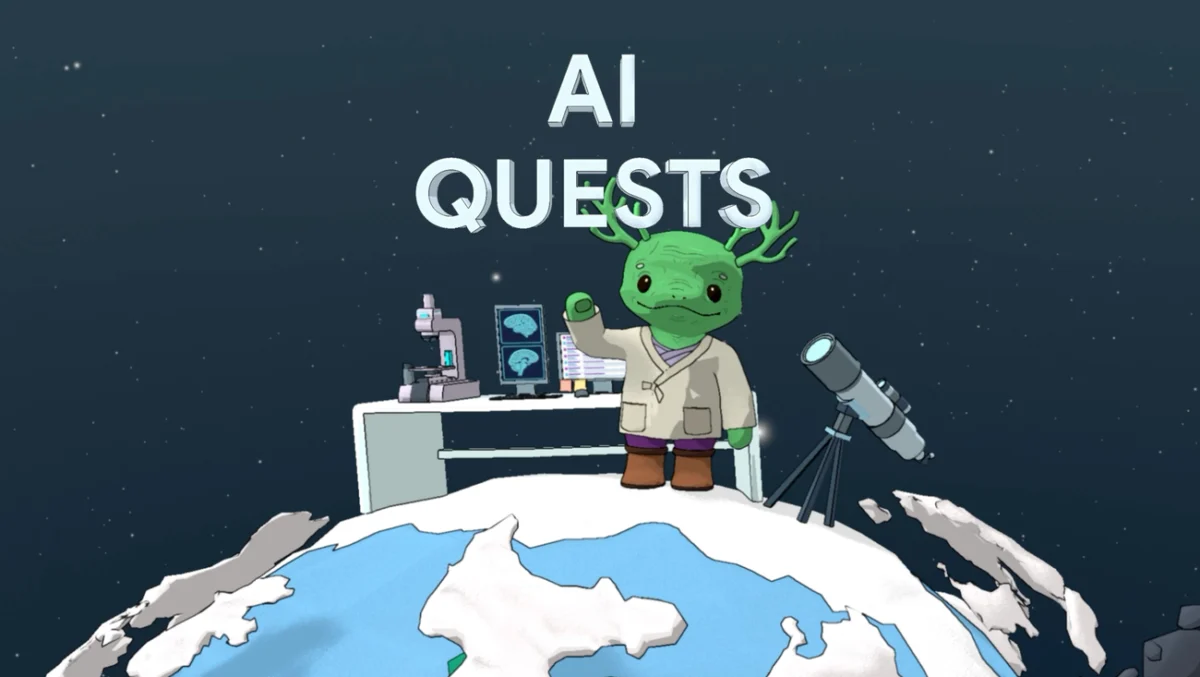
The Evolution of AI Quests: From Flood Forecasting to Neuroscience
The AI Quests program was launched with the explicit goal of democratizing AI literacy, moving beyond abstract definitions to provide students with hands-on, simulation-based experiences. To date, the program has reached a significant milestone, with over 400,000 completed quests across 10 languages. The curriculum is built upon the premise that students learn best when they are tasked with solving real-world problems that have historically challenged professional researchers.
The initial quest in the series focused on flood forecasting, a direct application of machine learning used by Google to predict riverine flooding in vulnerable regions. By simulating the data collection and modeling processes, students were introduced to the challenges of environmental AI. The second quest pivoted to healthcare, specifically addressing diabetic retinopathy screening. This module mirrored the development of automated diagnostic tools that help ophthalmologists detect eye disease in underserved areas.
"Polar Peaks" represents a significant shift toward high-level neurobiology. By grounding the curriculum in connectomics, Google and Stanford are exposing students to the sheer scale of modern scientific data. In the simulation, students act as researchers attempting to solve a mystery related to memory loss. They navigate the lab environment, perform data cleaning, manage model training, and manually inspect brain scans for errors. This progression is designed to teach a fundamental lesson in AI ethics: that algorithms are only as reliable as the data they are trained on and the human supervision they receive.
Connectomics and the Technological Frontier
The academic inspiration for "Polar Peaks" is rooted in a decade of research at Google regarding the physical structure of the brain. Mapping the brain is a monumental task; a single cubic millimeter of human brain tissue can contain tens of thousands of neurons and billions of synaptic connections. The amount of data generated by such high-resolution imaging is staggering, necessitating the use of advanced computer vision and deep learning models to stitch these images together into a coherent "map."
In September 2026, Google researchers reached a major milestone in this field with the publication of the first complete map of a fruit fly brain. This project, which served as a primary reference for the "Polar Peaks" developers, involved processing massive datasets to trace the connections between neurons in a nervous system that, while small, provides a template for understanding complex biological circuitry. By exposing students to this research, the program aims to demystify how AI is not just a tool for generating text or images, but a critical engine for scientific discovery that could one day lead to breakthroughs in human neurology, Alzheimer’s disease research, and mental health treatments.
Empowering Educators: The Pedagogical Strategy
Recognizing that the success of any educational tool depends on its integration into the classroom, Google is simultaneously expanding its support for educators. The new training modules, which will be housed within the Google AI Educator Series, provide teachers with the pedagogical framework needed to facilitate these complex topics.
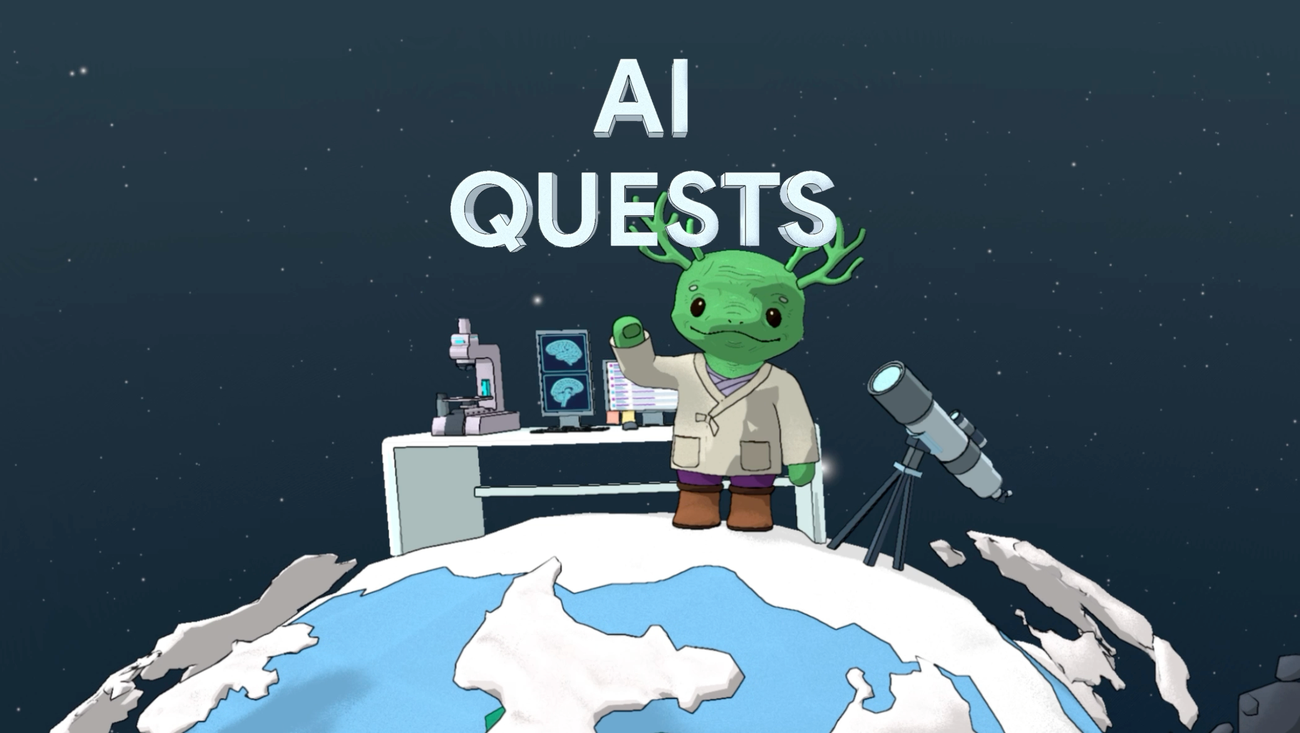
The strategy behind these modules is twofold. First, they provide the technical background teachers need to answer student questions about how machine learning works. Second, they provide classroom discussion guides that focus on the societal implications of AI. By moving away from a "black box" view of technology, the curriculum encourages students to ask critical questions: Who is responsible when an AI makes a mistake? How do we ensure that the data used for training is diverse and representative?
This comprehensive approach has garnered significant industry recognition. In 2026, the AI Quests series received a Webby Award for AI Education, Learning & Training, as well as the Best Global K-12 Learning Solution at the ETIH Innovation Awards. These accolades underscore a growing consensus in the educational technology sector: that literacy in the age of AI requires more than just knowing how to prompt a chatbot; it requires an understanding of the scientific and ethical architecture behind the technology.
The Future of AI Literacy in Schools
The launch of "Polar Peaks" arrives at a time when school districts globally are struggling to balance the risks and benefits of AI integration. While concerns about academic integrity and data privacy remain at the forefront of policy debates, there is a parallel demand for "AI fluency." Programs like AI Quests seek to provide a middle ground—a structured, vetted environment where students can experiment with AI in a way that is intellectually rigorous and socially responsible.
The long-term implications of this initiative are profound. As the workforce of the next decade begins to enter higher education, the ability to collaborate with AI systems will likely be as fundamental as basic computer programming is today. By teaching students the mechanics of data cleaning and model validation, Google is equipping them with the "skepticism" required to interact with AI models in the real world.
For many students, this quest will be their first exposure to the reality that AI is not a sentient entity, but a statistical tool—a powerful, yet flawed, instrument that requires human intelligence to be truly effective. The integration of these tools into public and private school curriculums suggests a shift in focus from AI as a consumer product to AI as a subject of scientific inquiry.
Looking Ahead
The rollout of the "Polar Peaks" training module is scheduled for next month, with Google planning to continue its collaboration with global educational partners to expand the reach of the AI Quests series. As researchers continue to refine brain mapping techniques, the curriculum is expected to evolve, potentially incorporating new breakthroughs in biological imaging and machine learning architectures.
For educators and administrators, the path forward involves continuing to monitor the efficacy of these tools. While the current metrics focus on student engagement and quest completion, the ultimate goal—producing a generation of citizens who can navigate an AI-augmented world with critical insight—will take years to fully realize. However, the foundational work being done in classrooms today represents a necessary investment in the intellectual infrastructure of the future. By bringing the frontiers of neuroscience and AI into the classroom, Google and Stanford are ensuring that the next generation of researchers is prepared not just to use the technology of the future, but to understand its origins, its limitations, and its immense potential for human progress.

