
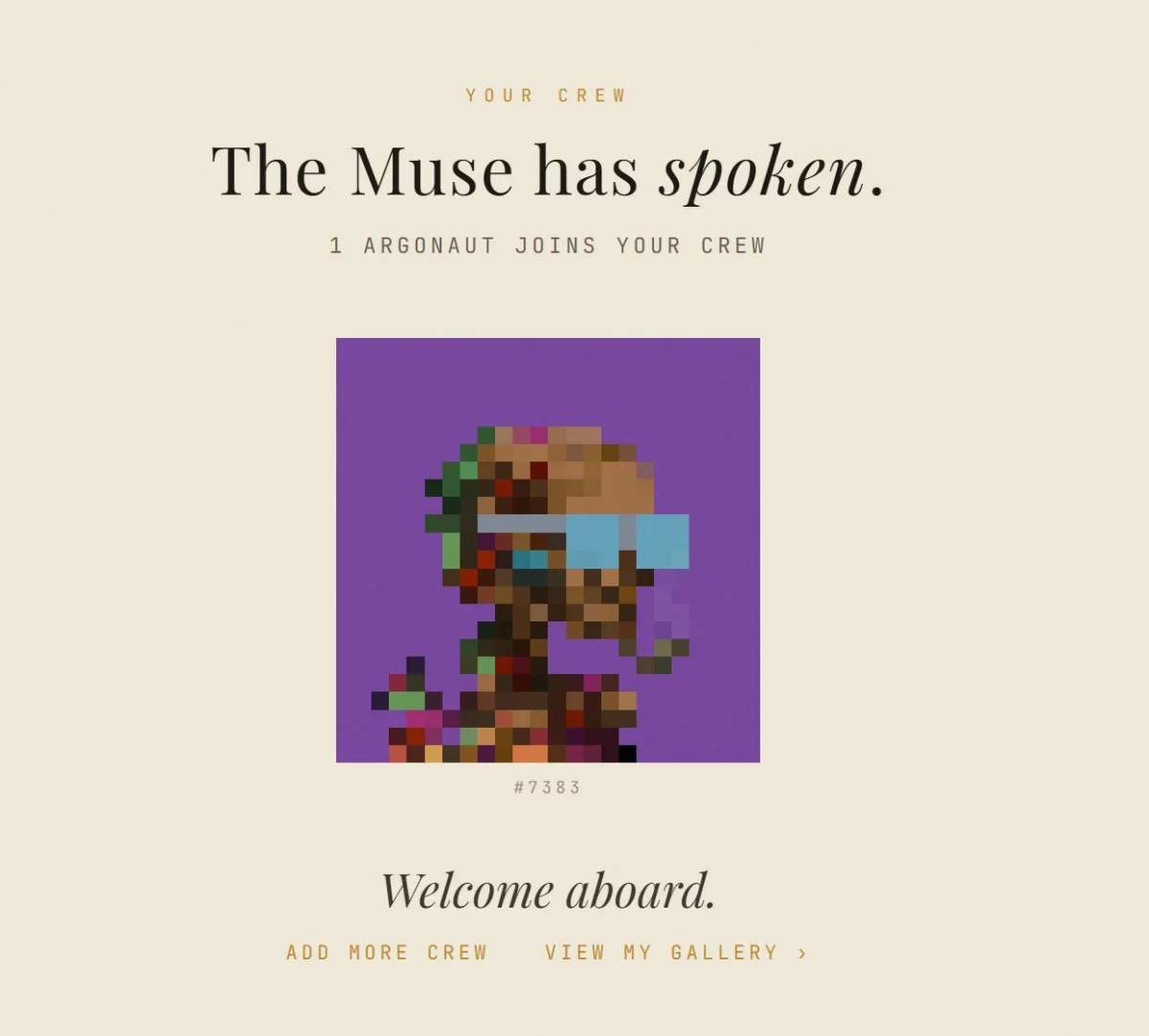
Today, the digital art landscape witnessed a significant shift in market behavior as Argonauts, the latest 10,000-piece collection by the crypto-native artist a.c.k. (@lphaCentauriKid), minted out in a matter of minutes. Priced at approximately 0.12 ETH—roughly $300 at the time of the sale—the collection’s rapid depletion of supply was not driven by the typical speculative frenzy that characterized the 2021 bull market, but rather by a concentrated effort from a community of artists, long-term collectors, and patrons of crypto-native aesthetics. While the secondary market for NFTs has faced extreme volatility over the past twenty-four months, the success of Argonauts serves as a data point indicating a potential transition toward a more sustainable, art-first ecosystem.
The Mechanics of the Mint and Market Context
The minting process for Argonauts began with a clear, artist-led value proposition. Unlike the "roadmap-heavy" project models that dominated the NFT space in recent years—where utility, tokenomics, and metaverse integration were used to justify price floors—a.c.k. opted for a minimalist approach. By positioning the collection as a direct extension of his established body of work, the artist bypassed the need to manufacture artificial demand.
The chronology of the release was swift. Within minutes of the contract opening, the 10,000 pieces were fully distributed. This velocity of sale, particularly in a market environment currently wary of high-supply collections, suggests that the collector base for crypto-art has become highly sophisticated. Data from the mint suggests that the primary purchasers were not anonymous "flippers" seeking immediate arbitrage opportunities, but rather wallets with histories of holding blue-chip digital art and supporting mid-career digital creators.
Historical Context: From Speculation to Provenance
To understand the significance of the Argonauts mint, one must examine the evolution of the NFT sector. During the height of the 2021 market boom, the narrative surrounding NFTs became increasingly commoditized. Projects were frequently launched as startup entities, promising future perks, "staking" rewards, and elaborate, often undeliverable, utility. This shift alienated many traditional art collectors, who viewed these projects as financial instruments rather than creative assets.
The foundational promise of NFTs—the ability to establish digital provenance, enforce scarcity, and facilitate a direct, transparent relationship between the artist and the buyer—was often obscured by the noise of speculative trading. The Argonauts launch acts as a correction to this trend. By focusing on the visual language that a.c.k. has cultivated over several years of production, the collection returns to the fundamental utility of the medium: the act of owning and supporting the work of a specific artist.
The Role of Accessibility in Digital Art
A persistent challenge in the digital art market has been the issue of accessibility. As artists gain prestige, their primary works often reach price points that exclude all but the most affluent collectors. Historically, this has created a "whale-dominated" market, where only a small percentage of participants can afford to engage with an artist’s ecosystem.
The 10,000-piece format utilized by Argonauts provides a strategic solution to this barrier. By offering a larger supply at an accessible entry price, a.c.k. has effectively democratized participation in his body of work. This strategy allows a wider demographic—including fellow artists, curators, and emerging collectors—to secure a stake in the artist’s output. This shift is vital for the long-term health of the crypto-art market; it builds a broad, inclusive foundation that is more resilient to the departures of high-net-worth speculators.
Demographic Analysis: Artists Collecting Artists
One of the most notable aspects of the Argonauts collection is the demographic profile of the holders. Industry analysts have noted a trend where established digital artists are increasingly becoming the primary collectors of their peers’ work. This phenomenon creates a "virtuous circle" of value, where the credibility of the ecosystem is bolstered by the participation of those who understand the technical and aesthetic nuances of the medium.
When an artist with a significant following releases a collection that is immediately absorbed by other practitioners in the field, it signals a consensus on the work’s artistic merit. This form of "social proof" is far more durable than the marketing-led hype cycles that plagued the NFT space in the past. It suggests that the value of Argonauts is anchored in cultural capital rather than speculative volatility.
Implications for Future Market Cycles
The successful sellout of Argonauts provides a blueprint for the next phase of the digital asset market. If the primary driver of future success is, once again, the quality of the art and the strength of the artist’s reputation, then the industry is likely entering a period of "professionalization."
In this emerging era, we can expect a decline in the dominance of collections that rely on "roadmap" promises. Instead, collectors are likely to prioritize:
- Provenance: The verifiable history of the artist’s career and their previous output.
- Aesthetic Cohesion: A clear, identifiable visual language that exists independently of the blockchain.
- Community Composition: The presence of genuine peers and long-term supporters within the holder base.
This evolution mirrors traditional fine art markets, where reputation and provenance are the primary determinants of value. By aligning itself with these historical precedents, the digital art space may finally be moving toward a model of permanence.
The Sustainability of the Artist-Collector Relationship
The relationship between the artist and the collector is the bedrock of any successful creative economy. For years, the NFT space treated this relationship as a transactional, short-term arrangement. The Argonauts launch, however, highlights the importance of fostering long-term engagement. When collectors believe in the trajectory of an artist’s career, they are more likely to hold their assets through market fluctuations, providing the stability that digital creators need to produce their best work.
Furthermore, the lack of reliance on secondary-market volatility suggests that both a.c.k. and his collectors are focused on the long-term appreciation of the art. This is a critical departure from the "mint-and-dump" culture that characterized the early 2020s, where projects often collapsed as soon as the initial hype dissipated.
Broader Impact on Digital Infrastructure
The broader implications of this shift extend beyond the art market. It reinforces the utility of blockchain technology as a tool for artistic distribution rather than just financial speculation. As the industry moves toward more stable, interest-based communities, the technological infrastructure supporting these assets—such as marketplaces, smart contract standards, and display platforms—will likely evolve to cater to the needs of collectors who prioritize quality over quick returns.
The success of the Argonauts mint proves that the demand for crypto-native art has not evaporated; it has simply matured. Collectors are no longer satisfied with empty promises of utility. They are looking for substantive, artist-led projects that offer a clear connection to the creator’s vision.
Conclusion: A Return to Fundamentals
The Argonauts collection by a.c.k. stands as a testament to the endurance of artistic value in the digital age. By ignoring the pressures of the speculative market and focusing on the core relationship between artist and collector, the project has successfully navigated a challenging economic environment.
This development is a signal to the entire NFT ecosystem: the era of the speculative "road-mapped" project is waning, and the era of the artist-centric collection is emerging. If the market continues to prioritize genuine appreciation, provenance, and the sustained support of creators, the digital art world will emerge from its current period of volatility not only intact but more robust than it has ever been. The success of this mint is not just a triumph for a.c.k.; it is a proof-of-concept for a healthier, more sustainable future for digital ownership.
As the dust settles on the Argonauts mint, the focus remains on the art itself—a simple, revolutionary concept that, after years of complexity and confusion, finally feels like it is coming home. Through this collection, the community has shown that it is ready to move beyond the experimental phase of NFTs and into a more mature, refined chapter of digital art history.

