
The global resale market has entered a transformative era in 2026, driven by a convergence of environmental consciousness, economic pragmatism, and rapid advancements in generative artificial intelligence. As search interest for terms like "vintage" and "how to thrift" reaches unprecedented peaks, technology is bridging the gap between the chaotic charm of a second-hand bin and the streamlined efficiency of modern e-commerce. Google has positioned itself at the center of this cultural shift, deploying a suite of AI-driven tools designed to simplify the hunt for unique, pre-loved items. From identifying the provenance of a 1990s leather bag to mapping out a full day of "slow fashion" shopping, the integration of AI into the search experience is fundamentally altering the mechanics of the circular economy.
The Rise of the Digital Thrifting Ecosystem
The surge in interest regarding vintage goods is not merely a fleeting trend but a significant shift in consumer behavior. According to recent search data, interest in "vintage desks" has spiked by 190% over the past year, while "vintage jerseys" and "thrifted heels" have reached all-time highs. This momentum is fueled largely by younger demographics—specifically Gen Z and Millennials—who prioritize individuality and sustainability over the standardized offerings of fast fashion.

In response to this demand, Google has refined its Search and Lens capabilities to cater to the "treasure hunter" mindset. The primary challenge of thrifting has historically been the lack of inventory data; unlike big-box retailers, thrift stores rarely have digitized catalogs. To solve this, Google’s AI tools now rely on visual recognition and contextual understanding to help users navigate the opaque world of second-hand retail.
1. Curated Itineraries via AI Mode in Search
One of the most significant hurdles for vintage enthusiasts is the logistical planning required for a successful outing. Unlike a trip to a shopping mall, thrifting often involves visiting multiple disparate locations, ranging from curated boutiques to massive warehouse-style outlets. Google’s "AI Mode in Search" addresses this by allowing for highly specific, multi-layered queries.
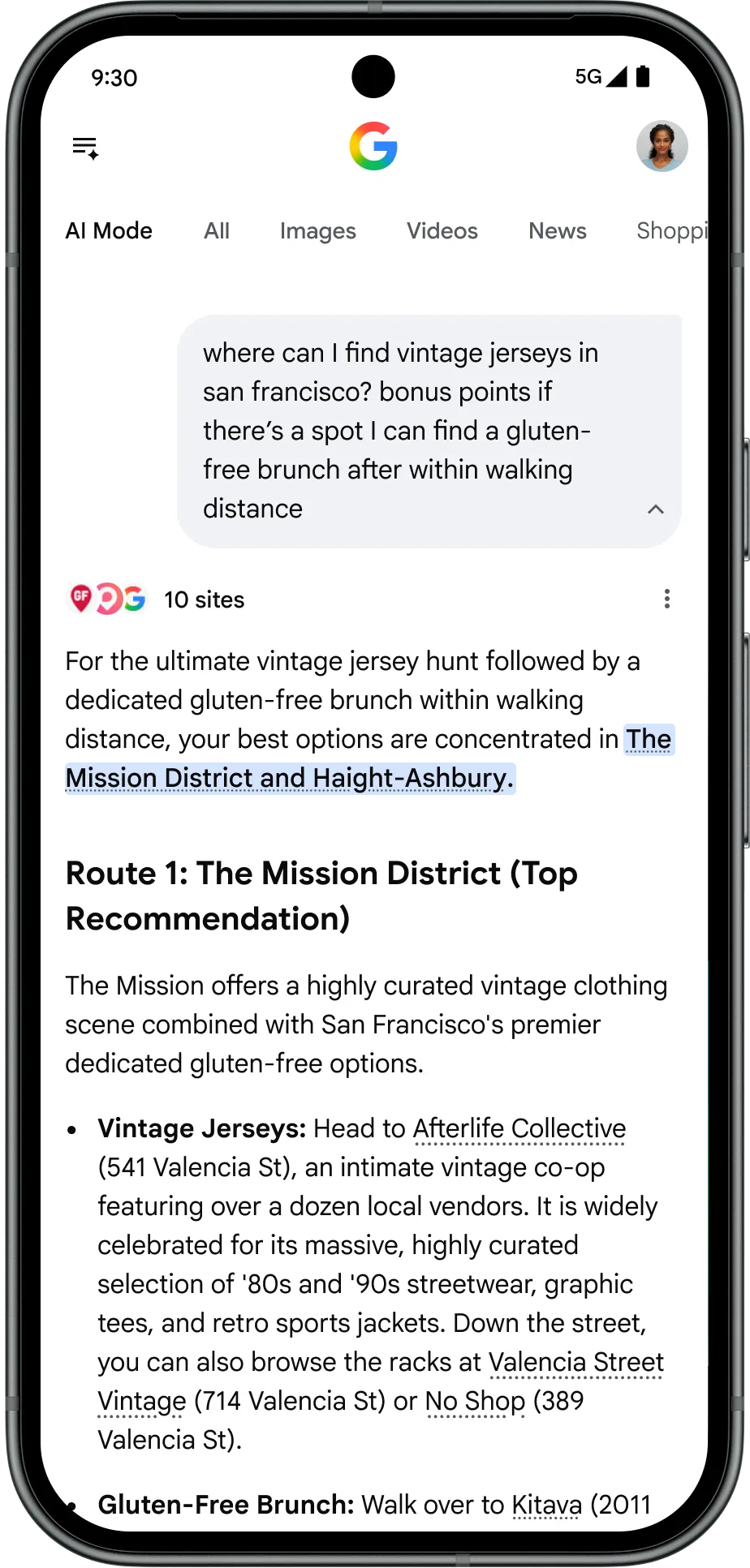
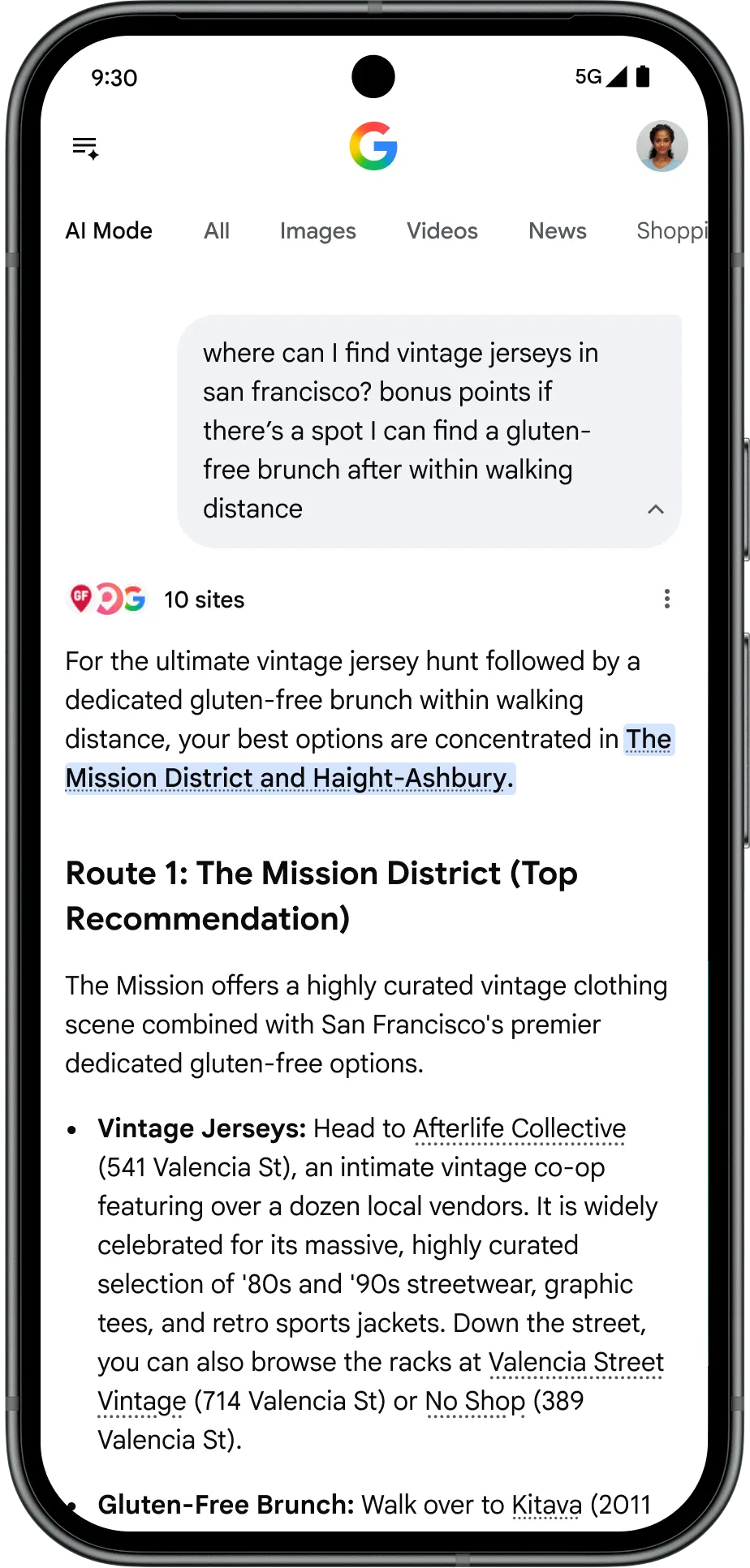
By leveraging large language models (LLMs), Search can now process nuanced requests such as, "Where can I find vintage jerseys in San Francisco? Bonus points if there’s a spot I can find a gluten-free brunch after within walking distance." The AI does not merely provide a list of links; it synthesizes data from Google Maps, business reviews, and local directories to present a cohesive plan. This tool effectively acts as a digital concierge, identifying stores that match a specific aesthetic while simultaneously accounting for the user’s dietary preferences and geographic constraints.

2. Deep Object Analysis with Google Lens
Google Lens has evolved from a simple image recognition tool into a sophisticated research assistant. For a shopper standing in a crowded flea market, Lens provides immediate clarity on an item’s history and value. By snapping a photo of a garment or piece of furniture, users can access "visual matches" that reveal the original designer, the likely era of production, and the materials used.
This feature is particularly valuable for identifying "hidden gems"—high-value items that may have been mispriced by a vendor. For example, a user might find a crocodile-embossed handbag and use Lens to determine if it is a genuine 1980s designer piece or a modern reproduction. Furthermore, Lens provides an "Estimated Resale Value" by aggregating data from various online marketplaces, allowing the shopper to make an informed decision on whether the asking price represents a fair deal.
3. Seamless Integration with Circle to Search
As social media continues to be a primary source of fashion inspiration, the friction between seeing an item on a screen and finding a vintage equivalent has been a persistent pain point. The "Circle to Search" feature, now a staple on the Android ecosystem, allows users to identify items without leaving their current app. By holding down the home button and circling an image—such as a vintage jersey worn by an influencer—users can instantly trigger a search for similar items across the web.

This tool is particularly effective for the "vibe-based" search. Once an item is circled, users can refine the results with follow-up questions like, "What are similar styles with a ’90s vibe?" This iterative search process allows consumers to explore the aesthetic nuances of different decades, helping them find pieces that fit a specific historical look without needing to know the exact technical terminology of the garment.
4. The Digital Dressing Room: Virtual Try-On
One of the greatest deterrents to buying vintage online is the uncertainty of fit and style. Vintage sizing is notoriously inconsistent, and the unique silhouettes of past decades do not always translate well to modern bodies. To mitigate this, Google has introduced "Virtual Try-On" (VTO) capabilities.
The process begins with Lens identifying a similar item to a vintage piece found in a store or online. If a "try it on" option is available, the user can upload a full-body photo of themselves. The AI then overlays the garment onto the user’s image, adjusting for drape, shadows, and body proportions. This digital dressing room experience provides a visual confirmation of whether a "funky vintage jacket" complements the user’s frame, reducing the likelihood of "buyer’s remorse" and the subsequent environmental cost of returns.

5. Empowering the Circular Economy through Resale
Thrifting is a two-way street, and Google’s tools are increasingly being used to facilitate the "selling" side of the equation. As closets become cluttered, Lens assists users in decluttering by evaluating the resale potential of their own possessions. By photographing an old item, a user can ask, "Could I resell this?" or "What kind of stores buy items like this?"
The AI analyzes the item’s condition and current market demand to suggest the best platforms for sale—whether it be a local consignment shop, a specialized vintage boutique, or a global peer-to-peer marketplace like Depop or Poshmark. This functionality encourages a "one-in, one-out" philosophy, ensuring that pre-loved goods continue to circulate rather than ending up in landfills.
A Chronology of Innovation: From Text to Vision
The current state of AI-assisted thrifting is the result of a decade-long evolution in search technology.

- 2017: Google Lens is launched, introducing the concept of "searching what you see."
- 2021: Multitask Unified Model (MUM) technology is integrated, allowing Search to understand information across text and images simultaneously.
- 2024: The introduction of "Circle to Search" removes the need to switch apps, streamlining the path from inspiration to purchase.
- 2025-2026: Generative AI becomes the default interface, shifting Search from a directory of websites to a proactive problem-solving engine.
This timeline illustrates Google’s shift toward "multimodal" search, where the input can be a photo, a gesture, or a complex spoken sentence, and the output is a personalized, actionable insight.
Economic and Environmental Implications
The implications of these tools extend far beyond individual convenience. From a macro-economic perspective, the democratization of vintage "expertise" via AI is professionalizing the amateur reseller market. When every shopper has the power to identify a rare label or estimate a fair market price, the efficiency of the secondary market increases.
Environmentally, the impact is even more profound. The fashion industry is responsible for approximately 10% of global carbon emissions. By making second-hand shopping as easy and reliable as buying new, Google is helping to normalize "circularity." When consumers choose a vintage desk over a flat-pack alternative, or a pre-owned jersey over a new one, they are actively reducing the demand for new resource extraction and manufacturing.
The Future of AI in Retail
As we look toward the remainder of 2026 and beyond, the role of AI in the thrift and vintage market is expected to deepen. We are likely to see the emergence of "proactive thrifting," where AI agents monitor local estate sales and online listings on behalf of the user, alerting them the moment a "grail" item—a highly sought-after collectible—becomes available.
Furthermore, as augmented reality (AR) hardware becomes more prevalent, the "Virtual Try-On" and Lens features may move from the phone screen to wearable glasses, allowing for a "heads-up" thrifting experience where prices and eras are overlaid directly onto items as a shopper browses a physical store.
In conclusion, the marriage of Google’s AI tools with the vintage movement represents a rare instance where high-tech innovation supports "low-tech" sustainability. By removing the barriers of uncertainty and logistical complexity, Google is not just helping people find old clothes; it is fostering a more intentional, informed, and environmentally responsible way of consuming. In 2026, the best way to move forward in fashion and home decor is, quite literally, to look back—with the help of a powerful AI lens.

