

Unveiling the Threat: Dolphin X Emerges
The discovery of Dolphin X was brought to light by Daniel Kelley, a diligent researcher at Varonis Threat Labs. Kelley identified the malware being actively promoted on a prominent cybercrime forum by a vendor operating under the alias "Kontraktnik." This vendor touted Dolphin X as a comprehensive, all-in-one remote access trojan, signaling its broad spectrum of functionalities. The advertisements and subsequent analysis by Varonis paint a picture of a highly modular and feature-rich tool, specifically engineered to grant cybercriminals extensive control and data exfiltration capabilities over compromised machines.
Varonis’s initial examination of the Dolphin X operator panel revealed an astonishing breadth of features, enumerating 329 distinct functionalities categorized across ten different modules. Among these, a robust credential-stealing mechanism stood out, claiming the ability to pilfer sensitive login information from an extensive list of over 300 applications. This broad targeting underscores the malware’s ambition to harvest a wide array of user data, ranging from personal accounts to corporate network access credentials. Such a comprehensive approach to data theft is a hallmark of modern, professional-grade malware, often indicating a well-resourced development effort aimed at providing maximum utility to its purchasers within the cybercriminal ecosystem.
The AI Profiler: A New Era of Victim Prioritization
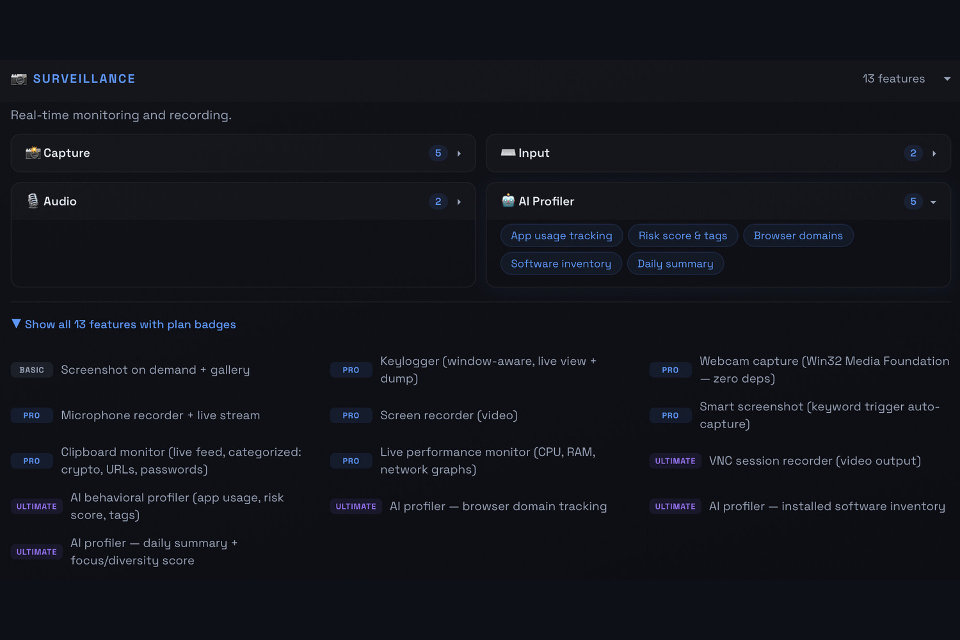
While its extensive credential-stealing capabilities are formidable, the most notable and concerning feature of Dolphin X is its "AI Profiler." This module represents a significant evolution in malware design, moving beyond mere data collection to intelligent data analysis and prioritization. The AI Profiler is designed to process the vast amounts of information exfiltrated from infected computers and, based on this analysis, assign each victim a "risk score." This score is not an indicator of the victim’s security posture, but rather their perceived value to the attacker.
As described by the vendor and confirmed by Varonis, the AI Profiler functions as an "AI behavioral profiler with app usage tracking, risk score, and daily summary." This means the system continuously monitors a victim’s activities, including application usage patterns, browsing habits (specifically browser domains visited), and installed software. By correlating these data points, the AI algorithm constructs a detailed profile for each compromised machine. The ultimate output is a ranked list of victims, presented to the attackers in daily summaries, allowing them to focus their subsequent efforts on the most promising targets.

The strategic advantage this provides to cybercriminals is immense. In typical large-scale credential-stealing operations, attackers are often overwhelmed by the sheer volume of stolen data. Manually sifting through hundreds or thousands of compromised accounts to identify those with high-value access (e.g., to corporate networks, cryptocurrency exchanges, cloud environments, or critical production systems) is a time-consuming and labor-intensive process. Dolphin X’s AI Profiler automates this triage, acting as a sophisticated sorting system that categorizes and ranks victims, directing attackers towards machines that are most likely to yield significant financial returns or strategic access. This automation translates directly into increased efficiency, higher success rates for secondary attacks (such as ransomware deployment or corporate espionage), and a more optimized resource allocation for the threat actors.
Beyond Profiling: Extensive Credential Stealing Capabilities
While the AI Profiler captures headlines, the underlying credential-stealing capabilities of Dolphin X are equally robust and dangerous. The operator panel boasts targeting for over 300 applications, indicating a broad and aggressive data exfiltration strategy. This includes, but is not limited to:
- Web Browsers: Nine popular Chromium and Gecko-based browsers, encompassing a significant portion of the global internet user base. This allows for the theft of saved passwords, browsing history, cookies, and auto-fill data.
- Cryptocurrency Assets: A staggering 100 cryptocurrency wallet extensions and 65 desktop cryptocurrency wallets are explicitly targeted. This focus highlights the growing trend of cybercriminals seeking direct financial gain through the theft of digital assets, a highly lucrative avenue given the decentralized nature and often irreversible transactions of cryptocurrencies.
- Password Managers: Ten different password managers are on its target list, which is particularly alarming. Compromising a password manager can give attackers access to a user’s entire digital life, bypassing the need to steal individual credentials one by one.
- Cloud Command-Line Tools: More than 30 cloud command-line tools are targeted, indicating an intent to compromise cloud infrastructure. This suggests that Dolphin X is not solely aimed at individual users but also at professionals and organizations that manage cloud resources, opening doors to corporate espionage, data exfiltration from cloud storage, or even the deployment of further malicious payloads within enterprise environments.
- Developer Credentials and Sensitive Files: Dolphin X also claims to steal
.envfiles, SSH keys, cloud access tokens, browser login data, and other developer-specific credentials. These items are critical for developers and IT professionals, and their theft can lead to severe compromises of development pipelines, source code repositories, and production systems.
The scope of these targets underscores Dolphin X’s design as a comprehensive toolkit for financial fraud, data theft, and potential corporate infiltration.
The Cybercrime Marketplace: Malware-as-a-Service (MaaS)
The advertising of Dolphin X on a cybercrime forum by "Kontraktnik" places it firmly within the growing phenomenon of Malware-as-a-Service (MaaS). This business model allows individuals or groups with advanced technical skills to develop sophisticated malicious software and then rent or sell access to it to a wider network of less-skilled cybercriminals. MaaS lowers the barrier to entry for cybercrime, enabling more individuals to conduct complex attacks without needing to develop the malware themselves.
The competitive nature of these underground markets often drives developers to innovate, adding features like the AI Profiler to differentiate their products. Vendors like "Kontraktnik" provide not just the malware itself, but often also offer support, updates, and even tutorials to their "customers," creating a professionalized ecosystem for illicit activities. This model fosters a rapid evolution of threats, as new features and attack vectors are quickly disseminated and adopted by a broad range of actors.

Varonis’s Investigation: A Glimpse Behind the Curtain
Varonis Threat Labs conducted their analysis of Dolphin X by obtaining and scrutinizing the operator panel, the malware builder, and its associated network traffic within an isolated lab environment. Crucially, they did not execute a live Dolphin X agent on an infected computer. This methodology allowed them to understand the malware’s advertised capabilities and internal workings without risking broader infection or enabling its full functionality.
Despite not observing a live execution, Varonis researcher Daniel Kelley confirmed the presence and functionality of the AI Profiler within the operator panel. Technical strings supporting the profiling workflow were discovered, including Auto-Start AI Profiler, ProfilerStart, ProfilerGetData, risk_score, risk_factors, and categoryusage. These strings provide strong evidence that the profiling workflow is indeed integrated into the malware’s design and that the panel is equipped to process the necessary data to rank victims. However, without analyzing a live Dolphin X malware sample in action, Varonis could not definitively determine the specific artificial intelligence engine or algorithms being employed to produce these rankings. Similarly, the full extent of the malware’s advertised collection capabilities, though strongly indicated by the operator panel, could not be independently confirmed in a live environment.
The Broader Landscape: AI’s Growing Role in Cyberattacks
Dolphin X’s AI Profiler is not an isolated incident but rather a symptom of a larger, evolving trend: the increasing integration of artificial intelligence into cybercrime. Threat actors are rapidly adopting AI tools to enhance the efficiency, scale, and sophistication of their operations. While AI has long been hailed as a powerful tool for cybersecurity defense, its potential for malicious application is equally significant.
Examples of AI’s burgeoning role in cybercrime include:
- SpamGPT: AI-powered tools designed to generate highly convincing phishing emails and spam campaigns, overcoming traditional spam filters and increasing the likelihood of victim engagement.
- AI Agents for Autonomous Attacks: Recent reports, such as those concerning the JadePuffer ransomware, describe AI agents capable of conducting entire cyberattacks autonomously, from initial reconnaissance and exploitation to lateral movement and payload deployment, with minimal human intervention.
- Automated Exploit Generation: Research indicates AI models can assist in identifying vulnerabilities and even generating exploit code, accelerating the development of new attack vectors.
- Social Engineering Enhancement: AI can be used to analyze vast amounts of public data to craft highly personalized and effective social engineering lures, making them far more difficult to detect and resist.
In this context, Dolphin X represents a strategic application of AI to solve a critical operational challenge for cybercriminals: the efficient processing and prioritization of massive datasets of stolen information. Instead of generating new attacks or evading defenses, its AI component focuses on optimizing the post-compromise phase, ensuring that the valuable time and resources of attackers are directed towards the most lucrative targets. This shift signifies a maturation of cybercrime operations, moving towards more intelligent and data-driven approaches.
Implications for Cybersecurity and Defense
The emergence of Dolphin X and its AI Profiler has profound implications for cybersecurity defenses for both individuals and organizations:
- Increased Attacker Efficiency: The primary implication is that attackers using Dolphin X will be far more efficient. This means a higher likelihood of successful secondary attacks, whether they be ransomware, corporate espionage, or direct financial fraud, as less time is wasted on low-value targets.
- Challenges for Incident Response: For security teams, the ability of attackers to quickly identify and escalate access to critical systems means that the window for detection and response shrinks considerably. Initial compromises, even of seemingly low-value individual machines, could rapidly lead to enterprise-wide breaches if the compromised user has access to sensitive corporate resources.
- Focus on High-Value Assets: The AI Profiler’s ability to identify high-value targets (e.g., cryptocurrency holdings, cloud credentials, developer tools) means these assets are at heightened risk. Organizations and individuals must ensure these assets are protected with the strongest possible security measures.
- The Arms Race of AI: Dolphin X highlights the accelerating AI arms race in cybersecurity. As threat actors increasingly leverage AI for offense, defenders must redouble their efforts to deploy AI-powered defenses capable of detecting sophisticated, automated attacks and predicting attacker movements.
- Economic Impact: Successful attacks facilitated by tools like Dolphin X can lead to significant financial losses for individuals through cryptocurrency theft and for businesses through data breaches, operational disruptions, and reputational damage. The average cost of a data breach continues to rise, and malware that improves attacker efficiency will only exacerbate this trend.
Expert Perspectives and Recommendations
Cybersecurity experts consistently emphasize the need for a multi-layered defense strategy to combat evolving threats like Dolphin X. Key recommendations include:
- Multi-Factor Authentication (MFA): Implementing MFA for all accounts, especially those accessing sensitive data or financial services, is paramount. Even if credentials are stolen, MFA can prevent unauthorized access.
- Robust Endpoint Detection and Response (EDR): Advanced EDR solutions can detect and respond to malicious activities, including credential-stealing attempts and unusual application behavior, even if initial malware execution bypasses traditional antivirus.
- Regular Software Updates and Patching: Keeping operating systems, applications, and web browsers updated with the latest security patches closes known vulnerabilities that malware often exploits.
- Security Awareness Training: Educating users about phishing, social engineering, and the dangers of downloading suspicious files remains a critical first line of defense. Users should be trained to recognize and report suspicious activity.
- Network Segmentation: For organizations, segmenting networks can limit the lateral movement of attackers even if one part of the network is compromised, containing potential damage.
- Data Loss Prevention (DLP): DLP solutions can help monitor and prevent sensitive data from being exfiltrated from the network, even if an attacker gains access.
- Zero Trust Architecture: Adopting a Zero Trust model, where every access request is verified regardless of its origin, can significantly reduce the risk of unauthorized access to critical resources.
- Regular Backups: Maintaining secure, offsite backups of critical data can mitigate the impact of ransomware or data deletion attacks.
- Proactive Threat Hunting: Security teams should proactively hunt for signs of compromise within their environments, rather than solely relying on automated alerts, especially given the stealth capabilities of modern RATs.
Conclusion and Outlook
The Dolphin X remote access trojan, with its innovative AI Profiler, represents a concerning advancement in the cybercrime toolkit. By automating the critical and often laborious task of victim prioritization, it empowers threat actors to operate with unprecedented efficiency, transforming large-scale compromises into highly targeted and potentially devastating attacks. This development underscores the relentless innovation within the cybercriminal underworld and the increasing sophistication of threats faced by individuals and organizations alike. As AI continues to permeate both defensive and offensive cybersecurity strategies, the vigilance, adaptability, and collaborative efforts of the cybersecurity community will be more critical than ever in safeguarding the digital realm against these evolving challenges.

