
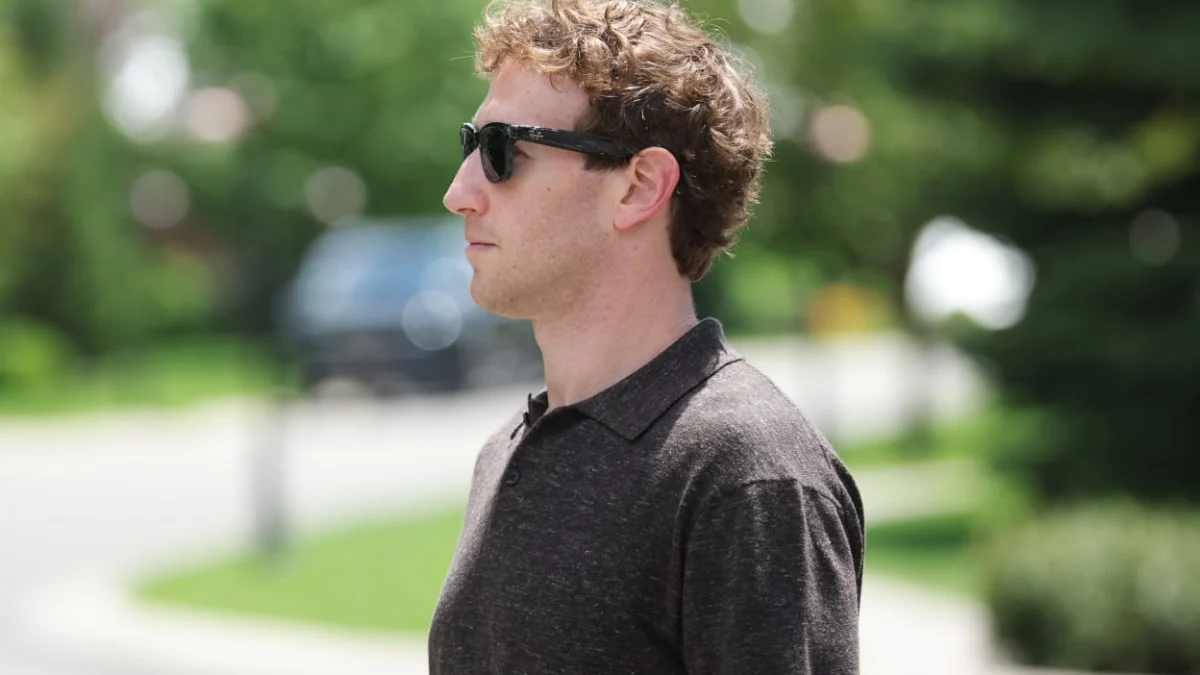
The core of the issue lies in the discretion provided by the Meta Ray-Ban and Oakley smart glasses lineups. Unlike a traditional camera or a smartphone held at eye level, these devices permit creators to film strangers in high definition while maintaining a hands-free, natural appearance. While the technology was marketed as a tool for capturing travel memories and first-person perspectives, it has increasingly been co-opted by a subculture of "pickup artists" and "prank" creators who thrive on non-consensual interactions.
The Policy Shift: Defining the New Boundaries
According to Mosseri, the platform will now actively remove videos captured with smart glasses if they are deemed to be taking advantage of or harassing people. Specifically, Mosseri targeted the "pickup line" genre of content, where creators approach women in public spaces—often gyms, parks, or retail stores—to record their reactions to unwanted romantic advances. "We don’t want people to be surreptitiously taking videos of other people and harassing them and then posting them on our platform," Mosseri stated, signaling a departure from previous, more reactive moderation strategies.
As part of this initiative, Instagram has already deactivated several prominent accounts associated with this behavior. Two notable "pickup artist" accounts, which collectively boasted more than 2 million followers, were removed for violating policies against harassing content. While Meta has not disclosed the exact timeline for these removals, the action suggests that the company is no longer willing to allow high-engagement accounts to bypass safety standards simply because they utilize Meta-branded hardware.
A Timeline of Meta’s Smart Glasses Evolution
To understand the current crisis, one must look at the rapid evolution of Meta’s wearable tech. The journey began in 2021 with the launch of the first-generation Ray-Ban Stories. At the time, privacy advocates warned that the small LED light designed to signal recording was insufficient.

- September 2021: Meta launches Ray-Ban Stories. The devices feature dual 5MP cameras and basic audio functions. Privacy concerns are immediate but largely theoretical.
- October 2023: The second-generation Meta Ray-Ban glasses are released. These feature improved 12MP cameras, better audio, and the integration of Meta AI. The recording LED is made brighter in response to feedback.
- June 2025: Meta expands its lineup through a partnership with Oakley and a high-profile collaboration with Kylie Jenner, pushing the glasses into the mainstream fashion world.
- October 2025: The University of San Francisco issues a campus-wide safety advisory after students report being harassed by an individual wearing Meta glasses for "pickup artist" content. Meta issues its first major warning against "harmful activities."
- January 2026: Investigative reports highlight the use of smart glasses in massage parlors and retail "trolling," leading to the deactivation of several accounts for "adult sexual exploitation."
- July 2026: Instagram officially codifies its ban on harassment-focused smart glasses content, moving toward proactive removal.
Technological Safeguards and the "Tampering" Economy
Meta has attempted to mitigate privacy risks through hardware-level safeguards. The current generation of glasses features a white LED indicator on the frame that pulses when recording is active. Furthermore, Meta introduced a software lock that disables the camera if the LED is obscured by tape or paint.
However, a "tampering" economy has emerged to circumvent these features. Reports indicate that in at least 30 U.S. states, third-party services offer to permanently disable the recording LED or modify the hardware to bypass the software lock. Meta has responded by banning advertisements and Marketplace listings for such services, yet the cat-and-mouse game between the manufacturer and bad actors continues.
The discretion of the glasses is their primary selling point for legitimate creators, but it is also their greatest liability. For athletes, the glasses provide a way to record high-speed cycling or climbing without dangerous equipment. For the visually impaired, Meta AI provides a revolutionary service by reading labels and describing surroundings. Yet, for a "clout-chaser," the same form factor provides a shield to engage in behavior that would be immediately shut down if a camera crew were present.
The Social Dynamics of "Clout Chasing"
The rise of harassment content is deeply tied to the "engagement economy." Creators often target specific demographics—primarily women and service industry workers—because these individuals are often in positions where they are socially or professionally obligated to remain polite.
Brad Podray, a digital culture commentator and former prank creator known as "Scumbag Dad," noted that the power imbalance is a key component of this content. "They want people who are good on camera, so they’re going to hit fast-food employees and they’re going to hit pretty girls," Podray explained. He emphasized that the use of smart glasses "removes the agency entirely" from the subject of the video. When a person is unaware they are being filmed, they cannot consent to the interaction being turned into a public spectacle for millions of viewers.

The psychological impact on victims can be severe. In one instance, a woman discovered footage of herself on Instagram after she had explicitly refused a man’s request for her phone number. The video, filmed via smart glasses, subjected her to thousands of comments scrutinizing her appearance and reaction. This "digital trail" of harassment often persists long after the original interaction, creating a culture of hyper-vigilance in public spaces.
Official Responses and Broader Implications
Meta’s latest move is being viewed by industry analysts as a necessary step toward "responsible innovation." As the company prepares to further integrate Augmented Reality (AR) into its eyewear, establishing clear ethical boundaries is critical for consumer trust.
A Meta spokesperson emphasized that the company’s Terms of Service have always prohibited harassment, but the specific mention of smart glasses content reflects the unique nature of the medium. "We are committed to ensuring our technology is used to bring people together, not to alienate or exploit them," the spokesperson said.
However, legal experts suggest that the platform’s internal policies may eventually clash with state-level privacy laws. In "one-party consent" states, recording a conversation is legal as long as one participant (the recorder) knows it is happening. Instagram’s ban, therefore, is a private contractual enforcement rather than a legal one, highlighting the role of big tech as the primary arbiter of social etiquette in the digital age.
Future Outlook: The Challenge of Moderation
The primary challenge for Instagram moving forward will be the scale of moderation. Identifying whether a video was filmed with smart glasses is relatively simple when the content is labeled "Made with Meta," but creators may find ways to strip metadata or hide the source of the footage. Furthermore, the line between a "funny prank" and "harassment" can be subjective, requiring nuanced human oversight that automated AI systems often lack.

As wearable cameras become indistinguishable from standard prescription eyewear, the social contract of the public sphere is being rewritten. Instagram’s decision to ban "creepy" videos is an admission that hardware safeguards alone are insufficient. The burden of safety has shifted back to the platform, requiring a combination of aggressive account deactivations, community reporting, and a cultural shift in what is considered "entertaining" content.
The success of this ban will likely determine the future of the smart glasses market. If Meta cannot prove that its devices can coexist with public privacy, it may face legislative hurdles or a consumer backlash that could stifle the adoption of wearable AI. For now, the message from Instagram is clear: the era of the surreptitious "pickup artist" and the exploitative prankster is being phased out, one deactivation at a time.

