
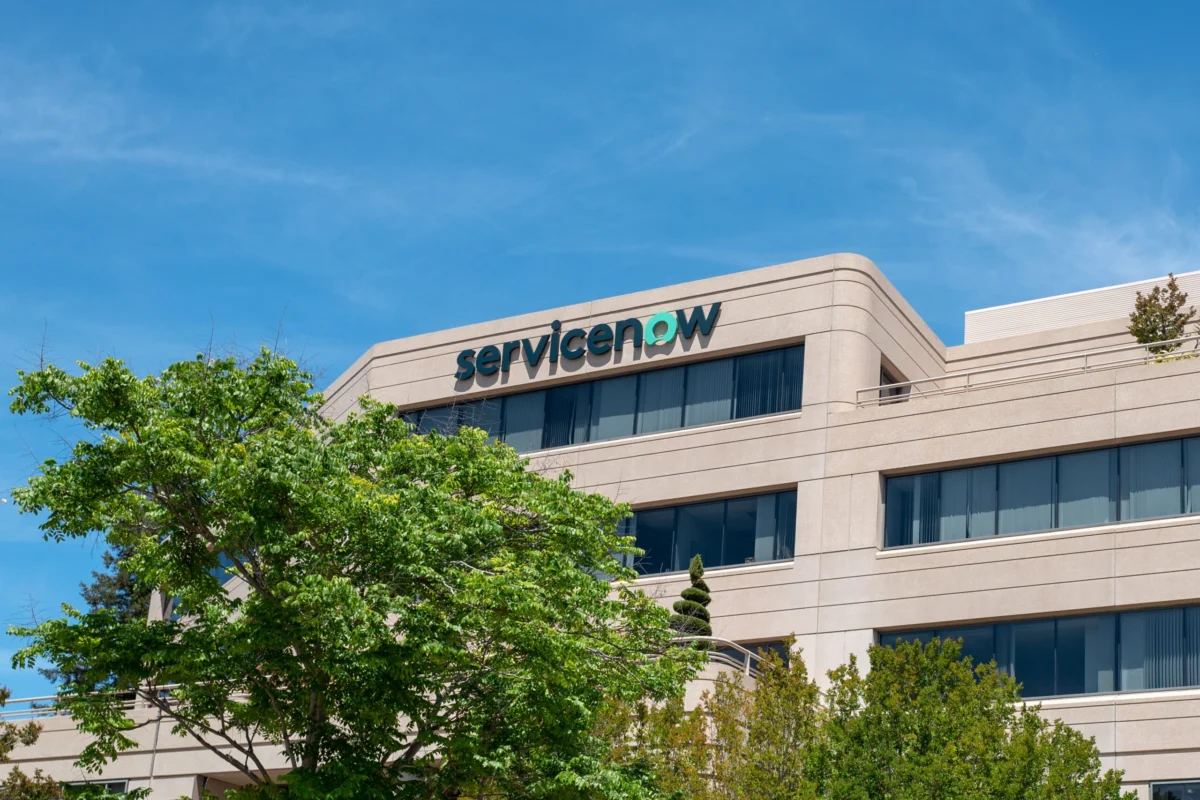
ServiceNow, the California-based leader in digital workflow automation, has announced a significant $40 million strategic investment in BusinessNext, an Indian enterprise software specialist dedicated to the financial services sector. This capital injection values the Noida-headquartered firm at approximately $700 million, representing a nearly fourfold increase from its previous valuation of $181 million in 2021. By acquiring a roughly 5% stake in the 22-year-old firm, ServiceNow is positioning itself to capture a larger share of the global banking technology market, a sector currently undergoing a massive transition from legacy infrastructure to artificial intelligence-driven operations. The deal is not merely a financial transaction but a deep-seated strategic partnership designed to merge ServiceNow’s formidable back-office workflow capabilities with BusinessNext’s specialized customer-facing banking solutions.
A Strategic Pivot Toward Autonomous Banking
The investment comes at a time when the global banking industry is facing a critical juncture. Traditional financial institutions are struggling to balance the need for rapid digital innovation with the stringent requirements of regulatory compliance and data security. BusinessNext, which operated under the name CRMNext until a major rebranding in 2022, has spent the last two decades building a platform specifically tailored to these unique pressures. Its core offering has evolved from a standard customer relationship management (CRM) tool into what CEO and founder Nishant Singh describes as an "autonomous banking" platform.
This autonomous banking model utilizes specialized AI agents to automate complex banking workflows, such as loan processing, account opening, and fraud detection, while ensuring that sensitive customer data remains within private AI infrastructures. This focus on data sovereignty is particularly attractive to central banks and large-scale commercial lenders who are often hesitant to move critical data to public cloud environments due to privacy laws and national security concerns. By integrating this expertise with ServiceNow’s expansive enterprise platform, the two companies aim to provide an end-to-end solution that handles everything from the initial customer interaction to the final back-office reconciliation.
Strengthening the Global Sales Machinery
For BusinessNext, the primary value of the deal lies in access to ServiceNow’s "go-to-market machinery." While BusinessNext has established a dominant position in India and Southeast Asia, expanding into the lucrative North American and European markets requires a level of sales infrastructure that is difficult to build organically. ServiceNow, with its massive global sales network and deep relationships with Fortune 500 companies, provides the perfect vehicle for this expansion.
Nishant Singh noted that the company intentionally chose ServiceNow over traditional financial investors, such as private equity firms or venture capital groups. The logic was simple: while a VC could provide capital, ServiceNow provides a direct bridge to global enterprise clients. This "strategic partnership cemented with funding" allows BusinessNext to leverage ServiceNow’s credibility and reach in markets where its brand presence is currently limited. In exchange, ServiceNow gains a specialized partner that can help it move beyond its traditional strongholds in IT service management (ITSM) and HR operations, directly into the high-stakes world of core banking operations.
Financial Performance and Market Footprint
Despite its relatively low profile in the Western tech press until recently, BusinessNext is a robust and profitable enterprise. In its latest financial year, the company generated approximately $32 million in revenue, with a significant portion of that growth coming from international markets. Currently, about 50% of the firm’s revenue is generated outside of India, a figure that is expected to rise as the ServiceNow partnership takes hold.
The company’s client list includes some of the most influential financial institutions in the world. In India, it serves the Reserve Bank of India (the nation’s central bank), as well as the State Bank of India and HDFC Bank—the country’s largest public- and private-sector lenders, respectively. Beyond the subcontinent, BusinessNext serves more than 70 banks across Southeast Asia, the Middle East, and the United States. With a workforce of over 1,300 employees, the company has the scale necessary to support large-scale digital transformations for global tier-one banks.
The Evolution of BusinessNext: From CRM to AI
The history of BusinessNext reflects the broader evolution of the enterprise software industry. Founded in 2002, the company initially focused on solving the CRM challenges of the banking industry. However, as cloud computing and AI began to reshape the landscape, the leadership realized that traditional CRM was becoming a commodity. To stay relevant, the company underwent a fundamental architectural shift.
In 2022, the company rebranded from CRMNext to BusinessNext, signaling its intent to manage entire business processes rather than just customer relationships. This transition involved rewriting a significant portion of its software stack to place AI at the core of the platform. Unlike many legacy software vendors who have attempted to "bolt on" AI features in response to the current hype cycle, BusinessNext maintains that its platform was rebuilt to be AI-native. This architectural advantage allows for more seamless automation and better handling of the complex, multi-step workflows inherent in modern banking.
ServiceNow’s Broader AI Strategy
ServiceNow’s investment in BusinessNext is a tactical move within a much larger strategic roadmap. Under the leadership of CEO Bill McDermott, ServiceNow has been on an aggressive path to become the "AI platform for business transformation." The company has been consistently expanding its portfolio through a combination of internal development—most notably its recent "Xanadu" platform update which integrated generative AI across its entire suite—and strategic investments.
The banking sector is a key pillar of this strategy. Financial services organizations are among the highest spenders on technology, yet they often suffer from fragmented systems where the front-office (customer-facing) and back-office (operations) are disconnected. Kulmeet Bawa, ServiceNow’s group vice president and managing director for India and SAARC, emphasized that the Indian financial sector is at an "inflection point." Institutions are moving away from small-scale digital experiments and toward full-scale, AI-led operational models. By partnering with BusinessNext, ServiceNow can offer a unified platform that bridges the gap between customer experience and operational efficiency.
Chronology of Key Events and Funding
The trajectory of BusinessNext highlights a steady climb in the enterprise tech ecosystem:
- 2002: Founded as CRMNext, focusing on specialized CRM solutions for banks.
- 2014: Secured early-stage funding to expand operations across Southeast Asia and the Middle East.
- 2021: Raised capital at a valuation of $181 million, with backing from Avataar Ventures, Norwest Venture Partners, and Ascent Capital.
- 2022: Rebranded to BusinessNext and launched its "autonomous banking" platform, signaling a shift toward AI-centric operations.
- 2023: Reached a revenue milestone of $32 million, maintaining profitability while scaling international operations.
- 2024: ServiceNow announces a $40 million investment at a $700 million valuation, establishing a global strategic partnership.
To date, BusinessNext has raised more than $60 million in external funding. The presence of blue-chip investors like Norwest Venture Partners and now ServiceNow suggests a high degree of confidence in the company’s long-term viability and technical superiority in the banking niche.
Market Context and Competitive Landscape
The deal arrives as the enterprise software market faces a "moment of reckoning." Many traditional Software-as-a-Service (SaaS) providers are seeing their valuations pressured as customers begin to question the ROI of legacy tools in the age of generative AI. There is a growing trend of "vendor consolidation," where enterprises prefer to work with a few powerful platforms rather than a patchwork of disparate tools.
ServiceNow’s move to invest in a specialized player like BusinessNext is a direct response to this trend. It allows ServiceNow to offer "verticalized" AI—solutions that are pre-configured for the specific regulatory and operational needs of the banking industry. This puts ServiceNow in more direct competition with industry giants like Salesforce and Oracle, both of whom have their own specialized financial services clouds. However, BusinessNext’s deep roots in the Indian market—a global laboratory for fintech innovation—gives the ServiceNow partnership a unique edge in emerging markets and high-growth economies.
Implications for the Future of Financial Services
The partnership between ServiceNow and BusinessNext is likely to accelerate the adoption of "agentic" AI in banking. Unlike basic chatbots, the AI agents developed by BusinessNext are designed to perform complex tasks, such as verifying documents for a mortgage application or conducting "Know Your Customer" (KYC) checks, with minimal human intervention.
For the banking industry, the implications are profound. Successful implementation of these technologies could lead to:
- Reduced Operational Costs: Automating high-volume, low-complexity tasks allows banks to reduce headcount or redirect staff to higher-value activities.
- Improved Customer Experience: Real-time processing of applications and inquiries can significantly reduce the "time to yes" for banking products.
- Enhanced Compliance: AI systems can monitor transactions and workflows in real-time, identifying potential regulatory breaches more accurately than manual audits.
- Data Sovereignty: By utilizing private AI infrastructure, banks can innovate without running afoul of strict data protection laws like GDPR or India’s Digital Personal Data Protection Act.
As ServiceNow and BusinessNext begin their joint sales efforts, the industry will be watching closely to see if this hybrid approach—combining a global horizontal platform with a specialized vertical expert—becomes the new blueprint for enterprise software investments in the AI era. For now, the $40 million bet signals that the future of banking will not just be digital, but autonomous, and that the road to that future may very well run through Noida.

