
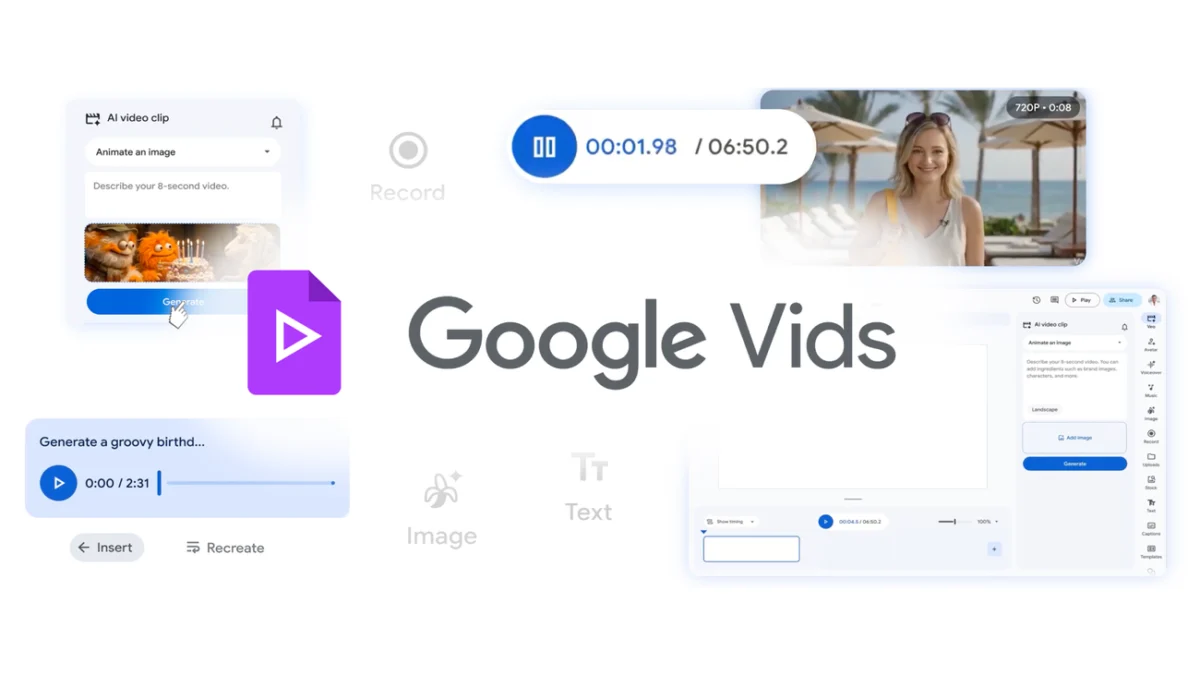
Google has announced a major expansion of its AI-driven video creation platform, Google Vids, introducing a suite of high-performance tools powered by its latest proprietary models, Veo 3.1 and Lyria 3. This update marks a significant shift in the company’s strategy, moving advanced generative video and audio capabilities from experimental environments into the daily workflows of millions of users. By offering high-quality video generation at no cost to all Google account holders and specialized features for premium subscribers, Google is positioning Vids as a central hub for corporate communication, educational content, and personal storytelling. The rollout includes not only visual generation but also custom music composition and directable AI avatars, signaling a comprehensive approach to the "video-first" workplace.
The Evolution of Google Vids: From Spreadsheet to Storyboard
Google Vids was first introduced as a new addition to the Google Workspace productivity suite, designed to sit alongside established tools like Docs, Sheets, and Slides. However, unlike traditional video editors that require a high degree of technical proficiency, Vids was built on the premise that anyone who can create a slide deck can create a professional-grade video. The latest update leverages Veo 3.1, Google’s most capable video generation model to date, which has been optimized for cinematic quality and consistency.
According to David Nachum, Group Product Manager for Google Vids, the integration of Veo 3.1 allows users to transform simple text prompts or static images into dynamic video clips. For the general public, this means access to a level of production value previously reserved for professional studios. Personal account holders will now receive 10 free video generations per month, a move intended to seed the market and encourage casual users to explore the platform’s potential for projects ranging from neighborhood event flyers to digital greeting cards.
Technical Milestones: Veo 3.1 and the Power of Generative Video
The core of this update lies in the technical capabilities of the Veo 3.1 model. Developed by Google DeepMind, Veo represents the pinnacle of the company’s research into temporal consistency and visual fidelity. In the context of Google Vids, Veo 3.1 is tasked with understanding complex prompts and translating them into high-definition video that maintains logical flow. This is particularly crucial for business users who need to maintain brand consistency across different segments of a presentation.
For power users, specifically those subscribed to Google AI Ultra and Workspace AI Ultra, the limits are significantly higher. These users can now generate up to 1,000 Veo-powered videos per month. This high-volume allowance is aimed at enterprise environments where rapid prototyping of marketing materials or internal training modules is required. The model’s ability to interpret photographic inputs also means that users can "animate" their existing assets, providing a bridge between traditional photography and modern video content.
Sonic Innovation: Custom Soundtracks via Lyria 3
A video is only as effective as its audio, a reality Google is addressing through the integration of Lyria 3 and Lyria 3 Pro. These models are designed specifically for music generation, allowing users to "score" their videos with original compositions that match the intended mood and pacing. Unlike stock music libraries, which can often feel generic or present licensing hurdles, Lyria allows for the creation of bespoke tracks ranging from 30-second stings to full three-minute compositions.
Subscribers to Google AI Pro and Ultra can now generate soundtracks by describing the vibe—such as "uplifting acoustic for a travel vlog" or "minimalist corporate ambient for a product demo." This feature eliminates one of the most significant friction points in video production: finding the right music. By generating royalty-free, tailored audio within the Vids environment, Google is streamlining the legal and creative complexities of content creation.
The Rise of the AI Avatar: Directable Digital Presenters
Perhaps the most forward-looking feature of the new update is the introduction of customizable and directable AI avatars. Powered by the same Veo 3.1 architecture, these avatars provide a consistent face and voice for videos, which is especially useful for tutorials, onboarding videos, and "explainer" content.

The "directable" aspect of these avatars is a key differentiator. Google AI Pro and Ultra subscribers have control over how these characters look, speak, and act. This level of granularity allows for a cohesive narrative voice without the need for a human presenter to record multiple takes in a physical studio. In a corporate setting, this could mean an HR department creating a series of training videos where the same digital "instructor" guides employees through various modules, ensuring a familiar and professional experience across all materials.
Strategic Integration: Chrome Extensions and YouTube Publishing
Google is also focusing on the "last mile" of video production—distribution and capture. A new Chrome extension has been launched to facilitate easy screen recording, allowing users to pull live demonstrations directly into the Vids editor. This integration is designed to cater to the growing demand for "how-to" content in the workplace, where screen-sharing is the primary method of knowledge transfer.
Furthermore, Google Vids now supports direct publishing to YouTube. This feature bridges the gap between a productivity tool and a social media platform, allowing creators to move from ideation to public broadcast within a single ecosystem. By removing the need to export, download, and re-upload large video files, Google is optimizing the workflow for the "prosumer" market.
Chronology of Development and Market Context
The journey of Google Vids reflects the broader acceleration of AI within the tech industry.
- April 2024: Google first unveils Vids at the Google Cloud Next conference, positioning it as a "video-first" app for work.
- June 2024: Limited beta testing begins for select Workspace Enterprise customers.
- November 2024: General availability is announced for most Workspace tiers, focusing on the "Help me create" feature which generates scripts and storyboards.
- March 2025: The current update introduces Veo 3.1 and Lyria 3, marking the transition from AI-assisted editing to AI-generated content.
This timeline shows a rapid progression from structural AI (organizing content) to generative AI (creating the content itself). Google’s move comes at a time of intense competition in the generative video space. Rivals like OpenAI with its Sora model, and startups like Runway and Pika Labs, have set high bars for visual quality. Google’s advantage, however, lies in its integration with the existing Workspace ecosystem. While Sora is currently a standalone capability for many, Veo is being woven into the fabric of tools that people already use for their daily work.
Industry Analysis: Implications for the Future of Work
The enrichment of Google Vids with these advanced models has profound implications for several sectors:
- Corporate Communications: Internal comms teams can now produce high-quality video updates at a fraction of the previous cost and time. The ability to use AI avatars means that executive messages can be "filmed" without requiring the executive to spend hours in front of a camera.
- Education and Training: Teachers and corporate trainers can convert static lesson plans into engaging video content. The 1,000-video limit for Ultra users suggests that Google expects high-volume usage in this sector.
- Small Businesses: For entrepreneurs, the ability to generate 10 high-quality clips a month for free provides a professional marketing edge that was previously unaffordable.
- The Creator Economy: By simplifying the editing process and providing built-in music and avatar tools, Google is lowering the barrier to entry for aspiring YouTubers and social media influencers.
Ethical Considerations and Responsible AI
As with all generative AI releases, Google has emphasized its commitment to responsible deployment. While not explicitly detailed in every promotional snippet, Google’s standard AI principles include the use of digital watermarking—likely through its SynthID technology—to identify AI-generated content. This is a critical step in maintaining transparency, especially as AI avatars become more realistic and harder to distinguish from human presenters.
Conclusion and Future Outlook
The update to Google Vids represents more than just a software patch; it is a declaration of intent. By making Veo 3.1 and Lyria 3 accessible to the general public, Google is betting that video will become as fundamental to digital literacy as writing or basic data analysis. As the distinction between "making a video" and "writing a document" continues to blur, the tools provided in this update will likely become the new standard for how information is shared in the 21st century.
With the ability to generate up to 1,000 videos a month for high-tier users and a suite of tools that handle everything from the initial prompt to the final YouTube upload, Google Vids is no longer just a "video editor." It is an automated production studio. As users begin to experiment with these new capabilities at vids.new, the real-world impact on content saturation and creative standards will become increasingly clear in the months to follow.
