
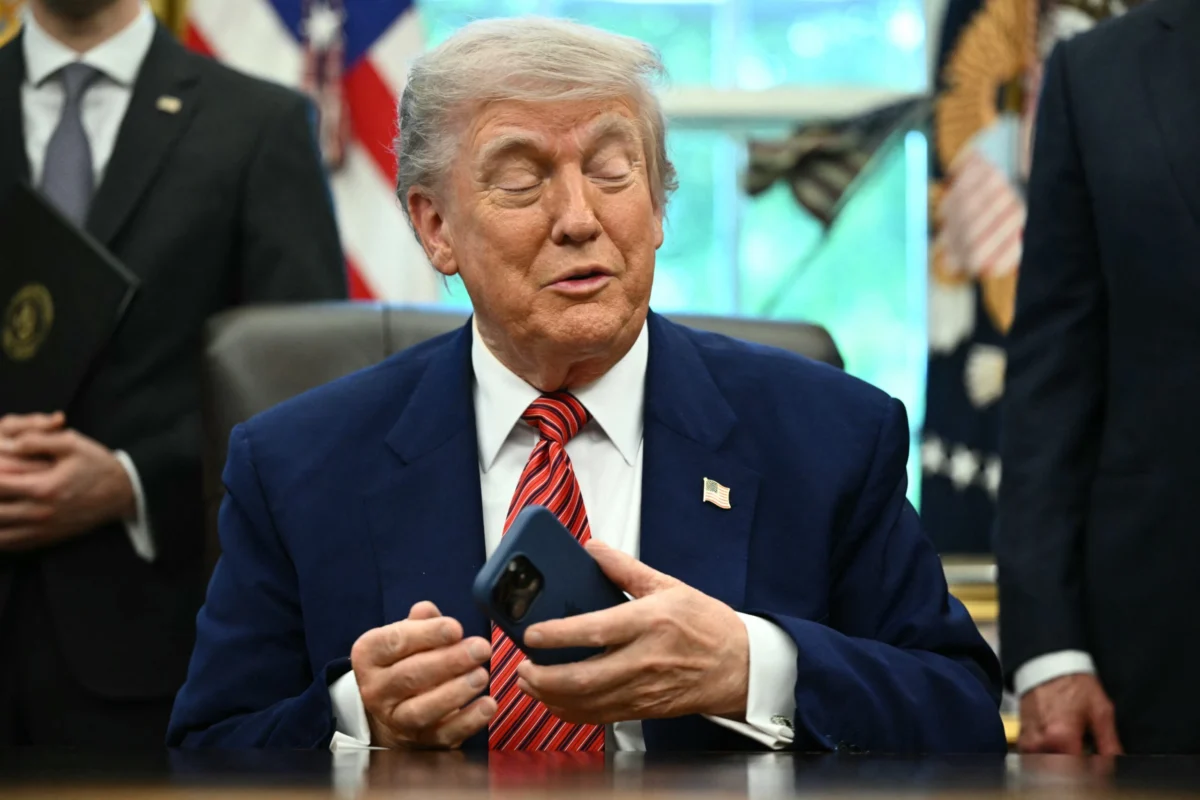
Nearly one million individuals have collectively lost an estimated $3.8 billion after investing in the $TRUMP memecoin, a digital asset associated with President Donald Trump, according to a comprehensive analysis by the cryptocurrency analytics firm Nansen. This substantial financial setback impacts approximately two out of three buyers of the highly speculative digital currency, raising significant questions about investor protection, the ethics of political figures promoting volatile assets, and the regulatory environment under the current administration. The revelation comes at a time when President Trump has disclosed personal earnings exceeding half a billion dollars from the very same memecoin, highlighting a stark contrast between presidential profits and widespread investor losses.
Unpacking the Losses: The Nansen Report and Blockchain Transparency
Nansen’s detailed analysis, first reported by The New York Times, leverages the inherent transparency of blockchain technology to meticulously track transactions. As of the end of June, Nansen identified 988,905 distinct accounts that had experienced net losses from their investments in $TRUMP. This granular data, publicly accessible and immutable on the blockchain, provides an unprecedented level of insight into the financial outcomes of participants in this particular cryptocurrency venture. The $3.8 billion figure represents the aggregate capital outflow from these nearly one million accounts, painting a stark picture of the risks associated with memecoin investments, particularly when tied to high-profile public figures. The ability of firms like Nansen to provide such precise audits underscores both the transparency and the accountability challenges inherent in the decentralized finance (DeFi) space. While the blockchain itself is transparent, interpreting its data requires sophisticated tools and expertise to distill actionable insights about market trends and individual financial performance.
The Volatile Trajectory of $TRUMP: A Case Study in Speculation
The $TRUMP memecoin has experienced extreme volatility since its inception, characteristic of many assets in the highly speculative memecoin category. On Sunday, July 5, 2026, the token was trading at a mere $1.69. This represents a staggering decline of nearly 98% from its all-time high of $75.35, a peak achieved during a period of intense market speculation and hype. Such precipitous drops are not uncommon in the memecoin market, where prices are often driven by social media trends, celebrity endorsements, and community sentiment rather than underlying technological innovation or tangible utility. The rapid ascent to $75.35 likely lured many retail investors, often with limited experience in cryptocurrency markets, who were hoping to capitalize on what appeared to be a rapidly appreciating asset. However, as is often the case with such speculative bubbles, the subsequent crash has left a vast majority of these investors with significant losses, underscoring the "greater fool" theory that often underpins memecoin valuations.
President Trump’s Entry into the Crypto Sphere: A Chronology
President Trump’s foray into the cryptocurrency world predates the launch of the $TRUMP memecoin. His broader engagement began with the co-founding of World Liberty Financial (WLF) alongside his sons. This crypto startup introduced its own digital token, $WLFI, which, much like $TRUMP, has also witnessed a substantial decline in value since its launch.
The announcement of the $TRUMP memecoin itself came just three days before his inauguration in 2025, signaling a deliberate and high-profile entry into the digital asset space at the very outset of his presidential term. This timing was notable, as it immediately linked his political brand with a novel and inherently risky financial product. The launch of $TRUMP was met with a mix of excitement from his supporters within the crypto community and skepticism from financial analysts and regulatory watchdogs concerned about the potential for conflicts of interest and market manipulation. The initial surge in the token’s value post-announcement exemplified the power of branding and personality in the memecoin market, where perceived endorsement can instantly create significant trading volume and price appreciation, irrespective of fundamental value.
A Lucrative Venture for the President: Personal Gains Amidst Public Losses
While nearly a million investors faced substantial losses, President Trump’s personal financial disclosures reveal a dramatically different outcome. In a recent filing, the president reported making a staggering $636 million from the $TRUMP memecoin alone. This considerable sum accounts for almost half of the total $1.4 billion he reportedly earned from the cryptocurrency industry last year, further solidifying his position as a significant beneficiary of the digital asset boom. The disparity between the president’s immense personal profit and the collective losses of his investors has fueled criticism and raised ethical questions regarding the promotion of speculative assets by public officials. Critics argue that such direct financial gain from a volatile, personality-driven asset, especially one launched during his political tenure, creates a significant conflict of interest and could be perceived as leveraging his public office for personal enrichment.
Regulatory Environment Under the Trump Administration: A Laissez-Faire Approach
Under the Trump administration, the Securities and Exchange Commission (SEC) has adopted a notably lenient stance on memecoins. In February 2025, the SEC publicly stated its position that it would not regulate memecoins as securities. This decision marked a significant departure from traditional financial regulatory approaches, which typically subject investment contracts and other financial instruments to stringent oversight to protect investors. The SEC’s reasoning often centers on the argument that memecoins, lacking a centralized issuer or a clear expectation of profit derived from the efforts of others, do not fit the established legal definition of a security under the Howey Test.

Further illustrating this regulatory posture, the SEC has also dropped a number of high-profile lawsuits against various cryptocurrency companies, including a notable case against the Winklevoss twins’ Gemini crypto exchange in January 2026. These actions collectively signal a broad hands-off approach to regulating certain segments of the crypto market, particularly those deemed less conventional. A White House spokesperson, defending the administration’s policy, told The New York Times that "President Trump proudly made the United States the crypto capital of the world." This statement underscores the administration’s prioritization of fostering innovation and growth within the crypto sector, even if it entails a more permissive regulatory framework that some argue leaves retail investors vulnerable.
Understanding Memecoins: High Risk, High Reward, and the Allure of the Crowd
Memecoins represent a unique and often perplexing phenomenon within the broader cryptocurrency landscape. Unlike established cryptocurrencies such as Bitcoin or Ethereum, which aim to solve specific technical or financial problems, memecoins are typically created as satirical or humorous digital assets, often inspired by internet memes or pop culture references. Their value is predominantly driven by community hype, social media trends, and the speculative interest of investors seeking rapid, exponential gains. They often lack a robust whitepaper, a dedicated development team, or a clear roadmap for utility, making their valuations highly susceptible to sudden shifts in sentiment.
The appeal of memecoins lies in their potential for astronomical returns in short periods, a siren song for retail investors hoping to "get rich quick." This allure is amplified by success stories (often highly publicized) of early investors who made fortunes, fueling a "fear of missing out" (FOMO) among others. However, the flip side is extreme volatility and a high propensity for "pump-and-dump" schemes, where early holders or large players inflate the price through coordinated buying and promotional activities, only to sell off their holdings at the peak, leaving latecomers with devalued assets. The $TRUMP memecoin, with its direct association with a prominent political figure, added another layer of complexity, intertwining political affiliation with financial speculation.
The Broader Implications: Investor Protection and Ethical Concerns
The substantial losses incurred by nearly a million investors in the $TRUMP memecoin, juxtaposed with the immense personal profits of President Trump, raise serious ethical and policy implications. From an investor protection standpoint, the lack of robust regulation for memecoins means that affected individuals have limited recourse compared to losses sustained in regulated financial markets. There are no clear mechanisms for recovery, and the speculative nature of the assets often means that buyers are implicitly accepting high levels of risk. This situation intensifies calls for clearer regulatory frameworks that can differentiate between legitimate technological innovations and purely speculative digital tokens, especially when public figures are involved.
Furthermore, the perceived conflict of interest is significant. A president actively profiting from a highly speculative and unregulated financial instrument, while his administration simultaneously adopts a lenient stance on its regulation, creates an appearance of impropriety. This scenario could undermine public trust in both financial markets and government institutions, suggesting that political influence might be used to create favorable conditions for personal financial gain. Critics argue that such circumstances necessitate stricter ethical guidelines for public officials engaging in financial activities, particularly in emerging and unregulated markets like cryptocurrency.
Expert Perspectives and Market Reaction
Financial analysts and consumer protection advocates have largely reacted to the Nansen report with concern, reiterating warnings about the inherent dangers of unregulated memecoin markets. Many experts have long cautioned against investing in assets driven primarily by hype, emphasizing the importance of due diligence, understanding underlying technology, and assessing genuine utility. The sheer scale of losses associated with $TRUMP reinforces these warnings, providing a real-world example of the potential financial devastation that can result from speculative bubbles.
Within the broader cryptocurrency community, reactions are more varied. While some vocal proponents continue to defend the "free market" nature of memecoins and the right of individuals to take on high risks, others acknowledge the reputational damage such incidents inflict on the nascent industry. The narrative of widespread losses, particularly when tied to a prominent political figure, risks alienating mainstream investors and could invite stricter regulatory scrutiny in the long run, despite the current administration’s stance. The market itself, by devaluing $TRUMP by 98%, has delivered its own verdict on the long-term viability and stability of the asset.
Looking Ahead: The Future of Political Memecoins and Regulation
The saga of the $TRUMP memecoin is likely to serve as a pivotal case study for the future of digital assets, particularly those intertwined with politics. The unprecedented scale of investor losses, coupled with the significant personal gains of a sitting president, will undoubtedly fuel ongoing debates about the appropriate level of regulation for cryptocurrencies. As digital assets become increasingly integrated into the global financial landscape, governments worldwide are grappling with how to balance innovation with investor protection.
The "crypto capital of the world" ambition, while promoting technological advancement, must also contend with the consequences of an unbridled market. Future administrations, or even the current one under renewed pressure, may be compelled to revisit the SEC’s stance on memecoins and other speculative tokens. There could be a push for clearer guidelines on what constitutes a security in the digital age, enhanced disclosure requirements for politically linked tokens, or even outright prohibitions on public officials from promoting or profiting from such volatile assets. The $TRUMP memecoin phenomenon has undeniably highlighted a critical intersection of finance, technology, and politics, with its ripples expected to influence regulatory discussions and ethical considerations for years to come.

