

For over two decades, Google has served as a cornerstone of machine learning and artificial intelligence research, consistently translating complex academic breakthroughs into practical, consumer-facing infrastructure. As of August 2026, the company has reached a critical inflection point, moving away from experimental generative AI toward a model of "applied intelligence" designed to function autonomously across personal, professional, and scientific landscapes. This month’s rapid series of product launches—highlighted by the debut of the Pixel 11 series, the rollout of Gemini 3.7 Flash, and the milestone of one billion monthly active users for the Gemini application—underscores a strategic shift toward integrating AI into the fabric of daily life.
The August 2026 Timeline of Innovation
The month began with a clear focus on developer efficiency and model optimization. Following the release of Gemini 3.6 Flash in late July, Google engineers accelerated the development cycle, launching Gemini 3.7 Flash just three weeks later. This rapid iteration cycle suggests a new internal operational tempo at Google, prioritized by the demand for low-latency, high-utility models. By offering 3.7 Flash at half the cost per million tokens compared to its predecessor, Google has signaled a competitive pricing strategy aimed at capturing a larger share of the enterprise agent-building market.
Mid-month, the attention shifted toward hardware. The "Made by Google 2026" event introduced the Pixel 11, 11 Pro, 11 Pro XL, and the 11 Pro Fold. These devices mark the first hardware generation designed entirely around the "Gemini Intelligence" architecture, powered by the new Google Tensor G6 chip. This hardware-software synergy is intended to move AI processing from cloud-dependent servers to on-device environments, utilizing the latest Gemini Nano models to enhance privacy, speed, and offline capability.

Scaling AI for the Global User Base
Perhaps the most significant metric released this month was the confirmation that the Gemini app has officially crossed the one billion monthly user threshold. This makes Gemini the fastest-scaling product in the company’s history, surpassing the growth trajectories of Search, Maps, and Android in their respective early years.
Data provided by Google suggests that user behavior is shifting toward conversational interaction. Approximately 63% of monthly active users now engage with Gemini through direct verbal dialogue rather than text prompts. This trend is particularly pronounced among parents and small business owners, who rely on the platform for multi-modal tasks, such as generating marketing materials or streamlining household scheduling. The app currently generates over 150 million images daily, reflecting a high volume of creative output that has fundamentally altered the digital content creation market.

Advancements in Specialized Transcription and Video
Beyond general-purpose chat, Google has introduced vertical-specific models to address long-standing gaps in AI performance. The launch of Gemini 3.5 Transcribe represents a significant improvement in speech-to-text accuracy. Unlike legacy transcription engines that struggle with ambient noise or technical jargon, 3.5 Transcribe utilizes context-aware processing to provide professional-grade outputs for live captioning, call center analytics, and voice-activated agents.
In the creative sector, the introduction of Gemini Omni 1.1 Flash provides high-end media production capabilities directly to the end user. Features like 4K upscaling, first-and-last-frame interpolation, and scene extension are no longer exclusive to professional video editing suites. By making these tools available within Google Flow and the Gemini Enterprise Agent Platform, Google is lowering the barrier to entry for high-fidelity video production, allowing for faster prototyping and more precise creative control.

Educational Integration and Academic Partnerships
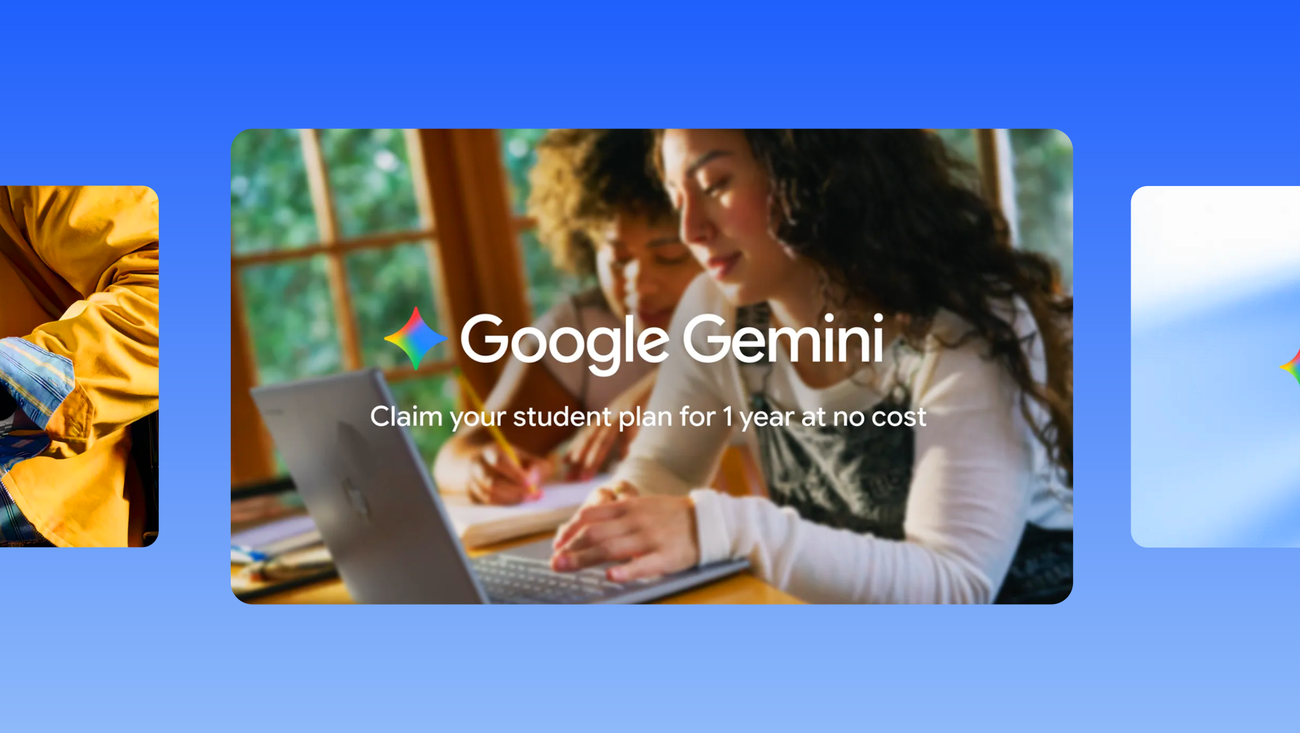
As the academic year commences, Google has launched a comprehensive initiative to integrate AI into higher education. This includes a one-year, cost-free subscription to the Google AI plan for eligible college students worldwide. The goal is to standardize the use of AI as a study tool, incorporating features like SAT, ACT, GRE, and LSAT practice modules directly into Search.
These educational tools are built with a "safety-by-design" framework, a critical consideration for academic institutions concerned with AI ethics and academic integrity. By providing a dedicated student hub and teacher-led tools, Google is attempting to position its platform as the primary digital assistant for the next generation of researchers and professionals, effectively embedding its ecosystem into the pedagogical process.

Environmental Impact and Scientific Resilience
Perhaps the most altruistic application of Google’s August updates lies in its commitment to climate science. The company has formally expanded "Operation Blue Skies," an AI-driven project that optimizes flight paths to minimize the formation of contrails—a significant contributor to aviation-related climate impact. By partnering with the UK government and global aviation leaders, Google is moving this technology from a research pilot to a standard operational practice across the North Atlantic flight corridors.
Simultaneously, the open-sourcing of the WeatherNext 2 model represents a major leap in meteorology. As detailed in the journal Nature, this model has demonstrated state-of-the-art accuracy in predicting cyclone tracks, intensity, and wind structure. By releasing the model to the research community, Google is facilitating a global effort to improve climate resilience, enabling nations to better prepare for extreme weather events with more granular and reliable data.

Analysis: Implications of the August Shift
The developments of August 2026 indicate that Google has successfully navigated the "proof of concept" phase of its AI transition. The implications for the technology industry are threefold:
- Hardware-Software Convergence: The Pixel 11 series demonstrates that AI will increasingly be defined by the quality of the silicon on which it runs. The integration of Tensor G6 and Gemini Nano suggests that future smartphone performance will be measured by "intelligence per watt" rather than just processor speed.
- The "Agentic" Era: The introduction of "Personal Intelligence" and "Daily Brief" features in Gemini Live confirms that the industry is moving from simple chatbots to autonomous agents. These systems are now designed to execute multi-step workflows—such as managing an inbox or organizing a complex schedule—without requiring constant user supervision.
- Commoditization of Intelligence: The aggressive pricing and rapid iteration of the Flash model series suggest that basic AI intelligence is becoming a commodity. As these models become cheaper and faster, the competitive advantage will shift toward companies that can provide the most seamless user experience and the most robust ecosystem of integrated applications.
As we look toward the remainder of 2026, the focus for Google will likely remain on refining these autonomous agents and expanding the reach of the Gemma open-source models. The fact that Gemma has been downloaded over one billion times—being deployed in environments as extreme as outer space and underwater research stations—highlights the ubiquity of Google’s AI infrastructure.

In summary, August 2026 served as a demonstration of technical maturity. The company has moved beyond the "hype cycle" to provide a suite of tools that are fundamentally changing how software is written, how education is conducted, and how global environmental challenges are addressed. Whether these tools will lead to the projected productivity gains remains a subject of ongoing analysis, but the scale of the deployment is, by any measure, historic. The shift toward AI-native devices and agent-based workflows marks a definitive transition in the modern digital age, moving the user experience from one of active searching to one of proactive, intelligent assistance.

