

In the nascent stages of Web3, the digital wallet served a singular, utilitarian purpose: a secure vault for private keys, facilitating token storage and transaction signing. However, as the digital landscape rapidly evolves towards what is being termed the "Post Web," this rudimentary model is proving insufficient. The wallet is no longer a peripheral tool but is emerging as the central nexus of user experience, transforming into a dynamic interface that manages not only assets but also an individual’s digital identity, permissions, resources, and even autonomous artificial intelligence (AI) agents. This paradigm shift is detailed in Chapter 2 of "The Post Web Thesis," which posits the wallet as the foundational control center for the "Agentic Web," a future ecosystem where human and intelligent machine interactions converge.
From Cryptographic Custody to Digital Personhood
The evolution of the wallet from a simple cryptographic key manager to a comprehensive digital identity framework represents a fundamental shift in how we understand ownership and agency online. Early iterations, exemplified by platforms like MetaMask and Ledger, prioritized the principle of "own your keys, own your crypto." This focus on cryptographic custody was essential for establishing trust and security in a decentralized environment. However, the burgeoning demands of the Post Web necessitate a more sophisticated approach.
As outlined in "The Post Web Thesis," wallets are increasingly becoming the primary interface for digital personhood. They are evolving into self-sovereign identity frameworks, capable of anchoring an individual’s identity, reputation, and agency within a single, verifiable system. This expansion means that a user’s wallet will no longer be solely a repository for digital assets but will function as a digital embodiment of the user themselves—an anchor for ownership, trust, and a verifiable online persona. This transformation is crucial for navigating a complex digital future where interactions are increasingly mediated by AI and decentralized systems.
The Wallet as a Command Center for AI Agents and Resource Management
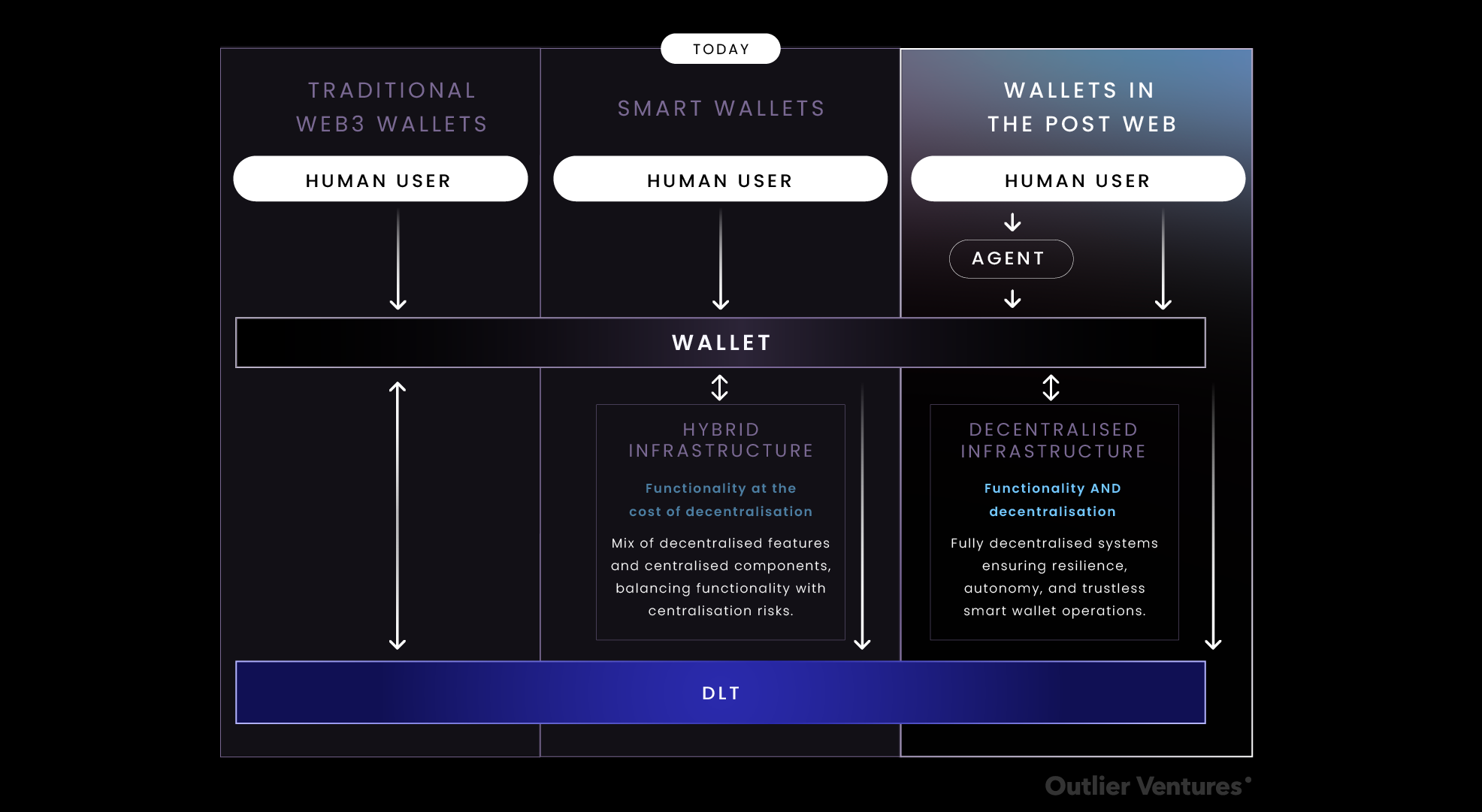
The Post Web envisions an "Agentic Web," where AI agents play an increasingly significant role in managing and executing tasks on behalf of users. The wallet is poised to become the command console for these agents, acting as a crucial intermediary that governs their operations. As highlighted in Exhibit 20 of "The Post Web Thesis," each AI agent will connect through a user’s wallet. This integration ensures that the wallet serves as a gatekeeper, responsible for:
- Authorizing Agent Actions: Granting or denying specific permissions for agents to perform actions on behalf of the user.
- Verifying Agent Identity: Confirming the legitimacy and credentials of the AI agent interacting with the user’s digital assets or identity.
- Auditing Agent Activity: Maintaining a transparent record of all actions taken by agents, ensuring accountability.
- Managing Agent Access and Revocation: Providing users with the ability to control which agents have access to their wallet and to revoke that access at any time.
This architectural design ensures that AI agents operate with user consent and within defined parameters, preventing unauthorized actions and maintaining user control. The wallet, therefore, evolves into a robust governance layer for digital autonomy.
Furthermore, the wallet’s role extends beyond managing AI agents to orchestrating a broader spectrum of digital resources. In the Post Web, wallets will manage not just digital assets like cryptocurrencies and NFTs, but also access to vital resources. This includes:
- Decentralized Physical Infrastructure Networks (DePIN): Enabling users to grant access to or leverage their participation in DePIN projects, such as decentralized storage or computing power.
- Data Ownership and Access: Managing permissions for how personal data is shared and utilized by various applications and AI agents.
- Decentralized Applications (dApps): Facilitating seamless access and interaction with a wide array of decentralized applications.
- Digital Credentials and Certificates: Storing and verifying digital attestations, diplomas, or professional certifications.
This comprehensive resource management capability transforms the wallet into an "operating system for autonomy," effectively mediating interactions across diverse networks, protocols, and decentralized infrastructures.
Navigating the Agentic World: Privacy and Security Imperatives
The proliferation of AI agents and the expanded functionality of digital wallets bring with them heightened concerns regarding privacy and security. As wallets evolve to store not only financial assets but also sensitive behavioral data, digital credentials, and agent connections, ensuring user privacy becomes paramount. "The Post Web Thesis" underscores the critical need for new cryptographic frameworks to maintain trust in this evolving ecosystem.
Post Web wallets are expected to leverage advanced privacy-preserving technologies, including:
- Zero-Knowledge Proofs (ZKPs): Allowing users to prove the validity of a statement without revealing the underlying data, thereby protecting sensitive information.
- Homomorphic Encryption: Enabling computations on encrypted data, allowing for data processing without decryption, thus preserving privacy.
- Secure Multi-Party Computation (SMPC): Facilitating joint computation over private inputs shared by multiple parties without revealing those inputs to each other.
These cryptographic advancements are designed to embed "privacy by design" into the wallet architecture. This approach ensures that users remain in control of their data and identity while still enabling verifiable and autonomous operations. The goal is to strike a balance where the convenience and power of autonomous systems do not come at the expense of fundamental user privacy.
Smart Wallets: Bridging Intent and Execution Today
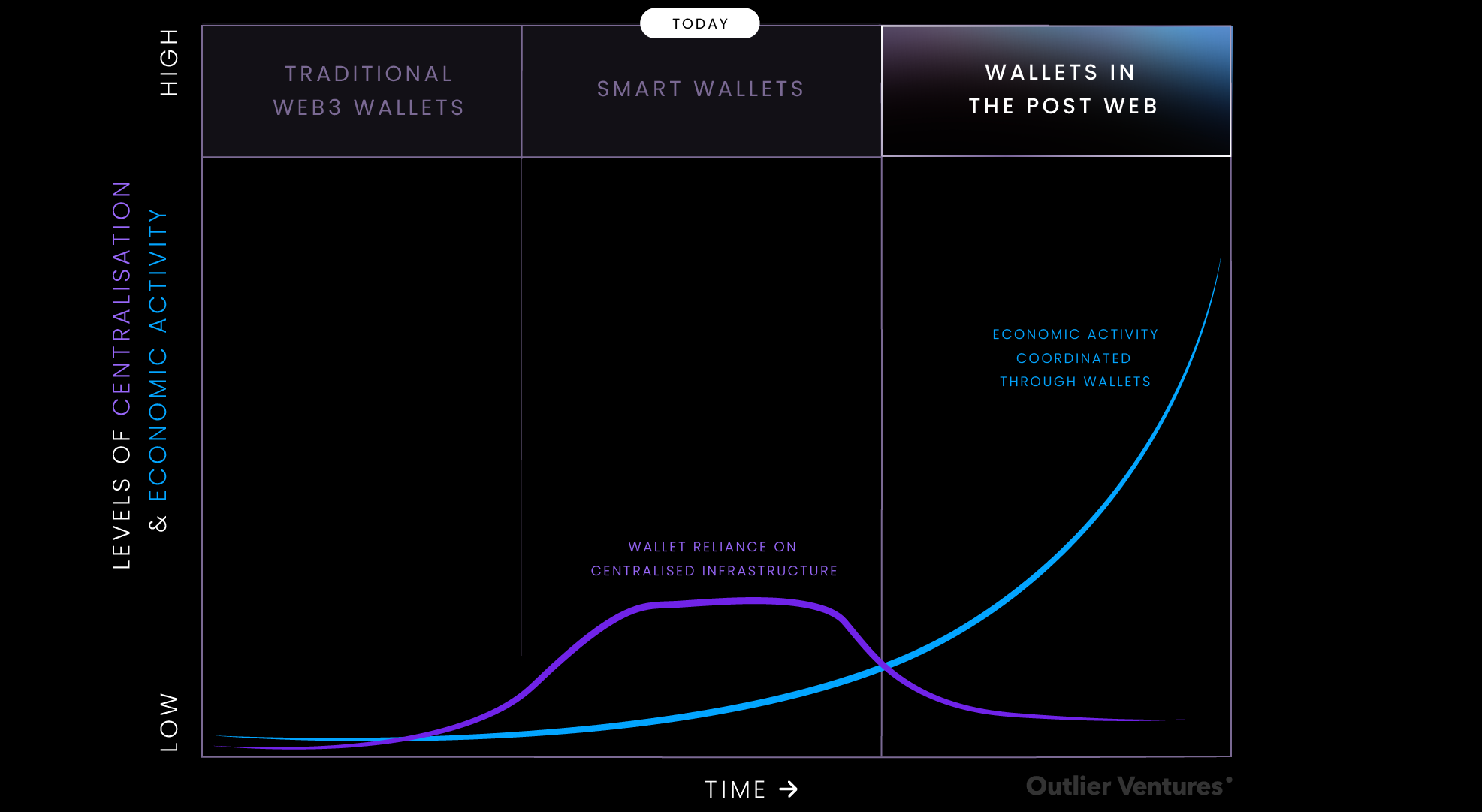
The challenges of early Web3 wallet user experience—cumbersome onboarding, the risk of losing funds due to lost seed phrases, and fragmented asset management across multiple blockchains—have historically served as significant barriers to mainstream adoption. However, the emergence of "smart wallets" is actively addressing these pain points and heralding the transition to a more intuitive digital future.
Platforms like Safe exemplify this new era of smart wallets. These innovative solutions are enhancing user experience by enabling sophisticated automation of user intents. This includes features such as:
- Automated Recurring Transactions: Scheduling and executing regular payments or DeFi interactions without manual intervention.
- Enhanced Security Measures: Implementing granular controls like spending limits, whitelists for approved counterparties, and multi-signature security protocols.
- Seamless DeFi Protocol Integration: Simplifying interactions with complex decentralized finance protocols.
As the digital economy shifts from manual execution to intention-based interaction, smart wallets are becoming the crucial interface between human users and autonomous on-chain actions. They are effectively bridging the gap between a user’s expressed goals and their automated execution within the blockchain ecosystem. This evolution signifies a move towards a more intelligent and user-centric digital paradigm.
Interoperability and Intent: The Wallet’s Evolving Interface
The increasing prevalence of AI agents necessitates a new paradigm for user interaction within the digital realm. The wallet is evolving into the primary interface for "intent," moving beyond the manual signing of individual transactions. Users and their agents will be able to express higher-level goals, such as:
- "Identify the most profitable yield farming opportunity with a risk tolerance below 5%."
- "Automatically vote on blockchain governance proposals that align with established sustainability metrics."
- "Secure the best available flight prices for my upcoming trip while optimizing for loyalty program benefits."
The wallet will then be responsible for interpreting these expressed intents, routing them across various protocols and networks, and ensuring their secure and verifiable execution. This fundamental shift from task execution to intent negotiation marks the wallet’s final metamorphosis into an intelligent mediator. It acts as the crucial bridge between human purpose and the execution capabilities of machine intelligence in the decentralized landscape.
Closing Thoughts: The Wallet as the Manifestation of Digital Selfhood
"The Post Web Thesis" posits that the digital wallet is undergoing a profound redefinition. It is transcending its origins as a mere storage tool for digital assets and transforming into a living, adaptive interface that embodies identity, manages assets, and enables autonomy. In this new paradigm, a user’s wallet will perform a multitude of functions far beyond simple transaction signing. It will:
- Manage Digital Identity: Serving as the verifiable anchor for who you are online.
- Orchestrate AI Agents: Acting as the control center for your autonomous digital assistants.
- Govern Resource Access: Mediating your interactions with various digital and decentralized infrastructures.
- Facilitate Intent Negotiation: Translating your goals into actionable on-chain operations.
- Protect Privacy: Employing advanced cryptography to safeguard your sensitive data.
In essence, the wallet is poised to become the true manifestation of digital selfhood. It represents the nexus of ownership, identity, and agency within the emerging agentic economy, fundamentally reshaping our relationship with the digital world.
This comprehensive transformation is deeply rooted in the research and analysis presented in "The Post Web Thesis; Chapter 2: Turning the Web3 Tech Stack into the Post Web Stack" by Outlier Ventures (2025), specifically pages 67-76. The insights provided by Andres Acevedo, Investment Manager at Outlier Ventures, offer valuable perspectives on the critical role of smart wallets in this evolving landscape. As the digital frontier continues to expand, the wallet’s evolution from a simple key vault to a sophisticated digital identity and autonomy manager will be a defining characteristic of the Post Web.

