The rapidly expanding commercial space sector has long struggled with a fundamental bottleneck: the disconnect between cutting-edge aerospace engineering and the conservative, risk-averse world of traditional insurance. Charter Space, an El Segundo-based startup that emerged as a standout finalist in last year’s TechCrunch Startup Battlefield, is aiming to bridge this divide. On Wednesday, the company announced it has successfully closed a $5 million seed funding round, bringing its total capital raised to $8 million. This injection of capital arrives as the firm scales its operations to meet the surging demand for specialized insurance coverage within the U.S. space and defense industrial base.
The funding round was spearheaded by Crystal Venture Partners, a firm with deep expertise in the insurance sector. Participation also included a strategic mix of fintech-focused investors such as QED and Blank Ventures, alongside early-stage venture firm Hustle Fund and the investment syndicate Gaingels, which prioritizes backing startups with underrepresented leadership.
A New Architecture for Space Risk
Founded by CEO Yuk Chi Chan and co-founder Yukun Yin, Charter Space initially set out to develop centralized software designed to aggregate technical, manufacturing, and testing data for aerospace companies. However, Chan quickly recognized that the existing underwriting process for space assets was archaic and poorly suited to the needs of modern aerospace firms.
In the current market, satellite operators often report that traditional underwriters react with confusion or skepticism when presented with complex engineering specifications. Because traditional insurers frequently lack the internal technical expertise to evaluate "scary science words," the premiums for insuring spacecraft remain prohibitively high. Charter Space aims to disrupt this by plugging its proprietary engineering data directly into the underwriting process, creating a more transparent and technically grounded assessment of risk.
Since launching its nationally licensed insurance brokerage in May, the startup has already onboarded over 50 clients, signaling a clear market appetite for a more sophisticated, data-driven approach to space insurance.
Chronology and Industry Evolution
The necessity for specialized insurance has grown in lockstep with the democratization of space access. For decades, the space industry was an exclusive domain of government agencies and large-scale defense contractors. During the Cold War and the decades that followed, these entities operated with long lead times and conservative risk profiles, which meant insurance was often a secondary, bureaucratic concern.
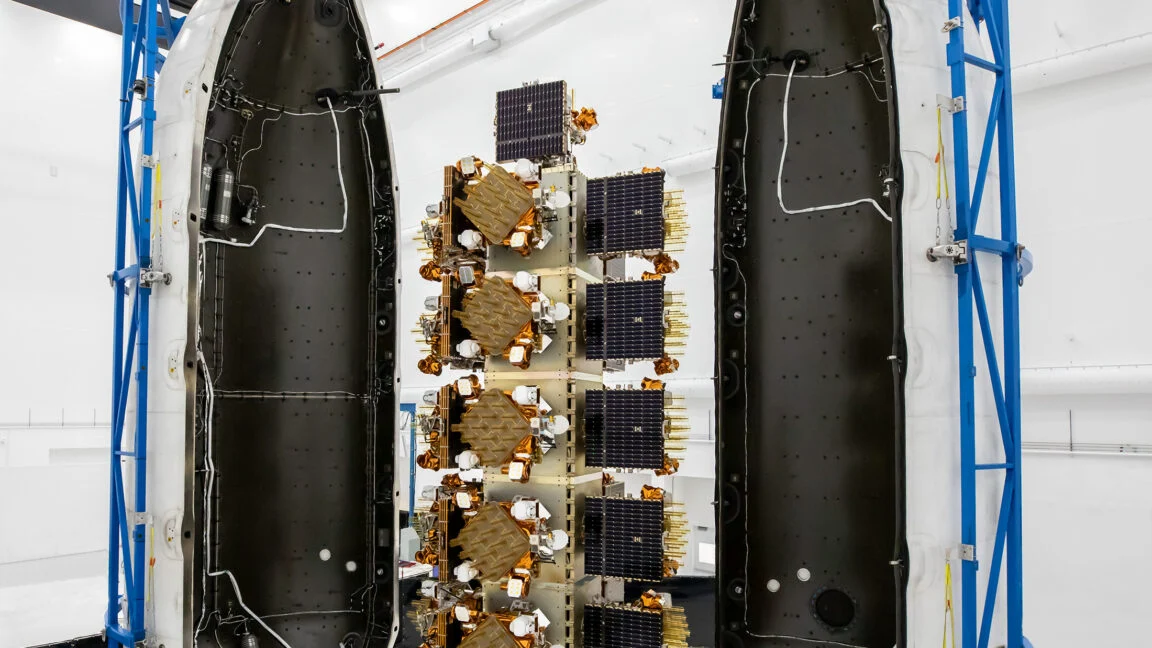
The paradigm shifted significantly over the last decade, driven by the dramatic reduction in launch costs spearheaded by SpaceX’s Falcon 9. As launch costs plummeted, the volume of private satellites and commercial space projects skyrocketed. This surge in activity created a crowded low-Earth orbit (LEO) and a burgeoning market for small-to-medium-sized aerospace startups that require financial stability to attract investors.
The trajectory of Charter Space reflects this shift:
- 2023: Charter Space makes its public debut as a finalist at TechCrunch Startup Battlefield, drawing industry attention to the "insurance gap" in the space economy.
- May 2025: The company officially launches its nationally licensed insurance brokerage, moving from software development to active service provision.
- October 2025: The company secures $5 million in seed funding to expand its sales and engineering teams.
- Future Outlook: With SpaceX moving toward the retirement of the Falcon 9 in favor of the Starship platform, the industry is bracing for another wave of innovation, creating a new requirement for specialized coverage of next-generation launch systems.
Data-Driven Implications for the Space Economy
The broader economic implications of Charter Space’s mission are significant. By making insurance more accessible and affordable, the firm is effectively creating a safety net that enables companies to move beyond reliance on pure venture capital.
When a sector lacks adequate insurance, it is viewed as "high-risk" by traditional financial institutions. This prevents companies from accessing lower-cost debt or credit-based financing. By normalizing the insurance process, Charter Space is helping to integrate the space industry into the broader financial ecosystem. As Chan previously noted, a well-insured space sector is not only safer but also significantly more attractive to alternative capital sources, such as institutional investors and credit markets that typically avoid unquantifiable risks.
Official Perspectives on the "Precondition for Growth"
The importance of this development has not gone unnoticed by regulators. Florida, which currently serves as the nation’s primary launch hub, views insurance as the linchpin for maintaining its competitive edge. Michael Yaworsky, the commissioner of insurance regulation in Florida, has emphasized that insurance is the "precondition for growth in space."
"The state that leads on insurance will be the destination for capital investing in the industries of the future," Yaworsky stated, suggesting that the maturation of firms like Charter Space will play a pivotal role in laying the foundation for American aerospace dominance in the coming decades.
From the investor side, Jonathan Crystal, managing partner of Crystal Venture Partners, highlighted the dual-opportunity nature of the business. "Charter Space sits at the intersection of two enormous opportunities: the rapid growth of the commercial space economy and the need for a modern approach to understanding and insuring the increasingly complex risks that accompany that growth," Crystal said. He described insurance as "critical infrastructure" for a sustainable space economy.
Future Offerings and Market Expansion
With the $5 million in new funding, Charter Space intends to broaden its scope beyond standard satellite insurance. The startup is eyeing coverage for "novel mission concepts" that push the boundaries of current aerospace technology. These include:
- Space-based Nuclear Power: As power requirements for long-duration missions grow, nuclear thermal and electric propulsion systems are becoming more viable, necessitating entirely new actuarial models.
- Lunar Missions: With the renewed focus on lunar exploration and resource extraction, the risks associated with cislunar transit and landing are becoming a priority for commercial insurers.
- In-Space Servicing: The rise of "space tugs" and robotic repair platforms introduces unique liability and operational risks that current policies are not equipped to handle.
By focusing on these niche, high-growth areas, Charter Space is positioning itself not just as a broker, but as a technical partner that can evolve alongside the technology it covers.
Analytical Summary: Is Insurance the New Engine of Growth?
The maturation of the space economy can be measured by the sophistication of its support services. In every major industrial revolution—from the steam engine to the internet—the emergence of robust insurance and financial services marked the transition from "experimental" to "essential."
Charter Space’s success in securing $5 million suggests that investors view the "space insurance gap" as a solvable problem. By bridging the linguistic and technical divide between aerospace engineers and underwriters, the company is effectively lowering the barrier to entry for the next generation of space startups.
However, challenges remain. The space environment is inherently unpredictable, and as more actors enter orbit, the risk of collisions and debris-related insurance claims will rise. The ability of Charter Space to accurately model these risks will be the ultimate test of its platform. If successful, it could turn the "scary science" of spaceflight into a manageable, predictable, and fully financeable industry.
As the industry moves toward the eventual retirement of the Falcon 9 and the full integration of heavy-lift, reusable rockets like Starship, the demand for sophisticated insurance will only intensify. Charter Space, by building the digital plumbing for these complex financial transactions, appears to be positioning itself as a central node in the future of the space-industrial complex. With a growing client list of 50-plus companies, the firm is already moving from theoretical promise to operational reality, setting the stage for a safer, more stable, and more deeply capitalized commercial space era.