
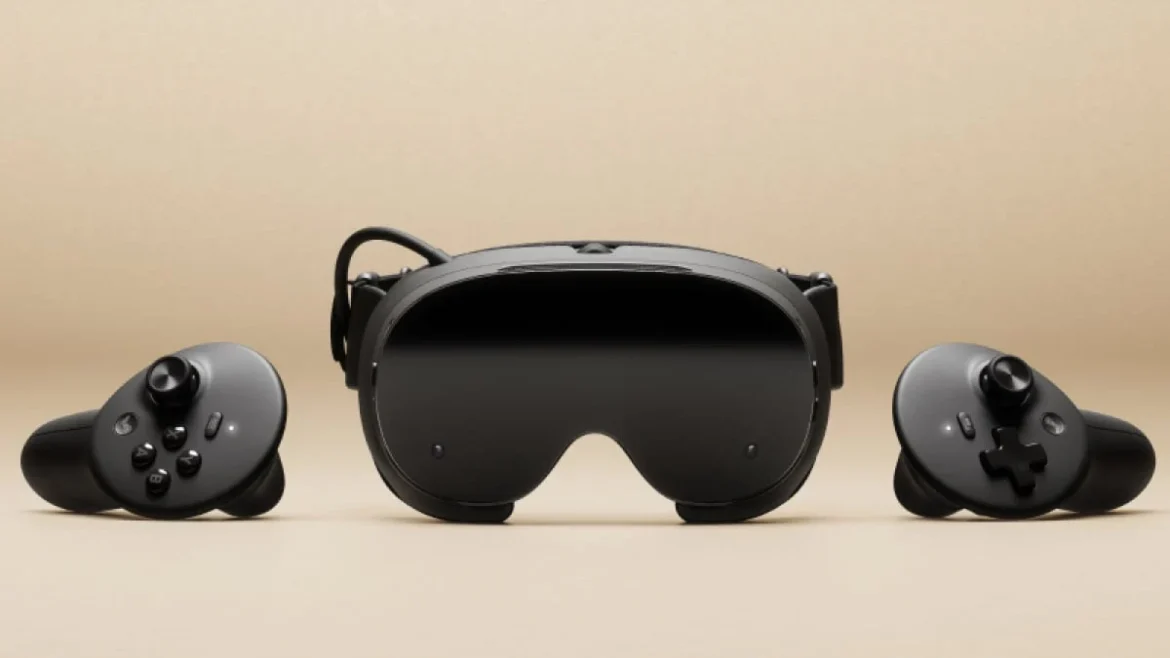
Following years of industry speculation, patent filings, and whispered expectations within the PC gaming community, Valve has officially brought its next-generation hardware to the consumer market. The Steam Frame, developed by the parent company behind the dominant Steam digital distribution platform, launched on September 18, following its initial announcement in November 2025. Positioned as a hybrid between a standalone virtual reality device, a wireless PC streaming peripheral, and a virtual monitor for traditional flat-screen titles, the headset arrives as one of the most ambitious and polarizing pieces of hardware in the recent history of consumer electronics.
Early evaluations from major technology and gaming publications paint a nuanced picture of a brilliantly engineered device hampered by macroeconomic headwinds, a high barrier to entry, and a software ecosystem that is currently experiencing a period of stagnation. While critics widely praise the hardware design, seamless wireless streaming capabilities, and user experience, questions regarding its pricing strategy and the broader viability of the virtual reality market threaten to cast a long shadow over its commercial debut.
A Chronological Overview: From Years of Rumors to Storefront Shelves
The journey of the Steam Frame dates back long before its official unveiling. For half a decade, hardware enthusiasts tracked code leaks within the Steam client, job postings at Valve’s Bellevue headquarters, and regulatory filings that pointed toward a successor to the Valve Index—the tethered VR headset released in 2019.
In November 2025, Valve broke its silence, confirming the existence of the Steam Frame and promising a paradigm shift in how users interact with their Steam libraries. Unlike its predecessor, which required base stations and a persistent wired connection to a powerful gaming rig, the Steam Frame was designed from the ground up to offer both standalone processing capabilities and low-latency wireless PC tethering.
By September 18, pre-orders and initial retail units began arriving at consumers’ doorsteps and reviewers’ desks. The launch immediately reignited debates regarding the utility of standalone VR headsets in an era where consumer interest in dedicated virtual reality software has plateaued. Despite the enthusiasm surrounding Valve’s engineering feats, the product enters a very different technological landscape than the one that greeted the Valve Index or Meta’s early Quest iterations.
Hardware Brilliance and the Death of Friction
The primary consensus among early reviewers centers on the device’s exceptional hardware design and its ability to remove the administrative and physical friction that has historically plagued VR adoption.
Jacob Ridley of PC Gamer highlighted the seamless user experience in his review, noting that the Steam Frame "gets a whole lot right" by prioritizing comfort, straightforward navigation, and above all, convenience. Ridley observed that the traditional hurdles of setting up boundary tracking, dealing with tangled wires, and navigating clunky software menus have been largely eliminated, allowing users to simply place the headset on their heads and immediately access their entertainment.
This sentiment was echoed by Zack Zwiezen of Kotaku, who focused heavily on the headset’s performance as a wireless PC gaming peripheral. Zwiezen reported that the Steam Frame’s wireless streaming capabilities outperformed any competing hardware he had previously tested. By maintaining a high-fidelity connection to a local PC without perceptible lag or streaming artifacts, the headset allowed users to experience high-end virtual reality untethered. Zwiezen characterized this seamless performance as "easily Valve’s biggest win with the Steam Frame," noting that it was effortless enough to make users entirely forget they were not physically plugged into a machine.
The Virtual Monitor Paradigm and Open Ecosystems
Beyond native virtual reality applications, the Steam Frame introduces significant utility for traditional desktop gaming. Jacqueline Thomas of IGN noted that during her testing period, she spent an almost equal amount of time playing non-VR, flat-screen games on a massive virtual screen inside the headset as she did engaging with dedicated VR titles. For many users, the device functions effectively as a portable, private gaming monitor that can be transported and utilized anywhere within a home Wi-Fi network.
Chris Person of gaming outlet Aftermath praised the device’s architectural philosophy, describing the Steam Frame as "one of the most exciting pieces of hardware I’ve seen in the space in years." Person commended Valve for attempting to unify several disparate use cases—standalone mobile VR, high-end wireless PC VR, and flat-screen virtual monitor viewing—into a single, cohesive, and open platform. This multi-role capability has led many analysts to describe the Steam Frame conceptually as a "Steam Deck with a VR and AR component," emphasizing its versatility over singular application focus.
Critical Friction Points: Battery Life, Stability, and Launch Software
Despite widespread praise for its conceptual ambition and baseline engineering, the Steam Frame has faced pointed criticism regarding its day-one execution. Scott Stein of CNET summarized these shortcomings, pointing to persistent battery life limitations, occasional software instability, and a noticeable paucity of dedicated game software optimized specifically for the platform at launch. Stein suggested that unless consumers are willing to embark on an expensive, experimental hardware journey, waiting for software updates and hardware revisions would be the prudent course of action.
These technical hurdles are compounded by the current economic climate of the consumer hardware market. The Steam Frame carries a substantial price tag, starting at $1,059 for the 256GB base model and scaling up to $1,299 for the 1TB configuration. James Archer of Rock Paper Shotgun pointed out that this pricing structure creates a massive economic hurdle, particularly when weighed against the current appetite for virtual reality hardware among mainstream gamers.
The Timing Problem and the State of the VR Market
Perhaps the most formidable challenge facing the Steam Frame is not an engineering flaw, but rather a macro-level industry trend. Reviewers across multiple publications noted that the broader gaming industry’s push for virtual reality failed to achieve the mass-market ubiquity predicted several years ago, resulting in a dramatic slowdown in the development of original, high-budget VR games.
Archer described it as a "strange time to be selling a new VR headset," noting that the supply of original virtual reality software has slowed to a trickle. This perspective was underscored by Kotaku’s blunt review headline: "I have no idea who it’s for in 2026."
Devindra Hardawar of Engadget expanded on this critique, arguing that while the Steam Frame delivers a fundamentally solid standalone experience, its exorbitant price point and late arrival work against its long-term viability. Hardawar suggested that the device has arrived far too late to single-handedly revitalize the declining momentum of the consumer VR sector.
Market Implications and Industry Outlook
The launch of the Steam Frame marks a critical juncture for Valve and the wider immersive computing landscape. By refusing to lock users into a closed, proprietary storefront and instead leveraging the massive ecosystem of Steam, Valve has attempted to build the most open and flexible headset on the market.
However, the hardware’s success remains constrained by the reality of the broader market. At over $1,000, the Steam Frame is priced squarely as an enthusiast product. At the same time, the relative scarcity of AAA virtual reality software in 2026 makes it difficult for mainstream consumers to justify the investment solely for immersive gaming.
As Valve continues to issue software patches and firmware updates to address launch-day bugs and battery optimization, industry observers will be watching closely to see whether the company’s open-platform philosophy can inspire developers to return to VR development, or if the Steam Frame will remain a niche marvel for early adopters and hardware purists.
