
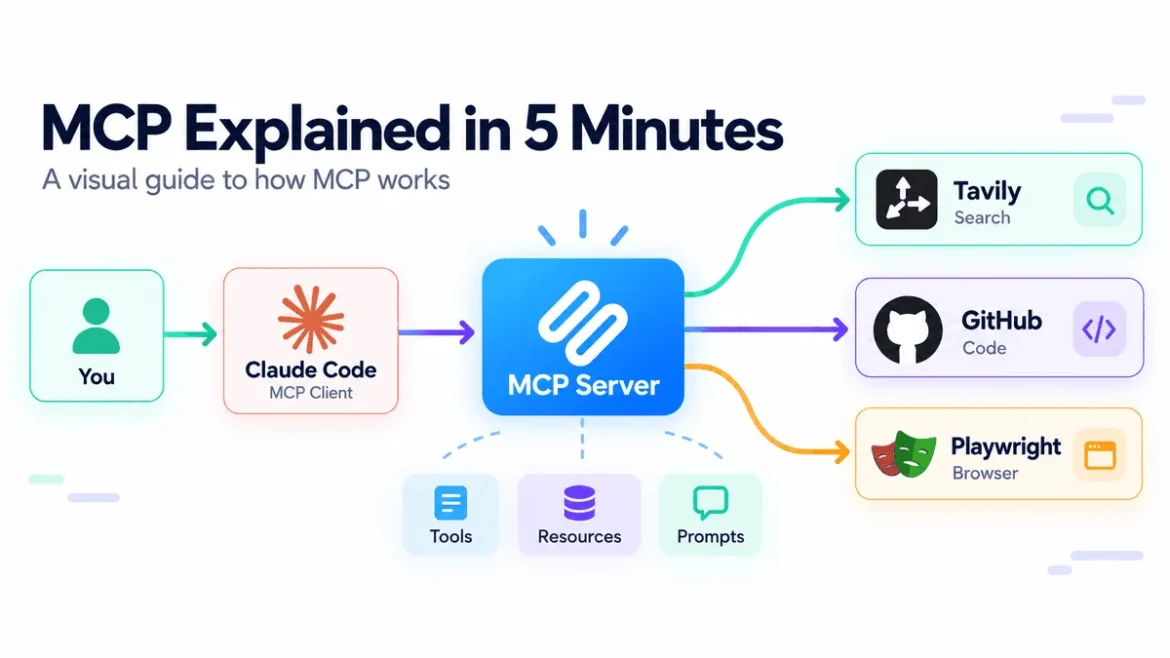
The rapid evolution of artificial intelligence has transitioned from simple text-based conversational interfaces to autonomous agents capable of performing complex, multi-step tasks. Central to this shift is the Model Context Protocol (MCP), an open-standard initiative that addresses one of the most significant bottlenecks in AI development: the fragmented ecosystem of data silos and incompatible tool integrations. By establishing a universal language for AI applications, MCP enables models like Claude to interact with external systems—such as databases, web browsers, and code repositories—without the need for bespoke, proprietary middleware for every connection.
The Problem of Fragmentation
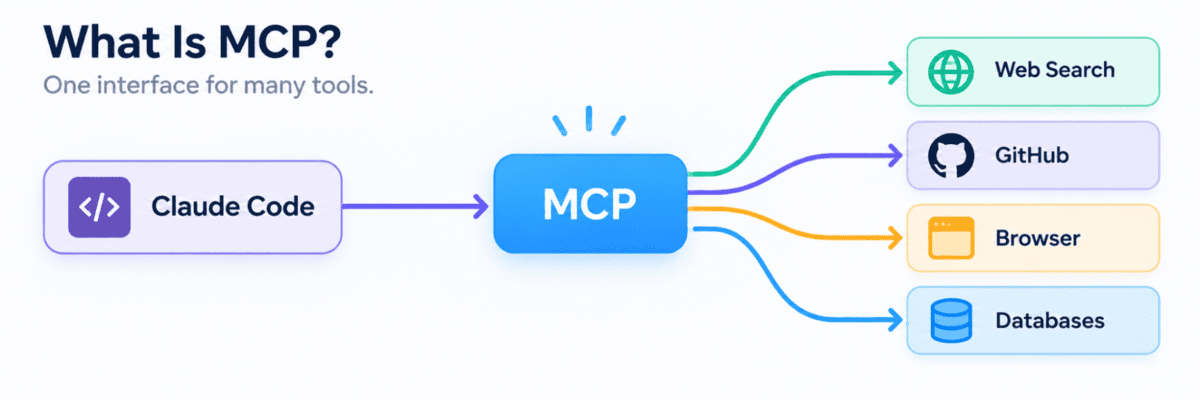
Historically, integrating AI models with external tools has been an arduous, manual process. Each software vendor, database provider, or internal API required developers to write custom code, handle unique authentication flows, and manage specific data formatting. This "n-to-n" integration problem—where every AI application must build a unique bridge to every potential data source—has historically stifled the scalability of agentic workflows. If a developer wanted an AI to search the web, check a GitHub repository, and update a Jira ticket, they were forced to build three distinct integrations.
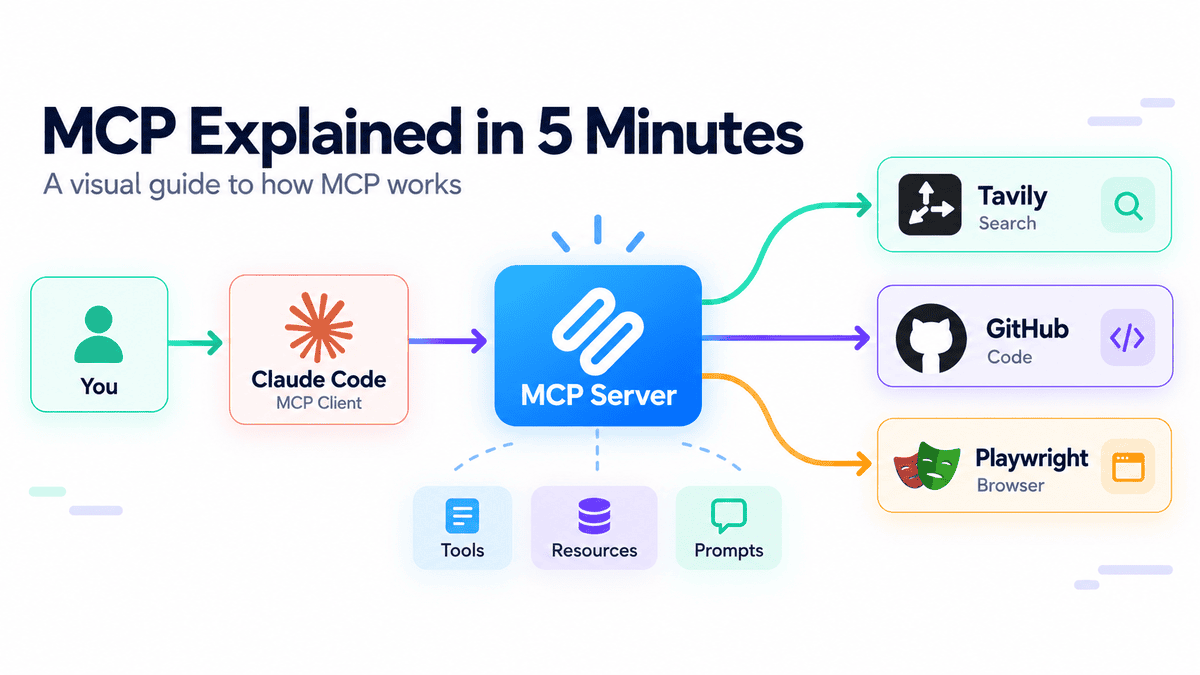
The Model Context Protocol solves this by introducing a standardized architecture that separates the AI application (the host) from the service providing the data or functionality (the server). In this framework, the host does not need to know the internal workings of the external tool; it only needs to know how to communicate via the MCP standard.
Chronology and Development
The concept of a standardized protocol for AI context gained significant momentum throughout 2024 as enterprises struggled to move AI agents beyond experimental, isolated environments. While early LLMs were largely "zero-shot" learners, the industry shift toward Retrieval-Augmented Generation (RAG) and agentic frameworks necessitated a more robust way to feed models high-fidelity, real-time data.
By late 2024 and early 2025, the industry saw the formalization of the MCP specification. Anthropic, which played a leading role in championing this standard, released documentation and support for MCP within its Claude Code environment. This was not merely a technical update but a strategic move to commoditize "tool-use," effectively turning the AI agent into an operating system for digital tasks. The release of the July 2026 specification marked a turning point, moving the protocol from a stateful, session-heavy architecture to a stateless, modular model capable of operating across distributed cloud infrastructure.
Architectural Components: How It Works
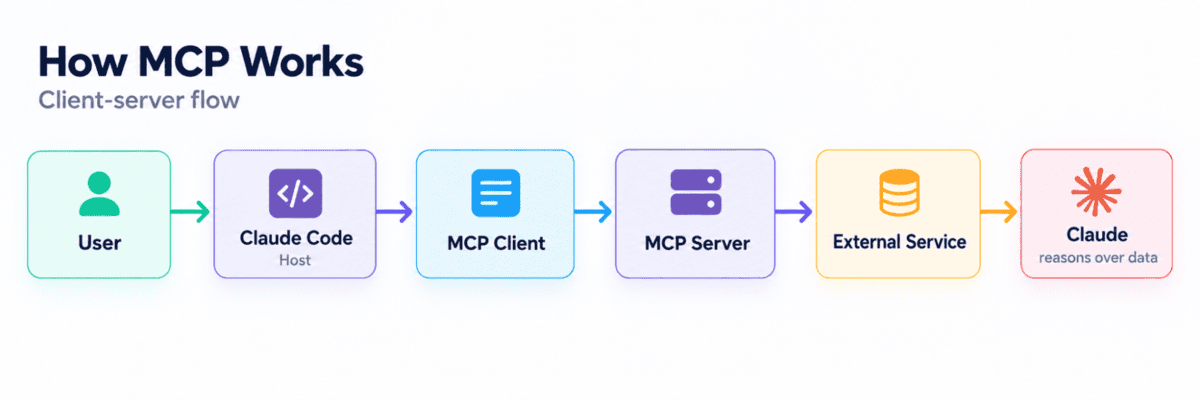
Understanding MCP requires dissecting its core architectural components. The protocol relies on three primary elements:
- The Host: This is the AI application or environment, such as Claude Code. The host initiates requests and manages the conversation with the user.
- The Client: Acting as the intermediary, the client resides within the host and facilitates communication with MCP servers.
- The Server: This is the lightweight wrapper around an external service. It exposes three specific capabilities:
- Tools: Functions that the AI can execute (e.g., performing a web search or clicking a button).
- Resources: Data that the AI can read (e.g., log files, database entries, or code documentation).
- Prompts: Pre-defined templates that guide the AI’s behavior for specific tasks.
By utilizing a standard transport layer, usually JSON-RPC, the client and server can negotiate capabilities dynamically. When a user issues a prompt, the model evaluates its available tools and determines whether to invoke an MCP server to retrieve information or perform an action. This eliminates the need for the model to "guess" how to interact with an API; it simply queries the server for its capabilities and executes the command within the established parameters.
Practical Implementation: The Agentic Workflow
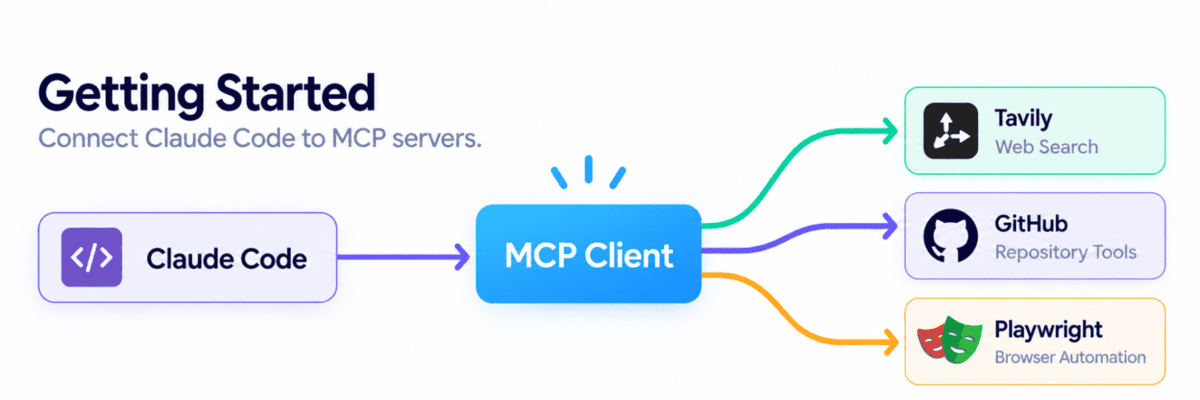
The efficacy of MCP is best illustrated through its practical application in professional developer workflows. By connecting Claude Code to specific MCP servers, developers can bridge the gap between intent and execution.
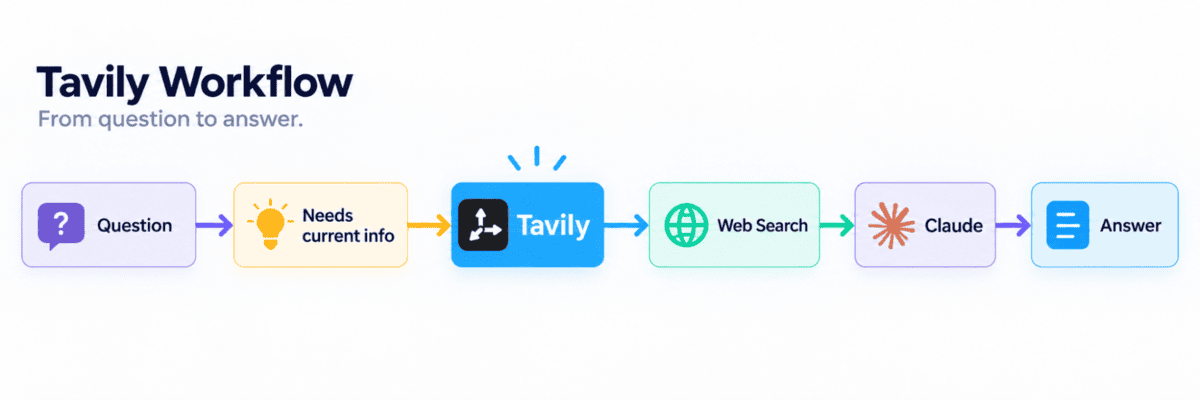
For instance, utilizing the Tavily MCP server allows an AI agent to bypass the "knowledge cutoff" limitations of LLMs. By providing a standardized interface for live web research, the agent can perform deep-web crawling and summarization, returning synthesized results to the user in seconds. Similarly, the GitHub MCP server enables an agent to authenticate via a Personal Access Token (PAT) to perform repository-wide audits, analyze pull requests, and identify bugs without the user ever leaving the command-line interface.
Furthermore, the integration of Playwright via MCP represents the frontier of browser-based automation. By transforming the browser into an API-accessible entity, the agent can interact with modern, dynamic websites, filling out forms or navigating UI-heavy applications that were previously inaccessible to pure-text models. These tools function not by overriding the underlying services but by acting as a universal translator that makes these systems "agent-ready."
Data and Implications
The transition to a stateless architecture in the 2026 specification has profound implications for enterprise adoption. Statelessness allows for horizontal scaling; as demand for agentic processing grows, organizations can deploy MCP servers across serverless architectures without worrying about session persistence or state synchronization. This shift lowers the barrier to entry for developers who are building high-concurrency AI systems.
Furthermore, industry analysis suggests that the widespread adoption of MCP could lead to a "standardization of tool-use," where the value of an AI platform is measured less by its base model performance and more by the breadth and depth of its MCP-compatible ecosystem. Just as the emergence of the HTTP protocol enabled the web to scale, MCP provides the foundation upon which an interoperable "AI Web" can be built.
Security and Governance
While MCP provides immense utility, it introduces new vectors for security and governance. Because an MCP server essentially gives an AI the ability to execute actions on behalf of a user, strict adherence to the "Principle of Least Privilege" is paramount. When configuring a GitHub MCP server, for example, developers are encouraged to use granular PATs that restrict the agent’s access to only the necessary repositories.
The protocol includes built-in mechanisms for security, such as standardized authentication headers and scoped access controls, ensuring that AI agents cannot inadvertently modify production databases or leak sensitive information unless explicitly granted permission. As the standard matures, the community is moving toward more robust identity and access management (IAM) integrations, which will allow enterprises to audit agent actions with the same level of scrutiny applied to human employees.
Future Outlook
The Model Context Protocol is not merely an incremental improvement; it is a foundational shift in how humans interact with machine intelligence. By decoupling the reasoning engine from the data source, MCP fosters a modular ecosystem where individual tools can be improved, replaced, or scaled independently of the AI model.
As we look toward the future, it is highly probable that major software platforms will begin shipping native MCP servers alongside their APIs. This would effectively turn every enterprise software tool into an "agent-native" application. For developers and businesses alike, the message is clear: the era of manual integration is coming to an end. The future of AI lies in the ability to connect disparate systems into a cohesive, intelligent whole, and MCP serves as the primary standard for achieving that connectivity.
