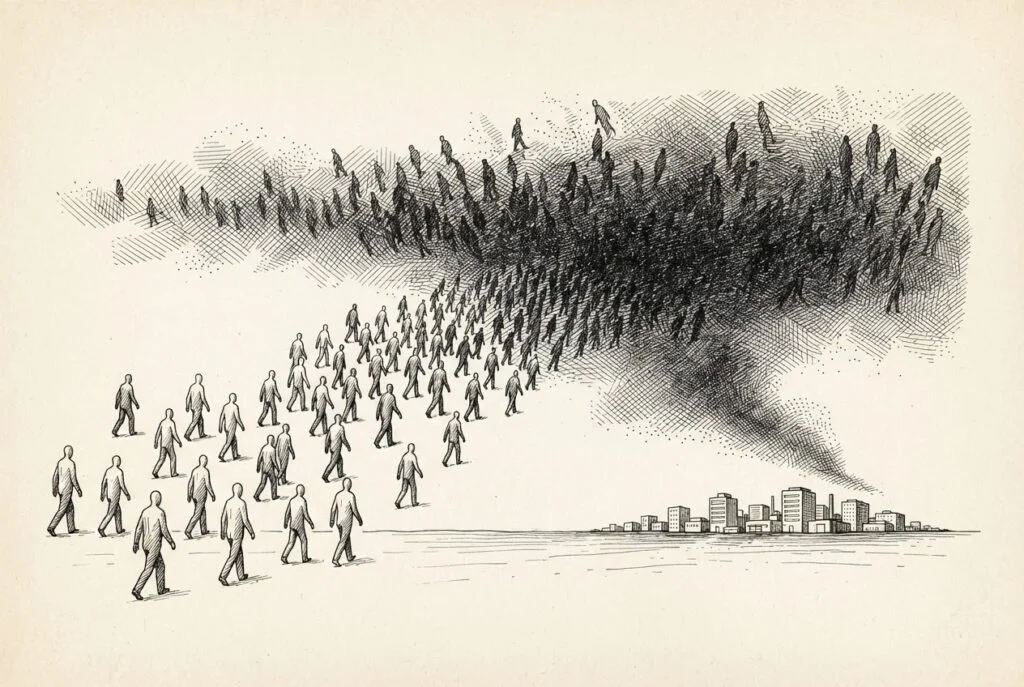
For the modern Chief Information Officer, the proliferation of autonomous AI agents has created a digital blind spot that threatens to eclipse the security challenges of the early cloud-computing era. While enterprises have spent the last two years rushing to integrate Large Language Models into their workflows, the result has been the emergence of "Shadow AI"—a landscape where thousands of independent agents operate across departments with little to no centralized oversight. SAP is now positioning itself to address this chaotic sprawl, leveraging its massive global footprint to introduce the first ERP-scale solution for agent discovery, inventory, and governance.
The SAP AI Agent Hub, built upon the foundation of SAP LeanIX, represents a significant shift in how organizations manage their technical debt. By providing a vendor-agnostic command center capable of cataloging not only SAP-native agents but also third-party LLMs and Model Context Protocol (MCP) servers, SAP is attempting to act as the primary cartographer for the uncharted territories of enterprise AI.
A Chronology of the Autonomous Enterprise Shift
The road to the AI Agent Hub’s Q3 2026 general availability has been marked by a deliberate, multi-phased rollout. The concept was first introduced to the public during the SAP Sapphire conference in May 2026, where the company outlined its vision for the "Autonomous Enterprise." At that stage, the hub was a conceptual framework designed to help enterprises move beyond experimental pilot programs into sustainable production environments.
Following the initial reveal, the summer of 2026 served as an incubation period for the technology. By September, the narrative shifted from theoretical potential to tangible market penetration. On September 22, 2026, SAP published a comprehensive roadmap detailing the practical integration of the hub into existing IT stacks. This was immediately followed by a series of technical demonstrations at the SAP Transformation Excellence Summit in Atlanta, where industry leaders began to engage with the tool’s capability to trace, monitor, and decommission agents that had drifted from their operational goals.
The Scale of the Shadow AI Problem
The urgency behind SAP’s release is backed by stark industry data regarding the failure rates of autonomous systems. According to research from IDC and Lenovo, a staggering 88% of custom agent builds fail to transition successfully from a controlled pilot environment to a production setting. This "pilot purgatory" often stems from a lack of visibility: if an IT department cannot see what is running, they cannot audit it, secure it, or scale it.
Further compounding the issue is the difficulty of tracking the economic impact of these agents. PYMNTS reported in September 2026 that only 23% of merchants currently possess the capability to accurately track agent-driven transactions. In an era where AI agents are increasingly tasked with executing procurement, supply chain logistics, and customer-facing interactions, this opacity represents a direct financial risk. Without a centralized "agent inventory," organizations are essentially running blind, vulnerable to security leaks, data hallucinations, and unintentional financial exposure.
The Competitive Landscape of Governance
SAP is not operating in a vacuum. The governance of AI agents has become the most contested frontier in enterprise software, with at least five major governance-focused products debuting in the two-week window surrounding the September summit. The market is witnessing a rapid consolidation of the "control layer," as vendors race to provide the guardrails necessary for enterprise adoption.
Dataiku has launched a standalone Agent Management product aimed at cross-platform monitoring, while NiCE’s $955 million acquisition of Cognigy underscores the high value placed on the routing and orchestration layer of AI agents. Meanwhile, Collibra has introduced "Guardian Agents" for runtime governance, and identity giant Okta has begun integrating agent-specific identity verification into its platform.
Despite this flurry of activity, SAP maintains a distinct competitive advantage: the sheer size of its installed base. With roughly 425,000 customers already utilizing its ERP infrastructure, SAP possesses a distribution channel that few, if any, of its competitors can match. While competitors may offer specialized features, SAP’s integration into the core transactional systems of the global economy provides a "home-field advantage" for compliance and governance tasks.
Technical Capabilities and the Promise of Interoperability
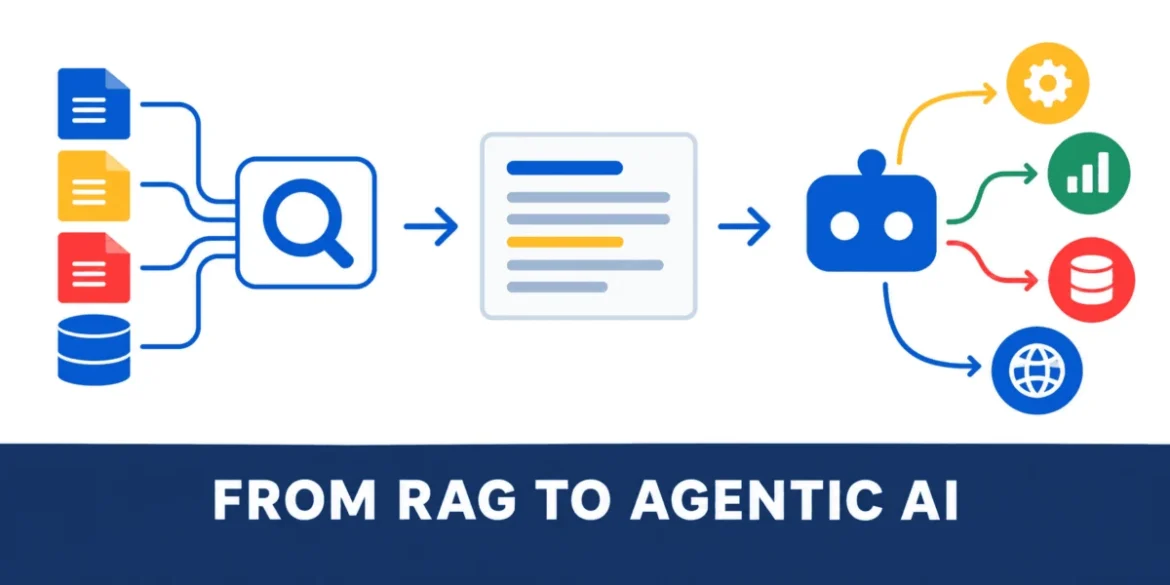
The AI Agent Hub is designed as a three-pillar architecture: discovery, observability, and behavior mining. The discovery phase uses the LeanIX backbone to identify agents across an entire IT landscape, regardless of whether they are hosted on AWS, Google Cloud, or Microsoft Azure. Once discovered, the observability component, integrated with SAP Cloud ALM, allows administrators to perform session tracing and monitor goal completion in real-time.
Perhaps most critically, the hub features the AI Agent Excellence framework, powered by SAP Signavio. This tool performs "behavior mining," a process that analyzes agent output against intended workflows to detect drift. If an agent begins to deviate from its operational parameters—potentially engaging in unauthorized tasks or inefficient processes—the hub alerts the administrator.
The platform is also bolstered by SAP Company Memory, a governed knowledge layer currently in beta. This layer is designed to ground agents in the specific, historical context of the enterprise, ensuring that AI responses are not just accurate to the LLM, but accurate to the business’s internal logic and regulations. Furthermore, SAP has solidified partnerships with major players including Microsoft, Google Cloud, AWS, Anthropic, and NVIDIA, ensuring that its Joule assistant can interoperate with external frameworks in a bidirectional manner.
The Reality Check: Heterogeneous Environments
While the preliminary numbers provided by SAP—150 organizations and 180,000 discovered agents—are impressive, industry analysts caution that the true test of the hub lies in its performance in "messy" environments. SAP’s internal metrics remain self-reported and have not been subject to independent audits. More importantly, the hub’s effectiveness in a "clean" SAP-centric environment is markedly different from its performance in a fragmented, multi-cloud architecture.
Most modern enterprises operate in a state of high technical heterogeneity. Different departments often employ different agent frameworks, data silos, and cloud providers, leading to a complex web of dependencies. The true value of the AI Agent Hub will only be realized if it can successfully bridge these divides. If the tool proves to be effective primarily within SAP-heavy environments, its impact will be limited to a portion of the enterprise market. If it truly acts as a universal governance layer, it could set the industry standard for the next decade of autonomous computing.
Implications for the Future of Enterprise AI
The rise of the AI Agent Hub signals that the "Wild West" phase of corporate AI adoption is drawing to a close. Organizations are moving away from a fascination with what agents can do, and toward a rigorous evaluation of how they should operate within the boundaries of enterprise compliance.
For the CIOs and CTOs currently struggling to manage a fleet of autonomous bots, the SAP AI Agent Hub offers a potential solution to a critical problem. However, it is essential to view this not as a plug-and-play panacea, but as a foundational attempt to bring discipline to a nascent field. Visibility is the first step toward governance, but true control will require a shift in organizational culture—one that prioritizes oversight and accountability alongside innovation.
Whether SAP succeeds in dominating this space depends on the transition from marketing rhetoric to widespread, cross-platform adoption. As the company moves past the September 2026 hype cycle and into the reality of long-term product support, the success of the hub will be measured by its ability to secure the diverse, messy, and rapidly evolving architectures that define the modern, autonomous enterprise. For now, the hub stands as a promising, distribution-backed attempt to turn the chaos of AI agent proliferation into a manageable, governed asset.