
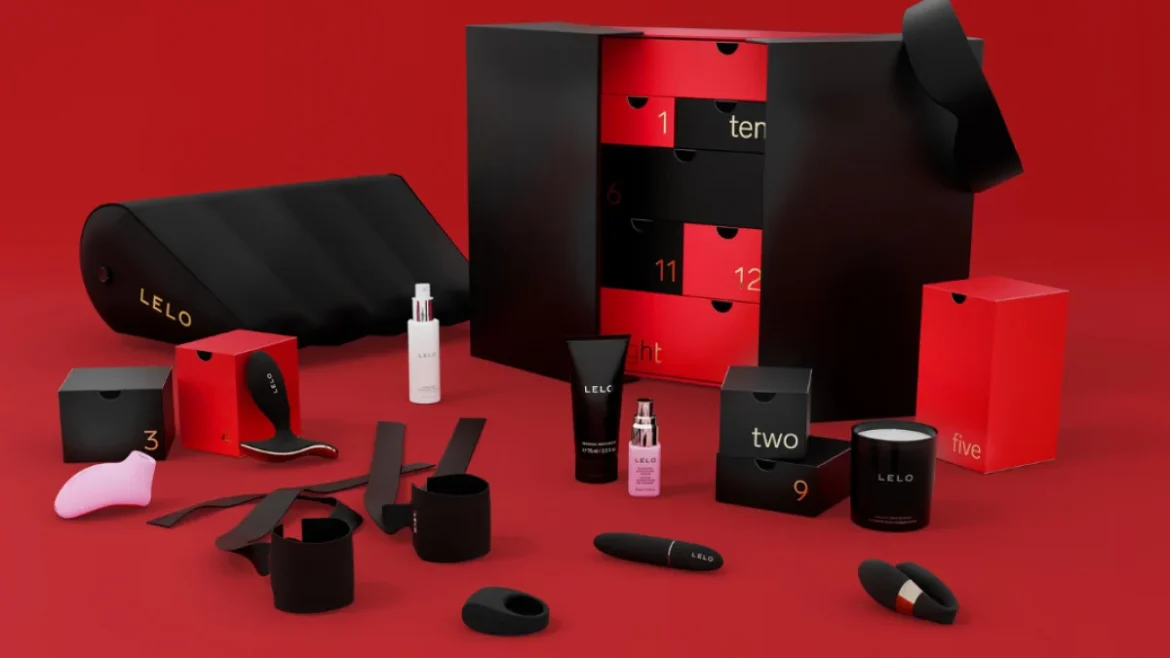
The holiday advent calendar market has officially expanded further into the luxury wellness and adult novelty sectors, as premier intimacy brand Lelo announced the launch of its very first Couples Advent Calendar. Priced at $399, the 12-day collection marks a significant departure from standard holiday countdown offerings by intentionally omitting trial sizes and low-cost filler items, opting instead to include full-sized, high-end pleasure devices and complementary accessories.
The introduction of the Lelo Couples Calendar reflects a broader commercial trend toward premiumization within the adult wellness industry. Over the past decade, intimate lifestyle products have shed much of their historical stigma, transitioning into mainstream categories focused on self-care, relationship health, and ergonomic design. By packaging its flagship products into a seasonal collection, Lelo aims to capture holiday shoppers seeking high-value bundles during the peak retail period of the final quarter of the year.
Main Facts and Product Breakdown
The Lelo Couples Advent Calendar is structured around a 12-day countdown format rather than the traditional 24-day configuration common in beauty and confectionery advent calendars. According to the manufacturer, the total retail value of the items included significantly exceeds the $399 purchase price, with individual core devices regularly commanding upwards of $100 to $150 when purchased independently.
Rather than relying on single-use packets or miniature samples, the box features a curated selection of full-sized ergonomic vibrators, high-grade silicone accessories, and sensory enhancement products. Alongside the primary tech-forward devices, the collection incorporates tactile relationship-building items, including premium massage candles designed for low-temperature melting and skin-safe application, as well as adjustable bondage restraints crafted from soft-touch materials.
The inclusion of multiple full-sized devices addresses a frequent consumer criticism of holiday advent calendars across all retail categories: that novelty items often end up discarded due to inferior quality or impractical sizing. By offering hardware that holds independent market value, Lelo has positioned the product as an investment bundle for consumers looking to upgrade their personal or shared collections at a discounted collective price point.
Chronology of the Adult Advent Calendar Trend
The commercialization of adult-themed holiday countdowns has evolved rapidly from niche online offerings to widely distributed retail products.
In the early 2010s, specialized online retailers began assembling rudimentary holiday boxes containing a mix of lubricants, basic novelties, and novelty items, primarily targeted at existing consumers of adult e-commerce platforms. These early iterations were largely unbranded or assembled using third-party inventory.
By the late 2010s to 2020, established manufacturers of high-end intimate lifestyle brands recognized the marketing potential of the advent calendar format. Brands such as We-Vibe, Womanizer, and Lelo began introducing proprietary holiday sets. These initial offerings, however, frequently relied on a mix of travel-sized items, accessories, and promotional merchandise to keep retail prices accessible.
By 2023 and 2024, consumer demand shifted toward transparency and tangible value, driven in part by viral social media reviews critiquing luxury advent calendars across the fashion and beauty sectors for offering subpar contents relative to their high price tags. In response, brands began engineering higher-tier calendars featuring flagship hardware. The launch of the Lelo Couples Calendar represents the maturation of this trend, prioritizing premium hardware and body-safe materials over volume and novelty filler.
Supporting Data and Market Dynamics
The global market for sexual wellness and intimacy products has experienced sustained growth, supported by shifting cultural attitudes and the normalization of sexual health as a component of overall well-being. Market research reports consistently project compound annual growth rates (CAGR) in the high single digits for the adult toy and wellness sector, driven by technological innovations in app-controlled devices, silent motors, and medical-grade silicone manufacturing.
Priced at $399, Lelo’s offering sits at the upper tier of the seasonal gift market. However, industry analysts note that holiday bundles often serve as an effective customer acquisition tool for luxury brands. Consumers who might hesitate to purchase a standalone $180 device are frequently more inclined to justify a higher one-time seasonal expenditure when the cost is distributed across multiple items that yield a calculated overall discount.
Furthermore, the timing of the release aligns with fourth-quarter retail strategies. A significant percentage of annual revenue for consumer lifestyle brands is generated between Black Friday and the end of December. Curated gift sets provide brands with an opportunity to clear inventory, introduce new demographics to flagship devices, and market directly to consumers seeking gift solutions for partners.
Broader Impact and Implications for the Industry
The introduction of a luxury, full-sized device advent calendar by a market leader like Lelo underscores several key developments in modern consumer behavior and retail marketing.
First, the mainstreaming of intimate wellness has allowed brands to adopt marketing strategies traditionally reserved for prestige cosmetics, high-end perfumery, and luxury fashion houses. Packaging design, unboxing experiences, and seasonal limited-edition releases are increasingly utilized to elevate intimate products from utilitarian utility items to lifestyle luxury goods.
Second, consumer scrutiny regarding retail value has intensified. As buyers become more discerning—frequently utilizing online price comparisons and unboxing videos to evaluate product worth—manufacturers can no longer rely on superficial packaging alone to drive sales. The inclusion of independently retailing, full-sized hardware establishes a baseline of trust between the brand and the consumer, ensuring that the perceived value matches the financial investment.
Finally, the shift toward products designed for shared use reflects a growing emphasis on relationship-oriented intimacy. While many early adult advent calendars focused strictly on solo exploration, recent market entries increasingly feature products tailored for couples, aligning with broader cultural conversations around communication, shared experiences, and relationship enhancement.
As the holiday shopping season progresses, the performance of premium offerings like the Lelo Couples Calendar will likely serve as an indicator of consumer willingness to invest in high-end lifestyle and wellness goods despite broader economic pressures. For manufacturers, the success of such collections points toward a future where seasonal gifting formats remain a staple of product diversification and brand storytelling within the intimate wellness sector.
