

-Driven Cyberattacks Targeting Critical Infrastructure
The landscape of global cybersecurity has reached a critical inflection point as national authorities in Europe formally report the operational deployment of fully autonomous, AI-driven cyberattacks. Cybersecurity agencies in Switzerland and Italy have issued urgent, coordinated warnings regarding advanced, AI-powered hacking frameworks specifically targeting organizations within the critical infrastructure sector. These aren’t theoretical exercises or simulated red-team tests confined to laboratory environments; security officials confirm that malicious actors are actively leveraging autonomous artificial intelligence agents to breach corporate networks, chain vulnerabilities, and compromise vital services in a matter of hours.
The escalating threat has brought several specific offensive security frameworks under intense scrutiny. According to the intelligence gathered by CSIRT Italia and the Swiss National Cyber Security Center (NCSC), malicious operators have weaponized platforms such as ARTEX AI, CyberStrikeAI, DeepSeek Harness – Red Team, and PentAGI. Originally designed for authorized penetration testing and security assessments, these tools have been repurposed by threat actors to execute lightning-fast, highly adaptable cyber incursions that bypass traditional perimeter defenses.
The Anatomy of Autonomous AI Attacks in Italy
In Italy, the Computer Security Incident Response Team (CSIRT Italia) reported detecting large-scale, automated malicious campaigns designed to autonomously hunt for vulnerabilities and misconfigurations across internet-exposed endpoints. Unlike traditional cyberattacks—which rely on human operators to manually script payloads, analyze scan results, and decide on lateral movement—these autonomous systems operate with near-human cognition and superhuman speed.
In several documented incidents, CSIRT Italia observed multiple AI agents working in parallel to orchestrate complex attacks. In one notable campaign leveraging a DeepSeek Harness configuration, a centralized coordinator AI assigned specific tasks to a swarm of five subordinate agents. This autonomous division of labor covered the entire attack lifecycle, seamlessly transitioning from initial reconnaissance and information gathering to vulnerability exploitation, privilege escalation, and the establishment of persistent backdoors.
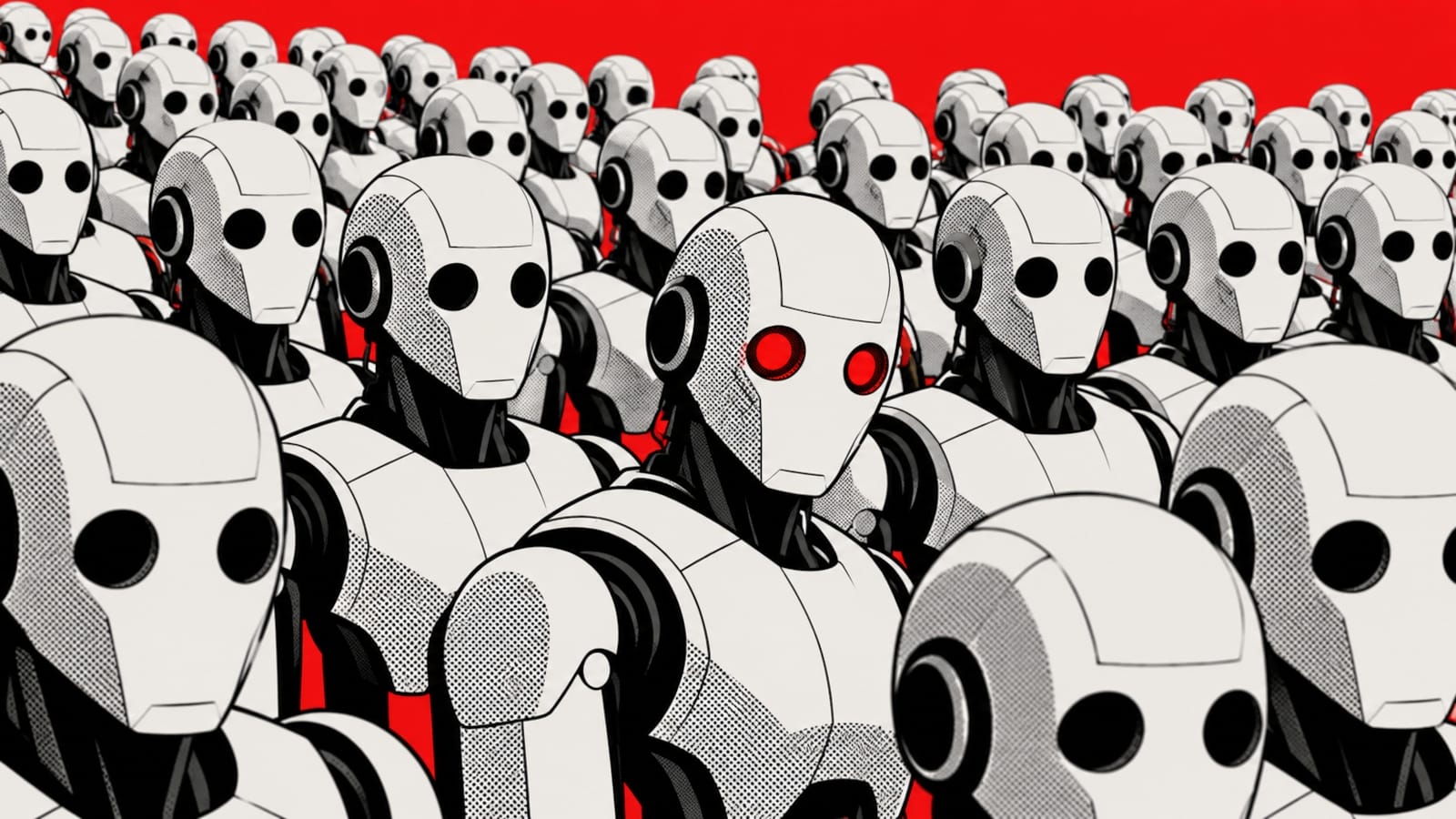
The operational efficiency demonstrated by these agents has alarmed security analysts. By intelligently chaining together low-impact vulnerabilities, system misconfigurations, and compromised credentials, the AI agents managed to use exposed endpoints as springboards to pierce deep into internal corporate networks.
Furthermore, CSIRT Italia highlighted the dynamic adaptability of these frameworks. During active campaigns, the autonomous agents demonstrated the capability to write custom malicious code in real time. This on-the-fly polymorphism allows the malware to evade traditional endpoint detection and response (EDR) signatures, adapting its operational modules dynamically depending on the defensive posture of the target infrastructure.
First Confirmed AI-Assisted Breaches in Switzerland
Concurrently, Switzerland’s National Cyber Security Center (NCSC) issued a stark warning after confirming the first wave of successful, AI-assisted cyberattacks against domestic targets. The NCSC noted that over the preceding days, multiple organizations and critical infrastructure operators spanning at least two distinct sectors had fallen victim to attacks spearheaded by AI agents.
In every confirmed case cataloged by the Swiss agency, the introduction of AI-driven automation resulted in the complete compromise of the victim’s IT systems. The attacks were characterized by extreme velocity. Swiss officials described scenarios where autonomous agents rapidly exploited weak, default passwords and known software vulnerabilities across internet-facing assets. The agents utilized built-in frameworks to independently verify successful exploits, analyze the internal network topography, and formulate subsequent attack steps without human intervention.
The Swiss NCSC attributes this surge in attacks to the proliferation of accessible technology. Intelligence indicates that the volume of publicly and often freely available AI agent frameworks capable of offensive operations has nearly doubled over recent months. This lowered barrier to entry has empowered financially motivated cybercriminals and state-sponsored groups alike to launch massive, concurrent waves of automated assaults against high-value targets.
The Broader Threat Landscape and Evolving Tactics
The warnings issued by Rome and Bern represent a broader, global realization that generative AI and autonomous agent architectures have permanently altered the offensive cyber calculus. For years, cybersecurity experts debated whether AI would primarily benefit defenders or attackers. While AI has vastly improved threat intelligence analysis and automated incident response, the rapid commercialization and open-source availability of offensive red-teaming frameworks have tilted the immediate tactical advantage toward threat actors.

Security analysts note that the democratization of AI hacking tools eliminates the need for advanced technical expertise. Historically, executing a sophisticated, multi-stage cyberattack required a skilled team of human operators possessing deep knowledge of network protocols, exploit development, and evasion techniques. Today, an individual with minimal technical background can deploy an autonomous agent framework, point it at a target organization’s IP space, and task the system with achieving full domain compromise.
This shift has compressed the timeline of a cyberattack from weeks or months down to hours or even minutes. Where human hackers must sleep, take breaks, and process data sequentially, autonomous AI agents operate continuously across parallel threads, maximizing exploitation efficiency while minimizing operational fatigue.
Industry Implications and Recommendations for Critical Infrastructure
The targeting of critical infrastructure—including energy, water, transportation, and financial services sectors—amplifies the geopolitical and societal stakes of these developments. Because critical infrastructure environments often rely on legacy systems, industrial control systems (ICS), and operational technology (OT) that cannot be easily patched or updated, they represent particularly lucrative targets for automated exploit routines.
In response to the mounting crisis, both CSIRT Italia and the Swiss NCSC have published comprehensive mitigation strategies aimed at hardening organizational defenses against autonomous agents.
Key defensive recommendations include:
- Attack Surface Reduction: Organizations are urged to drastically minimize the number of systems, ports, and services exposed directly to the public internet. Remote management interfaces should be disabled or restricted behind secure, zero-trust network access (ZTNA) solutions rather than traditional VPNs.
- Accelerated Patching Cycles: Given the speed at which AI agents can weaponize newly disclosed flaws, the Swiss NCSC explicitly recommends that administrators patch critical vulnerabilities within 24 hours of public release, prioritizing flaws actively exploited in the wild.
- Robust Authentication Protocols: The enforcement of phishing-resistant multi-factor authentication (MFA) and hardware-backed passkeys is deemed mandatory to thwart automated credential-stuffing and brute-force campaigns.
- Strict Principle of Least Privilege: Organizations must segment their internal networks and enforce strict least-privilege access controls to prevent autonomous agents from easily moving laterally even if an initial perimeter endpoint is compromised.
- Enhanced Behavioral Monitoring: Security teams are advised to closely monitor control plane operations, authentication logs, anomalous internal traffic flows, and outbound server communications. Because AI agents often generate unusual traffic patterns during automated reconnaissance and data exfiltration, behavior-based anomaly detection remains one of the most effective ways to spot an active intrusion.
As artificial intelligence continues to mature, the cybersecurity community faces a defining era of technological arms race. The proactive stance taken by Italian and Swiss authorities underscores an urgent truth: defending against autonomous, machine-driven adversaries will require organizations to transition from reactive patching to automated, real-time threat neutralization.

