• Home
  • About Us
  • Contact Us
  • Cookies Policy
  • Disclaimer
  • DMCA
  • Privacy Policy
  • Terms and Conditions
Dr Crypton
Secure Your Future in Crypto
Artificial Intelligence & Tech

Google’s AMIE AI Demonstrates Breakthrough in Longitudinal Disease Management and Clinical Reasoning in Nature Study

by admin July 22, 2026
written by admin

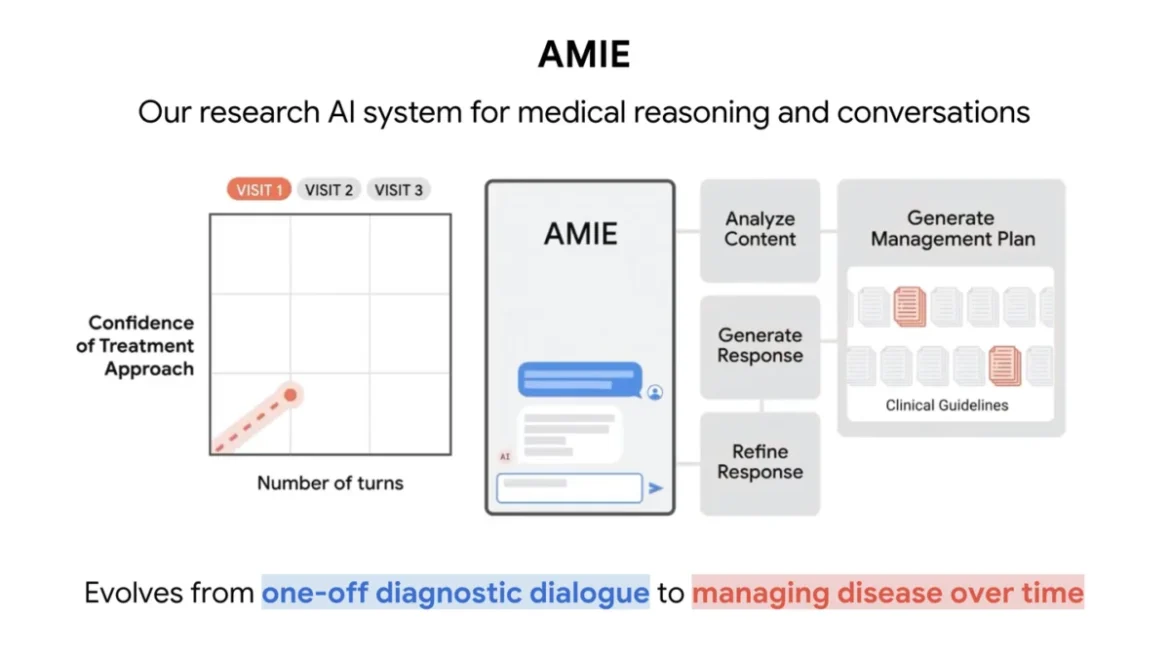
The landscape of modern healthcare is increasingly defined by the management of chronic conditions, a task that requires clinicians to synthesize vast amounts of historical data, evolving clinical guidelines, and real-time patient feedback. While initial diagnosis remains a critical milestone, the long-term oversight of health—tracking symptom progression across multiple years, adjusting medications, and adhering to complex protocols—presents a significant cognitive burden on medical professionals. Research published today in the journal Nature reveals a significant advancement in this field through the Articulate Medical Intelligence Explorer (AMIE), a research-grade AI system developed by Google. The study demonstrates that AMIE has evolved beyond one-off diagnostic interactions to handle the complexities of longitudinal disease management, matching or exceeding the performance of primary care physicians in several key metrics of reasoning and guideline adherence.

The transition from acute diagnostic AI to longitudinal management AI marks a pivotal shift in medical technology. For years, medical AI was primarily evaluated on its ability to identify a condition from a single set of symptoms. However, real-world medicine is rarely a singular event; it is a continuous process of observation and adjustment. The Nature study highlights how AMIE utilizes the long-context capabilities of Google’s Gemini models to maintain a "memory" of a patient’s medical journey, allowing it to parse hundreds of pages of clinical knowledge while simultaneously engaging in empathetic dialogue with the patient. This dual-capability approach—combining rigorous logic with human-centric communication—is designed to support a healthcare system currently strained by administrative overhead and physician burnout.

The Evolution from Diagnosis to Longitudinal Care

The primary challenge in managing chronic disease lies in the continuity of care. A typical patient with a condition such as hypertension or diabetes may see several different specialists over a decade, resulting in a fragmented medical record that is difficult for any single physician to review in the limited time allotted for a standard appointment. Furthermore, clinical guidelines are not static; they are frequently updated as new pharmacological data becomes available. A physician must not only remember the patient’s history but also cross-reference it against the most current medical literature.

AMIE was specifically engineered to address these hurdles. By leveraging large language models (LLMs) with expanded context windows, the system can process an entire patient history in a single session. This allows the AI to identify subtle trends in symptom reporting or lab results that might be overlooked during a brief human consultation. The research published in Nature indicates that this transition from "snapshot" medicine to "longitudinal" medicine is not only feasible but potentially more accurate in terms of guideline alignment than traditional methods.

Methodology of the Nature Study: Humans vs. Machines

To rigorously test AMIE’s capabilities, researchers conducted a blinded study involving "standardized patients"—professional actors trained to portray individuals with specific medical conditions. These actors interacted with both AMIE and a group of 21 primary care physicians. To ensure an unbiased evaluation, the interactions were transcribed and anonymized. A panel of specialist physicians then reviewed the consultations without knowing whether the responses were generated by a human doctor or the AI system.

The study focused on three primary domains: diagnostic reasoning, management reasoning, and communication quality. Management reasoning is particularly complex, as it involves deciding on the next steps of treatment, such as ordering specific tests, adjusting drug dosages, or scheduling follow-up appointments based on the patient’s response to previous interventions. The specialist reviewers used a standardized rubric to score the participants on the preciseness of their plans and their adherence to established clinical guidelines.

Analyzing the Results: Precision and Guideline Alignment

The results of the Nature study suggest a significant parity between the AI and human clinicians, with the AI showing a distinct advantage in specific technical areas. In the category of overall management reasoning, AMIE matched the performance of the 21 primary care doctors. However, the AI scored significantly higher in two critical areas: plan preciseness and guideline alignment.

Plan preciseness refers to the specificity and clarity of the recommended medical actions. While human doctors, often under time pressure, might provide generalized advice, AMIE generated detailed, step-by-step management plans that left little room for ambiguity. Perhaps more importantly, the AI demonstrated superior alignment with clinical guidelines. In a clinical environment where medical knowledge doubles every few months, keeping up with every updated protocol is a Herculean task for humans. AMIE, by contrast, can be programmed with the latest drug formularies and authoritative clinical knowledge, ensuring that its recommendations are always based on the most current evidence-based medicine.

Furthermore, the study measured the "empathy" of the interactions. Historically, AI has been viewed as cold or robotic, but the "empathetic dialogue agent" within AMIE was rated highly by the patient actors. This suggests that the AI can maintain a supportive tone while processing complex medical data, a combination that is essential for patient compliance in long-term disease management.

The Technological Backbone: Gemini and Long-Context Reasoning

The success of AMIE is largely attributed to the underlying architecture of Google’s Gemini models. Unlike earlier iterations of medical AI that could only process a few thousand words at a time, Gemini’s long-context capabilities allow the system to "read" and "remember" vast amounts of information. This is critical for medical reasoning, where a single lab result from three years ago might be the key to understanding a patient’s current resistance to a medication.

AMIE functions through a bifurcated system. The first component is the empathetic dialogue agent, which is optimized for real-time conversation. It focuses on gathering information from the patient in a way that feels natural and supportive. The second component is the deep-thinking management reasoning agent. This agent operates in the background, cross-referencing the patient’s input against a massive database of clinical guidelines and pharmacological data. By separating the "social" and "analytical" tasks, the system can provide a human-like interaction without sacrificing scientific rigor.

Addressing the Global Healthcare Crisis and Physician Burnout

The implications of this research extend far beyond the laboratory. The global healthcare system is currently facing a crisis of scale. According to the World Health Organization, there is a projected shortage of 10 million health workers by 2030. In the United States, physician burnout has reached record levels, with many doctors citing administrative tasks and the struggle to keep up with clinical documentation as primary stressors.

If an AI system like AMIE can handle the "heavy lifting" of data synthesis and guideline adherence, it could fundamentally change the day-to-day life of a physician. Instead of spending 20 minutes of a 30-minute appointment reviewing old records and checking drug interactions, a doctor could use that time to focus on the physical examination and the nuances of the patient-doctor relationship. The AI acts not as a replacement, but as a high-level clinical assistant that ensures no detail is missed and every protocol is followed.

Chronology of Google’s Medical AI Development

The journey to AMIE has been a multi-year effort within Google Research and Google Health. The timeline of this development reflects the rapid acceleration of AI capabilities in the medical domain:

  • 2022: Med-PaLM: Google introduced Med-PaLM, the first large language model to pass the U.S. Medical Licensing Exam (USMLE) style questions. While impressive, it was primarily a knowledge-retrieval system rather than a conversational tool.
  • Early 2023: Med-PaLM 2: This iteration improved upon the original by providing more nuanced answers and demonstrating a better understanding of medical ethics and safety.
  • Late 2023: The Introduction of AMIE: Researchers shifted focus toward "Articulate" intelligence, prioritizing the ability of the AI to conduct a diagnostic interview.
  • 2024: Longitudinal Expansion: The current research published in Nature marks the expansion of AMIE into disease management, moving beyond the initial diagnosis into the "what happens next" phase of care.
  • Present and Future: Google has launched a nationwide randomized study to assess the efficacy of AI in real-world virtual care settings, marking the transition from simulated actors to actual clinical environments.

Safety, Ethics, and the Road to Clinical Implementation

Despite the promising results, the researchers and the broader medical community emphasize that AI is not yet ready for autonomous clinical practice. The Nature study was conducted in a controlled, blinded environment with actors, not in a chaotic emergency room or a real-world clinic where patients might have multiple, conflicting comorbidities.

Safety remains the paramount concern. AI models are known to occasionally "hallucinate" or provide incorrect information with high confidence. To mitigate this, AMIE’s reasoning agent is designed to cite its sources from authoritative clinical knowledge. Furthermore, the "human-in-the-loop" model remains the gold standard. In this framework, the AI provides recommendations, but a licensed physician makes the final decision.

Ethical considerations also include data privacy and bias. Ensuring that the AI performs equally well across different demographics—regardless of race, gender, or socioeconomic status—is a major focus of ongoing research. The nationwide study currently underway aims to collect diverse data to ensure that the AI’s reasoning is equitable and applicable to the broad spectrum of the human population.

Broader Impact and the Future of Virtual Care

The successful deployment of a system like AMIE could democratize access to high-quality medical expertise. In rural areas or developing nations where specialists are scarce, an AI that has "memorized" the latest global clinical guidelines could provide a baseline of care that was previously unavailable.

In the realm of virtual care, which saw an explosion in use during the COVID-19 pandemic, AMIE could serve as a triage and management tool. By conducting the initial longitudinal review and symptom tracking, the AI can prepare a comprehensive briefing for the physician before the virtual visit even begins. This ensures that the limited time spent between patient and doctor is as productive as possible.

The publication of this research in Nature serves as a formal validation of the potential for AI to move into the more complex, nuanced areas of medical practice. While the transition from a research system to a bedside tool will require years of further testing, regulatory approval, and integration into existing electronic health records, the data suggests that the path toward AI-augmented longitudinal care is now clearly defined.

As Google continues its exploration into clinical settings and virtual care studies, the focus will remain on how these tools can reduce the cognitive load on healthcare providers while improving the precision of patient care. The ultimate goal, as suggested by the AMIE researchers, is a future where technology handles the complexity of data management, giving physicians the freedom to return to the heart of medicine: the human connection.


July 22, 2026 0 comment
0 FacebookTwitterPinterestEmail
Cryptocurrency News

CFTC Self-Reporting Guidelines Could Change Crypto Enforcement Incentives

by admin July 21, 2026
written by admin

The U.S. Commodity Futures Trading Commission (CFTC) has recently unveiled a comprehensive advisory outlining new penalty mitigation guidelines for self-reporting and cooperation, establishing a clearer, more transparent framework for entities that voluntarily disclose regulatory breaches. This significant move, encapsulated in an advisory titled “Enforcement Advisory on Self-Reporting, Cooperation, and Voluntary Disclosure Penalties,” details how civil penalty reductions may be applied when firms proactively identify, report, and remediate violations, while also cooperating fully with investigators. The guidance is broad, applying across the CFTC’s extensive jurisdiction, which encompasses traditional derivatives markets as well as the rapidly evolving digital commodity sector. This inclusive approach means that crypto firms, often navigating a complex and nascent regulatory environment, are directly within the policy’s purview, though it is crucial to note that the policy itself is not exclusive to digital assets.

This distinction underscores a fundamental principle: the CFTC is not carving out special exemptions for digital asset companies. Instead, it is providing all regulated entities, including those operating in the volatile crypto space, with a more transparent roadmap for how voluntary disclosure can significantly influence enforcement outcomes. This initiative signals a strategic shift in regulatory enforcement, moving towards an incentivized compliance model that encourages internal vigilance and proactive engagement with the regulator, rather than solely relying on reactive punitive measures.

The CFTC’s Mandate and the Digital Asset Landscape

To fully appreciate the implications of these new guidelines, it is essential to understand the CFTC’s foundational role and its expanding jurisdiction within the digital asset ecosystem. Established in 1974, the CFTC is an independent agency of the U.S. government that regulates the U.S. derivatives markets, which include futures, options, and swaps. Its core mission is to promote the integrity, resilience, and vibrancy of these markets through sound regulation, working to avoid systemic risk and protect market participants from fraud, manipulation, and abusive practices.

In recent years, the CFTC has asserted its authority over certain digital assets, classifying them as "commodities" under the Commodity Exchange Act (CEA). This interpretation has placed various cryptocurrencies, most notably Bitcoin and Ethereum, under its regulatory umbrella, particularly when they are traded as derivatives (e.g., futures, options) or involve leveraged retail transactions. This stance has led to numerous enforcement actions against unregistered trading platforms, individuals engaging in fraud, and firms failing to adhere to commodity laws, such as those related to KYC/AML, registration, or market manipulation. Notable cases have involved platforms like BitMEX, Binance, and individuals associated with FTX, highlighting the agency’s proactive approach to policing the crypto derivatives space. The total value of the global derivatives market is estimated to be in the hundreds of trillions of dollars, with digital asset derivatives representing a growing, albeit smaller, segment that nonetheless demands robust oversight due to its inherent volatility and novel technological underpinnings.

The regulatory landscape for digital assets in the United States remains fragmented, with ongoing debates between the CFTC and the Securities and Exchange Commission (SEC) over jurisdictional boundaries for different types of tokens. This lack of a unified, comprehensive federal framework often leaves crypto firms grappling with regulatory uncertainty. Against this backdrop, the CFTC’s new advisory provides a much-needed layer of clarity, offering a predictable pathway for firms to address compliance issues proactively, rather than waiting for enforcement actions to materialize.

A Chronology of Proactive Enforcement and Regulatory Evolution

The introduction of these self-reporting guidelines is not an isolated event but rather a continuation of the CFTC’s evolving strategy to manage the complexities of modern financial markets, particularly the burgeoning digital asset space.

  • Early 2010s: The CFTC begins to observe the emergence of cryptocurrencies, with initial internal discussions on their classification and potential regulatory implications.
  • 2014: The CFTC issues its first guidance indicating that Bitcoin and other virtual currencies could be classified as commodities.
  • 2015: The agency takes its first enforcement action involving a digital asset, fining Coinflip, Inc. for operating an unregistered derivatives exchange offering Bitcoin options. This landmark case solidified the CFTC’s jurisdictional claim over certain digital assets.
  • Late 2010s – Early 2020s: A period of increased enforcement activity against unregistered crypto derivatives platforms, fraudulent schemes, and market manipulation in the digital asset space. Cases against BitMEX, Tether/Bitfinex, and Binance demonstrate a clear escalation in the CFTC’s efforts to bring the sector under its regulatory perimeter.
  • Ongoing Legislative Debates: Throughout this period, Congress continues to debate comprehensive digital asset legislation, with various bills proposing clearer definitions and jurisdictional assignments for crypto assets, often positioning the CFTC as the primary regulator for the spot market of non-security digital commodities.
  • Recent Years: The CFTC has increasingly emphasized the importance of robust compliance and internal controls within regulated entities. This new advisory builds on that foundation, formalizing an incentive structure for firms to internalize risk management and regulatory adherence. The specific advisory was issued in [Please insert specific date if available from CFTC press release, e.g., "May 2024" or "early June 2024"] as part of a broader push to enhance market integrity.

This chronology illustrates a consistent trajectory: from initial observation to assertive enforcement, and now, to a more sophisticated approach that combines punitive measures with incentives for proactive compliance.

Why Self-Reporting Rules Matter: Shaping Incentives for Compliance

The essence of enforcement policy extends beyond mere punishment; it fundamentally shapes incentives for market participants. If firms perceive that self-reporting a violation will lead to the same punitive outcome as being discovered later through an investigation, there is little motivation for them to come forward voluntarily. Conversely, if there is a credible assurance that cooperation and early disclosure can meaningfully reduce penalties, firms are far more likely to identify and report problems early. This is the core logic underpinning penalty mitigation frameworks.

Regulators, including the CFTC, have a vested interest in encouraging firms to detect and report misconduct before it escalates, causes greater harm to users, or undermines market integrity. From the firms’ perspective, uncertainty about the benefits of early disclosure can be a significant deterrent. Clearer, published guidelines like this advisory serve to reduce that uncertainty for both sides, creating a more predictable environment.

For crypto firms, this framework is particularly pertinent. The digital asset sector has experienced explosive growth, characterized by rapid innovation and complex business models that often span multiple product lines: derivatives, spot markets, custody solutions, lending protocols, staking services, decentralized finance (DeFi) integrations, and token listings. Compliance failures can readily occur in areas where regulatory rules are still evolving, or where firms might misinterpret the boundaries of the CFTC’s jurisdiction. The self-reporting framework provides a powerful incentive for these firms to cultivate robust internal compliance mechanisms, identify potential issues, and bring them to the attention of regulators before they escalate into larger, more damaging enforcement actions. This can potentially save firms millions in fines and legal fees, while also preserving their reputation and operational licenses.

Not a Free Pass: Conditions and Expectations for Mitigation

It is critical to interpret the CFTC’s new guidance not as a carte blanche or a blanket leniency program, but rather as a structured pathway to reduced penalties for those who genuinely demonstrate commitment to compliance and cooperation. Self-reporting may significantly reduce civil penalties, but it does not erase the underlying violations. Firms are still expected to cooperate fully with investigations, remediate the identified issues comprehensively, and demonstrate that their disclosure was timely, truthful, and complete.

The advisory explicitly states that the benefits of mitigation will depend on several key factors:

  1. Timing: The earlier a firm reports the violation, especially before it becomes public or known to regulators, the greater the potential for mitigation.
  2. Completeness: The disclosure must be thorough, providing all relevant facts, documents, and information without reservation. Incomplete or misleading disclosures will likely disqualify a firm from full benefits.
  3. Cooperation: Firms must actively cooperate with investigators, including providing access to personnel, documents, and data, and demonstrating a willingness to assist the CFTC’s efforts.
  4. Remediation: Crucially, firms must take prompt and effective corrective actions to address the root causes of the violation, implement enhanced internal controls, and compensate affected customers where appropriate.
  5. Seriousness of the Breach: While mitigation is possible, egregious violations involving widespread fraud, significant customer harm, or market manipulation will still face substantial penalties, even with self-reporting.

This emphasis is particularly vital for crypto markets. Regulators are keen to foster better behavior and instill a culture of compliance, not to create a loophole for misconduct. A firm that manipulates markets, misleads customers, or flagrantly violates derivatives rules will still face severe consequences. Voluntary disclosure may mitigate the severity of these consequences but will not automatically eliminate liability. This reinforces the critical importance of internal compliance systems. A firm cannot self-report a problem it cannot detect. Therefore, robust monitoring, comprehensive audit trails, effective risk controls, and strong governance processes become integral components of the enforcement equation.

Implications for Crypto Firms: A Call to Strengthen Compliance

Crypto firms frequently articulate concerns about regulatory ambiguity. While there may be merit to this complaint in certain areas, the CFTC’s advisory provides a concrete impetus for digital asset firms to invest significantly in building and strengthening their compliance infrastructures.

For crypto derivatives platforms, market makers, brokers, or digital commodity firms, this guidance offers a clearer understanding of how voluntary disclosures will be evaluated. This clarity can directly influence strategic decisions at the board level, shape legal strategies, and cultivate a proactive internal reporting culture. It also encourages firms to meticulously document their remediation efforts. Regulators are not only concerned with the admission of a problem but also with the efficacy of the solutions implemented to prevent recurrence. In the crypto context, this could involve enhancing surveillance tools, implementing stronger customer protection measures, refining leverage controls, improving reporting processes, and strengthening product governance frameworks.

Firms that prioritize and consistently invest in robust compliance programs will undoubtedly be in a stronger position if and when a violation occurs. Data from traditional finance shows that companies with strong compliance cultures often face significantly reduced penalties compared to those perceived as having weak or non-existent controls. For example, a 2023 study by a legal firm found that self-reporting and cooperation could reduce fines by 30-50% in certain types of financial misconduct cases.

Broader Impact on Market Maturity and Enforcement Trends

The CFTC’s advisory represents a broader trend in financial regulation. While enforcement actions are far from disappearing, there is a discernible shift towards more structured and predictable regulatory engagement. Agencies are moving beyond reactive headline-grabbing enforcement actions towards developing comprehensive frameworks, conducting extensive consultations, issuing clear guidelines, and setting explicit compliance expectations.

This shift does not imply that the industry will welcome every new rule. However, it does signify that the market is receiving increasingly granular information about the standards by which regulators will judge conduct. For serious, forward-thinking firms, this transparency is invaluable. A well-defined self-reporting framework helps companies understand precisely what regulators expect when problems inevitably arise. It can also foster a more mature enforcement environment where genuine cooperation and effective remediation are recognized and appropriately credited, rather than being dismissed as irrelevant.

For the crypto sector, the message is unequivocal: compliance infrastructure is not merely a cost center but a strategic imperative. The CFTC is offering a powerful incentive for firms to come forward early, but simultaneously reinforcing that digital commodity markets operate within a well-defined regulatory enforcement perimeter. Companies that grasp this duality and strategically prepare for it will be better positioned to navigate the next phase of institutional crypto adoption and ensure long-term viability in a regulated financial ecosystem. This advisory serves as a clear signal for the industry to mature its practices, embrace transparency, and integrate robust risk management as a core operational principle.

July 21, 2026 0 comment
0 FacebookTwitterPinterestEmail
Blockchain Technology

America’s Crypto Market Structure Rules Face August Deadline Amid Ethics Debate and Stablecoin Regulatory Lapses

by admin July 21, 2026
written by admin

The push to establish comprehensive regulatory frameworks for America’s nascent cryptocurrency market is reaching a critical juncture, with key legislation facing an August recess deadline and ongoing debates over ethical guidelines for elected officials and the prevention of illicit finance. Simultaneously, federal agencies have missed a crucial deadline for implementing stablecoin regulations, highlighting the complexities and challenges inherent in governing the rapidly evolving digital asset space. Public sentiment, as revealed by a recent survey, underscores a deep-seated distrust in the crypto industry, amplifying calls for robust oversight.

CLARITY Act’s Legislative Gauntlet: A Race Against the Clock

The digital asset market structure bill, known as the CLARITY Act, is on a fast track to the Senate floor, with Senate Majority Leader John Thune (R-SD) committing to a vote before the chamber’s traditional summer recess, slated to begin after August 7. This legislative urgency comes as stakeholders across the political spectrum grapple with fundamental questions of market integrity, investor protection, and the role of digital assets in the broader financial system.

Senator Thune, in a July 14 statement to Bloomberg, acknowledged the lack of an "exact" date but affirmed his dedication to bringing the CLARITY Act to a vote. He expressed "hope" that a revised version of the bill could garner Democratic support, a crucial factor given the Senate’s 60-vote threshold for passage. This means all 53 Republican senators (effectively 52, considering Senator Mitch McConnell’s hospitalization) would need to back the bill, along with a significant number of Democrats, to reach the required supermajority. Thune’s willingness to proceed even without guaranteed Democratic backing suggests an awareness of the political stakes, potentially banking on the influence of well-funded crypto political action committees (PACs) on midterm campaigns.

The Ethics Quagmire: Trump’s Crypto Holdings and Conflicts of Interest

The primary impediment to bipartisan consensus on the CLARITY Act remains the contentious "ethics" issue. Democrats have consistently raised concerns about the bill’s perceived lack of provisions to limit or prohibit elected officials and their immediate families from profiting from crypto businesses. This issue gained significant traction and "new urgency" following financial disclosure documents revealing that former President Trump earned "well over $1 billion from various crypto ventures" in the preceding year. Critics argue that allowing officials to benefit financially from an industry they regulate creates a blatant conflict of interest, as they possess the power to weaken or eliminate regulatory obstacles facing their own investments.

In an effort to bridge this divide, two prominent Republican senators and staunch crypto supporters, Bernie Moreno (OH) and Cynthia Lummis (WY), met with former President Trump at the White House last week. The meeting, which also included White House chief of staff Susie Wiles, counsel David Warrington, Acting Attorney General Todd Blanche, and crypto advisor Patrick Witt, aimed to discuss potential ethics language. Senator Thom Tillis (R-NC) voiced optimism ahead of the meeting, hoping for an agreement "by the end of this week," deeming the timing "critical" for a pre-recess vote.

However, Democratic skepticism persists. Representative Ruben Gallego (D-AZ) expressed dismay at the lack of Democratic involvement in these high-level discussions, criticizing the "very weak" ethics text reportedly shown to Trump. Gallego warned that such language would grant "a lot of latitude to the president to continue doing his grift," asserting unequivocally that without "strong ethics," Democratic votes would not materialize.

Reports regarding the outcome of the White House meeting were initially conflicting. The Block quoted a source indicating "no agreement on what, if any provisions Trump can get behind," with a second source corroborating that the GOP senators "couldn’t get him to agree to anything." These sources suggested Trump’s reluctance stemmed from fears of "future prosecutions based on his activity to date," implying a desire for retroactive immunity.

Yet, a late Monday tweet from journalist Eleanor Terrett offered a contrasting narrative, stating that "the White House has agreed on an ethics package for the Clarity Act and sent the language to certain Senate Republicans this afternoon." Brendan Petersen of Punchbowl News corroborated this "breakthrough on ethics language" citing "three sources familiar" with the situation, though he cautioned that "details remain elusive, and Democrats have not seen text." The crucial question remains whether any ethics language acceptable to Trump will be robust enough to satisfy Democratic demands for genuine accountability and conflict-of-interest prevention.

Prior to these White House discussions, Senator Lummis had promised a new CLARITY draft circulated earlier in the month, allowing time for review by politicians and stakeholders. Her suggestion that this draft might include "brackets" for final ethics language indicated the depth of the divide. The delay in circulating a comprehensive new draft underscores the ongoing challenges in bridging what some have termed a "Grand Canyon-wide" chasm between the parties. Senator Mark Warner (D-VA) articulated the Democratic frustration, lamenting that Republicans frequently "backpedal" on agreed-upon drafts after "industry is freaked out," urging them to learn to say "no" to crypto operators.

Four Senate Democrats – Chris Murphy (CT), Chris Van Hollen (MD), Jeff Merkley (OR), and Elizabeth Warren (MA) – underscored their opposition at a Capitol Hill press conference, joined by actor and crypto critic Ben McKenzie and representatives from Americans for Financial Reform. Senator Murphy starkly declared that the CLARITY Act would be "a fundamental corruption if it gives Trump’s corruption the protection of law," while Senator Van Hollen, without qualification, labeled it a "corrupt piece of legislation that will do a lot of harm."

Illicit Finance Concerns: A Battle Over Accountability

Beyond the ethics debate, the CLARITY Act’s provisions regarding "illicit finance" have generated significant controversy. These provisions aim to offer developers of noncustodial decentralized finance (DeFi) platforms a degree of legal immunity when their platforms are exploited for criminal activities. This aspect has drawn fierce opposition from law enforcement and prosecutors who contend it would complicate crypto-related prosecutions.

While CLARITY supporters have highlighted recent "reversals" by some law enforcement groups on these views, the Department of Justice (DoJ) appears steadfast in its concerns. Punchbowl News reported on July 16 that the DoJ’s Criminal Division reiterated its objections, arguing the illicit finance text would "impose a higher burden of proof for prosecutions" involving money laundering charges. This directly contrasts with the industry’s push for greater legal certainty for DeFi developers, who argue they are not custodians of funds and thus should not be held liable for user misuse.

However, Amanda Tuminelli, CEO of the DeFi Education Fund, challenged Punchbowl’s report, claiming it "gets DOJ’s position wrong" and referencing "recent, directly-on-point, publicly reported DOJ statements from June 23 saying the exact opposite" of the cited email. This highlights the ongoing confusion and conflicting interpretations surrounding official positions on this complex issue.

Adding to the nuanced landscape, the Federal Law Enforcement Officers Association (FLEOA) offered its support for CLARITY, albeit with "targeted recommendations to strengthen the legislation and preserve essential federal law enforcement authorities." FLEOA’s recommendations include calls for "greater clarity regarding accountability within decentralized financial systems," prevention of "regulatory circumvention through artificial decentralization," revision of the "specific intent" language to an existing "knowledge standard," preservation of current criminal liability standards, and an explicit reaffirmation that the legislation does not limit established federal investigative authorities. Summer Mersinger, current CEO of the Blockchain Association (BA), quickly celebrated FLEOA’s conditional support as a positive step.

In stark contrast, the National Sheriffs’ Association (NSA) released a video last week, unequivocally labeling crypto "the cartel currency of choice" and demanding that Congress "fix" the bill "before it’s too late." This strong stance from a major law enforcement body underscores the deep divisions and unresolved issues surrounding the illicit finance aspects of the CLARITY Act, threatening its ability to achieve broad consensus. Kristin Smith, former CEO of the Blockchain Association and current CEO of the Solana Policy Institute, speaking at the Injective Summit, acknowledged the ethics issue as "the big elephant in the room," but emphasized her members’ focus: "whatever you decide on ethics, that’s really not our concern… But please don’t let it kill all the hard work that we put in the rest of the bill." This statement perfectly encapsulates the industry’s desire for regulatory clarity, even if it means compromising on other contentious aspects.

GENIUS Act: Stablecoin Regulations Miss Deadline, Global Pressures Mount

While the CLARITY Act dominates current headlines, another significant piece of crypto legislation, the stablecoin-focused GENIUS Act, recently marked its first anniversary with a notable regulatory lapse. July 18, 2026, was the deadline for regulatory bodies such as the Federal Deposit Insurance Corporation (FDIC), the Treasury Department’s Office of the Comptroller of the Currency (OCC), and others to issue the Act’s final rules. Despite releasing proposals, a cohesive, final set of rules has yet to emerge.

Nonetheless, the GENIUS Act rules are still slated to officially take effect on July 18, 2028. This two-year countdown has already begun for stablecoins operating in the U.S. market, most notably Tether’s USDT, which will be required to formally "withdraw access to U.S. customers" if it does not comply with the new regulations. The Act mandates that stablecoin asset reserves be held exclusively in cash and similarly redeemable vehicles like U.S. Treasury Bills.

Tether CEO Paolo Ardoino has previously stated the company’s commitment to ensuring USDT meets GENIUS requirements. However, Tether’s most recent reserve "attestation" revealed that the token is still backed by nearly $50 billion worth of non-compliant assets, including Bitcoin (BTC), gold bricks, and "highly controversial ‘secured’ loans." This historical lack of transparency and diversification into riskier assets has been a persistent criticism of Tether, making compliance with the strict GENIUS Act requirements a significant challenge.

In January, Tether launched a new U.S.-focused stablecoin, USAT, which it claims will be fully compliant with the new rules, intending for USDT to pivot its focus to non-U.S. markets. Adoption of USAT has been relatively slow, with a market cap of approximately $185 million, a mere fraction of USDT’s colossal $184 billion market cap. However, USAT’s market cap has seen significant growth since April, when it was below $50 million, leading Ardoino to claim this surge represented "regulated digital dollar adoption accelerating at exactly the moment U.S. policy is beginning to catch up with market demand."

The U.S. regulatory landscape for stablecoins is not an isolated phenomenon. The European Union (EU) has already implemented its Markets in Crypto Assets (MiCA) regulations, with a July 1 deadline for compliance. This has had immediate repercussions for stablecoins like USDT, as digital asset exchanges began restricting EU customers’ access. For instance, OKX recently offered 8% deposit bonuses to EU customers, incentivizing them to convert their USDT to the MiCA-compliant USDC token issued by Circle (NASDAQ: CRCL), highlighting a strategic shift in the global stablecoin market towards regulated, compliant offerings. The international push for stablecoin regulation underscores a global recognition of their potential systemic importance and the need for robust oversight.

Public Distrust: A Call for Greater Regulation

The ongoing regulatory debates occur against a backdrop of significant public skepticism towards the cryptocurrency industry. A recent survey released by Crypto Watchdog, a non-profit dedicated to "educating consumers about the extreme risks involved in the cryptocurrency industry," revealed deep-seated distrust among U.S. voters. While Crypto Watchdog’s executive director, Chapin Fay, maintains the group is "not anti-crypto" but "pro-innovation" and "accountability," the survey results paint a challenging picture for the industry.

Conducted by Basswood Research, the survey polled 1,000 registered voters and found that a substantial 65% expressed a "high level of distrust" in crypto. An even higher percentage, 68%, indicated they are "not open to owning" digital tokens. The most common words respondents associated with crypto, after "Bitcoin," were "criminals," "scammers," and "fraud," reflecting a pervasive negative perception.

Furthermore, 70% of respondents believe crypto is "designed to benefit insiders and scammers rather than helping ordinary people achieve investment success." This sentiment is reinforced by the finding that 81% believe crypto is "easily controlled and manipulated by a small number of powerful insiders." The inherent volatility and lack of transparency also fueled concerns, with 81% agreeing that "it’s nearly impossible to know why crypto values rise and fall because the industry lacks basic transparency."

Perhaps unsurprisingly, given these findings, a significant majority (72%) of respondents believe "there should be more regulation of the cryptocurrency industry." Critically, even among current crypto owners, 68% agreed that "more oversight is necessary to protect consumers." These survey results underscore a clear public mandate for increased regulatory intervention, providing additional impetus for lawmakers to finalize legislation like the CLARITY Act and rigorously implement stablecoin rules. The findings suggest that for the crypto industry to gain broader public trust and adoption, it must proactively address concerns about transparency, manipulation, and illicit activities, moving beyond self-regulation to embrace comprehensive governmental oversight. The persistent public apprehension, coupled with the slow pace of regulatory clarity, indicates a long and arduous path ahead for the digital asset ecosystem in the United States.

July 21, 2026 0 comment
0 FacebookTwitterPinterestEmail
Blockchain Technology

Augustus Secures $180 Million Series B Funding at $1 Billion Valuation, Poised to Become a Full-Service National Dollar Bank

by admin July 21, 2026
written by admin

Augustus, a burgeoning financial technology startup, has announced the successful closure of a $180 million Series B funding round, catapulting its valuation to an impressive $1 billion. The substantial investment, led by venture capital giant Tiger Global, underscores significant investor confidence in Augustus’s ambitious vision to establish itself as a "Global Dollar Bank." This financial milestone arrives on the heels of a pivotal regulatory achievement: preliminary conditional approval for a full-service national bank charter from the Office of the Comptroller of the Currency (OCC) in May 2026. This dual development marks a critical juncture for the company, positioning it to redefine how global businesses and digital asset firms access and manage U.S. dollar liquidity.

The Series B round saw robust participation from a consortium of prominent investors, including Hummingbird and QED, alongside a distinguished roster of fintech founders. These founders represent some of the industry’s most successful ventures, including Nubank, a leading digital bank in Latin America; Ramp, an innovative corporate card and expense management platform; Circle, a key player in stablecoins and digital payments; and Deel, a global payroll and compliance solution. This diverse backing not only provides substantial capital but also brings invaluable strategic insights and industry expertise to Augustus. The current funding round represents a sharp acceleration in investor interest compared to the company’s $20 million Series A round in 2023, which was led by Peter Thiel’s Valar Ventures, indicating a rapid maturation and validation of Augustus’s strategic direction and market potential.

The Significance of a Full National Bank Charter

The preliminary conditional approval for a full-service national bank charter from the OCC is perhaps the most consequential detail underlying Augustus’s recent success. This distinction sets Augustus apart from a growing number of digital asset firms that have acquired national trust charters over the past year. While a trust charter is a limited instrument, typically allowing firms to custody assets and provide certain fiduciary services, a full national bank charter offers a far broader scope of operations.

A full-service national bank, such as Augustus aims to become, possesses the authority to take traditional deposits, issue loans, and, crucially, benefit from Federal Deposit Insurance Corporation (FDIC) insurance. FDIC insurance provides a critical layer of protection for depositors, enhancing trust and stability, particularly important in the volatile digital asset landscape. More significantly, a full charter allows Augustus to hold a direct master account at the Federal Reserve. This capability is a game-changer for any financial institution. Fewer than ten such charters have been granted by the OCC since 2010, highlighting the rigorous standards and the scarcity of such approvals.

Augustus raises $180 million funding as it chases a full US bank charter and Fed account

A Federal Reserve master account empowers Augustus to clear U.S. dollar transactions directly, bypassing the need to rely on correspondent banks. In the traditional financial system, many smaller banks and non-bank financial institutions must "rent" access to the Fed’s clearing system through larger correspondent banks. This reliance often introduces additional layers of fees, slower settlement times, and potential operational bottlenecks. By securing direct access, Augustus can achieve greater efficiency, reduce operational costs, enhance transaction speed, and offer more competitive services to its clients globally. This independence is a cornerstone of its "Global Dollar Bank" vision, enabling it to provide seamless, high-speed, and cost-effective USD access to a worldwide clientele, particularly those operating in the digital economy.

A Chronology of Augustus’s Evolution

Augustus’s journey to becoming a prospective full-service national bank is rooted in its earlier operations and strategic foresight. The company was founded in 2022 under the name Ivy, with an initial focus on building a robust European business.

  • 2022: Founding as Ivy and European Expansion: Ivy established its foundational operations, focusing on providing critical crypto on and off-ramps in the European market. This initial phase was crucial for building infrastructure, understanding regulatory nuances, and establishing a footprint in the digital asset space.
  • European Regulatory Compliance: A key early achievement was the establishment of Ivy Pay Oy, an authorized payment institution licensed by Finland’s financial regulator. This subsidiary enabled Ivy to operate within a regulated framework, demonstrating an early commitment to compliance and responsible financial operations. Ivy Pay Oy quickly became live with euro clearing capabilities, showcasing its technical prowess and operational readiness.
  • Partnership with Kraken: The regulated European subsidiary quickly secured a significant partnership, serving the major cryptocurrency exchange Kraken. This collaboration provided a real-world testbed for its payment infrastructure and solidified its reputation within the digital asset ecosystem.
  • 2023: Series A Funding and U.S. Ambitions: In 2023, the company, still operating as Ivy, secured a $20 million Series A funding round led by Peter Thiel’s Valar Ventures. This capital infusion likely fueled its expansion plans and initiated its strategic pivot towards securing a U.S. national bank charter, recognizing the immense potential and regulatory stability offered by the U.S. financial system for its "Global Dollar Bank" concept. It was around this time that the formal application process for the OCC charter would have begun, a notoriously lengthy and complex undertaking.
  • May 2026: Preliminary Conditional OCC Approval: After a rigorous application and review process, Augustus (by this point likely rebranded or in the process of rebranding) received preliminary conditional approval for a full-service national bank charter from the OCC. This critical milestone signifies that the OCC has reviewed Augustus’s business plan, capital structure, management team, and risk management frameworks, finding them suitable for progression. The "conditional" aspect means Augustus must meet specific requirements and milestones set by the OCC before receiving final approval and commencing operations as a chartered bank. These conditions typically include raising additional capital, finalizing operational systems, and demonstrating compliance with all relevant banking laws and regulations.
  • July 2026: Series B Funding at $1 Billion Valuation: Building on the regulatory momentum, Augustus successfully closed its $180 million Series B round, achieving a $1 billion valuation. This substantial capital will be instrumental in fulfilling the OCC’s conditions, investing in technology and infrastructure, scaling operations, and attracting top talent necessary to launch and operate a full-service national bank.

The Vision of a Global Dollar Bank

Augustus’s ambition to be the "Global Dollar Bank" speaks to a significant unmet need in the modern financial landscape. Many businesses, particularly those operating internationally or within the digital asset sphere, face challenges in efficiently and reliably accessing U.S. dollar services. Traditional banking systems, often characterized by legacy infrastructure and stringent compliance requirements, can be slow, expensive, and sometimes unwilling to serve innovative, high-growth sectors.

A "Global Dollar Bank" implies a focus on facilitating seamless USD transactions across borders and for diverse clients, including:

Augustus raises $180 million funding as it chases a full US bank charter and Fed account
  • Fintechs and Startups: Providing banking services to other innovative companies that may struggle to secure accounts with traditional banks.
  • Digital Asset Businesses: Offering regulated, secure, and efficient on/off ramps for converting fiat currency to digital assets and vice versa, which is crucial for the growth and mainstream adoption of cryptocurrencies and blockchain technologies.
  • International Businesses: Streamlining cross-border payments and treasury management for companies operating in multiple jurisdictions.
  • E-commerce and Gig Economy Platforms: Enabling faster and more transparent payment processing for global platforms.

By holding a direct Federal Reserve master account and being FDIC-insured, Augustus will offer a level of trust, speed, and cost-effectiveness that many current providers cannot match. This allows it to address critical pain points such as high foreign exchange fees, slow international wire transfers, and the difficulty digital asset firms face in maintaining banking relationships.

Broader Implications and Market Impact

The emergence of Augustus as a full-service national bank has wide-ranging implications across the financial sector:

  • For the Fintech Industry: Augustus’s success could serve as a blueprint and a strong validation for other fintechs seeking to integrate more deeply into the traditional financial system. It demonstrates that with sufficient capital, a robust business plan, and a commitment to regulatory compliance, it is possible for technology-first companies to obtain the most coveted banking licenses. This could accelerate the trend of "embedded finance" and "fintech banks."
  • For the Digital Asset Ecosystem: The availability of a regulated, FDIC-insured bank specifically designed to cater to digital asset firms represents a significant leap forward for the industry. It provides a credible and stable conduit between the traditional financial world and the burgeoning digital economy, potentially fostering greater institutional adoption and reducing systemic risks associated with less regulated banking partners. This could help legitimize the crypto space further in the eyes of mainstream financial institutions and regulators.
  • For Traditional Banking: While Augustus represents a new competitor, it also highlights the evolving demands of the market. Traditional banks may face increased pressure to innovate, improve their digital offerings, and potentially form partnerships with fintechs to retain and attract clients in rapidly growing sectors. The move by Augustus underscores the ongoing convergence of traditional finance and technology.
  • Regulatory Landscape Evolution: The OCC’s decision to grant preliminary conditional approval to Augustus reflects a nuanced and evolving approach to regulating financial innovation. While maintaining strict oversight, regulators are increasingly open to new models that can enhance competition, improve efficiency, and serve underserved segments, provided they meet rigorous safety and soundness standards. This signals a potential shift towards greater regulatory accommodation for well-capitalized and well-managed fintechs that commit to operating within established banking frameworks.
  • Global Financial Connectivity: By focusing on being a "Global Dollar Bank," Augustus aims to enhance the global flow of the U.S. dollar, which remains the world’s primary reserve currency. Its ability to clear transactions directly and efficiently could contribute to greater financial inclusion and smoother international trade and commerce, particularly for businesses in emerging markets or those dealing with complex cross-border operations.

The Road Ahead

While the $180 million Series B funding and preliminary OCC approval are monumental achievements, Augustus still faces significant steps to move from "preliminary conditional" to a fully operational national bank. These steps typically include:

  • Fulfilling OCC Conditions: Augustus must meticulously satisfy all conditions stipulated by the OCC, which may involve demonstrating sufficient capital reserves, finalizing technology infrastructure, implementing robust compliance and risk management systems, and recruiting key personnel.
  • Operational Readiness: Building out the full operational capabilities of a bank, including customer onboarding, deposit-taking systems, lending platforms, and comprehensive fraud prevention measures.
  • Final Approval: Upon successful fulfillment of all conditions, the OCC will conduct a final review before granting full operating approval.
  • Market Launch and Scaling: Once fully chartered, Augustus will need to execute its market entry strategy, acquire customers, and scale its operations while maintaining regulatory compliance and financial stability.

The journey from a fintech startup to a full-service national bank is arduous, but Augustus, with its substantial funding, experienced investors, and critical regulatory approval, appears well-positioned to navigate these challenges. Its success could herald a new era of integrated, efficient, and globally accessible U.S. dollar banking services, reshaping the competitive landscape and further blurring the lines between traditional finance and the digital economy.

July 21, 2026 0 comment
0 FacebookTwitterPinterestEmail
Blockchain Technology

CryptoPunks Reclaims Top Spot in Daily NFT Sales as Mythos Chain Nears Half-Billion Dollar Milestone Amidst Shifting Digital Collectibles Landscape

by admin July 21, 2026
written by admin

The venerable CryptoPunks collection surged back to the apex of daily NFT sales charts on Monday, recording a robust US$825,446 in transactions. This performance, as tracked by CryptoSlam, underscored the enduring appeal and significant market presence of one of the original blue-chip digital asset collections. The resurgence of CryptoPunks, an Ethereum-based pioneer in the non-fungible token space, momentarily dethroned DMarket, a burgeoning collection operating on the Mythos Chain, which secured the second position with US$746,474 in sales for the day. This dynamic shift at the top of the daily rankings highlights the ongoing volatility and competitive nature of the NFT market, where established giants contend with emerging platforms and collections for market share and investor attention.

CryptoPunks’ return to the daily summit is particularly noteworthy given its historical significance and substantial all-time sales volume. With an impressive US$2.87 billion in total sales, CryptoPunks ranks as the third-highest-grossing NFT collection in industry history, a testament to its foundational role in popularizing profile picture (PFP) NFTs and setting precedents for digital ownership. Launched in 2017 by Larva Labs, CryptoPunks predates much of the mainstream awareness surrounding NFTs and is widely credited with inspiring the ERC-721 token standard that underpins most NFTs today. Its initial distribution was largely free, with users only needing to pay the Ethereum gas fee to mint one of the 10,000 unique pixelated characters. Over the years, these digital artifacts have transcended mere collectibles, evolving into coveted status symbols and cultural icons within the Web3 ecosystem. The acquisition of the CryptoPunks IP by Yuga Labs, the creators of the Bored Ape Yacht Club, in March 2022, further solidified its position and introduced new possibilities for commercial rights and ecosystem integration, ensuring its continued relevance in a rapidly evolving market.

The Monday sales figures illustrate a fascinating interplay between legacy assets and newer entrants. While CryptoPunks leverages its established brand and historical gravitas, DMarket represents a newer wave, demonstrating significant momentum on a specialized blockchain. DMarket, which primarily focuses on in-game item trading and digital asset monetization, showed strong performance with US$746,474 in daily sales. This was accompanied by a notable volume of activity, boasting 3,732 unique buyers and 3,148 unique sellers. This high transactional velocity suggests a vibrant and active community around the DMarket platform, indicative of healthy market participation rather than concentrated whale activity.

The impressive performance of DMarket is intrinsically linked to the growing prominence of the Mythos Chain, the blockchain infrastructure upon which it operates. The Mythos Chain is now less than US$10 million away from reaching the significant milestone of US$500 million in all-time sales volume. Should it achieve this benchmark, it would become only the 14th NFT collection in history to join the prestigious "half-billion dollar club." More broadly, the Mythos Chain itself is nearing the US$500 million mark in total ecosystem sales, standing at approximately US$497.93 million as of Monday’s report. CryptoSlam data suggests that the Mythos Chain is on track to breach this half-billion dollar threshold within the current week, a feat that would solidify its position as the 11th blockchain to achieve such a substantial cumulative sales volume.

The impending half-billion dollar milestone for the Mythos Chain carries significant implications for the broader blockchain and NFT landscape. It signals the increasing viability and adoption of specialized, application-specific blockchains, particularly those catering to the burgeoning Web3 gaming sector. The Mythos Foundation, which oversees the Mythos Chain, has positioned it as a decentralized autonomous organization (DAO) dedicated to accelerating the growth of Web3 gaming. This strategic focus differentiates it from general-purpose blockchains like Ethereum, aiming to provide a more optimized and efficient environment for game developers and players.

While no official statements were immediately available, it can be reasonably inferred that stakeholders within the Mythos Foundation and DMarket would express considerable optimism regarding this trajectory. A representative, if queried, might highlight the platform’s commitment to fostering a robust ecosystem for digital assets in gaming, emphasizing the high number of unique buyers and sellers as evidence of genuine community engagement and organic growth. They would likely point to the consistent performance of DMarket as a key driver of the Mythos Chain’s overall volume, underscoring the success of their specialized approach in attracting and retaining users. The achievement of the half-billion dollar mark would serve as a powerful validation of their strategic vision and technological execution, potentially attracting further investment and developer interest into their ecosystem.

Beyond the top two, the daily NFT market saw a diverse range of collections making their mark. Polygon-based Fashion Girl, a relatively new entrant, concluded Monday as the third-ranking collection, generating US$608,982 in sales. This performance represented a notable bump from its debut on Sunday, where it recorded approximately US$529,000. Fashion Girl’s rapid ascent highlights the growing influence of scalable and cost-effective layer-2 solutions like Polygon in attracting new projects and users to the NFT space. Polygon’s lower transaction fees and faster processing times make it an attractive alternative to Ethereum for creators and collectors wary of high gas costs, particularly for collections aimed at a broader audience or with high transaction volumes.

Further down the rankings, Immutable’s Guild of Guardians Heroes and Ethereum’s Bored Ape Yacht Club secured the fourth and fifth positions, respectively. Guild of Guardians Heroes, an NFT collection tied to the upcoming mobile fantasy RPG "Guild of Guardians," saw a daily sales volume of US$422,847 from 491 unique buyers. This performance is a strong indicator of the continued enthusiasm for gaming-centric NFTs, where digital assets often come with in-game utility or future play-to-earn potential. Immutable X, the layer-2 scaling solution on which Guild of Guardians operates, is specifically designed for NFTs, offering gas-free minting and trading without compromising the security of the Ethereum mainnet. This platform’s focus on gaming and high-volume transactions positions it as a critical infrastructure provider for the future of Web3 gaming.

In contrast, the Bored Ape Yacht Club (BAYC), another titan of the Ethereum NFT ecosystem and a sibling collection to CryptoPunks under the Yuga Labs umbrella, generated US$378,692 in sales. Interestingly, this volume was achieved with a significantly lower number of unique buyers, totaling just 13. This discrepancy, compared to DMarket’s thousands of buyers and sellers, suggests that BAYC’s daily sales often involve higher-value transactions between a smaller pool of dedicated collectors or institutional holders, rather than broad market participation. BAYC’s enduring appeal stems not just from its artistic merit but also from its robust community, extensive utility, and the exclusive access it provides to events, merchandise, and new projects within the Yuga Labs ecosystem. Despite its lower unique buyer count on this particular day, BAYC remains a cornerstone of the NFT market, with an all-time sales volume exceeding US$3 billion, making it one of the most successful and culturally impactful collections to date.

From a broader blockchain perspective, Ethereum continued to dominate the NFT sales landscape on Monday, recording a total of US$3.84 million in transactions across all its hosted collections. This represented a slight uptick from the previous day’s US$3.38 million, underscoring its enduring position as the primary network for high-value NFT activity. Ethereum’s robust security, extensive developer community, and the sheer volume of established blue-chip collections contribute to its sustained lead, despite ongoing challenges related to network congestion and high transaction fees. The "blockchain wars" in the NFT space continue, with challengers like Solana, Flow, Cardano, and the aforementioned Polygon and Immutable X vying for market share by offering alternative solutions focused on scalability, lower costs, or specific use cases like gaming. However, Ethereum’s network effect and the perceived decentralization and security of its mainnet continue to make it the preferred choice for many high-stakes NFT projects and collectors.

The current market movements suggest a complex interplay of factors influencing NFT sales. While macroeconomic headwinds and the broader cryptocurrency market downturn have tempered the speculative fervor seen in previous bull cycles, there is a clear trend towards utility-driven NFTs, particularly within the gaming sector. The strong performance of DMarket and Guild of Guardians Heroes indicates that collectors are increasingly looking for digital assets that offer more than just aesthetic appeal, seeking tangible benefits or participation in a larger ecosystem. The consistent demand for blue-chip collections like CryptoPunks and Bored Ape Yacht Club, even with varying transaction patterns, points to a maturation of the market where established assets are treated more akin to digital art or luxury goods, retaining value due to scarcity, historical significance, and community backing.

The NFT market appears to be navigating a transitional phase, moving beyond initial hype towards more sustainable models. Projects that demonstrate real utility, foster strong communities, and are built on robust, scalable infrastructure are likely to thrive. The imminent achievement of the half-billion dollar mark by the Mythos Chain is not merely a numerical milestone but a symbolic one, signaling the diversification of the NFT ecosystem and the emergence of specialized blockchains as serious contenders for specific niches. As the industry continues to evolve, the focus will likely remain on innovation, interoperability, and the creation of compelling experiences that transcend simple digital ownership, pushing the boundaries of what non-fungible tokens can represent and achieve in the digital economy. The daily fluctuations, while indicative of short-term market sentiment, collectively paint a picture of a resilient and adaptable industry that continues to attract significant capital and creative talent, shaping the future of digital ownership and interaction.

July 21, 2026 0 comment
0 FacebookTwitterPinterestEmail
Blockchain Technology

TechCrunch Disrupt 2026 Early Bird Savings Expire Tonight as Global Tech Community Prepares for Flagship Innovation Summit

by admin July 21, 2026
written by admin

The clock is ticking for entrepreneurs, investors, and tech enthusiasts worldwide to secure their spot at TechCrunch Disrupt 2026 with significant Early Bird savings. Tonight, at 11:59 p.m. Pacific Time, the opportunity to save up to $410 on tickets will close, marking the final chance to access the lowest available rates before prices escalate. This impending deadline serves as a critical reminder for anyone planning to attend what is widely regarded as one of the most influential gatherings in the global technology and startup ecosystem.

TechCrunch Disrupt, scheduled to take place from October 13-15, 2026, at Moscone West in San Francisco, is an annual pilgrimage for over 10,000 founders, venture capitalists, seasoned operators, and burgeoning innovators. The event is meticulously designed to foster connections, facilitate startup discovery, and ignite conversations that will invariably shape the future trajectory of the tech industry. For those who have long harbored ambitions of attending this pivotal summit, the urgency of the Early Bird deadline cannot be overstated, as the financial incentive is substantial and will not be replicated in subsequent pricing tiers.

A Legacy of Innovation: The Enduring Significance of TechCrunch Disrupt

TechCrunch Disrupt has carved out an indelible niche in the tech world since its inception, evolving into a beacon for groundbreaking innovation and entrepreneurial ambition. Launched by TechCrunch, a leading online publisher of technology news, the event quickly established itself as a critical platform for early-stage startups to gain visibility, secure funding, and connect with industry heavyweights. Its enduring appeal lies in its consistent ability to bring together the most promising new ventures with the capital and expertise needed to scale them.

Historically, Disrupt has been more than just a conference; it’s been a launchpad for countless successful companies that have since become household names or significant industry players. While specific examples vary from year to year, the event’s Startup Battlefield competition has a storied reputation for identifying and propelling startups that go on to achieve remarkable valuations and market penetration. This track record has solidified Disrupt’s reputation as a bellwether for future tech trends and a crucial nexus for the venture capital community. Over the years, the event has grown in scale and scope, adapting to the dynamic shifts within the technology landscape while maintaining its core mission of accelerating startup momentum. The choice of San Francisco, a global epicenter of innovation and venture capital, further underscores the event’s strategic importance and its deep roots within the tech ecosystem.

Unlocking Unparalleled Value: What Attendees Can Expect

Final 24 hours to save up to $410 on your TechCrunch Disrupt 2026 ticket

The draw of TechCrunch Disrupt extends far beyond its historical prestige; it’s the tangible value and strategic advantages it offers attendees year after year. The 2026 iteration promises to be no exception, with a comprehensive agenda crafted to cater to the diverse needs of its sophisticated audience.

At its core, Disrupt serves as a powerful catalyst for startup growth. The event acts as a confluence point where the architects of tomorrow’s technology – across burgeoning fields such as Artificial Intelligence, Fintech, Software-as-a-Service (SaaS), Climate Technology, Cybersecurity, and Consumer Tech – converge to build, fund, and scale their ventures. For founders, it represents an unparalleled opportunity for exposure to potential investors, media, and strategic partners. For investors, it offers a curated pipeline of promising startups, often before they enter mainstream awareness.

The Pillars of Disrupt: Networking, Discovery, and Insight

Attendees flock to Disrupt for a multitude of compelling reasons, each contributing to its reputation as a must-attend event:

  • Networking at Scale: With over 10,000 participants, Disrupt creates an extraordinarily rich environment for networking. From casual encounters in the expo hall to structured meetings facilitated by dedicated platforms, attendees can forge invaluable connections with peers, mentors, potential collaborators, and key decision-makers. This density of talent and capital is a rare commodity, making meaningful introductions highly probable. Industry reports consistently highlight the critical role of in-person events for deal flow and strategic partnerships, and Disrupt exemplifies this by providing a concentrated hub for such interactions.
  • Startup Discovery and Validation: The event is a hotbed for uncovering the next wave of disruptive companies. The Startup Battlefield 200 stands as a testament to this, showcasing 200 hand-picked, early-stage startups vying for a significant equity-free cash prize and intense media scrutiny. Many alumni of the Battlefield have gone on to raise substantial funding rounds and achieve considerable success, cementing its status as a premier global startup competition. Beyond the Battlefield, over 300 exhibiting startups populate the expansive expo hall, offering attendees a direct window into emerging technologies and business models. This vibrant marketplace allows for hands-on engagement with new products and direct conversations with the founders behind them.
  • Actionable Insights and Thought Leadership: Disrupt’s multi-stage programming is a cornerstone of its value proposition. With 200+ sessions spread across six industry-focused stages, the agenda delves deep into the most pressing topics and future trends. Keynotes, fireside chats, and panel discussions feature influential voices from leading tech companies, venture capital firms, and academic institutions. Additionally, smaller-format roundtables and breakout sessions offer more intimate settings for focused discussions on critical areas such as scaling strategies, AI ethics, fintech regulations, infrastructure challenges, robotics advancements, and other emerging technologies. This comprehensive approach ensures that attendees gain not only inspiration but also practical, actionable intelligence to apply to their own ventures or investment strategies.

Statements from the Ecosystem (Inferred)

"TechCrunch Disrupt remains the essential gathering point for the global innovation ecosystem," a hypothetical TechCrunch spokesperson might state. "Our mission is to connect groundbreaking startups with the resources they need to thrive, and the early bird discount is designed to make this unparalleled opportunity accessible to as many visionary entrepreneurs and investors as possible. We believe that fostering diverse participation leads to more robust innovation."

Echoing this sentiment, a veteran venture capitalist, hypothetically remarking on the event’s enduring appeal, could offer, "For VCs, Disrupt is a crucial barometer for market trends and an efficient mechanism for deal sourcing. The curated environment of the Startup Battlefield and the sheer volume of high-quality exhibitors make it indispensable for identifying promising opportunities early."

Final 24 hours to save up to $410 on your TechCrunch Disrupt 2026 ticket

A past attendee, reflecting on their experience, might add, "Attending Disrupt early in my startup journey was pivotal. The connections I made and the insights I gained, particularly from the more intimate roundtable discussions, were invaluable in refining our product and strategy. The energy is infectious, and it genuinely accelerates your understanding of where the industry is heading."

Designed for the Architects of Tomorrow’s Tech

TechCrunch Disrupt is not a generic tech conference; it is meticulously crafted for specific segments of the innovation community:

  • Founders: For those actively building and launching companies, Disrupt offers unparalleled opportunities to pitch to investors, gain media attention, recruit talent, and find strategic partners. The exposure gained can be transformative for early-stage ventures.
  • Investors: Venture capitalists, angel investors, and corporate VCs will find a highly curated environment for deal sourcing. The Startup Battlefield, the exhibitor hall, and dedicated networking events provide direct access to a pipeline of innovative companies. Furthermore, the expert-led sessions offer crucial market intelligence and insights into emerging investment theses.
  • Operators and Innovators: Professionals looking to scale companies, explore new technologies, or understand the future landscape of specific sectors will benefit immensely. The content covers a wide array of technical and business challenges, offering strategies for growth, operational efficiency, and competitive advantage. It’s a prime environment for learning, upskilling, and identifying career-advancing opportunities.

Whether an individual is embarking on their first startup, seeking their next funding round, looking to expand their professional network, or tracking the cutting edge of technological advancement, Disrupt strategically places them in direct conversation with the individuals and organizations driving the industry forward. The density of high-caliber participants ensures that every interaction holds potential value, from serendipitous meetings to planned strategic discussions.

The Imperative of Early Registration: Savings and Strategic Planning

The imminent expiration of the Early Bird pricing tier underscores a critical financial and strategic opportunity. With savings of up to $410, securing a pass now represents a significant cost advantage, allowing individuals and organizations to allocate budget more effectively for travel, accommodation, or other event-related expenses.

Beyond individual savings, TechCrunch Disrupt 2026 also offers attractive incentives for group participation, recognizing the collective value of team attendance:

Final 24 hours to save up to $410 on your TechCrunch Disrupt 2026 ticket
  • Bring a Plus-One: Attendees can secure a second ticket at a 50% discount, making it ideal for founders bringing a co-founder, or an investor bringing a team member.
  • Group Discounts: For larger teams or community organizations, group tickets offer discounts of up to 30%, encouraging broader participation and collaborative learning experiences. These tiered pricing structures are designed to maximize access and foster a more expansive and inclusive dialogue within the tech community.

The registration process is straightforward, accessible directly through the TechCrunch Disrupt website. Prospective attendees are strongly advised to act before tonight’s 11:59 p.m. PT deadline to lock in these advantageous rates. Once the deadline passes, prices will increase, making the investment in attendance higher.

Broader Impact and Future Implications

TechCrunch Disrupt’s role in the broader tech ecosystem extends beyond its immediate networking and educational benefits. It acts as a significant economic driver for the host city, San Francisco, bringing thousands of visitors who contribute to the local economy. More importantly, it serves as a crucial barometer for the health and direction of the global tech industry. The innovations showcased, the investment trends discussed, and the dialogues initiated at Disrupt often foreshadow the broader technological shifts and market dynamics that will define the coming years.

By facilitating connections between capital and innovation, Disrupt contributes directly to job creation, economic growth, and the advancement of technology that addresses global challenges. It nurtures a culture of entrepreneurship, encouraging risk-taking and problem-solving, which are essential ingredients for societal progress. As the world grapples with complex issues, the technological solutions often incubated or accelerated at events like Disrupt become increasingly vital.

In conclusion, TechCrunch Disrupt 2026 is poised to be another landmark event, a nexus where the future of technology is not just discussed but actively shaped. The rapidly approaching Early Bird deadline represents a fleeting opportunity to engage with this vibrant ecosystem at the most favorable price point. For anyone serious about being at the forefront of technological innovation, building impactful ventures, or making strategic investments, securing a pass now is not merely a purchase—it is an investment in unparalleled access, insight, and the future of their professional journey. The countdown is indeed almost over, and the chance to join the vanguard of global tech at a significant discount ends tonight.

July 21, 2026 0 comment
0 FacebookTwitterPinterestEmail
Cybersecurity & Hacking

Instagram AI Bot Vulnerability Leads to High-Profile Account Defacements, Raising New Cybersecurity Concerns

by admin July 21, 2026
written by admin

Over the recent weekend, several Instagram accounts, notably those associated with the Obama White House and the Chief Master Sergeant of the U.S. Space Force, were briefly compromised and defaced with pro-Iranian imagery and messages. This incident stemmed from a novel exploit involving Meta’s "AI support assistant" bot, the details of which circulated rapidly across various Telegram channels, demonstrating a method to trick the bot into facilitating unauthorized password resets. The vulnerability, which allowed attackers to add a new email address to an existing account as part of a manipulated password reset flow, highlights emerging cybersecurity challenges posed by the increasing integration of artificial intelligence into critical online services.

The exploit, which came to light on May 31, involved a remarkably straightforward process that leveraged the conversational AI’s willingness to assist with account recovery. According to a video disseminated by pro-Iranian hacking groups on Telegram, the method entailed using a Virtual Private Network (VPN) to establish an IP address geographically close to the target account’s usual login location. Following a request for a password reset, attackers would engage with Meta’s AI support assistant. The crucial step involved instructing the bot to link a new, attacker-controlled email address to the target account. The AI assistant, seemingly programmed to streamline recovery processes, would then send a one-time code to this newly added email, enabling the attacker to complete a password reset and gain full control of the account. This simple yet effective social engineering technique, applied to an AI, bypassed traditional human oversight and exposed a significant flaw in Meta’s automated support infrastructure.

Chronology of the Exploit and Incident

The timeline of the event unfolded rapidly, from the discovery of the vulnerability to Meta’s swift response:

  • May 31: Information detailing the AI bot exploit began to spread across several Telegram instant messaging channels. Pro-Iranian hacking groups actively shared a video tutorial demonstrating the vulnerability and its potential for account hijacking. The focus of these discussions was on exploiting Meta’s AI assistant to add an unauthorized email address during the password reset process.
  • Early June (Weekend): Utilizing the widely shared instructions, threat actors launched attacks, successfully compromising and defacing numerous Instagram accounts. Among the most prominent targets were the Instagram accounts for the Obama White House (managed by the National Archives and Records Administration) and the Chief Master Sergeant of the U.S. Space Force. These accounts were briefly altered to display pro-Iranian content, including images and political messages, before being secured.
  • Early June (Weekend, Post-Attack): News of the defacements began to surface publicly. Security researchers and media outlets picked up on the story, scrutinizing the nature of the exploit.
  • Shortly After (Weekend): Meta, the parent company of Instagram, acknowledged the issue. Andy Stone, Communications Director at Meta, confirmed via Twitter/X that the vulnerability had been resolved and that the company was actively working to secure all impacted accounts.
  • Weekend (Emergency Patch): The security blog thecybersecguru.com reported that Meta pushed an emergency patch over the weekend to address the vulnerability. It was clarified that the exploit did not involve a backend database breach, but rather a flaw in the logic and permissions granted to the AI support assistant.

High-Profile Targets and Broader Implications

The targeting of the Obama White House Instagram account, which serves as a historical archive, and the account of a high-ranking U.S. Space Force official underscores the potential geopolitical and national security implications of such vulnerabilities. While the defacements were temporary and no sensitive data was reported to be compromised, the symbolic nature of these targets sends a clear message about the capabilities and motivations of the threat actors. These groups often engage in cyber-propaganda and disruption campaigns, using high-profile targets to amplify their messages and demonstrate their prowess.

Beyond the political implications, the Telegram account that publicized the exploit also boasted about hijacking a number of "valuable" Instagram account names—specifically, short, desirable handles. These handles, due to their scarcity and memorability, can command significant resale values on underground markets, allegedly exceeding half a million dollars for certain premium names. This suggests a dual motivation for the attackers: political messaging and financial gain, illustrating the diverse landscape of cybercrime. The market for stolen social media handles and accounts is a lucrative one, with prices varying based on factors like follower count, historical activity, and the conciseness of the username itself. This incident further highlights the interconnectedness of nation-state-backed activities and financially motivated cybercrime, where tools and techniques can be repurposed for different objectives.

Meta’s Response and the AI-Driven Support Paradox

Meta’s rapid response to patch the vulnerability and secure affected accounts was critical. The company’s quick action, within the span of a weekend, prevented wider exploitation and further damage. This incident, however, brings into sharp focus the inherent paradox of deploying AI in customer support, especially for sensitive operations like account recovery.

As noted by Cybersecguru, Instagram has historically faced criticism for its "notoriously poor human support infrastructure." Recovering locked or high-value accounts could often involve weeks of frustrating back-and-forth with automated ticketing systems. Meta’s strategic decision to deploy a conversational AI layer was, in theory, a solution to this problem. The AI assistant was designed to "reduce friction for legitimate users stuck in account-access hell" by handling common recovery workflows, such as relinking lost email addresses, triggering password resets, and verifying account ownership. The goal was to improve user experience and operational efficiency, serving a user base that numbers over 2 billion people worldwide for Instagram alone.

However, this incident demonstrates that while AI can enhance convenience, it also introduces new attack vectors. The AI, in its programmed eagerness to assist, proved susceptible to a form of social engineering that a human support agent might have identified as suspicious. The bot’s inability to sufficiently verify the legitimacy of the request beyond basic geographical proximity (via VPN) and its willingness to link a new email without stronger authentication mechanisms were critical flaws.

Expert Insights on the Evolving Threat Landscape

Cybersecurity experts are increasingly vocal about the novel challenges posed by AI integration. Ian Goldin, a threat researcher at Lumen’s Black Lotus Labs, articulated this concern, stating, "AI chatbots create interesting new attack surface, and we’re likely going to see a lot more of these kinds of attacks." Goldin further elaborated that just as human customer support employees can be social engineered into granting unauthorized account access, AI bots, designed for helpfulness, are equally vulnerable to persuasion and trickery. This phenomenon marks a significant shift in the cybersecurity landscape, where the focus moves beyond traditional software vulnerabilities to the behavioral and logical vulnerabilities of AI systems themselves.

The core issue lies in the design and training of these AI models. While they excel at processing natural language and following programmed protocols, their lack of critical judgment, intuition, and the ability to detect subtle cues of deception that a human might pick up makes them ripe targets for sophisticated social engineering. This incident serves as a stark reminder that the "trust" placed in AI systems must be carefully calibrated, especially when they are empowered to make decisions that impact user security. The rush to integrate AI for efficiency and cost-saving measures must be balanced with robust security frameworks and continuous adversarial testing to identify and mitigate such vulnerabilities before they are exploited in the wild.

The Geopolitical Dimension: Pro-Iranian Hacking Groups

The involvement of pro-Iranian hacking groups adds a geopolitical layer to this cybersecurity incident. These groups are known for their state-sponsored or state-aligned activities, often engaging in cyber espionage, sabotage, and propaganda campaigns against perceived adversaries, particularly the United States and its allies. Past incidents have seen these groups target critical infrastructure, government entities, and media organizations. Their use of publicly available exploits, coupled with sophisticated social engineering tactics, demonstrates their adaptability and persistence.

The defacement of the Obama White House Instagram account, even if symbolic, serves as a propaganda victory for such groups, allowing them to project influence and sow discord. This incident is part of a broader pattern of cyber warfare where digital platforms become battlegrounds for ideological and political contests. Understanding the motivations and capabilities of these actors is crucial for developing effective defensive strategies.

Lessons Learned and Future Security Measures

This incident provides several critical lessons for both platform providers and individual users in an increasingly AI-driven digital world:

  1. Robust AI Security Design: Platform developers must prioritize security in the design and deployment of AI-powered customer support systems. This includes implementing stronger authentication checks, multi-factor verification for sensitive actions (like email changes or password resets), and integrating anomaly detection capabilities that flag unusual or suspicious requests, even if they fit a programmed workflow. Adversarial AI testing, where security researchers actively try to trick the AI, will become indispensable.
  2. Importance of Multi-Factor Authentication (MFA): The hackers themselves admitted that their exploit failed against accounts with MFA enabled. This underscores the paramount importance of MFA as a fundamental layer of defense. Even the least robust form of MFA, such as a one-time code sent via SMS, would likely have thwarted this particular exploit. Users should be encouraged to activate the strongest forms of MFA available, such as passkeys or security keys, which offer superior protection against phishing and account takeover attempts compared to SMS-based codes.
  3. User Vigilance and Education: While the vulnerability was on Meta’s side, users must remain vigilant. Understanding common social engineering tactics, even when applied to AI, and being cautious about unexpected account recovery requests are vital.
  4. Balancing Convenience and Security: The incident highlights the ongoing tension between providing a seamless, convenient user experience and maintaining robust security. Platforms must find a delicate balance, ensuring that efficiency gains from AI do not come at the cost of exposing users to new risks. This may involve implementing more friction for high-stakes actions, even if it means a slightly less immediate resolution.
  5. Continuous Monitoring and Incident Response: Meta’s quick patch demonstrates the importance of continuous security monitoring and a rapid incident response framework. As new vulnerabilities emerge, particularly with evolving technologies like AI, the ability to detect, analyze, and mitigate threats swiftly is crucial.

In conclusion, the Instagram AI bot vulnerability and the subsequent high-profile defacements represent a watershed moment in cybersecurity. It signals the emergence of a new class of threats targeting the "brains" of automated systems. As AI continues to permeate various aspects of online life, understanding and securing these intelligent systems will become a primary focus for cybersecurity professionals and a critical challenge for platform providers worldwide. The incident serves as a powerful reminder that while AI promises efficiency and innovation, it also demands an equally innovative and robust approach to security.

July 21, 2026 0 comment
0 FacebookTwitterPinterestEmail
Cybersecurity & Hacking

Apple Addresses Critical Privacy Flaw in Hide My Email Service After Year-Long Disclosure

by admin July 21, 2026
written by admin

Apple has recently deployed a crucial fix for a significant security flaw within its "Hide My Email" service, a premium feature designed to safeguard user privacy by generating unique, disposable email addresses. The vulnerability, which persisted for over a year after its initial disclosure, had the potential to unmask users’ real email addresses, thereby undermining the core privacy guarantees of the service. This development comes amidst growing scrutiny and a pending class-action lawsuit accusing the tech giant of misrepresenting the privacy capabilities of this very feature.

The resolution of this long-standing issue was formally implemented by Apple on July 3, 2026, as reported by 404 Media. The vulnerability was initially brought to Apple’s attention on June 13, 2025, by Tyler Murphy, co-founder of EasyOptOuts, a service dedicated to helping users manage their online data. The extended timeline from disclosure to a successful patch highlights potential challenges in addressing complex privacy vulnerabilities within sophisticated digital ecosystems.

Understanding Hide My Email: A Pillar of Apple’s Privacy Ecosystem

Introduced by Apple in June 2021 as part of its iCloud+ subscription offering, Hide My Email was heralded as a robust privacy-enhancing tool. Its fundamental purpose is to generate unique, random email addresses for users, which then automatically forward incoming messages to their designated personal email inbox. This mechanism is designed to create a layer of anonymity, shielding users’ primary email addresses from third parties, reducing unwanted spam, and mitigating risks associated with data breaches. For instance, when signing up for a new service or making an online purchase, a user could employ a generated Hide My Email address instead of their personal one. If that service were later compromised, only the disposable address would be exposed, not the user’s primary contact.

Apple has consistently positioned itself as a champion of user privacy, often contrasting its data protection policies with those of other tech giants. Features like Hide My Email are central to this narrative, promising users greater control over their personal information in an increasingly data-driven world. The service requires a paid iCloud+ subscription, bundling it with other privacy-focused features such as iCloud Private Relay and HomeKit Secure Video support. This premium offering underscores the perceived value and trust users place in Apple’s ability to deliver on its privacy commitments.

The Nature of the Vulnerability: Unmasking Real Identities

The critical flaw in Hide My Email revolved around a seemingly innocuous interaction: the rejection of an email as spam. Details, previously withheld to prevent potential exploitation, emerged more clearly following the fix. The core of the problem was that if a message sent to a user’s Hide My Email address was automatically classified and rejected as spam by the receiving mail server, the user’s actual, personal email address would, under certain conditions, appear in the server’s email logs.

This mechanism represents a significant breach of the feature’s intended privacy. Email logs, while typically not publicly accessible, are routinely reviewed by system administrators and, in some cases, can be exposed through misconfigurations or targeted attacks. The fact that a legitimate message, if incorrectly flagged as spam, could trigger this leak meant that users were unknowingly vulnerable even when interacting with non-malicious senders. As Tyler Murphy and Ben Weiner of EasyOptOuts explained to 404 Media, "We don’t know how often hidden email addresses were leaked in email logs. For many major email hosts, the leak was triggered simply by an email being automatically rejected as spam, even if it was a legitimate message. Such emails probably didn’t make it to your inbox, so you can’t review your spam folder to learn whether you were affected." This particular aspect highlights the insidious nature of the vulnerability: users had no direct way to detect or prevent the exposure of their real email addresses.

Apple Fixes Hide My Email Bug That Exposed Real Addresses in Mail Logs

A Protracted Patching Timeline: A Chronology of Events

The journey from discovery to resolution for this vulnerability spans over a year, raising questions about the speed and effectiveness of Apple’s security response protocols.

  • June 2021: Apple officially announces and launches the Hide My Email feature as part of iCloud+.
  • June 13, 2025: Tyler Murphy, co-founder of EasyOptOuts, responsibly discloses the vulnerability to Apple, providing details of how real email addresses could be unmasked.
  • March 2026: Apple makes its first attempt to patch the reported issue. This attempt is later determined to be unsuccessful, indicating the complexity or the subtle nature of the flaw.
  • June 30, 2026: A second patching attempt is made by Apple, which also fails to fully resolve the vulnerability. The persistence of the flaw through multiple patch cycles suggests that the underlying cause was deeply embedded or difficult to isolate.
  • July 3, 2026: Apple successfully deploys a fix that addresses the Hide My Email vulnerability. This marks the culmination of over a year of engagement between the security researcher and the company.
  • July 7, 2026: Apple clarifies that while the bug has been resolved, there remains a possibility that real email addresses linked to Hide My Email addresses created before this date may have been captured in mail transfer logs when non-malicious emails were bounced. This caveat is critical, implying that historical data exposure might still exist, even if the active vulnerability is patched.
  • July 20, 2026 (Reported Tuesday): 404 Media publishes its report detailing Apple’s fix and the specifics of the vulnerability, given that the flaw is no longer exploitable.
  • July 21, 2026: Wider news dissemination of the fix and its implications occurs.

This timeline underscores a significant delay in addressing a privacy-critical flaw, especially for a company that prides itself on security and user trust. Industry best practices for responsible disclosure often aim for a much shorter resolution window, typically 90 days, though complex issues can extend this. Over a year for a vulnerability that directly undermines a core privacy feature is notably long.

Statements and Legal Ramifications: The Class-Action Lawsuit

The delayed resolution of this vulnerability has not gone unnoticed by affected users, culminating in a class-action lawsuit filed against Apple. The complaint, titled "Alvarez v. Apple Inc.," directly accuses Apple of misleading its customers regarding the privacy of its Hide My Email feature, particularly given that it is a paid service.

The lawsuit alleges that "Apple promised Hide My Email as a privacy feature customers paid for, whether directly through iCloud+ or indirectly through Apple’s product-wide privacy representations, and failed to deliver it." Furthermore, the complaint asserts, "Worse, Apple has been fully aware of this problem for over a year and has not fixed it." A particularly damning accusation is that "At no point during this period did Apple disable or pause Hide My Email, warn its customers of the flaw, or correct its privacy representations."

These allegations strike at the heart of consumer trust. Users pay for iCloud+ services with the explicit expectation of enhanced privacy and security. If a core feature designed for privacy is found to be leaking sensitive information, and the company was aware of this for an extended period without informing its user base, it constitutes a serious breach of that trust. The class-action lawsuit seeks to hold Apple accountable for these alleged failures, potentially seeking damages for affected users and demanding changes in Apple’s practices regarding transparency and timely disclosure of vulnerabilities.

While Apple has not issued a public statement directly acknowledging the lawsuit or the specifics of the vulnerability beyond deploying the fix, their actions speak volumes. The multiple attempts to patch the flaw and the eventual success on July 3, 2026, implicitly confirm the existence and severity of the issue.

Broader Impact and Implications: Trust, Transparency, and Future Privacy

Apple Fixes Hide My Email Bug That Exposed Real Addresses in Mail Logs

The resolution of the Hide My Email vulnerability, while a positive step, carries significant implications for Apple, its users, and the broader cybersecurity landscape.

Erosion of User Trust: Apple’s brand identity is heavily intertwined with its privacy stance. Failures like the Hide My Email flaw, especially when coupled with a prolonged resolution period and a lack of proactive user communication, can significantly erode consumer trust. Users who subscribed to iCloud+ specifically for features like Hide My Email may now question the efficacy of other privacy safeguards offered by the company. Rebuilding this trust requires not only fixing vulnerabilities but also demonstrating greater transparency and responsiveness in the future.

Legal Precedent and Accountability: The class-action lawsuit could set a precedent for how tech companies are held accountable for privacy features they market and sell. If successful, it could compel companies to be more rigorous in their testing, more transparent about known flaws, and more proactive in informing users of potential exposures. This could lead to stricter regulatory oversight regarding privacy assurances in paid services.

The Challenge of Responsible Disclosure: The extended timeline of over a year from disclosure to fix highlights the complex relationship between security researchers and large corporations. While Apple has a robust bug bounty program, the specific circumstances surrounding this vulnerability suggest that some flaws are more challenging to remediate than others, or that internal processes might need streamlining. This case underscores the importance of clear communication channels, timely updates, and a commitment to prompt patching once a vulnerability is confirmed.

Future of Privacy Features: This incident serves as a crucial reminder that even sophisticated privacy-enhancing technologies can have unforeseen weaknesses. It emphasizes the need for continuous auditing, rigorous security testing, and a "privacy-by-design" approach that anticipates potential vectors of attack or information leakage. For users, it reinforces the message that while such features are valuable, they are not infallible and should be part of a broader strategy for digital hygiene.

Data Remediation and User Awareness: The caveat that real email addresses linked to Hide My Email addresses created before July 7, 2026, may have been captured in mail transfer logs is particularly concerning. This means that even after the fix, a user’s data might already be compromised in historical logs that could persist for varying periods depending on server policies. Apple has not yet provided guidance on how users can determine if they were affected or what steps, if any, they should take to mitigate potential past exposure. This lack of clarity leaves many users in an uncertain position, unable to verify their own privacy status.

In conclusion, while Apple’s deployment of a fix for the Hide My Email vulnerability is a necessary step, the circumstances surrounding its prolonged existence and the ensuing class-action lawsuit underscore critical challenges in maintaining digital privacy. The incident serves as a powerful reminder for both technology providers and users about the delicate balance between innovation, security, transparency, and accountability in the ever-evolving landscape of online privacy.

July 21, 2026 0 comment
0 FacebookTwitterPinterestEmail
Cybersecurity & Hacking

Critical SharePoint RCE Flaw Exploited to Steal Machine Keys, Granting Persistent Access

by admin July 21, 2026
written by admin

Hackers are actively exploiting the critical vulnerability identified as CVE-2026-50522 in Microsoft SharePoint, leveraging it to steal machine keys and establish persistent access to compromised systems, even after affected servers have been updated and patched. This exploitation grants attackers the ability to forge authentication tokens, effectively impersonating legitimate users and gaining unauthorized access to sensitive resources such as SharePoint sites and documents with the full privileges of the stolen identity.

Understanding the Critical Vulnerability

Microsoft officially describes CVE-2026-50522 as a severe deserialization-of-untrusted-data flaw. This particular type of vulnerability allows a remote attacker to execute arbitrary code over a network without requiring any prior authentication. Deserialization, in the context of software, is the process of converting a stream of bytes back into a live object. When an application deserializes untrusted data without proper validation, an attacker can embed malicious code within that data stream. When the application attempts to reconstruct the object, it inadvertently executes the attacker’s code, leading to potentially devastating consequences, including remote code execution (RCE).

SharePoint, a cornerstone of collaboration and document management for countless organizations worldwide, often handles vast amounts of sensitive data and critical business processes. Its ubiquitous presence in enterprise environments makes any severe vulnerability, especially one allowing unauthenticated RCE, a prime target for malicious actors. A successful exploit can lead to data breaches, intellectual property theft, system compromise, and significant operational disruption. The severity is further amplified by the fact that this flaw allows attackers to bypass authentication entirely, making it an ideal entry point for initial compromise.

Chronology of Discovery and Exploitation

The timeline surrounding CVE-2026-50522 reveals a rapid transition from vulnerability disclosure to active exploitation, underscoring the relentless pace of cyber threats.

  • Early Warnings (July 17th): Threat intelligence company Defused began detecting suspicious activity as early as July 17th. Their observations pointed to the use of "an undocumented SharePoint deserialization vector" in active attacks. At this initial stage, the activity could not be definitively linked to a specific, known vulnerability. These early detections highlight the proactive monitoring capabilities of advanced threat intelligence platforms, often catching nascent attack trends before official disclosures.

  • Microsoft’s Patch Tuesday (July 2026): Microsoft released its monthly security updates, commonly known as "Patch Tuesday," in July 2026. This update included a fix for CVE-2026-50522. While the vulnerability was categorized as critical, Microsoft’s advisory did not initially mark it as "actively exploited." However, it did note an "increased likelihood of being leveraged," a common indicator from Microsoft for vulnerabilities that are technically feasible to exploit and pose a significant risk. This assessment, in retrospect, proved prescient.

    Critical SharePoint RCE flaw exploited to steal machine keys
  • Proof-of-Concept Emergence (July 20th): On July 20th, an offensive security company, watchTowr, identified and confirmed the existence of a functional proof-of-concept (PoC) exploit code for CVE-2026-50522. This PoC was quickly made public, a common occurrence in the cybersecurity research community, which can serve to help defenders understand the threat but also unfortunately accelerate its weaponization by attackers.

  • Immediate Exploitation Confirmed (Hours Later, July 20th): The window between a public PoC release and active exploitation was exceptionally narrow. watchTowr’s global honeypot network, named Attacker Eye, captured exploitation attempts using this newly released PoC "within hours" of its publication. These attempts were successful in compromising target systems, confirming that malicious actors were quick to adopt and deploy the publicly available exploit. This rapid weaponization emphasizes the critical importance of immediate patching for organizations.

  • Linking Early Attacks (Later, July 20th): Following the public disclosure of the vulnerability and the confirmation of active exploitation, Defused revisited its earlier observations. The company subsequently confirmed that the attacks it had detected as early as July 17th were indeed likely driven by the exploitation of the CVE-2026-50522 SharePoint vulnerability, solidifying the timeline of pre-patch and post-PoC exploitation.

The Technical Mechanism of Exploitation

The publicly available PoC exploit, demonstrated by security researcher Janggggg on GitHub, provides a clear illustration of the attack vector. The exploit leverages PowerShell to deliver a malicious .NET ‘BinaryFormatter’ payload. This payload is embedded as the cookie of a forged ‘SecurityContextToken’ within a WS-Federation sign-in response. This malicious response is then posted to SharePoint’s /_trust/default.aspx endpoint.

When the vulnerable SharePoint server processes this specially crafted token, it attempts to deserialize the untrusted data. Due to the flaw, the application fails to adequately validate the incoming data, allowing the malicious BinaryFormatter payload to be executed. This results in arbitrary code execution on the SharePoint server, granting the attacker full control over the compromised system.

The Significance of Machine Key Theft

Beyond initial remote code execution, the most alarming aspect of the observed attacks is the attackers’ focus on stealing "machine keys." Machine keys are cryptographic keys used by a server to perform various sensitive operations, including encrypting and decrypting data, signing authentication tokens, and generating session identifiers. In the context of SharePoint and Windows environments, these keys are fundamental to the system’s security and trust model.

When an attacker obtains a server’s machine keys, they gain a powerful persistence mechanism. With these keys, they can create valid authentication tokens from scratch, allowing them to impersonate any user within the SharePoint environment. This means they can bypass traditional authentication mechanisms and access any resource (sites, documents, administrative interfaces) with the privileges of the forged identity.

Critical SharePoint RCE flaw exploited to steal machine keys

Crucially, the theft of machine keys provides long-term access that can persist even after the initial vulnerability (CVE-2026-50522) has been patched. Applying the security update fixes the deserialization flaw, preventing new exploitation attempts. However, if an attacker has already exfiltrated the machine keys, they can continue to generate valid authentication tokens and maintain their foothold on the network, effectively "living off the land." This renders the patching effort only partially effective without further remediation steps. The ability to forge identities means attackers can continue to operate stealthily, escalating privileges and moving laterally within the network, making detection and eradication significantly more challenging.

Broader Implications and Enterprise Risk

The active exploitation of CVE-2026-50522 carries profound implications for enterprise security:

  • Data Breach Risk: SharePoint often houses sensitive corporate data, including confidential documents, intellectual property, and personal employee information. Unauthorized access through forged identities presents a direct path to massive data exfiltration.
  • Systemic Compromise: A foothold on a SharePoint server can be a gateway to the broader corporate network. Attackers can use this access to launch further attacks, deploy ransomware, or establish command-and-control infrastructure.
  • Trust Erosion: The ability to impersonate users undermines the entire security architecture built on identity and access management. This can lead to a complete breakdown of trust within the internal network.
  • Operational Disruption: Beyond data theft, attackers could manipulate or destroy critical documents, disrupt collaborative workflows, and cripple business operations.
  • Compliance and Regulatory Fines: Organizations failing to adequately protect sensitive data due to unpatched systems or insufficient incident response may face severe regulatory penalties and reputational damage.
  • The "Race to Patch" Dynamic: This incident highlights the critical "race to patch" that organizations face. The gap between a vulnerability’s disclosure and its widespread exploitation is shrinking. Organizations must implement robust patch management strategies that prioritize critical vulnerabilities and ensure rapid deployment of security updates. The fact that exploitation was observed within hours of a public PoC release underscores this urgency.

Official Responses and Mitigation Strategies

Microsoft’s primary response has been the release of the security update in July 2026, which addresses the deserialization flaw. Organizations are strongly urged to apply this update immediately. However, given the nature of the machine key theft, patching alone is insufficient for systems that may have already been compromised.

Security experts, including watchTowr, are issuing critical advice to defenders:

  1. Apply Security Updates: The first and most crucial step is to apply the latest SharePoint security updates to remediate CVE-2026-50522, preventing further exploitation of the deserialization vulnerability.
  2. Rotate Credentials and Machine Keys: For any SharePoint asset that may have been exposed or potentially compromised, it is imperative to rotate all relevant credentials. More specifically, administrators must rotate the server’s machine keys. This invalidates any stolen keys, preventing attackers from using them to forge new authentication tokens and maintain persistent access. This process typically involves regenerating cryptographic keys used by IIS and SharePoint.
  3. Conduct Comprehensive Forensics: Organizations should conduct thorough forensic investigations on potentially affected servers to identify any signs of compromise, including unauthorized access, data exfiltration, or the presence of malicious implants.
  4. Enhanced Monitoring: Implement enhanced logging and monitoring for unusual activity on SharePoint servers, including failed login attempts, unusual data access patterns, and suspicious process executions.
  5. Network Segmentation: Employ network segmentation to limit the blast radius of any potential compromise, isolating critical SharePoint deployments from other sensitive parts of the network.
  6. Strong Authentication: Reinforce the use of multi-factor authentication (MFA) for all administrative and user accounts accessing SharePoint, adding an extra layer of security that can mitigate the impact of stolen credentials or forged tokens (though machine key forgery bypasses traditional MFA for session tokens).
  7. Security Audits: Regular security audits and penetration testing of SharePoint environments can help identify and address vulnerabilities before they are exploited by malicious actors.

The active exploitation of CVE-2026-50522 serves as a stark reminder of the sophisticated and rapid nature of modern cyber threats. For organizations relying on Microsoft SharePoint, immediate action is required not only to patch the vulnerability but also to proactively address the potential for persistent access through stolen machine keys, thereby safeguarding their critical data and maintaining the integrity of their digital infrastructure. The incident underscores the continuous need for a multi-layered security approach, combining timely patching with robust incident response and proactive threat intelligence.

July 21, 2026 0 comment
0 FacebookTwitterPinterestEmail
Bitcoin & Altcoins

Ethereum Development Landscape Illuminates Key Initiatives for 2026 and Beyond

by admin July 21, 2026
written by admin

The Ethereum ecosystem is poised for significant advancements across its application infrastructure, cryptography, community engagement, and core protocol development, as detailed in a comprehensive overview of upcoming initiatives. Spanning from foundational tooling maintenance to cutting-edge research in zero-knowledge proofs and privacy, these projects collectively aim to bolster reliability, foster innovation, and expand the network’s capabilities through 2026 and beyond. The initiatives highlight a strategic focus on developer empowerment, enhanced security, improved user experience, and robust ecosystem growth.

Strengthening Application Infrastructure and Developer Tooling

A critical area of focus is the ongoing maintenance and enhancement of the EthereumJS TypeScript stack. This initiative is designed to ensure the stack’s continued reliability and seamless compatibility with evolving execution-layer changes within the Ethereum protocol. By actively implementing protocol updates, refining testing methodologies, and providing crucial support to downstream developers, the project aims to solidify the bedrock upon which many Ethereum applications are built. This proactive approach is essential for maintaining the stability and performance expected by a rapidly growing developer community.

Developer tooling is further bolstered by several key projects. The BuidlGuidl initiative is transitioning its flagship Ethereum education and developer tools, including SpeedRunEthereum and Scaffold-ETH 2, into an "AI-ready" maintenance mode. This strategic shift ensures the sustainability of core infrastructure while simultaneously supporting enterprise certification efforts, signaling a move towards integrating AI capabilities into the development lifecycle.

The "Open Creator Rails" project is developing a verifiable on-chain runtime for managing time-bound access to digital resources. This innovation promises to enhance the functionality of subscriptions and enable privacy-preserving linkage, opening new avenues for content creators and digital service providers on Ethereum.

Addressing a persistent challenge in the decentralized application space, the "Walletconnect clear signing library" project is developing a library and a proof-of-concept wallet. The primary objective is to solve the "blind signing" problem, a security vulnerability that can lead to users unknowingly approving malicious transactions. By enhancing transaction security and user transparency, this effort is crucial for building greater trust in wallet interactions.

Advancing Cryptography and Privacy Technologies

The realm of cryptography is seeing significant investment in research and development aimed at bolstering Ethereum’s security and privacy features. A notable effort involves the "Poseidon Bounty" and ongoing research into "Poseidon Gröbner Bases Exploratory." These initiatives are geared towards understanding and mitigating potential vulnerabilities in cryptographic hashing algorithms like Poseidon, which are foundational for many zero-knowledge proof systems. By systematizing algebraic modeling and conducting large-scale experiments, researchers aim to derive updated security parameters and enhance the overall robustness of these systems.

The "Local Mixing" project is developing a practical, open-source indistinguishability obfuscation (iO) solution using reversible circuits. This Rust implementation is designed to scale from small to large circuits, with the ultimate goal of improving privacy for Ethereum applications by making data and computations more opaque to unauthorized parties.

Furthering the practical application of cryptography, the "GPU-Accelerated R1CS Witness Generation based on MLIR Compiler stack" project is building an MLIR-based compiler stack. This end-to-end pipeline aims to decouple Zero-Knowledge (ZK) circuit authoring from hardware optimizations, thereby reducing fragmentation and demonstrating GPU-based witness generation for future zkVM integrations. This advancement is critical for making ZK proofs more efficient and accessible.

The "High Assurance Crypto Software Workshop" (HACS) represents a collaborative effort to bring together cryptographers, software engineers, and formal verification experts. The workshop’s objective is to improve the security and correctness of real-world cryptographic implementations, a vital step in ensuring the integrity of the entire ecosystem.

In the domain of privacy, the "Kohaku – Privacy Pool and TC Integrations" project is focused on integrating Privacy Pool v1 and TC into the Kohaku SDK. This initiative aims to empower wallet teams by enabling them to adopt privacy features with minimal developer effort, thereby making privacy-enhancing technologies more accessible to end-users. The "Oblivious Labs server <> Kohaku" project complements this by building an Oblivious server designed to handle requests from the Kohaku extension’s embedded execution client, facilitating private state reading. Additionally, efforts to "Unblock Tor bridge scalability" are underway to support network-level privacy initiatives.

Fostering Community and Ecosystem Development

Community engagement and ecosystem development are central to Ethereum’s long-term success. The "Developer Growth 2026 Support" initiative aims to optimize the developer funnel, lead enterprise certification efforts, and shape ecosystem funding strategies to ensure sustained developer growth. This strategic planning is crucial for nurturing the next generation of Ethereum builders.

A series of specialized events are being supported to foster collaboration and knowledge sharing. The "Cornell Blockchain Conference 2025" will convene researchers, policymakers, and industry leaders to examine U.S.-based crypto innovation. The "L2 Event at Network School" in Singapore will bring together Layer 2 teams for focused discussions on roadmap alignment and collaborative R&D. "Invisible Garden," a developer pop-up city in Buenos Aires, will focus on Ethereum, ZK, AI, and cybersecurity. These events, along with initiatives like "Ethereum Vancouver 2026" and "Synergy Seoul," underscore a commitment to building vibrant, localized Ethereum communities worldwide.

The "ERC-8004 Developers Engagement" project is dedicated to fostering community growth around ERC-8004 by providing technical assistance and coordinating builder engagement, with a particular focus on supporting decentralized AI engineers.

Enhancing Ethereum Protocol and Network Operations

The core Ethereum protocol itself is subject to ongoing refinement and development. The "Lighthouse – November 2025 to April 2026" project is developing key features for upcoming network upgrades, including Glamsterdam and tree sync, while expanding adversarial testing to improve mainnet resilience. The "[Pectra Round] Post-Pectra Network Dashboard" provides crucial insights into the Beacon network’s validator consolidation and P2P bandwidth usage, offering real-time and historical data to track improvements post-hardfork.

The "Zeam Phase 3 – leanEthereum spec & impl with a zig lean client" project is exploring advanced consensus mechanisms, including PQ consensus and ZK-verified consensus with a ZK lightclient attesting protocol, aiming for enhanced finality and security.

Performance optimization is another key area. The "Performance Benchmarking Grant" aims to develop tooling to generate states significantly larger than Mainnet size, identifying and addressing performance bottlenecks in critical, underrepresented areas of stateful testing.

Strengthening Decentralized Identity and DeFi

The "Advancing the did:ethr Method Specification" project is working to modernize the did:ethr Decentralized Identifier standard and improve its EVM interoperability. This effort is critical for achieving DIF Recommended status and enhancing usability across the ecosystem.

In Decentralized Finance (DeFi), the "Open-Source Research Platform" is designed to facilitate the systematic study of blockchain and DeFi transaction patterns. This platform will provide curated datasets, benchmarks, and tools to accelerate empirical research and foster cumulative insights within the DeFi space.

Addressing Security and Regulatory Considerations

Security remains paramount, with initiatives focusing on both research and practical tooling. The ongoing cryptanalysis of Poseidon algorithms, including "Improved Round-Skipping for Poseidon(2)(b)" and "Improved Resultant-based Techniques for the Cryptanalysis of Poseidon(2)(b)," aims to uncover and address potential vulnerabilities.

Practical security enhancements are also being developed, such as the "ERC-7730 v2 Cross-Platform Clear Signing Library," which aims to provide mobile wallets with human-readable transaction previews, significantly improving user experience and security. The "Kohaku light client" project integrates a stateless client for trustless, proof-based verification of on-chain state without relying on centralized RPCs.

From a regulatory perspective, the "Ethereum Climate Impact Assessment" project will update electricity consumption and greenhouse gas emissions estimates post-Merge, contributing to the Cambridge Blockchain Network Sustainability Index. The "European Decentralisation Institute 2026" initiative will deliver policy projects, roundtables, and policy briefs to foster strategic regulatory engagement and policy development for the Ethereum ecosystem.

The Road Ahead

The breadth and depth of these initiatives underscore a vibrant and forward-looking Ethereum ecosystem. From fortifying foundational infrastructure and enhancing cryptographic primitives to fostering community growth and navigating complex regulatory landscapes, the focus remains on building a more scalable, secure, private, and user-friendly decentralized future. The coordinated efforts across these diverse domains signal a robust commitment to Ethereum’s continued evolution and widespread adoption.

July 21, 2026 0 comment
0 FacebookTwitterPinterestEmail
Newer Posts
Older Posts

Recent Posts

  • Ethereum Foundation’s Trillion Dollar Security initiative explores native transaction assertions to combat blind signing and outcome uncertainty.
  • Outlier Ventures and Injective Unveil the Injective Ecosystem Builder Catalyst Cohort to Accelerate Institutional-Grade Decentralized Finance
  • Outlier Ventures and Injective Unveil the Injective Ecosystem Builder Catalyst Cohort to Accelerate Institutional-Grade Decentralized Finance
  • Dutch Authorities Arrest Convicted Cybercriminal Linked to ShinyHunters as International Hackers Launch Unprecedented Retaliation
  • Web3 Venture Capital Surges to $7.2 Billion in September 2025 as Late-Stage Deals and Token Megarounds Dominate the Landscape

Recent Comments

No comments to show.
  • Facebook
  • Twitter

@2021 - All Right Reserved. Designed and Developed by PenciDesign


Back To Top
Dr Crypton
  • Home
  • About Us
  • Contact Us
  • Cookies Policy
  • Disclaimer
  • DMCA
  • Privacy Policy
  • Terms and Conditions

We are using cookies to give you the best experience on our website.

You can find out more about which cookies we are using or switch them off in .

Dr Crypton
Powered by  GDPR Cookie Compliance
Privacy Overview

This website uses cookies so that we can provide you with the best user experience possible. Cookie information is stored in your browser and performs functions such as recognising you when you return to our website and helping our team to understand which sections of the website you find most interesting and useful.

Strictly Necessary Cookies

Strictly Necessary Cookie should be enabled at all times so that we can save your preferences for cookie settings.