
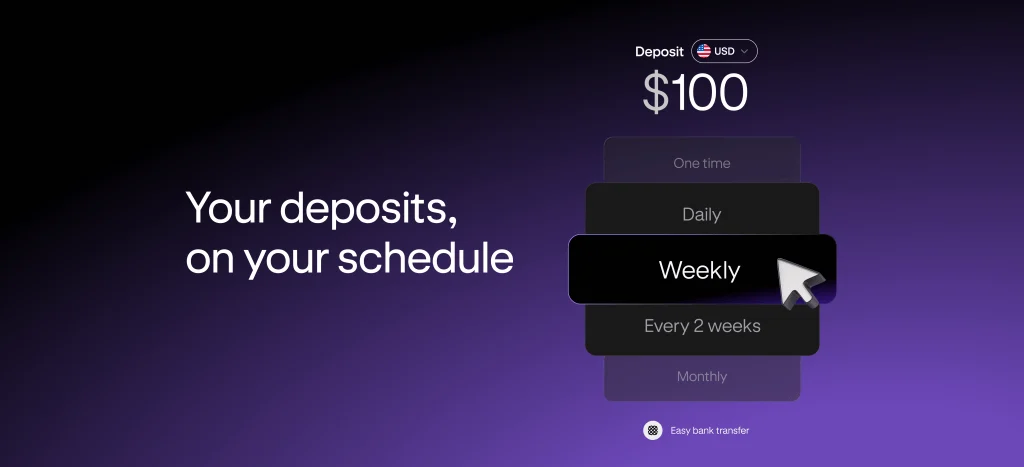
Cryptocurrency exchange Kraken has officially rolled out a new feature allowing United States-based customers to establish automated, recurring ACH (Automated Clearing House) deposits. Designed to remove the friction of manual funding, the feature aims to help investors maintain consistent capital allocation strategies without the need to remember individual transaction execution. By bridging traditional banking rails with digital asset infrastructure, the platform is addressing a persistent pain point for retail and institutional participants alike: the behavioral hurdle of timely account funding.
The mechanics of the new offering are designed for administrative simplicity. Users can link an eligible bank account, select a specific funding amount, and choose from multiple scheduling frequencies tailored to personal financial calendars—such as matching up with standard bi-weekly paydays. Unlike automated purchasing plans that immediately convert fiat currency into a specific digital asset, Kraken’s recurring ACH deposit simply moves cash from a linked checking or savings account into the user’s cash balance. The funds reside securely within the ecosystem, completely liquid and immediately available for deployment into trades whenever market conditions align with the investor’s strategy.
Background Context and Evolution of Retail Crypto Funding
The introduction of automated ACH deposits arrives against the backdrop of an evolving digital asset market where user experience has become a primary differentiator for major exchanges. In the early years of cryptocurrency trading, funding an account was often a cumbersome process involving international wire transfers, high fees, and lengthy processing times. Over the last decade, exchanges have steadily integrated domestic banking rails—such as ACH in the United States and SEPA in Europe—to reduce barriers to entry.
However, manual ACH transfers historically suffered from psychological and operational friction. Investors frequently report intending to fund accounts during market downturns or regular investment intervals, only to delay or forget the manual steps required to transfer capital. By introducing recurring deposits—a staple of traditional brokerages like Vanguard, Fidelity, and Charles Schwab—Kraken is aligning its product offerings with established personal finance best practices. This shift acknowledges that digital asset investing is increasingly viewed not merely as speculative trading, but as a long-term component of diversified financial portfolios.
Operational Mechanics and User Control
Understanding the operational boundaries of the new feature is essential for participating users. When establishing a recurring schedule, clients retain complete autonomy. The system accommodates modifications, allowing users to pause, edit, resume, rename, or cancel their deposit schedules at any time through the platform interface.
To maintain transparency, the platform provides a dedicated schedule dashboard displaying upcoming deposit dates, cumulative historical deposits, and recent transaction logs. Additionally, automated push notifications and email confirmations are triggered upon the success or failure of any scheduled transfer, as well as whenever modifications are made to an active schedule.
Financial regulations and banking standards dictate certain operational parameters regarding fund availability and cancellations. While deposited capital is available for trading immediately upon clearing, funds deposited via ACH are restricted from withdrawal from the platform for a period of seven days. Furthermore, clients wishing to halt an upcoming scheduled debit must submit their cancellation request at least three business days prior to the designated transfer date to ensure the instruction can be processed through the ACH network before the financial institution initiates the pull. There are no direct platform fees levied on the deposit itself, though users must remain mindful of standard banking rules regarding sufficient funds to avoid overdraft fees at their respective financial institutions.
Strategic Implications for the Digital Asset Market
From a broader market perspective, the rollout of automated fiat ingestion tools carries notable implications for liquidity and market stability. Historically, retail trading volume has exhibited sharp cyclicality, often surging during parabolic price rallies driven by emotional buying, and drying up during consolidation phases. By facilitating automated, systematic deposits—a methodology akin to Dollar-Cost Averaging (DCA)—exchanges encourage a more disciplined, behaviorally detached approach to capital allocation.
Industry analysts point out that regular, automated inflows help stabilize exchange liquidity by smoothing out retail transaction volumes over time. When capital enters accounts predictably, it creates a baseline of dry powder that can absorb sudden market volatility. Furthermore, as regulatory scrutiny increases across the global cryptocurrency sector, user-friendly features that encourage transparent, deliberate, and compliant fiat onboarding help mainstream digital assets further into legitimate financial planning.
Looking forward, the integration of traditional banking rails with automated software architectures underscores the convergence of fintech and decentralized finance principles. As legacy financial habits merge with blockchain-based ecosystems, tools that automate mundane administrative tasks are expected to become standard across all major trading venues. For Kraken’s US user base, the new recurring ACH deposit feature represents a significant step toward reducing friction, empowering disciplined investment strategies, and modernizing the digital asset funding experience.

