
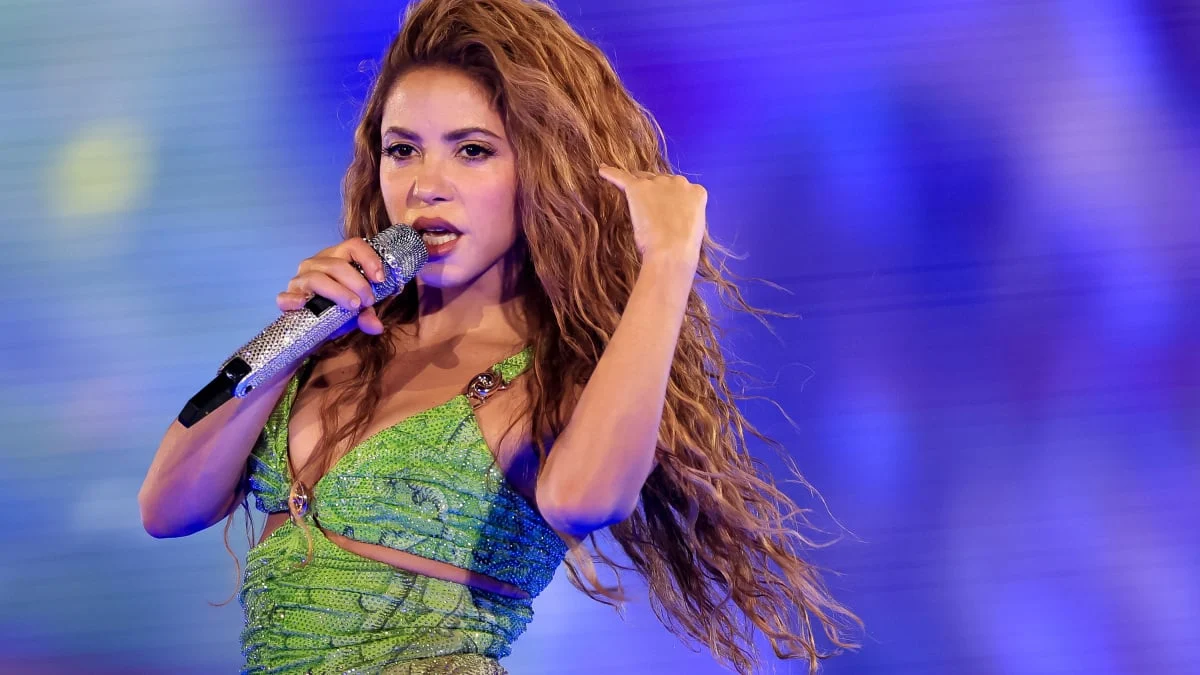
The world of international association football is set to undergo a transformative cultural shift as FIFA prepares to host its first-ever Super Bowl-style halftime show during the 2026 World Cup final. This unprecedented move marks a departure from decades of traditional soccer protocol, signaling a new era of entertainment-heavy sports broadcasting designed to capture a global audience. Scheduled for Sunday, July 19, the performance will take place during the interval of the championship match between Spain and Argentina at the New York New Jersey Stadium, commonly known as MetLife Stadium. In a lineup that rivals the scale of the most significant music festivals in the world, the show will be headlined by global icons Justin Bieber, BTS, Madonna, and Shakira.
The production, curated by Coldplay frontman Chris Martin, aims to bridge the gap between elite athletics and high-concept musical performance. Beyond the primary headliners, the event will feature a diverse array of supporting talent, including Afrobeat sensation Burna Boy, world-renowned conductor Gustavo Dudamel, and the PS22 Chorus featuring members of Coldplay. In an unexpected twist that highlights the family-oriented nature of the tournament, characters from Sesame Street and The Muppets are also scheduled to appear on the pitch. This ambitious undertaking is not merely an entertainment spectacle but a strategic partnership between FIFA and Global Citizen, designed to leverage the massive viewership of the World Cup final for humanitarian and commercial objectives.
A New Framework for the World Cup Final
The decision to implement a high-production halftime show during the World Cup final represents a significant pivot in FIFA’s commercial strategy. Traditionally, the World Cup has utilized pre-match or post-match ceremonies to showcase local culture and international music, keeping the 15-minute halftime interval strictly reserved for team tactical adjustments and player recovery. However, the 2026 tournament, co-hosted by the United States, Mexico, and Canada, has provided a unique opportunity to adopt North American sports marketing traditions.
The "Super Bowl-style" designation is not accidental. By bringing in a curated lineup of diverse, multi-generational stars, FIFA is attempting to replicate the massive non-sporting draw that the NFL achieves annually. For the 2026 final, the stakes are particularly high. The match between Spain, a European powerhouse known for its technical precision, and Argentina, the defending champions led by a legacy of footballing greatness, is already expected to break viewership records. The addition of a halftime show featuring BTS—marking a significant global appearance for the K-pop group—and Shakira, who has become synonymous with World Cup anthems, is a calculated move to ensure the eyes of the world remain glued to the screen even when the ball is not in play.
Logistics, Timing, and the Challenge of the Soccer Clock
One of the primary hurdles for the production is the inherent unpredictability of soccer timing. Unlike American football, where the clock stops frequently and halftime is a fixed point, a soccer match consists of two continuous 45-minute halves. The official kickoff is set for 3:00 p.m. ET, which would theoretically place the halftime show around 3:45 p.m. ET. However, the inclusion of "stoppage time"—minutes added at the end of the half to account for injuries, substitutions, and celebrations—means the exact start time of the performance remains fluid.
FIFA and Global Citizen have advised viewers primarily interested in the musical performances to tune in well before 3:45 p.m. ET to avoid missing the opening acts. The performance itself is slated to last approximately 11 minutes. However, the logistical reality of moving a massive stage, lighting rigs, and audio equipment onto the grass and then removing them without damaging the playing surface is a daunting task. While the standard halftime break is 15 minutes, internal reports suggest that broadcasters and organizers are preparing for a window that could stretch to 30 minutes. This extension is necessary to ensure the safety of the performers and the integrity of the pitch for the second half of the match.
Historical Precedent and the IFAB Regulatory Conflict
The extension of the halftime interval has sparked considerable debate within the football community. The International Football Association Board (IFAB), the body responsible for the Laws of the Game, has historically been protective of the 15-minute halftime limit. In 2021, a proposal to extend the halftime break to 25 minutes for entertainment purposes was formally rejected by the IFAB. The board cited concerns regarding player welfare, noting that a prolonged period of inactivity could lead to muscle cooling, increasing the risk of injury when players return for the second half.
Critics of the new halftime format argue that FIFA is prioritizing commercial revenue and American-style "spectacle" over the sporting integrity of the competition. Social media reactions from long-time fans have expressed frustration, with some suggesting that the essence of the "Beautiful Game" is being diluted by excessive advertising and entertainment breaks. However, FIFA officials have defended the move, pointing to the evolving nature of global sports consumption and the need to engage younger demographics who expect multi-dimensional entertainment experiences.
The FIFA Global Citizen Education Fund
Central to the halftime show’s mission is a massive philanthropic effort. The performance serves as the primary promotional vehicle for the FIFA Global Citizen Education Fund. This initiative aims to raise $100 million to expand access to quality education and youth soccer programs in underserved communities across the globe.
According to official FIFA statements, the fund has already surpassed the $50 million mark. A significant portion of this revenue has been generated through a unique ticketing model where $1 from every ticket sold throughout the 2026 tournament is directed toward the fund. The halftime show is expected to drive a surge in private donations and corporate sponsorships. By partnering with Global Citizen, an organization known for its high-profile advocacy concerts, FIFA is attempting to frame the 2026 World Cup as a "tournament with a purpose," moving beyond the pitch to address systemic global issues.
Broadcast Information and Global Accessibility
For fans looking to catch the historic event, the broadcast will be accessible through multiple platforms. In the United States, English-language coverage will be spearheaded by Fox, with pre-game festivities beginning at noon ET—three hours prior to the 3:00 p.m. ET kickoff. The game and the halftime show will also be available for streaming via the Fox Sports app and Fox One.
For Spanish-speaking audiences, Telemundo will provide comprehensive coverage, while the Peacock streaming service will offer live access to the final. Peacock has positioned itself as a central hub for the 2026 tournament, offering all 104 matches to its Premium and Premium Plus subscribers. Internationally, the halftime show will be distributed to hundreds of territories, ensuring that the performances of Madonna, Justin Bieber, and BTS reach an estimated audience of over one billion people.
Analysis of the Broader Impact on International Sports
The introduction of a Super Bowl-style halftime show at the World Cup final is more than just a one-off event; it is a bellwether for the future of international sports marketing. If successful, this format could become a permanent fixture of the FIFA World Cup, potentially expanding to the Women’s World Cup and other major confederation tournaments like the UEFA Euro or the Copa América.
From a commercial perspective, the "Americanization" of the World Cup final opens up lucrative new inventory for advertisers. Traditionally, soccer has been difficult for broadcasters to monetize due to the lack of natural breaks in play. By extending halftime and turning it into a marquee event, FIFA creates a high-value environment for "halftime sponsors," similar to the multi-million dollar slots sold during the NFL’s championship game.
However, the long-term impact on player performance remains a point of contention. Sports scientists will likely monitor the physical data from the Spain and Argentina squads closely to determine if the 30-minute break contributes to a dip in intensity or an increase in soft-tissue injuries during the second half.
As Sunday, July 19 approaches, the anticipation is building not just for the clash between the tactical brilliance of Spain and the passionate flair of Argentina, but for a musical showcase that promises to be a milestone in pop culture history. Whether this experiment will be embraced as a vibrant evolution of the game or criticized as an unnecessary distraction remains to be seen, but one thing is certain: the 2026 World Cup final will be unlike any that have come before it.

