
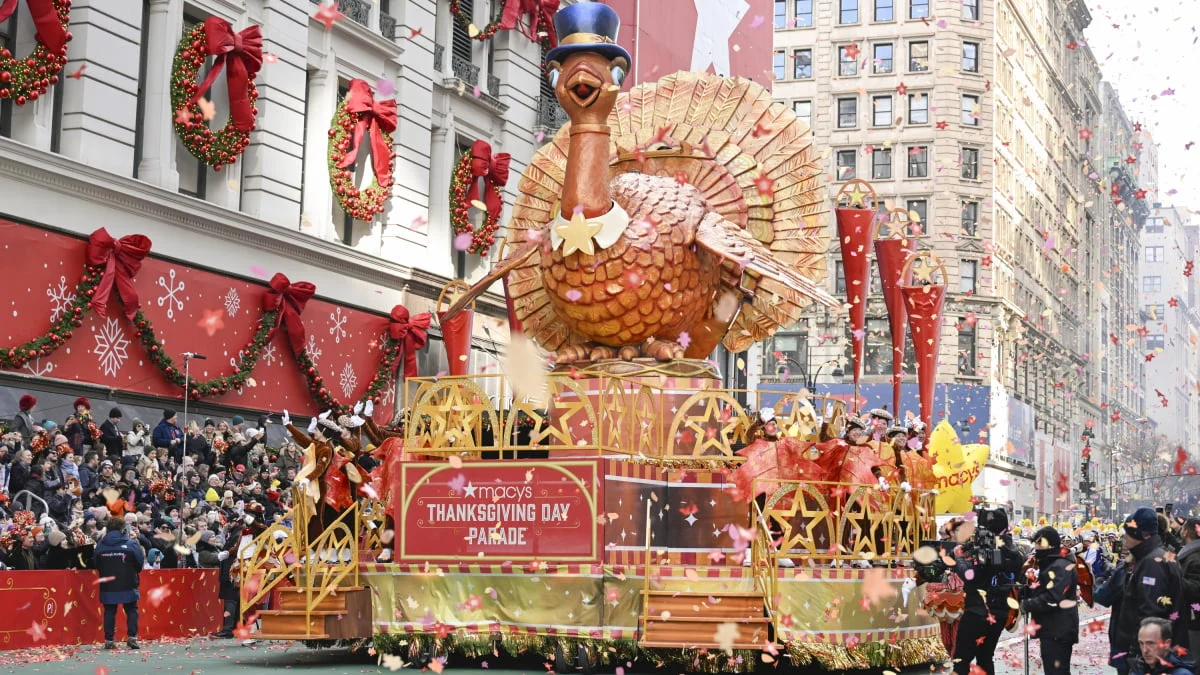
In an unprecedented disruption to a century-old American holiday tradition, the 100th-anniversary edition of the Macy’s Thanksgiving Day Parade will not take place on Thanksgiving Day. Due to severe weather forecasts anticipating a potent nor’easter set to batter the New York metropolitan area, event organizers and city officials have made the historic decision to reschedule the iconic procession for Saturday, November 28, at 8:30 a.m. ET.
The announcement has sent ripples through households nationwide, fundamentally altering a holiday routine that has reliably anchored Thanksgiving morning television and family gatherings for generations. While public safety has justifiably taken precedence, the decision marks a watershed moment in the storied history of the holiday pageant, breaking an unbroken string of Thanksgiving Day performances that has endured for a century.
A Historic First: Safety Trumps Tradition
According to meteorological briefings provided by the Weather Channel and local emergency management agencies, New York City is bracing for severe wind gusts and heavy precipitation on Thursday, creating hazardous conditions that violate strict municipal safety guidelines.
Under city regulations established in the wake of a 1997 incident—in which a high winds caused a Cat in the Hat balloon to veer into a lamppost, severely injuring a bystander—parade organizers are legally bound by strict wind thresholds. Current municipal law dictates that giant helium-filled character balloons cannot take flight if sustained winds exceed 23 miles per hour, or if gusts surpass 34 miles per hour. With a nor’easter forecasted to bring conditions well beyond these safety limits, city officials and Macy’s leadership were left with few alternatives.
"The safety of our participants and spectators is our top priority, and after close consultation with our City and agency partners, we have made the decision to move this year’s celebration," Macy’s said in an official statement released on Wednesday. "Thank you to the thousands of volunteers, performers, and partners who create the magic millions enjoy each year. We look forward to celebrating together on Saturday."
A Century of Resilience: The Parade Chronology
To understand the magnitude of this rescheduling, one must look back at the resilient history of the Macy’s Thanksgiving Day Parade. Launched in 1924 by Macy’s department store employees—many of whom were first-generation immigrants wanting to celebrate the American holiday with the pageantry of European festivals—the parade quickly grew into a cultural touchstone.
Over its 100-year history, the parade has proven remarkably resilient, weathering economic depressions, wartime hardships, and political turmoil. Prior to this week’s announcement, the parade had never once been postponed or delayed from its scheduled Thursday morning time slot. Historically, cancellations have been exceedingly rare:
- 1924–1941: The parade establishes itself as a beloved New York City tradition, featuring live animals borrowed from the Central Park Zoo and the introduction of its iconic giant balloons in 1927Felix the Cat.
- 1942–1944: The parade is suspended entirely for three consecutive years due to wartime rubber and helium shortages during World War II. During this period, the parade’s massive balloons were famously donated to the U.S. government to aid the war effort.
- 1945–1970: The parade returns triumphantly, becoming a staple of national television broadcasting as networks began transmitting the event to living rooms across America via NBC in the early days of commercial television.
- 1971: Severe rain and high winds force organizers to ground the giant balloons for the first time in the event’s history. While the parade itself proceeded, spectators were deprived of the signature airborne characters.
- 1997: Following an accident involving high winds and a runaway Cat in the Hat balloon, the New York City Council implements strict wind-speed thresholds to govern future balloon flights.
- 2020: During the COVID-19 pandemic, the parade successfully adapted by pivoting to a heavily modified, television-only format without traditional street spectators, ensuring the continuity of the Thanksgiving morning broadcast.
- 2026: For the first time in its century-long operational history, severe weather forces a postponement of the actual date of the parade to the subsequent Saturday.
Logistical and Economic Implications
Moving an event of this magnitude with less than 48 hours’ notice creates a staggering logistical puzzle for the City of New York, Macy’s, and broadcasting partner NBC. The parade is not merely a morning stroll down Central Park West and Sixth Avenue; it is a meticulously choreographed military-style operation involving thousands of participants.
Marching bands from across the United States have spent months fundraising and rehearsing for their Thanksgiving Day appearance. High school and university musicians, professional dance troupes, Broadway casts, and celebrity performers now face sudden schedule adjustments, hotel booking extensions, and travel rearrangements. Many participants travel from distant states, and adjusting return flights or securing additional lodging over a holiday weekend presents significant logistical and financial hurdles.
Furthermore, local businesses, hotels, and restaurants in Manhattan—which traditionally rely on Thanksgiving week tourism for a massive economic boost—must navigate the shifting schedules of visitors. While many tourists may choose to extend their stays to catch the Saturday procession, others with strict holiday travel itineraries may be forced to miss the event entirely.
From a broadcasting perspective, NBC and its affiliates face unprecedented scheduling adjustments. The Thanksgiving morning broadcast slot is traditionally one of the most-watched non-sports television events of the year, drawing tens of millions of viewers who tune in while preparing holiday meals. Relocating the telecast to Saturday morning places it in direct competition with heavy college football schedules and weekend programming blocks, potentially impacting viewership metrics and advertising revenue.
Public Reaction and Cultural Impact
As news of the postponement spread across news outlets and digital platforms, the public reaction was swift and varied. Social media channels flooded with expressions of disbelief, humor, and disappointment. For millions of Americans, watching the parade while cooking turkey and spending time with family is an irreplaceable holiday ritual.
The internet responded with characteristic hyperbole, with users expressing mock distress over a Thanksgiving without the familiar sights of floating pop-culture icons, show tunes, and Santa Claus signaling the official start of the holiday shopping season. At the same time, many commentators acknowledged the practical wisdom of the decision, noting that attempting to navigate giant vinyl balloons through dangerous nor’easter winds poses an unacceptable risk to both the crowds lining the streets and the handlers guiding the tethers.
Looking Ahead to Saturday
Despite the calendar shift, organizers remain committed to delivering a spectacle worthy of the parade’s centennial milestone. The rescheduled event on Saturday, November 28, will feature the full lineup originally planned for Thursday, including the signature giant character balloons, elaborate floats, marching bands, and celebrity performances.
City officials have urged spectators planning to attend the Saturday procession to monitor local weather reports and municipal transit updates, as lingering effects from the nor’easter could still impact travel conditions. Meanwhile, families across the country will adapt their holiday traditions, tuning in on Saturday morning to witness a historic chapter in the legacy of the Macy’s Thanksgiving Day Parade.

