
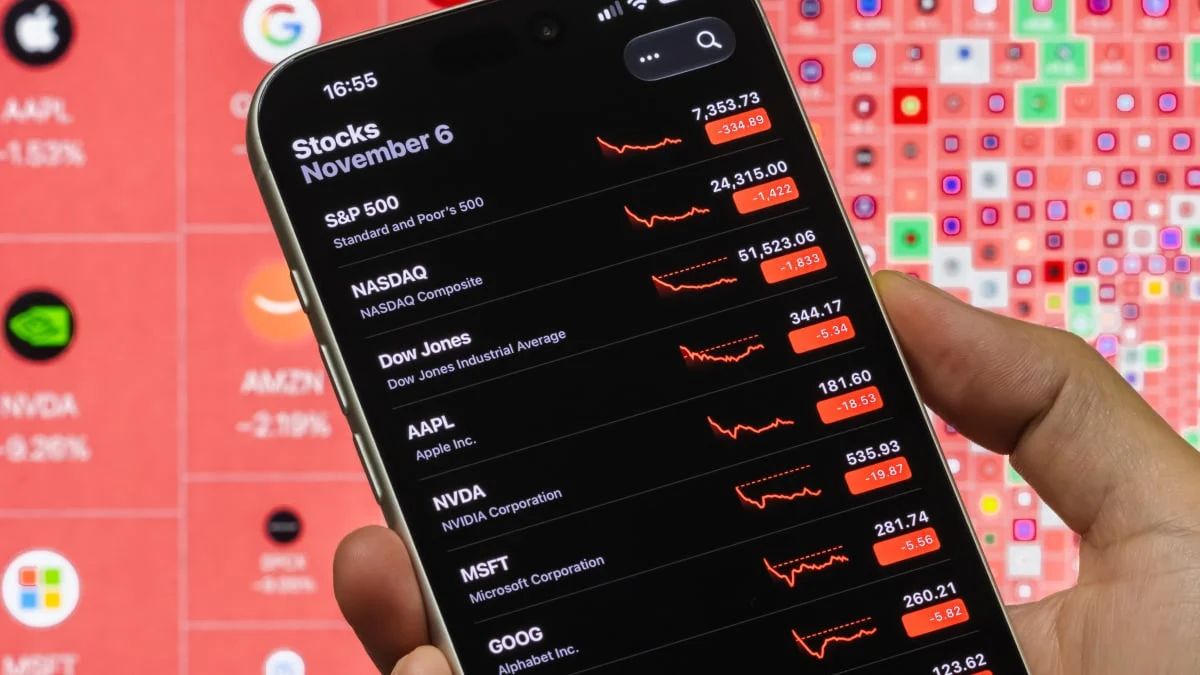
The technology sector attempted to steady itself on Friday, staging a modest recovery following one of the most severe single-day market sell-offs in recent years. Wall Street traders and institutional investors rushed to buy the dip, injecting tentative optimism into a market battered earlier in the week by political shifts and mounting regulatory uncertainties.
The tech-centric Nasdaq 100 climbed 1.9 percent by Friday afternoon, offering a welcome reprieve after suffering a staggering 6.3 percent collapse on Thursday. While the modest rebound does not entirely erase the historic losses, it signals an initial stabilization as market participants reassess valuations following the dramatic political outcomes of the U.S. midterm elections.
The Aftershocks of the Midterm Elections
The root of the recent market turmoil traces back to the reverberations of Tuesday’s U.S. midterm election results, which sent immediate shockwaves across the financial and technology sectors. Over recent election cycles, a significant portion of Silicon Valley’s high-profile leadership—including prominent figures such as tech mogul Elon Musk—had publicly aligned themselves with President Donald Trump and the Republican Party.
However, the political landscape shifted dramatically on Tuesday as Democratic candidates secured resounding victories in key races across the nation. These electoral triumphs have triggered widespread anxiety within the tech industry regarding potential legislative and regulatory blowback. In particular, many victorious Democratic candidates campaigned on platforms explicitly critical of the rapid, largely unregulated expansion of artificial intelligence.
The legislative implications of these campaigns quickly materialized in Washington. On Wednesday, just one day after the Democratic Party’s decisive midterm wins, Senator Bernie Sanders formally called for a national moratorium on the construction of new data centers. The policy proposal directly targeted the massive energy and infrastructure demands required to sustain modern generative AI models, instantly intensifying investor anxieties over the future profitability and operational freedom of the technology sector.
Chronology of a Market Crisis
To understand the trajectory of the week’s trading, market analysts have mapped out a rapid sequence of events that transformed political developments into a financial crisis:
- Sunday to Monday: Tech stocks trade near recent highs, buoyed by optimism surrounding corporate earnings and continued advancements in artificial intelligence infrastructure.
- Tuesday: U.S. midterm elections conclude with significant Democratic gains across congressional and gubernatorial races, altering the perceived balance of power in Washington.
- Wednesday: Lawmakers, including Senator Bernie Sanders, respond to the election results by introducing policy proposals aimed at reining in the tech sector, specifically targeting artificial intelligence data centers.
- Thursday: Wall Street opens to panic-selling. The Nasdaq 100 suffers a 6.3 percent drop, marking its worst single-day performance in six years and triggering a broader rout across major tech equities.
- Friday: Investors step in to buy the dip, leading to a measured recovery across major indices, though key AI-adjacent hardware and infrastructure firms lag behind the broader rebound.
Performance Divergence: Hardware Lagging Software and Services
Despite the general upward trend on Friday, the recovery remains uneven, highlighting a deep-seated division within the broader tech ecosystem. Chipmakers and companies most directly tied to the infrastructure of artificial intelligence continue to face heightened scrutiny and investor hesitation.
Nvidia and SpaceX, two of the most prominent pillars of the modern AI and aerospace-tech ecosystem, saw their shares rise by 7 percent and 6.1 percent respectively during Friday’s trading session. Despite these percentage gains, neither company has successfully clawed back the immense valuation wiped from its books during Thursday’s historic rout.
In contrast, software, consumer tech, and platform companies that are less immediately vulnerable to infrastructure bans or hardware moratoriums experienced more robust recoveries. Intel shares surged 8.9 percent, while home-sharing giant Airbnb saw its stock climb 11.7 percent. Market strategists note that while investors are willing to re-enter software and established platform providers at discounted prices, hardware manufacturers and data-intensive firms remain weighed down by regulatory clouds.
Industry Reactions and Market Analysis
Financial analysts and corporate representatives have spent the latter half of the week parsing the long-term implications of a newly empowered Democratic legislative agenda. While executive leadership teams in Silicon Valley have largely remained publicly circumspect, behind-the-scenes lobbying efforts are reportedly ramping up to address the looming threat of federal oversight.
"The market is currently pricing in a worst-case scenario regarding regulatory friction," noted Sarah Jenkins, senior equity strategist at Meridian Capital. "The aggressive rhetoric surrounding artificial intelligence during the midterms caught many institutional investors off guard. Thursday’s sell-off was a knee-jerk reaction to the realization that the political tailwinds the tech industry has enjoyed may be shifting toward aggressive headwinds."
Jenkins emphasized that while the fundamental demand for artificial intelligence capabilities remains robust, the cost of compliance, energy consumption, and infrastructure development could increase dramatically under a hostile legislative framework. The call for data center moratoriums, in particular, represents a structural bottleneck that could stall the deployment of next-generation machine learning models.
Broader Economic Implications and Outlook
The swift transition from record-high valuations to severe market corrections underscores the high-stakes relationship between Washington politics and the technology sector. As artificial intelligence moves from an experimental novelty to the central engine of corporate growth, its fate is increasingly tied to public policy, environmental regulations, and national security debates.
For everyday investors and retirement funds heavily weighted in tech index funds, the week serves as a stark reminder of systemic volatility. While "buying the dip" has historically proven to be a profitable strategy over the past decade of tech-led market expansion, the emergence of bipartisan or party-line skepticism toward artificial intelligence introduces a new variable that quantitative models struggle to predict.
As markets close for the weekend, Wall Street will look ahead to upcoming congressional hearings and potential policy announcements from Democratic leaders to gauge whether Friday’s recovery is the start of a sustainable stabilization or merely a temporary dead-cat bounce in an increasingly turbulent political economy.

