
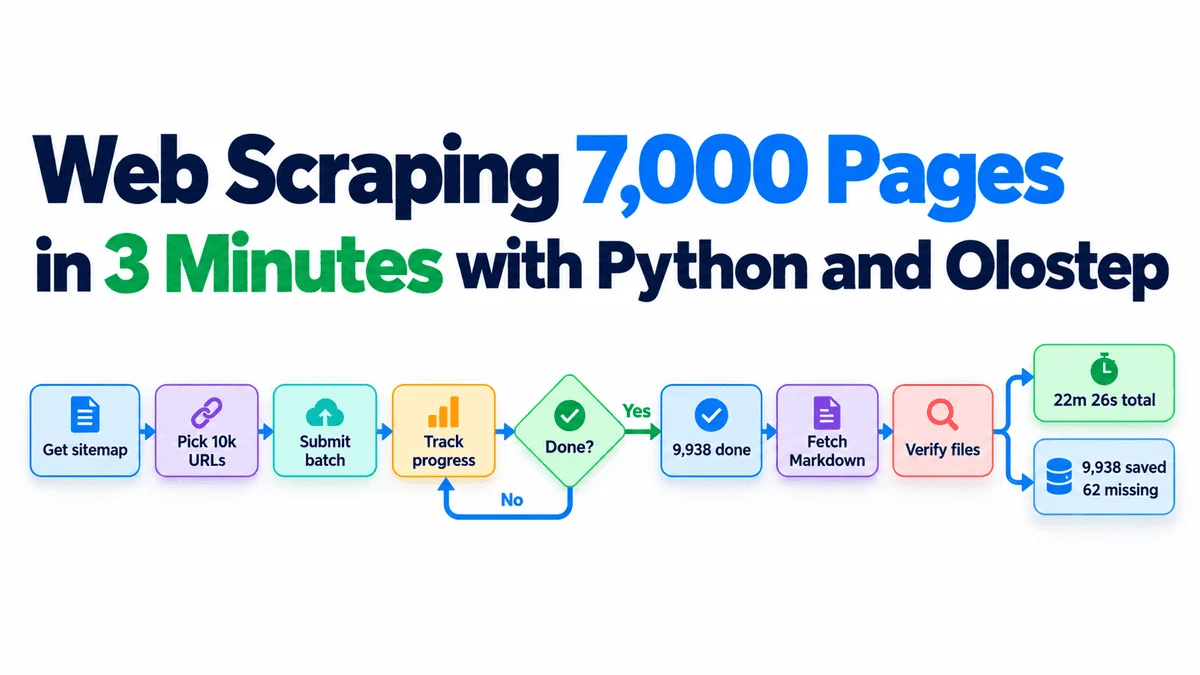
The modern data-driven enterprise relies heavily on the ability to ingest vast quantities of web-based information for market analysis, large language model (LLM) training, and real-time competitive intelligence. Traditional scraping methods, which often rely on individual request-response cycles, frequently encounter bottlenecks when scaled to tens of thousands of URLs. Recent benchmarks using the Olostep Batch API demonstrate a significant shift in this paradigm, showcasing a hybrid performance model where massive throughput is achievable, provided that developers implement robust verification protocols to account for the nuances of distributed web scraping.
The Performance Benchmark
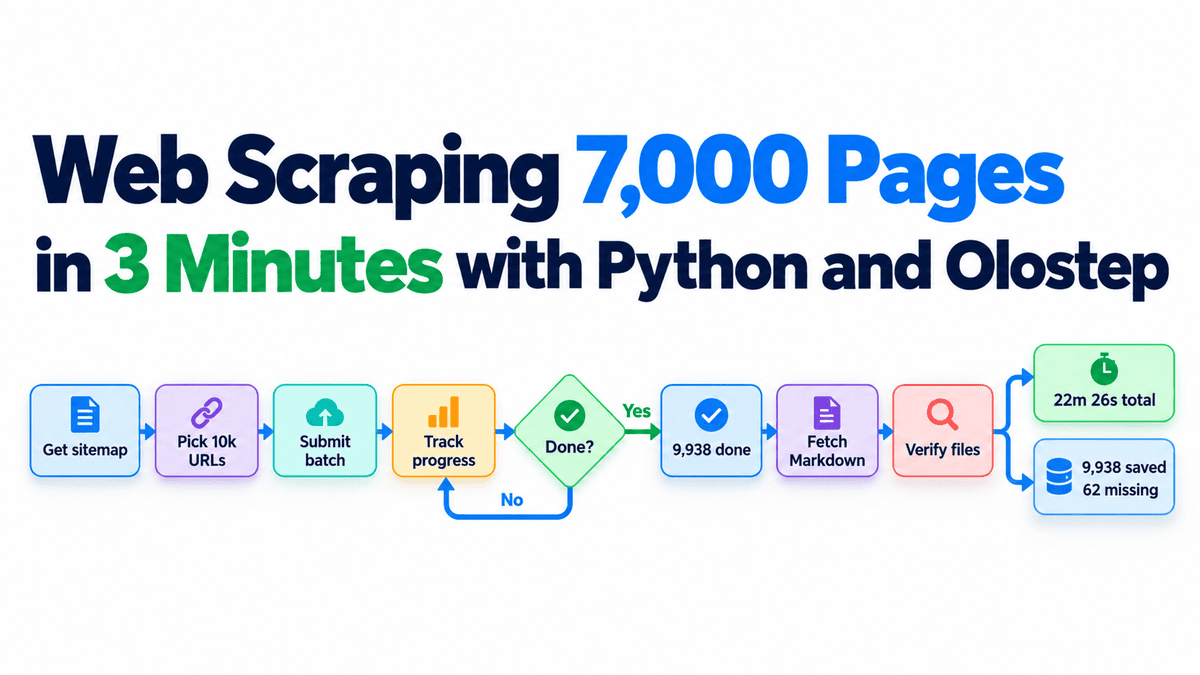
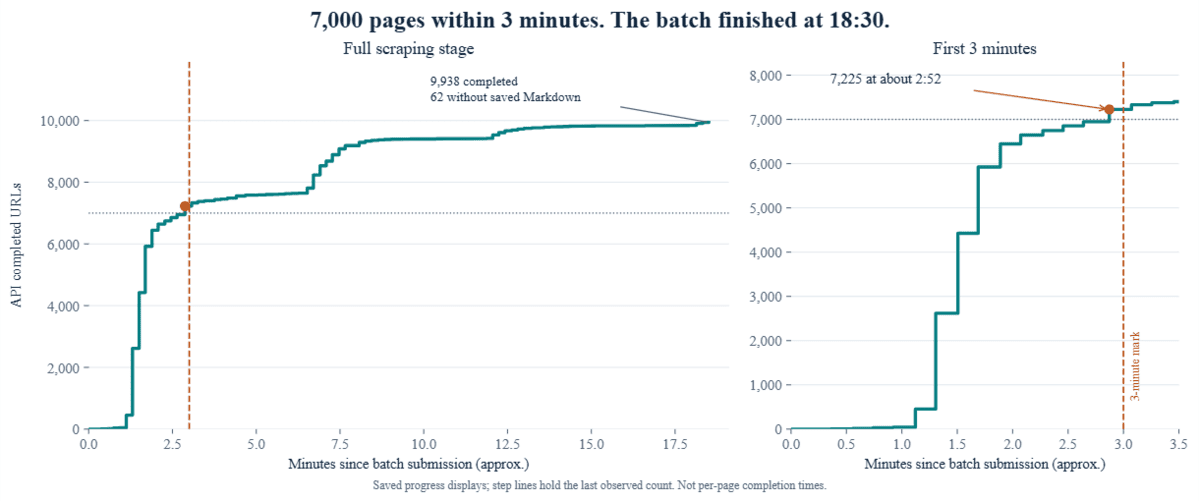
In a controlled experiment conducted using Python 3.13.15 and the Olostep SDK version 1.2.2, a total of 10,000 unique URLs from the Mozilla Developer Network (MDN) were submitted for processing. The results revealed a non-linear performance trajectory: 7,225 pages were successfully processed in under three minutes, indicating an exceptionally high initial ingestion rate. However, the completion of the entire batch—including final processing, data validation, and the local storage of Markdown files—took a total of 22 minutes and 26 seconds. Ultimately, 9,938 URLs were successfully rendered and saved, resulting in a 99.38% success rate.
This discrepancy between initial speed and total job completion time highlights a critical distinction in data engineering: throughput capacity versus end-to-end pipeline latency. For enterprise-grade applications, the speed at which the first few thousand records are retrieved is often less important than the reliability of the entire dataset.
Evolution of Web Data Infrastructure
The shift toward batch-based scraping represents a broader evolution in web data infrastructure. Historically, organizations have struggled with "scraping at scale," which often involves managing proxy rotation, handling CAPTCHAs, and ensuring that concurrent requests do not trigger security rate-limiting. By moving toward a batch-oriented API model, providers like Olostep aim to abstract these challenges away from the developer.
According to industry observers, the move toward specialized data infrastructure is a response to the "AI Gold Rush." As companies race to scrape the internet to create high-quality datasets for training generative AI models, the demand for stable, high-throughput pipelines has increased. Olostep’s reported capability of processing 100,000 pages in under 25 minutes for enterprise-tier workloads suggests that the bottleneck for data collection is moving from the network layer to the data cleaning and verification layer.
Chronology of the 10,000-Page Workflow
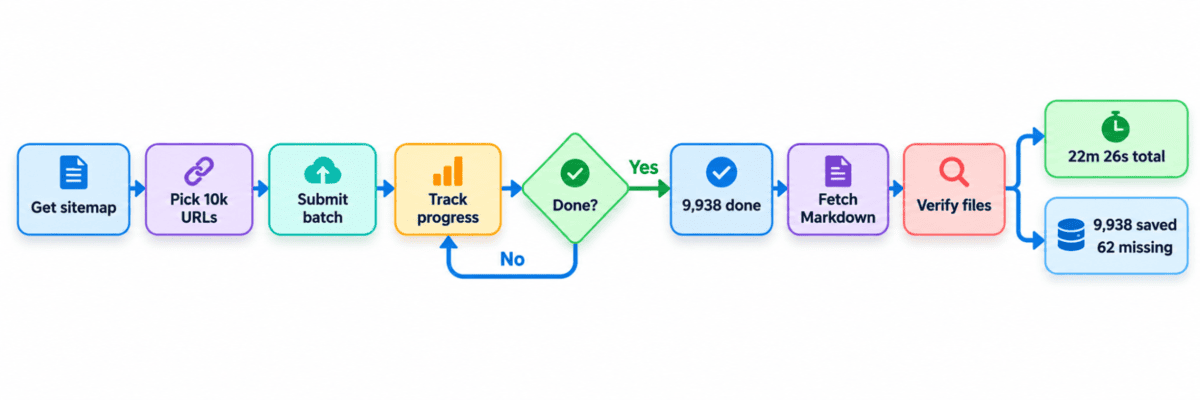
The workflow for processing such a high volume of data requires a structured, multi-stage approach to ensure data integrity. The experiment followed a six-step methodology:
- Environment Setup and SDK Initialization: The integration began with the installation of the Olostep Python SDK, combined with external libraries such as
requestsandtqdmfor metadata retrieval and progress tracking. - Dataset Curation: A sitemap of the MDN documentation was downloaded, decompressed, and processed to isolate 10,000 unique URLs. This ensures that the scrape is deterministic and reproducible.
- Batch Submission: URLs were submitted as a single request to the Olostep Batch API, moving away from iterative, single-threaded requests.
- Monitoring and State Management: Using a loop-based monitor, the process tracked the batch status in real-time. This phase highlighted the importance of checkpointing; by saving the batch ID to a local JSON file, the system gained the ability to resume if a network interruption occurred.
- Concurrent Download: Once the batch status reached "completed," the system initiated a parallel download phase. To optimize efficiency, a semaphore was used to limit concurrency to 96 simultaneous connections, preventing the local machine from being overwhelmed by I/O requests.
- Verification and Manifest Generation: The final step involved cross-referencing the requested URLs against the saved files. This generated a
manifest.csvand afailures.csv, providing a clear audit trail of the 62 pages that failed to render correctly.
Technical Implications and Data Reliability
The data gathered from this experiment suggests that while batch APIs offer a substantial speed advantage, they are not infallible. The 0.62% failure rate observed—attributed to either transient network errors, content generation issues, or site-specific blocks—underscores why enterprise pipelines must include a post-scraping verification phase.
From a technical perspective, the variance in processing time is likely due to the dynamic nature of web content. Different pages have varying DOM complexity and file sizes, which impact the time required to convert raw HTML into clean Markdown. When an API processes 7,000 pages in three minutes, it is likely handling the most accessible pages first. As the batch progresses, the remaining requests may involve more complex or slower-loading assets, which would naturally cause the average processing speed to taper off.
Broader Impact on Market Intelligence
For enterprises engaged in price monitoring, real-time competitor analysis, or data-heavy research, the implications of this speed-to-scale ratio are profound. In a competitive market, having data 20 minutes faster than a competitor can be the difference between a successful trade or an accurate market forecast. However, the cost of this speed is the increased complexity of infrastructure.
The integration of such tools requires a fundamental shift in how data scientists view web scraping. Instead of treating it as a simple script, it is now treated as an ETL (Extract, Transform, Load) process. This requires:
- Infrastructure as Code: Automating the spin-up of scraping environments.
- Robust Error Handling: Ensuring that failed URLs are logged and retried rather than ignored.
- Auditability: Maintaining a permanent log of what was collected and when, which is essential for compliance and data provenance.
Future Outlook
As the volume of data required for machine learning models continues to grow, the industry is likely to see further consolidation of these services. We are moving toward a period where "Scraping-as-a-Service" becomes a standard utility, similar to cloud storage or compute power. The ability to handle 10,000 to 100,000 pages with minimal custom code allows engineering teams to focus on the value-add—data analysis and model training—rather than the maintenance of fragile, home-grown scrapers that break every time a website updates its layout.
The experiment performed by the data science community confirms that while tools like the Olostep Batch API provide the engine for rapid data collection, the pilot—the developer—must remain vigilant. The 22-minute duration for a 10,000-page batch is an impressive benchmark, but the true value lies in the 9,938 verified Markdown files that can immediately be fed into an LLM or an analytics dashboard. As the ecosystem matures, the focus will likely shift from "how fast can we scrape" to "how reliably can we maintain a clean, updated data pipeline," marking the next stage in the evolution of web-based intelligence.

