
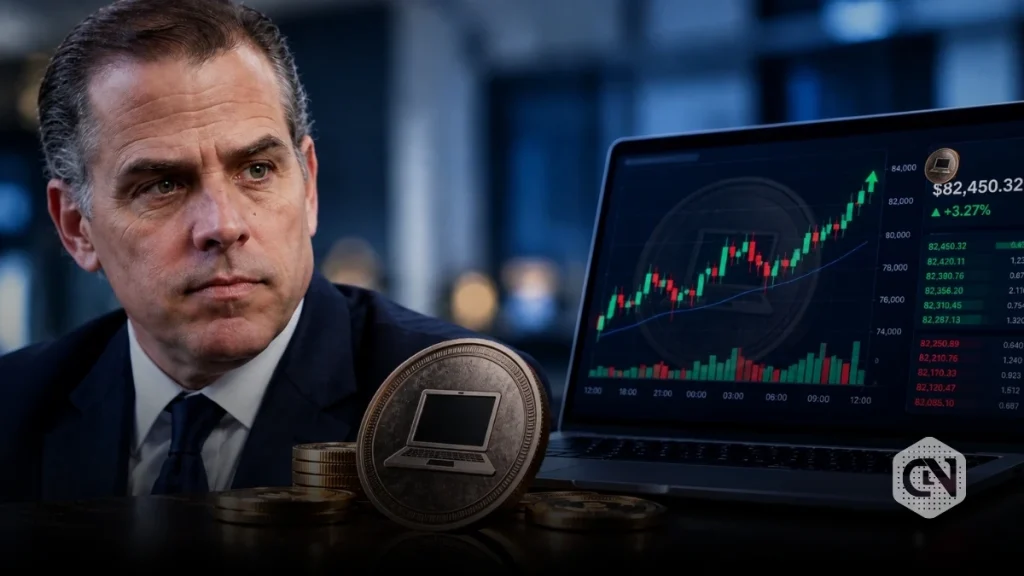
The launch of the LAPTOP meme coin on the Base blockchain has culminated in a chaotic market event, characterized by a staggering price collapse and intense scrutiny from both the cryptocurrency community and on-chain investigators. Initially marketed with significant fanfare, the token’s valuation soared to an eye-watering peak of $199 before suffering a catastrophic correction, ultimately shedding nearly 99% of its value and wiping out an estimated $1.6 billion in fully diluted valuation (FDV) in a matter of hours. As the token currently struggles to maintain a floor price of approximately $0.86, the project has become the center of a heated debate regarding market integrity, the role of automated trading bots, and the accountability of high-profile figures in the volatile meme coin ecosystem.
A Chronology of the Market Collapse
The volatility surrounding the LAPTOP token began almost immediately upon its deployment on the Base network. Early participants witnessed an aggressive, parabolic ascent that pushed the asset’s price from negligible levels to nearly $200. However, this momentum proved to be unsustainable. By the time the dust settled on the initial 24-hour trading window, the asset had plummeted by 96.9%, leading to widespread allegations from investors and independent analysts that the project exhibited classic symptoms of a "rug pull"—a malicious practice where developers or insiders drain liquidity from a project, leaving retail investors with worthless assets.
Data from market trackers like CoinGecko confirmed that the token’s liquidity depth was remarkably thin, reportedly falling under the $1 million threshold. This liquidity mismatch relative to the token’s massive FDV created the perfect conditions for a violent price swing. Analysts have noted that two primary wallets controlled a significant portion of the supply—approximately 50%—which created a structural vulnerability that was exploited as soon as trading volumes spiked.
On-Chain Forensic Analysis and Disputed Narratives
While the project leadership has maintained a posture of transparency, on-chain investigators have presented a more clinical and critical assessment of the events. Forensic analysis of the blockchain activity suggests that the volatility was not merely the result of organic market forces or technical glitches.
Investigators identified several suspicious fund movements that occurred in the three-hour window preceding the public rollout. Specifically, a single "sales wallet" was tracked liquidating $2.23 million in assets. Furthermore, two separate wallets identified as airdrop recipients sold 4,476 tokens each during the earliest stages of the launch, netting a combined $647,000. These transactions occurred in tandem with the activity of high-frequency trading bots, which reportedly entered the liquidity pool at the second opening, capturing an additional $716,000.
Perhaps most damning is the discovery of a liquidity boost executed on September 7—two days prior to the public sale—which generated $650,000 in fees. Furthermore, records show that 2.2 million tokens were deposited into the Bitvawo exchange before the exchange had even officially commenced trading for the asset. While the destination and beneficiary of these proceeds remain under investigation, analysts estimate that the total realized profit from these suspicious transactions likely falls between $5 million and $10 million.
Hunter Biden’s Defense and Strategic Pivot
In response to the mounting criticism, Hunter Biden has categorically denied that the project was a rug pull. In a public statement, he attributed the price collapse to a combination of overwhelming demand that the project’s liquidity could not support, technical infrastructure failures, and the intervention of front-running bots that manipulated the price movement.
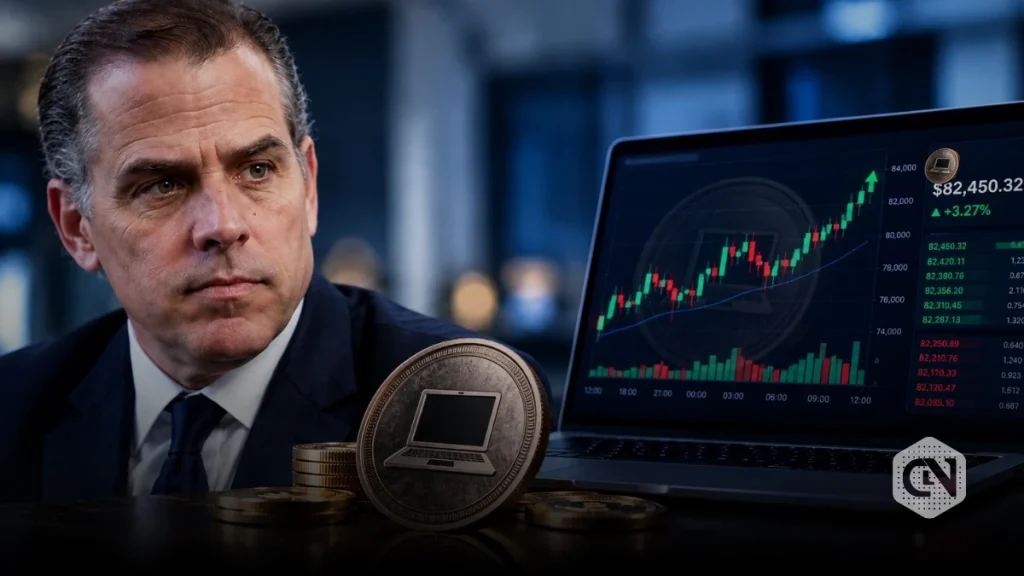
"The demand simply exceeded the supply, and the liquidity was unable to keep pace with the purchase activity," Biden stated. He emphasized that the team’s holdings remain under a lock-up agreement, insisting that neither he nor his core team members have cashed out or earned revenue from the project. According to Biden, the current price represents a "healthy level" after the initial froth was removed from the market.
Looking forward, the project team has announced a series of remedial measures designed to stabilize the token and rebuild investor confidence. These include the planned release of 4 million LAPTOP tokens as an incentive for liquidity providers, as well as a proposed burn of 10 million tokens during the next phase of the rollout. Biden framed the project as a long-term community-building exercise, noting that he had distributed free tokens to individuals who had previously lost funds in other political-themed meme coins, such as those associated with the Trump family.
Broader Implications for Political Meme Coins
The failure of the LAPTOP token highlights the precarious nature of the "PolitiFi" sector—a niche within the cryptocurrency market where tokens are derived from the brands and controversies of political figures. This event is not an isolated incident; it follows a pattern of extreme volatility observed in other tokens such as $MELANIA and $TRUMP, both of which have seen their values approach zero, suggesting that the sector is prone to boom-and-bust cycles that mirror speculative mania.
The political optics of the situation have only fueled the fire. Eric Trump, son of former President Donald Trump, took to social media platform X to mock the performance of the LAPTOP token, suggesting that Biden should return to his artistic pursuits rather than venture into decentralized finance. This public exchange serves as a microcosm of the larger rivalry between the two families, now playing out on the unpredictable stage of blockchain markets.
The incident has also raised questions about platform accountability. Following the fallout, the foundation’s official X account was suspended, effectively cutting off the primary line of communication with the community and forcing the project to rely on secondary blogging platforms like Medium for announcements.
The Regulatory and Market Reality
From a technical standpoint, security researchers have observed that the LAPTOP smart contract itself appears functional and does not contain the typical "backdoors" often found in fraudulent projects. The controversy, therefore, does not stem from a flaw in the code, but rather from the timing of liquidity provisioning and the movement of large token quantities prior to public access.
The disparity between the project’s stated intent—building a long-term community—and the reality of the price action serves as a cautionary tale for the broader crypto market. As institutional interest in the Base blockchain grows, the prevalence of meme coins that lack utility and possess centralized supply structures remains a significant risk factor for retail participants.
As of this writing, the project continues to operate, albeit under a cloud of skepticism. Whether the promised liquidity incentives will be sufficient to stabilize the token and restore the confidence of the disenfranchised, or if the project will serve as yet another example of the inherent dangers of speculative digital assets, remains to be seen. For now, the LAPTOP case stands as a stark reminder that in the world of meme coins, the distance between a billion-dollar valuation and a total market wipeout is often measured in minutes, not months. The intersection of high-profile politics and decentralized finance continues to be a volatile frontier, one where the absence of clear regulatory oversight leaves investors exposed to the whims of market manipulation and the rapid evaporation of capital.

