
The Genesis of the AI Jesus Controversy
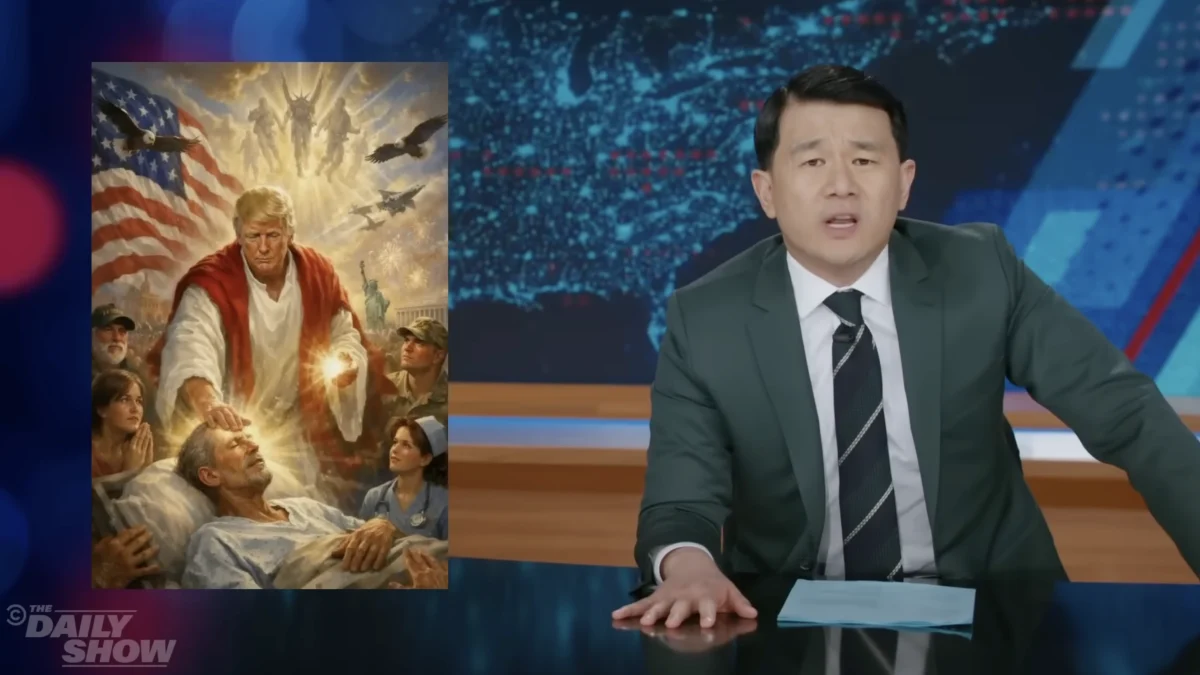
The controversy began when Donald Trump shared an image on his proprietary social media platform, Truth Social, which utilized generative artificial intelligence to blend his likeness with classical depictions of Jesus. In the image, Trump was shown in a divine light, surrounded by ethereal glow and symbolic religious overtones. This is not the first time the former president has leaned into messianic imagery; throughout his campaigns, he has often been framed by supporters as a providential figure. However, the explicit nature of the AI-generated image—placing him directly in the role of a central deity—prompted a swift reaction from across the political and religious spectrum.
Critics argued that the post bordered on blasphemy, citing the biblical prohibition against "false idols." Conversely, a segment of his base viewed the image as a metaphorical representation of his perceived persecution by the legal system. The post remained active for a brief period before being removed, but not before it was captured and disseminated across other social media platforms, including X (formerly Twitter) and Facebook. The deletion of the post usually signals a pivot in communication strategy, and in this instance, it set the stage for a defensive maneuver by Trump’s running mate, Senator JD Vance.
JD Vance and the "Humor" Defense
Appearing on Fox News to address the fallout, Senator JD Vance attempted to reframe the narrative. According to Vance, the former president was not making a theological claim but was instead engaging in a form of internet-based humor. Vance suggested that the post was a "joke" and that the decision to delete it was born out of a realization that the general public was not equipped to understand Trump’s specific brand of "humor."
"I think the president was posting a joke and, of course, he took it down because he recognized that a lot of people weren’t understanding his humor," Vance stated during his interview. This rhetorical strategy—claiming a controversial statement was merely a joke—has been a recurring theme in the Trump communications playbook. It allows the campaign to signal to a core base that understands the "in-joke" while providing a layer of deniability against mainstream criticism. However, this defense relies on a consistent narrative, which was quickly undermined by the former president’s own comments to the press.
The Daily Show’s Ronny Chieng Deconstructs the Narrative
On Tuesday night’s broadcast of The Daily Show, guest host Ronny Chieng took aim at the inconsistency between Vance’s defense and Trump’s own explanation. Chieng pointed out that while Vance was busy rebranding the post as a satirical masterpiece, Trump had offered a completely different interpretation to reporters. When questioned about the image, Trump claimed he believed the AI-generated figure was actually him dressed as a doctor, rather than a religious figure.
"He had to come out yesterday to defend President Trump from all the woke Christians who are trying to cancel him just because he might have said, ‘I am Jesus’," Chieng joked during the segment. He further leaned into the irony of the situation, asking the audience, "Where in the Trump Bible does it say you can’t worship false idols?"
The core of Chieng’s critique focused on the "doctor" explanation. He played footage of Trump telling reporters he thought "it was me as a doctor," with no mention of the image being a joke or a religious metaphor. Chieng highlighted the absurdity of the conflicting stories, asking, "Is it a doctor or is it a joke, or is it a doctor who is a joke, like a chiropractor?" This segment resonated with viewers by highlighting the often-contradictory nature of political damage control in the digital age.
A Chronology of Religious Messaging and Commercialization
To understand the weight of the "AI Jesus" post, it is necessary to look at the broader timeline of Donald Trump’s engagement with religious themes. This event does not exist in a vacuum but is part of a sustained effort to align his political persona with evangelical interests and religious symbolism.

- The "God Made Trump" Video (Early 2024): A heavily circulated video used AI-style narration and imagery to suggest that God created Donald Trump to be the "caretaker" of the United States. The video was played at rallies and shared widely on social media.
- The "God Bless the USA" Bible (March 2024): Trump endorsed and sold a $59.99 Bible that included the U.S. Constitution, the Bill of Rights, and the Pledge of Allegiance. This move was criticized by some theologians as "Christian Nationalism" but embraced by supporters as a fusion of faith and patriotism.
- The AI Jesus Post (April 2026): The current controversy, where an AI image directly placed Trump in the role of a religious icon.
- The Vance Defense and Trump Rebuttal (April 14-15, 2026): The sequence of events where the campaign attempted to label the post a joke, only for the candidate to claim he thought he was a medical professional in the image.
This chronology suggests a pattern of testing the boundaries of religious imagery. Each iteration moves closer to a direct conflation of the political figure with the divine, often followed by a period of "strategic ambiguity" where the campaign gauges public reaction.
The Role of Generative AI in Political Disinformation
The use of AI-generated imagery in this context raises significant questions about the future of political campaigning. Generative AI allows for the rapid creation of hyper-realistic or highly stylized images that can evoke strong emotional responses. Unlike traditional Photoshop, AI can generate entirely new scenarios that feel "authentic" to a candidate’s brand.
In the case of the "AI Jesus" image, the technology was used to create a visual shorthand for a complex political sentiment. However, the lack of a clear disclaimer—and the subsequent confusion over whether the image was intended to be a doctor, a deity, or a joke—illustrates the dangers of AI in the hands of political actors. When images can be generated and deleted within minutes, the traditional "record" of a candidate’s statements becomes fluid and harder to hold to account.
Broader Implications for the Electorate
The reaction to the AI Jesus post reveals a fractured electorate. For many evangelical voters, the use of such imagery is seen as a bridge too far, potentially alienating a demographic that has historically been a cornerstone of the Republican coalition. Traditional Christian doctrine views the depiction of a political leader as a messianic figure as a violation of the First Commandment.
On the other hand, the "joke" defense used by JD Vance appeals to a younger, more internet-savvy demographic that views political discourse through the lens of irony and "trolling." This segment of the population often finds humor in the outrage of their political opponents, making the "it was just a joke" defense highly effective, regardless of its factual accuracy.
The tension between these two groups—traditionalists and the "irony-poisoned" digital base—represents a significant challenge for the Trump-Vance ticket. They must balance the need to appear as a serious defender of religious values with the desire to maintain the disruptive, anti-establishment energy that fueled their rise.
Analysis: The Strategy of Contradiction
Political analysts suggest that the contradiction between Vance and Trump may not be an accident, but rather a form of "multi-channel messaging." By providing two different explanations (it’s a joke vs. it’s a doctor), the campaign allows different supporters to choose the version of reality they prefer. Those who want to believe Trump is a savvy media manipulator can lean into the "joke" narrative, while those who want to see him as a hard-working leader can accept the "doctor" explanation.
However, as The Daily Show and other media outlets have demonstrated, this strategy leaves the campaign vulnerable to charges of incoherence. In an era of instant fact-checking and viral clips, the ability to maintain multiple conflicting narratives is diminishing. The "AI Jesus" incident serves as a case study in the limitations of digital-age spin, where the candidate’s own words can often be the greatest obstacle to his campaign’s defensive efforts.
As the election cycle continues, the role of AI and the boundaries of religious rhetoric will undoubtedly remain at the forefront of the national conversation. Whether this specific incident will have a lasting impact on voter sentiment remains to be seen, but it has certainly provided ample material for the critics and satirists who monitor the pulse of American politics. For now, the question remains: in the evolving landscape of political marketing, where does the "joke" end and the "idol" begin?
