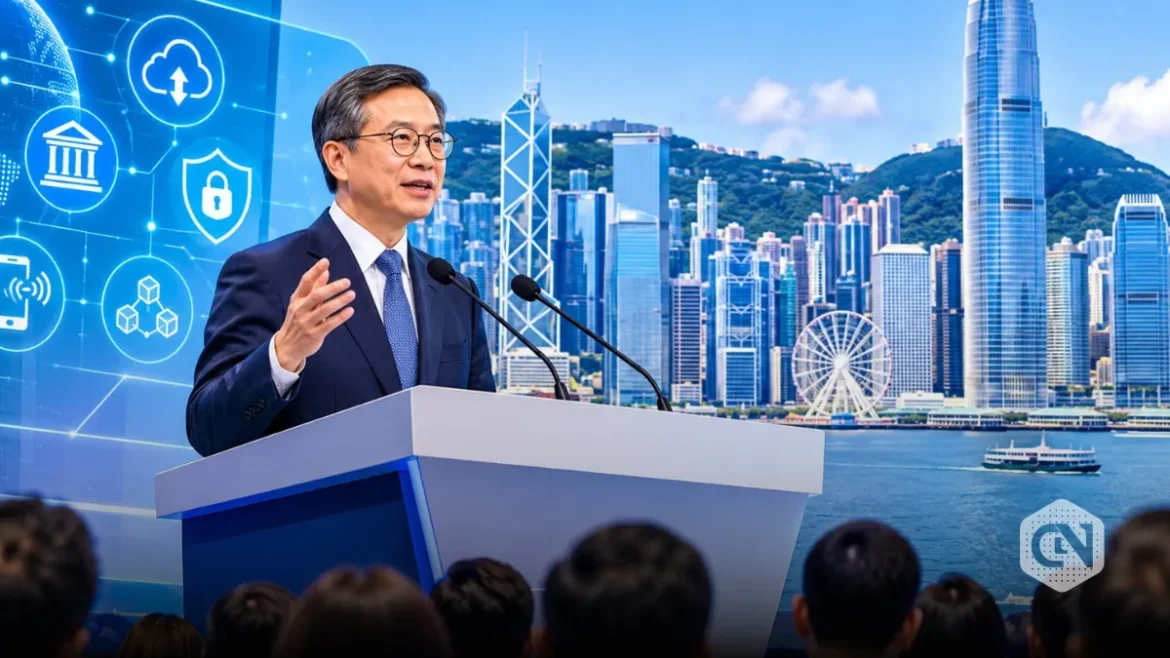
Hong Kong has firmly cemented its position as a global nexus for financial technology, signaling a new era of institutional innovation during the eleventh annual Hong Kong Fintech Week. Held on November 2, 2026, the event served as the backdrop for the Hong Kong Monetary Authority (HKMA) to unveil a comprehensive suite of initiatives designed to refine the city’s digital landscape. These developments represent a significant maturation of the HKMA’s "Fintech 2030" strategy, which seeks to harmonize rapid technological adoption with the rigorous governance required for a global financial hub. By leveraging the DART framework—encompassing Data and Payment, Artificial Intelligence (AI), Resilience, and Tokenization—the HKMA is attempting to balance the aggressive pursuit of emerging technologies with the fundamental necessity of systemic stability.
The Evolution of the Fintech 2030 Roadmap
The HKMA’s strategy, first introduced in 2025, has undergone a structured evolution to address the changing needs of the financial sector. The DART framework serves as the cornerstone of this evolution. Data and Payment initiatives aim to streamline liquidity; AI integration focuses on operational efficiency and customer experience; Resilience addresses the growing threat landscape; and Tokenization targets the modernization of capital markets. This year’s announcements mark a transition from the conceptual and pilot phases toward the integration of these technologies into the core infrastructure of Hong Kong’s banking ecosystem.
The event, co-hosted by the HKMA and InvestHK, continues to serve as a vital platform for the convergence of policymakers, technology developers, and banking executives. Over the past decade, this gathering has evolved from a niche sectoral discussion into a high-level summit where regulatory policy is defined in tandem with private-sector capability.
Pioneering Agentic AI: The SAGE Project
One of the most consequential announcements at the summit was the formal introduction of the SAGE project, which stands for Searching Agentic Finance with Governance and Enablement. As financial institutions transition from traditional, predictive AI models to "agentic" systems—AI capable of autonomous decision-making and task execution—the regulatory landscape faces unprecedented challenges.
The HKMA’s decision to launch SAGE is a proactive move to prevent the "black box" risks often associated with autonomous agents. By establishing a sandbox environment for banks to experiment with agentic AI, the HKMA is providing a controlled space for innovation. Crucially, the project is supported by a cross-sectoral expert panel, including data scientists, ethicists, and veteran bankers. This multi-disciplinary approach is intended to produce a governance framework that ensures AI agents operate within the bounds of existing financial laws while preventing systemic biases.
To foster industry-wide consensus, the HKMA concurrently published a discussion paper on agentic AI in banking. This document invites stakeholders to provide feedback on proposed regulatory standards, reflecting the regulator’s "consultative-first" approach. Industry analysts suggest that this will likely lead to a new set of compliance requirements by 2027, potentially mandating "human-in-the-loop" protocols for high-stakes financial transactions.
Strengthening Institutional Resilience Against Quantum Threats
As the digital perimeter of banking expands, the HKMA is addressing the looming threat of quantum computing. The potential for quantum algorithms to decrypt current cryptographic standards presents a systemic risk to global finance. To mitigate this, the HKMA has entered a strategic partnership with the Hong Kong University of Science and Technology (HKUST) to introduce the Post-Quantum Cryptography (PQC) Toolkit.
The toolkit is designed to be a living resource for financial institutions. It provides a standardized methodology for assessing current cryptographic vulnerabilities and migrating existing systems to quantum-resistant standards. The urgency of this initiative is supported by recent findings from global cybersecurity firms, which estimate that a "harvest now, decrypt later" strategy by adversarial actors could already be putting sensitive financial data at risk. By providing a clear roadmap for migration, the HKMA is positioning Hong Kong’s banks as early adopters of post-quantum security, a move expected to enhance the city’s reputation as a secure harbor for global wealth management.
The Ensemble Project and the Future of Tokenized Assets
The HKMA’s commitment to tokenization reached a milestone with the expansion of the Ensemble project. This initiative has shifted the focus from theoretical models to real-world, 24/7 settlement capabilities. The integration of tokenized deposits is expected to drastically reduce the friction in cross-border settlements, potentially cutting transaction times from days to mere seconds.
The recent completion of a pilot in the secondary market for tokenized Exchange Fund Bills demonstrated the feasibility of using distributed ledger technology (DLT) for repo transactions. By moving these activities onto a blockchain-based platform, the HKMA aims to enhance liquidity management for banks. Furthermore, the inclusion of regulated stablecoins into the Ensemble ecosystem indicates a pragmatic acceptance of digital assets as a legitimate component of the monetary framework.
To facilitate this, the HKMA and Cyberport have launched the "tConnect Launchpad." This incubator-style platform is designed to bridge the gap between financial institutions and fintech innovators. By providing a common environment for banks to co-create with tech firms, the HKMA is effectively shortening the time-to-market for tokenized financial products. This represents a significant shift from the previous model of isolated innovation to a collaborative, ecosystem-driven approach.
Expanding Connectivity: The FPS-UnionPay Integration
While high-level institutional infrastructure is undergoing a digital overhaul, the HKMA is also refining the consumer-facing payment experience. The upcoming integration of the Faster Payment System (FPS) with UnionPay International, scheduled for completion by the end of 2026, is a major step in regional financial connectivity.
The FPS, already a dominant force in local payments, will soon facilitate QR code payments across the vast UnionPay merchant network, which spans over 100 million merchants in mainland China and 40 other jurisdictions. This integration is designed to reduce the reliance on fragmented payment apps and provide a unified, efficient cross-border payment experience for travelers and businesses. By linking Hong Kong’s domestic payment rail with a global powerhouse like UnionPay, the HKMA is enhancing the utility of the Hong Kong dollar and promoting the seamless movement of capital within the Greater Bay Area and beyond.
Strategic Implications and Industry Response
The breadth of these announcements underscores a clear shift in the HKMA’s strategy: moving away from reactive regulation toward active, technology-driven leadership. By institutionalizing projects like SAGE and Ensemble, the HKMA is effectively setting the global "rules of the road" for the next generation of finance.
Financial analysts have noted that these initiatives are timely. With increasing competition from regional hubs like Singapore and Dubai, Hong Kong’s move to codify its fintech stance provides much-needed certainty for international investors. The emphasis on governance, particularly within the AI and quantum security sectors, is viewed as a strategic advantage; by establishing a high bar for safety, Hong Kong aims to attract institutional-grade fintech firms that prioritize long-term stability over short-term volatility.
HKMA Chief Executive Eddie Yue’s remarks at the event highlighted the necessity of this balanced approach. "We are not just chasing trends; we are building the foundation for the next century of financial services," Yue stated. His emphasis on the dual necessity of innovation and security serves as the overarching mantra for the regulator. The success of these initiatives will now depend on the speed of implementation and the level of adoption by private banks, which are under pressure to integrate these new standards while maintaining profitability.
As 2026 draws to a close, the focus shifts to the execution of these initiatives. The integration of the FPS-UnionPay link and the expansion of the Ensemble project will be closely watched by international regulatory bodies, as they provide a blueprint for how a major financial center can successfully navigate the intersection of legacy banking and decentralized technology. If successful, these efforts will likely solidify Hong Kong’s role as a preeminent leader in the global digital economy, ensuring that its financial services sector remains resilient, innovative, and deeply connected to the global market.