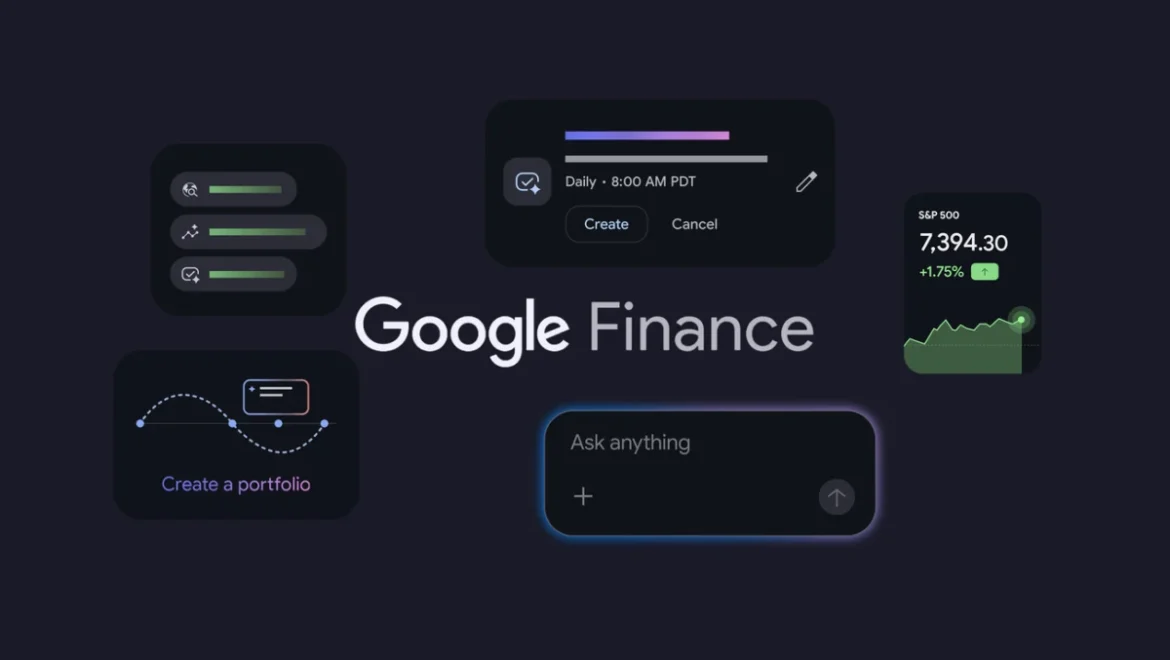
The landscape of retail investing underwent a significant shift this week as Google announced that its Finance platform is officially exiting its beta phase, accompanied by a comprehensive suite of new features designed to streamline wealth management. In a move that signals Google’s deeper commitment to the financial services sector, the company has introduced sophisticated portfolio tracking tools, AI-integrated research capabilities, and a dedicated Android application. These updates represent the most substantial overhaul of the platform since its 2020 redesign, aiming to transform Google Finance from a simple ticker-tracking site into a robust intelligence engine for both casual and serious investors.
The core of this update is the global rollout of an enhanced portfolio management system. While Google Finance has long allowed users to track watchlists, the new iteration provides a centralized dashboard that consolidates performance data and offers granular insights into asset allocation. Investors can now see their holdings reflected in a unified interface that calculates real-time gains, losses, and historical performance. To facilitate the transition for new users, Google has implemented several frictionless data entry methods. Beyond manual entry, the platform now supports the uploading of CSV and PDF files, such as brokerage statements. Furthermore, the system utilizes advanced recognition technology, allowing users to simply upload screenshots of their holdings or describe their investments in natural language to populate their digital portfolios.
Barine Tee, Principal Engineer for Search at Google, emphasized that the goal of these updates is to demystify the complexities of the market. According to Tee, the new features are designed to help users better track and understand financial investments while providing the mobility required in today’s fast-paced economic environment. This sentiment reflects a broader trend in the fintech industry where the democratization of data is being replaced by the democratization of analysis.
The Evolution of Google Finance: A Chronological Context
To understand the significance of this week’s announcement, it is necessary to look at the historical trajectory of Google Finance. Launched in March 2006, the platform was initially a direct competitor to Yahoo Finance and MSN Money. It was lauded for its clean interface and integration with Google Search, providing interactive charts that were revolutionary for the time. However, for several years in the mid-2010s, the platform saw minimal updates, leading many to believe Google might sunset the service.
In 2017, Google began a multi-year process of reintegrating Finance more deeply into the main Search ecosystem. This culminated in a 2020 refresh that focused on "Watchlists" and "Market Trends," though it remained in a perpetual state of refinement. The 2024 exit from beta marks the end of this transitional period. By moving the platform into a stable, feature-complete release, Google is positioning itself to compete more aggressively with modern fintech apps like Robinhood and established data providers like Bloomberg and Morningstar. This timeline suggests that Google has spent the last four years building the AI infrastructure necessary to support the natural language processing (NLP) features that define this new version.
AI Integration and the Research Tool
Perhaps the most innovative aspect of the update is the integration of an AI research tool. Rather than requiring users to manually calculate their exposure to specific sectors or analyze the impact of interest rate changes on their holdings, the platform now allows for conversational queries. Users can ask the system specific questions such as, "What sectors are currently underrepresented in my portfolio?" or "How does my fixed income allocation impact my long-term growth potential?"
This functionality leverages Google’s Large Language Models (LLMs) to synthesize complex financial data into actionable advice. For example, if a user has a portfolio heavily weighted in technology stocks, the AI can identify the lack of diversification and suggest sectors like healthcare or consumer staples that might mitigate risk. This move toward "AI-assisted investing" is a response to the growing demand for personalized financial advice that does not carry the high fees of traditional wealth management services.
Furthermore, the platform has introduced a new "Market Intel" feature. This allows users to automate the gathering of information by describing specific tasks. An investor might instruct the platform to "Send a daily pre-market briefing analyzing significant overnight moves across major cryptocurrencies." Once configured, the system works in the background, scanning global markets and news feeds to deliver a customized report. These briefings are delivered via notifications through the Google app on Android and iOS, or visible within a dedicated research panel on the web interface.
The Return to Mobile: The New Android App
A pivotal component of this launch is the introduction of a dedicated Google Finance app for Android. For several years, Google had moved away from standalone finance apps, preferring to house financial data within the primary Google Search app. The reversal of this strategy highlights the necessity of a specialized environment for investors who check market fluctuations multiple times a day.

The new app serves as a dedicated hub for watchlists, real-time data, and a live financial news feed. Crucially, it includes "Key Moments," an AI-powered feature that analyzes price volatility and provides concise explanations for why a particular stock moved. If a company’s share price drops following an earnings report, "Key Moments" will summarize the specific misses in revenue or guidance that triggered the sell-off. This reduces the "noise" of the 24-hour news cycle, providing investors with the specific data points that matter most. Google has confirmed that while the Android app is available now, an iOS version is slated for release later this year, ensuring parity across the mobile ecosystem.
Supporting Data and Market Trends
The timing of this release aligns with significant shifts in global market participation. According to data from the World Federation of Exchanges, retail participation in equity markets has surged by over 40% since 2020. This "new class" of investors is characterized by a preference for mobile-first experiences and a heavy reliance on digital tools for research.
Furthermore, a 2023 study by McKinsey & Company found that nearly 60% of retail investors are interested in using AI to help manage their portfolios, yet many find existing professional tools too expensive or difficult to navigate. By offering these AI-driven insights for free within the Google Finance ecosystem, Google is filling a significant gap in the market. The ability to import data via screenshots or CSVs also addresses a major pain point: the fragmentation of assets. With many investors holding accounts across multiple platforms—such as E*TRADE, Coinbase, and Vanguard—the ability to see a "total wealth" view in one place is a highly sought-after feature.
Industry Implications and Competitive Analysis
Market analysts view this move as a strategic play to increase "stickiness" within the Google ecosystem. By becoming the primary dashboard for an individual’s financial life, Google ensures that users remain engaged with its services throughout the trading day. This has secondary benefits for Google’s advertising business, as financial queries are among the most valuable in the search industry.
From a competitive standpoint, Google Finance is now treading on the toes of specialized portfolio trackers like Personal Capital (now Empower) and Mint (which recently shuttered, leaving a void in the market). While Google Finance does not yet offer the full suite of budgeting tools that Mint once did, its superior AI capabilities and integration with real-time market data make it a formidable alternative for investment tracking.
Industry experts suggest that the "Key Moments" and natural language research tools could eventually put pressure on traditional financial news outlets. If an algorithm can accurately summarize a 50-page earnings transcript into three bullet points delivered to a user’s phone, the need for traditional financial journalism may evolve toward deeper, long-form analysis rather than breaking news.
Future Outlook and Global Availability
The rollout of these features is currently underway globally. Over the coming months, Google plans to bridge the remaining gaps between the web and mobile experiences. This includes bringing live earnings calls and the full suite of portfolio management tools to the mobile app.
As Google Finance continues to evolve, the integration of more predictive analytics seems likely. Future updates could potentially include "what-if" scenario modeling, allowing users to see how their portfolio might react to specific economic events, such as a 50-basis-point hike by the Federal Reserve or a sudden spike in oil prices.
By exiting beta with such a robust feature set, Google Finance has signaled that it is no longer just a utility for checking stock prices; it is an ambitious attempt to organize the world’s financial information and make it universally accessible and useful. For the millions of retail investors navigating an increasingly volatile global economy, these tools arrive at a time when clarity and informed decision-making have never been more valuable.