
Poor data quality remains a multi-billion-dollar silent epidemic for global enterprises, according to recent industry analyses. A landmark report from Forrester, frequently cited by organizations such as IBM, highlights that one-quarter of businesses estimate that inadequate data quality costs them upwards of $5 million annually. For 7% of those organizations, the financial impact exceeds $25 million. Perhaps most concerning is that these losses often remain invisible on executive dashboards, as the errors bypass standard automated validation pipelines.
Modern data engineering teams typically rely on automated frameworks—such as Pandera or dbt tests—to ensure data integrity. These systems are highly efficient at performing "syntactic" validation: checking for null values, duplicate rows, and data type mismatches. However, these tools are inherently limited by their focus on the structure of the data rather than its substance. When a pipeline confirms that every column passes these basic constraints, the automated monitoring often stops, leaving the organization vulnerable to "silent" errors that are semantically incorrect or contextually impossible.
The Linguistics of Data Validation: A Three-Tiered Approach
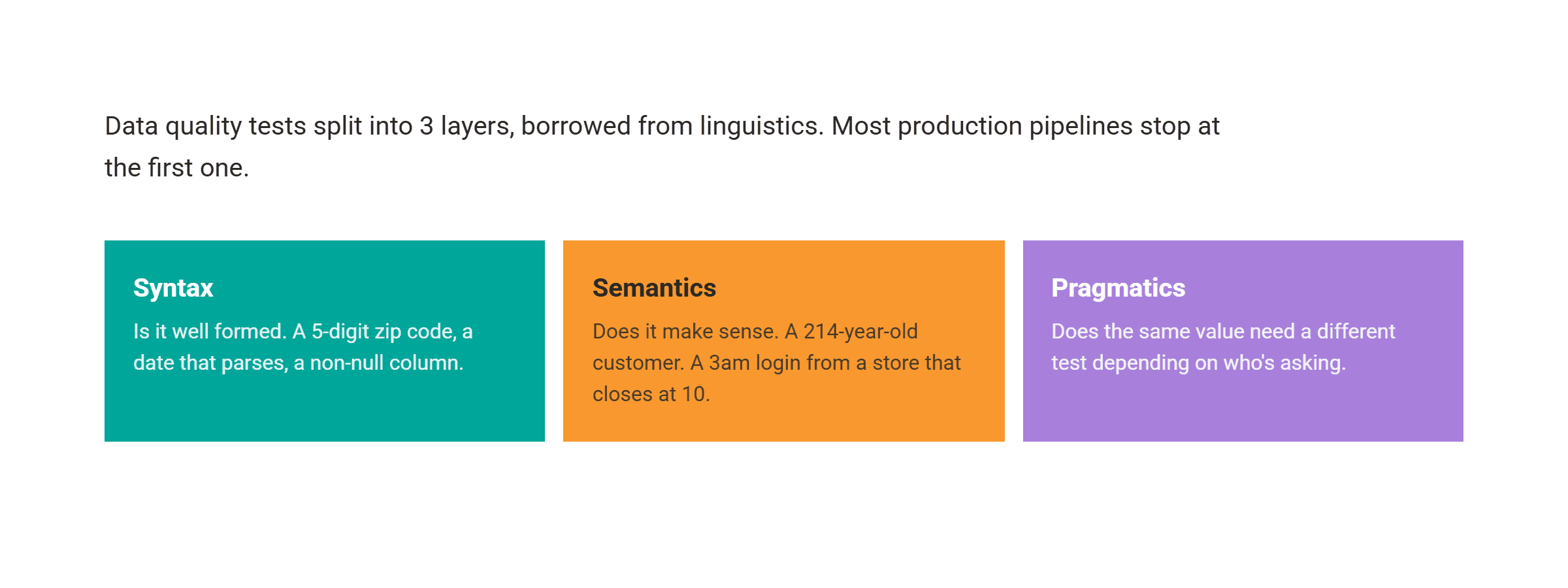
To understand why these errors persist, industry experts have adopted a framework borrowed from linguistics: syntax, semantics, and pragmatics.
Syntax validation is the current industry standard. It confirms if a value is well-formed—for instance, ensuring a zip code contains five digits or that a date field parses correctly. However, syntax does not verify whether the data makes sense. Semantic validation, the next layer, asks if a value is plausible within its context. A 214-year-old customer or a login timestamp occurring three hours before a store opens would pass a syntactic check but fail a semantic one.
The final, most complex layer is pragmatics. This considers the intent and the user of the data. In a pharmaceutical manufacturing environment, for example, a drug discovery team and a production compliance team may look at the exact same data record but apply entirely different validation criteria based on their specific operational goals. Because most production pipelines terminate at the syntactic level, they are blind to these deeper layers of corruption.
Anatomy of the Four Silent Killers
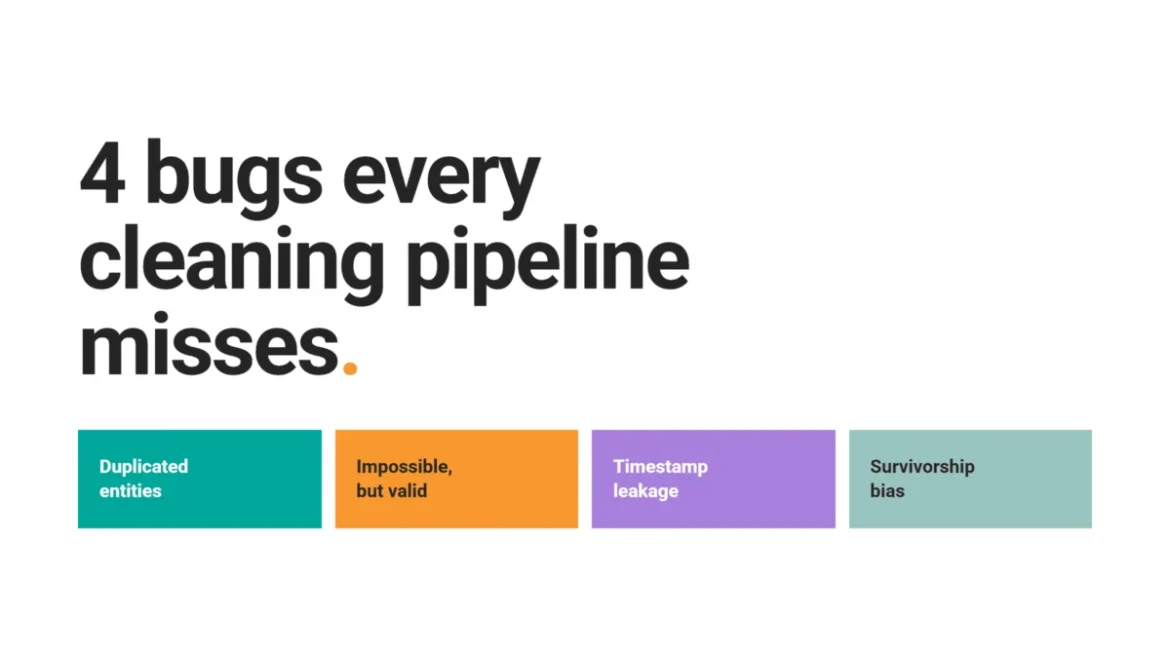
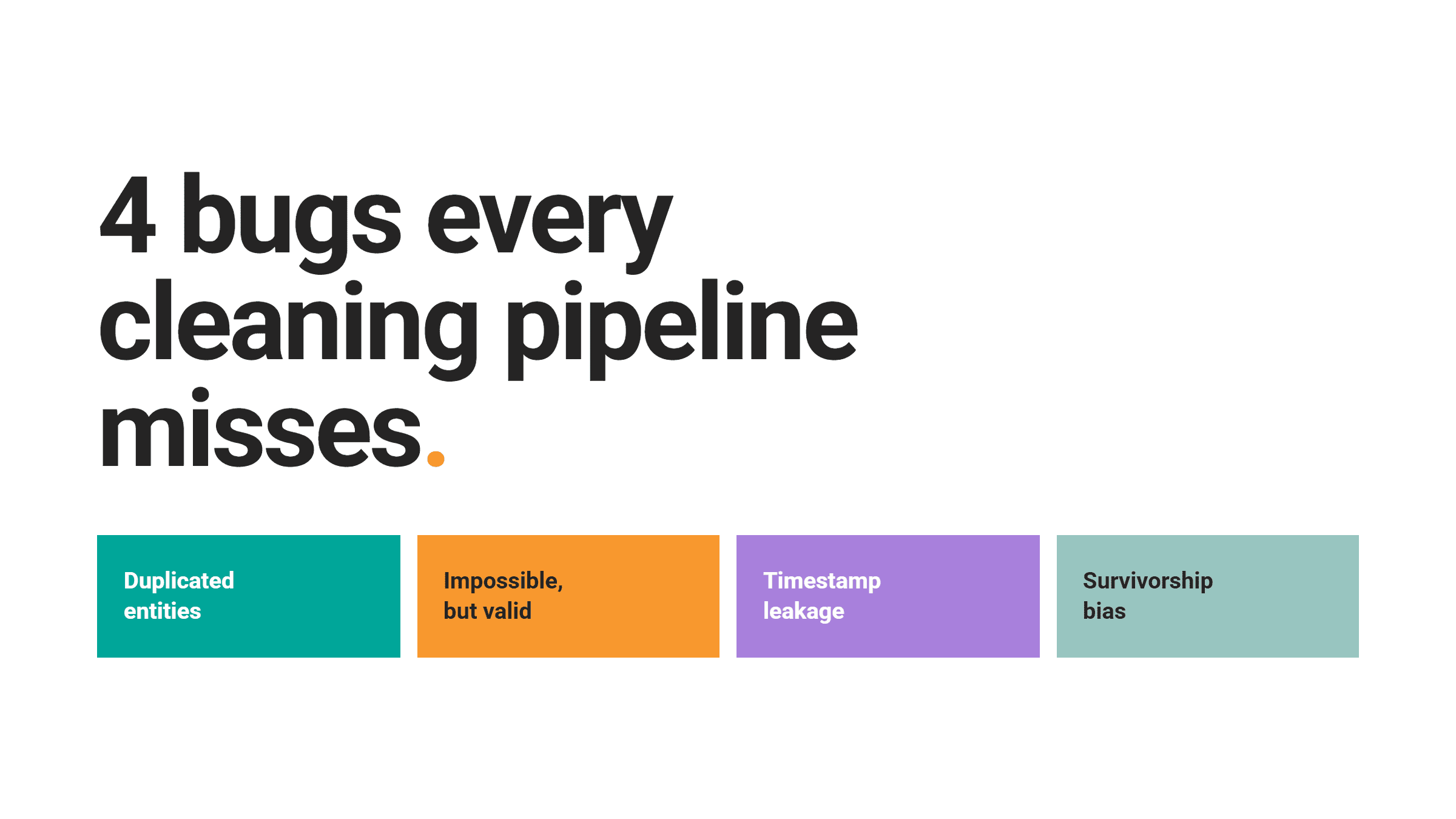
Four specific categories of errors frequently bypass conventional automated testing, leading to broken machine learning models, skewed financial reporting, and flawed business intelligence.
1. The Entity Duplication Trap
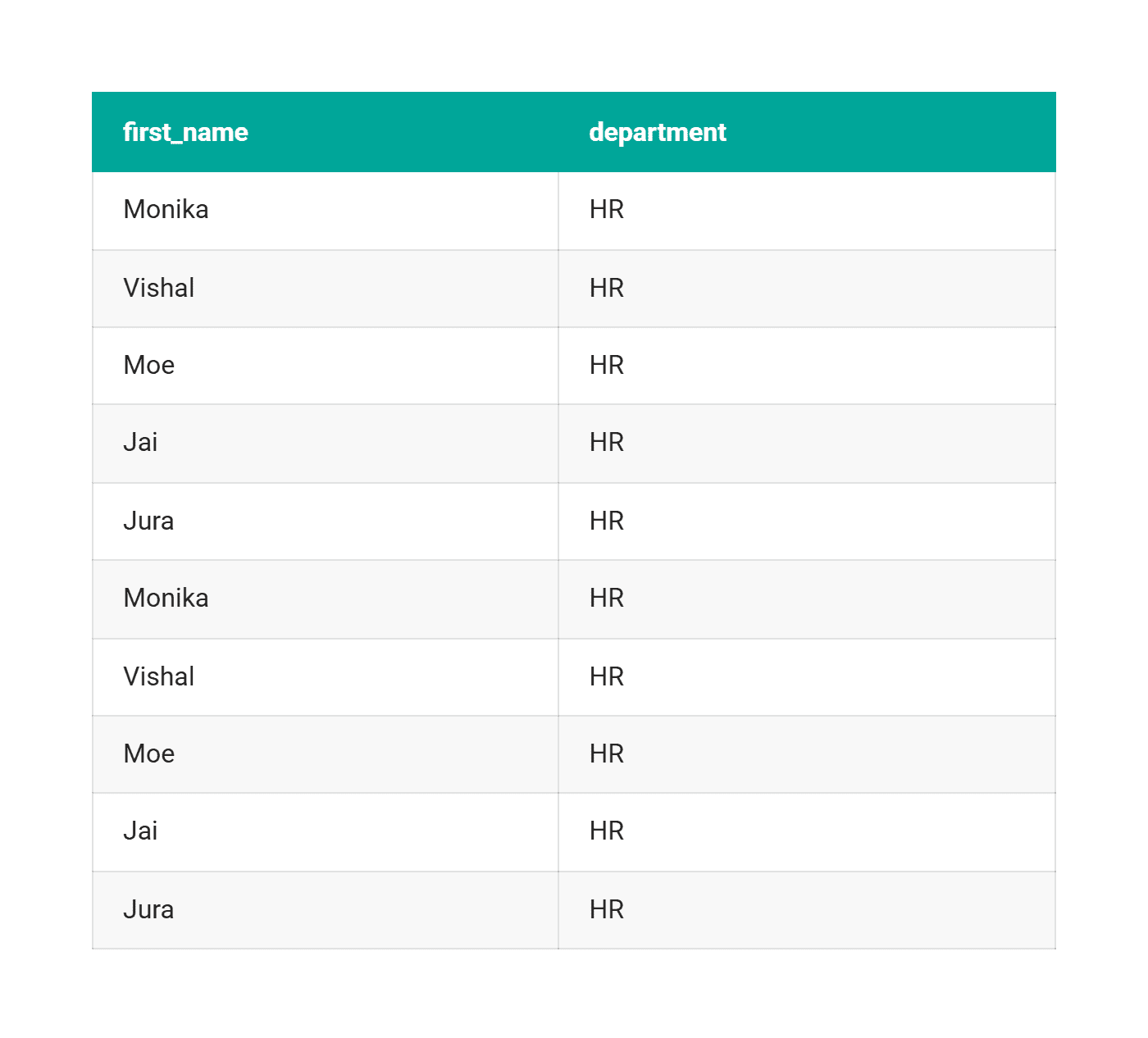
The most common failure occurs when an automated check searches for byte-for-byte identical rows. While a drop_duplicates() function effectively removes exact row matches, it fails to identify entity duplication. For example, "John Smith" and "J. Smith" at the same address may be treated as two distinct individuals by a customer lifetime value model. Because the rows are not byte-for-byte identical, the system assumes they are unique. This leads to inflated counts, inaccurate revenue attribution, and skewed demographic modeling. When multiple source systems feed a data warehouse without a rigorous deduplication layer, the downstream effects on metrics like "Monthly Active Users" (MAU) can be profound, as a simple COUNT(*) function will treat each duplicate record as a new, unique event.
2. Impossible but Valid Values
Data points can exist within a valid data type and range while being contextually nonsensical. A salary field might be typed as an integer and fall within a logical range, yet be wrong for a specific employee’s role or tenure. Because the value is technically "valid," no standard schema check will flag it. These errors are particularly insidious because they alter aggregate statistics—such as averages or medians—without triggering any alerts. By the time the data reaches a report, the "bad" value is treated as legitimate, causing managers to make decisions based on distorted averages.
3. The Hazard of Timestamp Leakage
In machine learning and predictive analytics, "leakage" occurs when a model is trained on data that contains information from the future. This often happens in databases that lack proper versioning. If an employee salary table contains multiple entries for the same person but lacks a definitive "as-of" date, analysts often use a MAX() function or a row-numbering trick to identify the "current" salary. If this inferred value is then used to train a model to predict past behavior, the model essentially "cheats" by incorporating information that would not have been available at the time the prediction was actually made. This leads to models that perform exceptionally well in testing but fail dramatically when deployed in real-world scenarios.

4. The Peril of Survivorship Bias
Survivorship bias occurs when the dataset is inadvertently filtered, leaving only the "winners" or the active participants, while the "losers" or churned accounts are removed from the denominator. A classic example is a report on customer activity that only includes accounts currently marked as "open." By failing to account for the accounts that have been deactivated or closed, the resulting percentage of active users becomes artificially inflated. Because the missing data was pruned before the analysis began, the final percentage looks mathematically sound, masking a significant loss of context.
Implications and the Path Toward Robust Governance
The failure to catch these silent errors has significant, real-world consequences. Financial institutions, retail giants, and healthcare providers are increasingly relying on automated AI models to drive strategy. When these models ingest tainted data, the errors are amplified. A minor inaccuracy in a training set can lead to biased hiring algorithms, flawed inventory demand forecasting, or misallocated marketing spend.
The industry is beginning to shift toward more rigorous "Validation Layers." Rather than relying solely on automated libraries, data engineering teams are increasingly implementing business-aware constraints. This includes:
- Canonicalization: Ensuring identity records are normalized before deduplication.
- Peer-Group Plausibility: Comparing values against expected distributions (e.g., salary vs. role/level) rather than just against static bounds.
- Structural Joins: Implementing strict inequality checks on timestamps (e.g.,
event_time <= feature_time) to prevent future-data leakage. - Cohort Auditing: Logging row counts at every filter step to identify when data is being silently discarded, helping to prevent the effects of survivorship bias.
Conclusion
Data quality is a multi-dimensional challenge that extends far beyond simple schema validation. While automated tools are necessary for the "cheap" half of data quality—checking if data is well-formed—they are insufficient for determining if the data is true. True data integrity requires a deeper integration between data engineering and business logic. Organizations that prioritize this semantic and pragmatic validation, and that empower their data teams to act as business analysts rather than just pipeline maintainers, are significantly better positioned to mitigate the risks of silent data failure. As reliance on automated systems continues to grow, the ability to catch these errors before they reach the boardroom will define the divide between data-driven success and costly, invisible failure.
