

Popular communication platform Discord is undergoing a fundamental shift in how it handles user-generated content by allowing major search engines to index discussions hosted within its public communities. Historically functioning as a walled garden where conversations remained locked behind registration walls, invite links, and private server barriers, the platform is now positioning itself as a searchable knowledge base. Under the upcoming structural changes, users across the open internet will be able to discover specific discussions, troubleshoot technical problems, and read community-driven advice via standard web searches without needing to create an account or hold a direct server invitation.
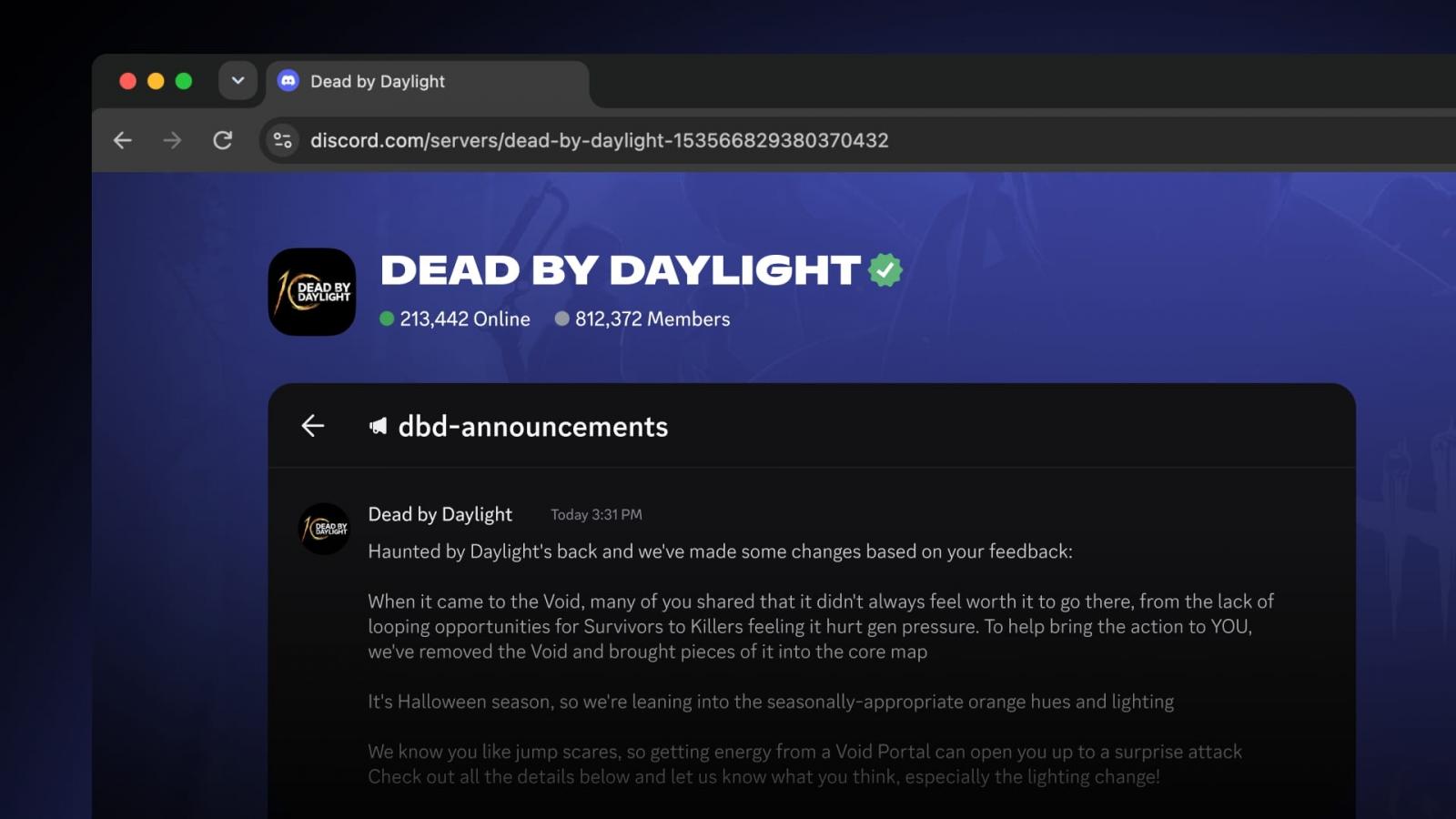
The primary objective behind this monumental policy shift is to bridge the gap between valuable niche knowledge trapped inside private messaging silos and the wider internet community. For years, specialized troubleshooting tips, gaming strategies, software development fixes, and hobbyist guides shared within large Discord servers have been effectively invisible to Google, Bing, and other web crawlers. By permitting search engines to index these public spaces, Discord aims to transform its platform into an accessible reference tool. When web users search for specific technical queries or community insights, search engine results will link directly to newly created Server Web Pages, allowing readers to view the discussions and seamlessly step straight into the active conversation on the messaging platform if they choose to participate.
Scope and Limitations of the New Indexing Policy
The rollout of web-accessible discussions will not apply universally across the entire Discord ecosystem. The platform has drawn strict boundaries to protect user privacy and maintain the integrity of private spaces. The changes are strictly confined to what Discord defines as Discoverable Servers—publicly listed communities that boast a minimum membership threshold of 1,000 active participants and comply with community guidelines. According to internal platform metrics, Discord currently hosts approximately 63,000 servers that meet these rigorous criteria.

By design, this means that the vast majority of the platform remains untouched by the new indexing rules. Private servers, invitation-only communities, direct messages between individual users, group chats, and public announcements hosted on smaller servers that fail to meet the 1,000-member requirement are entirely excluded from search engine indexing. Furthermore, the platform has instituted granular controls to ensure that administrators and individual users retain a degree of oversight over how their shared content is distributed to the wider web.
Chronology and Rollout Schedule
Discord has structured the implementation of its web indexing feature into a carefully managed timeline, allowing administrators and users adequate time to review their privacy choices. The rollout began with a closed pilot phase, during which the messaging platform tested Community Messages and Server Web Pages within prominent gaming communities, including the official servers for NBA 2K, Rust, and Dead by Daylight. These initial tests allowed the company to evaluate server load, search engine crawling behavior, and community response before moving forward with a broader release.
Following the successful conclusion of the pilot phase, the platform has established a two-stage rollout schedule for late autumn. On November 16, Discord will automatically generate Server Web Pages for all eligible communities unless administrators take proactive action. If a server owner or administrative team prefers to keep their community’s discussions off the open web, the sole method to prevent automatic page creation before the cutoff date is to manually change the server’s privacy classification from public to private.
Following the automated web page generation in mid-November, a gradual deployment phase will commence in December. During this secondary rollout, newly posted messages within eligible communities will begin feeding into search engine indexes. Discord has clarified an important historical limitation for this phase: messages posted prior to the official December release date will be permanently excluded from web indexing, ensuring that historical logs predating the policy shift are not retroactively dragged onto the open web without explicit contextual framing.
Granular Administrative and User Controls
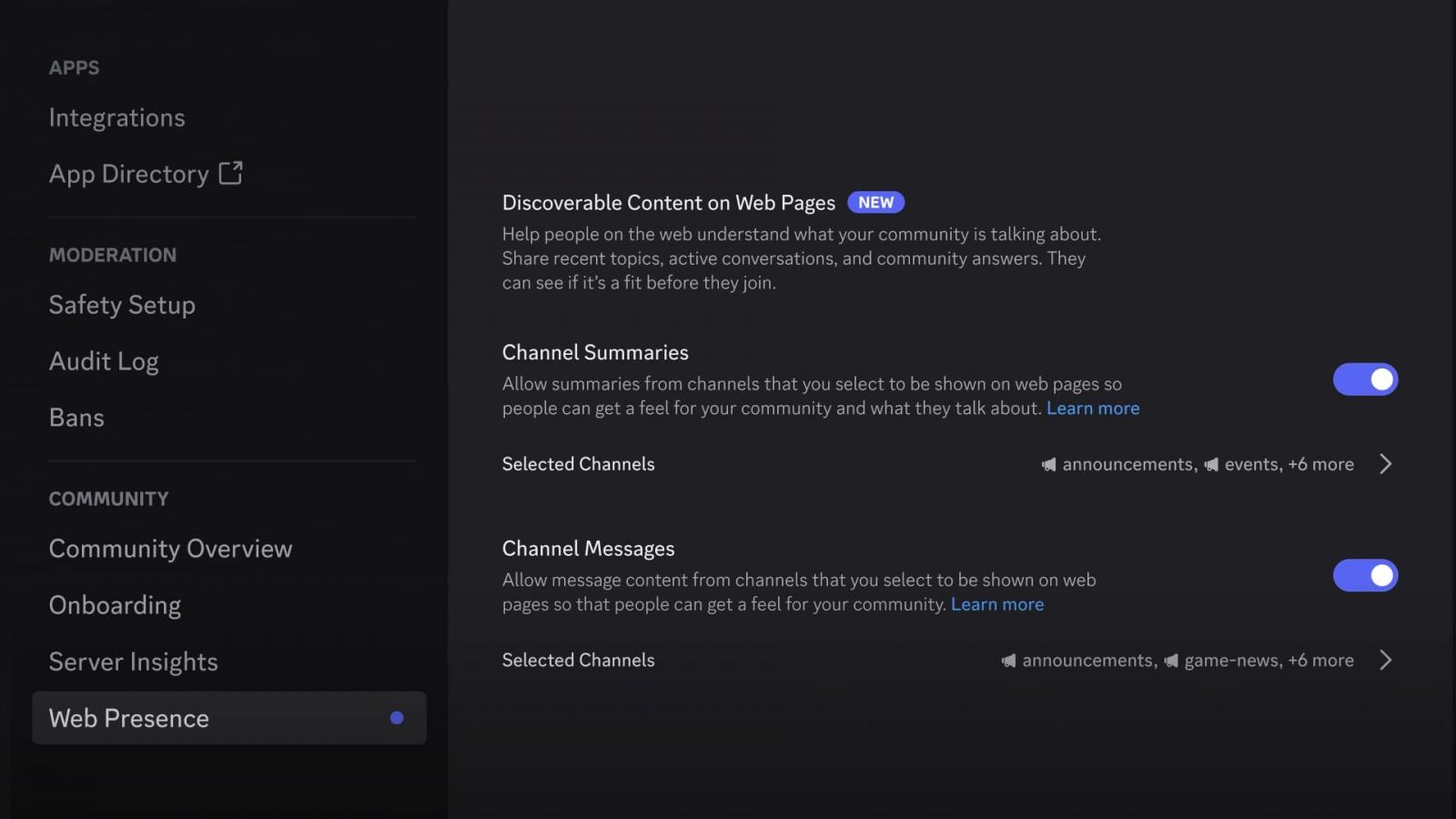
To accommodate varying community standards and personal privacy preferences, Discord has introduced a tiered system of controls, enabling both server administrators and individual users to opt out of the web sharing scheme.
At the server level, channel administrators retain the authority to fine-tune visibility. Administrators can navigate to Server Settings and access the Web Presence tab, where they are granted the flexibility to exclude specific individual channels from web indexing or disable channel content sharing entirely across the entire server. This ensures that while general chat or gaming channels might be indexed for public discovery, sensitive administrative channels, staff-only rooms, or off-topic discussions remain strictly internal.
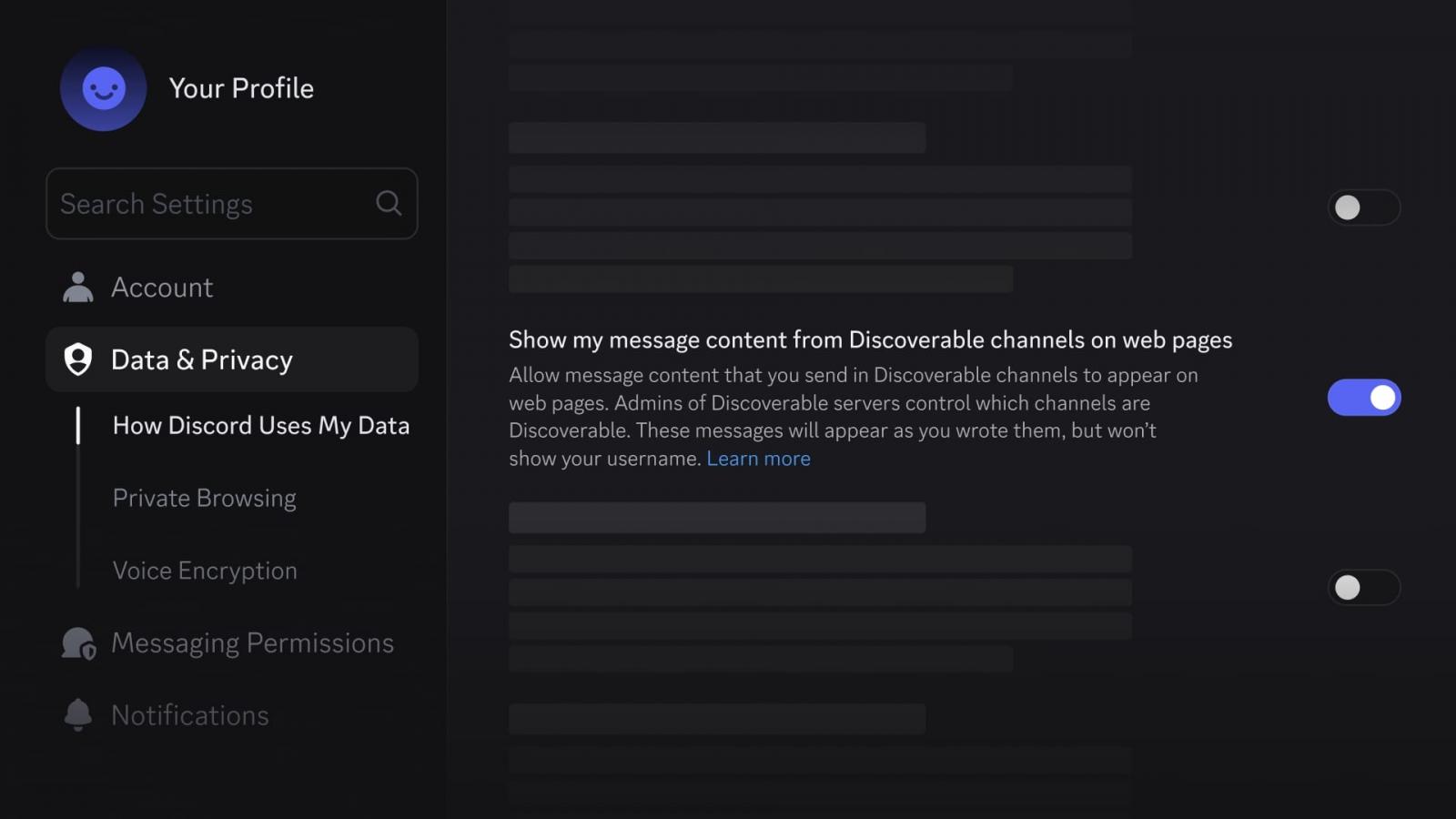
Individual users also receive a layer of control over their personal data footprint. Members who wish to prevent their future statements from appearing on public Server Web Pages can adjust their preferences by navigating to User Settings, selecting Data and Privacy, and disabling content sharing. However, Discord has emphasized a critical caveat regarding this user-level setting: modifying the privacy toggle only applies prospectively to future messages. Past messages that have already been indexed and published to the web cannot be retroactively retracted or scrubbed by the individual user, underscoring the importance of reviewing settings before the feature goes live.
Regional Exemptions and Protections for Minors
While users and administrators in many regions will find that content sharing is enabled by default unless they manually toggle the settings off, Discord has established major geographic and demographic exceptions to comply with international regulatory frameworks.
In a notable nod to stringent data protection laws, message sharing will remain switched off by default across all European Union member states, the United Kingdom, Canada, Brazil, Australia, and South Korea. In these designated regions, the principle of privacy by default takes precedence; platform members must explicitly and actively enable the sharing feature within their individual privacy settings if they wish for their public server contributions to appear in search engine results.
Additionally, Discord has instituted strict safeguards regarding minors. Underage users are automatically excluded from the web indexing initiative by default. The platform’s systems prohibit underage accounts from activating the feature, and users will remain blocked from opting into web search visibility until they officially turn 18 years old.
Broader Industry Implications and Technological Impact
Discord’s decision to open its doors to search engine crawlers represents a major milestone in the evolution of internet communication. For over a decade, chat applications like Discord, Slack, and Telegram have operated as digital black boxes. While traditional web forums like Reddit, Stack Overflow, and legacy message boards have historically served as the primary repositories for crowdsourced knowledge on the internet, a massive volume of modern human troubleshooting and community collaboration has migrated entirely into real-time chat apps.
By integrating with search engine indexers, Discord is effectively reclaiming the territory traditionally held by public forums, positioning itself not just as a gaming and social hub, but as a primary search destination for technical answers. This move could fundamentally alter how search engines serve content, routing users away from traditional article-based blogs and toward direct conversational threads where real users solve complex problems in real time.
At the same time, the transition introduces complex challenges regarding data governance, user consent, and digital footprints. Industry analysts note that while many users welcome the prospect of their favorite community tips showing up on Google, casual participants often harbor privacy reservations about their casual chat messages being broadcast to prospective employers, family members, or automated data scrapers.
As the rollout dates approach in November and December, the success of Discord’s initiative will largely depend on how effectively server administrators and everyday users navigate the newly introduced settings. Whether the platform can successfully balance its identity as a private, real-time hangout space with its new role as a publicly searchable knowledge repository remains one of the most significant digital experiments in recent platform history.
