
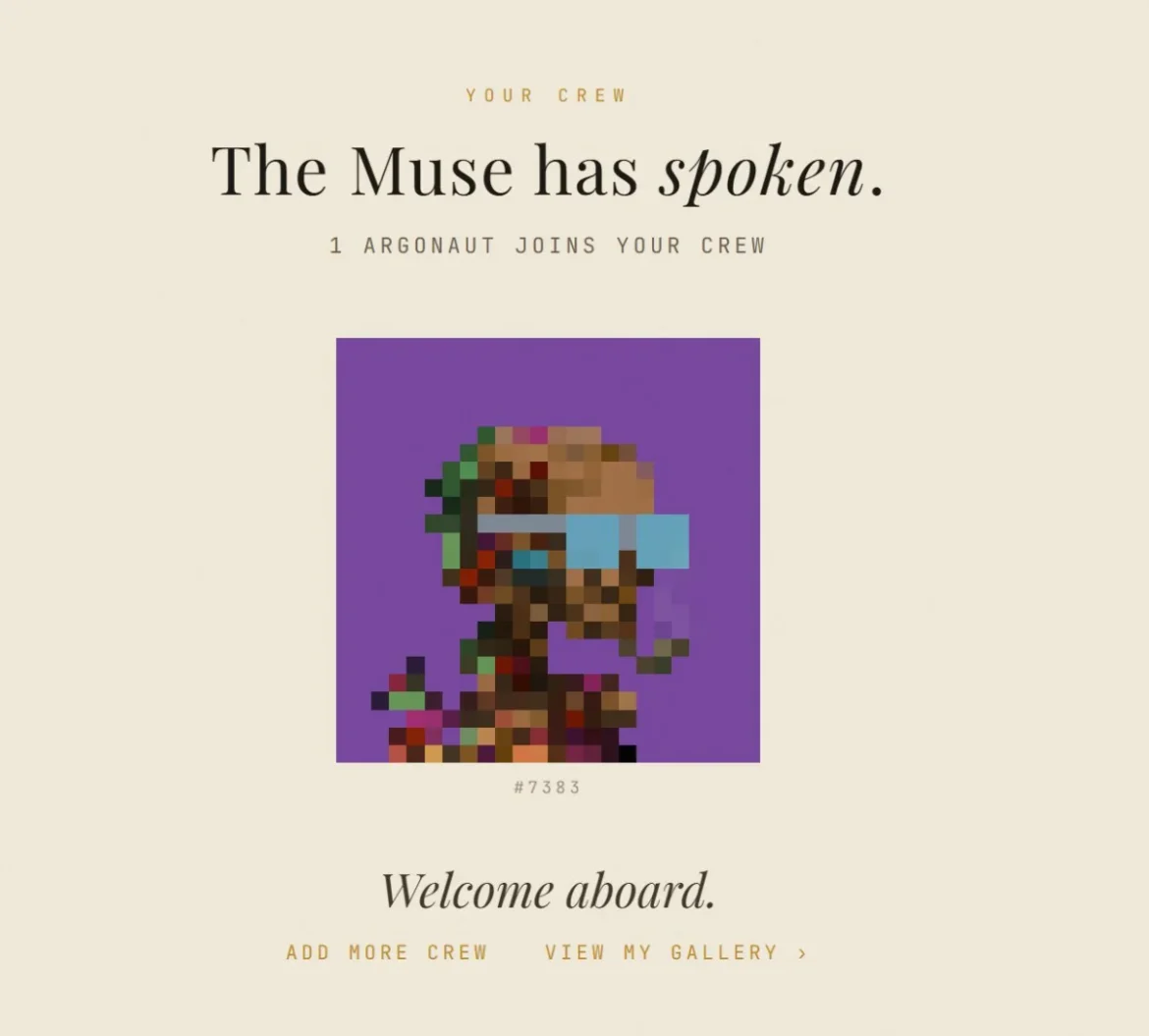
Today, the digital art community witnessed a significant milestone as Argonauts, a new collection by the artist known as a.c.k. (@lphaCentauriKid), minted its entire 10,000-piece supply in a matter of minutes. Each piece was priced at approximately 0.12 ETH, translating to roughly $300 at the time of the transaction. While rapid sell-outs have historically been common in the non-fungible token (NFT) sector, the reception of this particular collection signals a distinct departure from the speculative frenzy that characterized the market’s peak in 2021 and 2022. Rather than being driven by promises of future utility or tokenized incentives, the primary motivation for collectors appears to be the long-standing artistic reputation of a.c.k. within the crypto-native ecosystem.
A Chronology of the Mint
The launch of Argonauts followed a period of deliberate anticipation among established digital art enthusiasts. Unlike many projects that utilize aggressive marketing, paid influencer campaigns, or "whitelist" grinding—a process where prospective buyers must engage in social media activity to earn the right to purchase—a.c.k.’s approach remained focused on the artistic merit of the work.
In the hours leading up to the mint, sentiment across X (formerly Twitter) and other crypto-focused platforms reflected a high degree of collector intent. When the contract went live, the transaction throughput was high, reflecting a concentrated effort by fans and existing collectors of a.c.k.’s portfolio to secure an entry point. Within minutes, the 10,000 pieces were distributed, effectively establishing the project’s initial ownership base without the typical volatility associated with "gas wars" or secondary market flipping, which often plagues projects prioritized by speculators rather than art collectors.
The Shift from Speculation to Provenance
The fundamental difference in the Argonauts mint lies in the demographic of the participants. Analysis of the wallets involved suggests a high concentration of established artists and long-term collectors—individuals who have historically focused on the provenance and aesthetic value of digital work rather than short-term price appreciation.
This shift marks a maturation of the NFT market. During the 2021 boom, the industry was dominated by "roadmap-driven" projects—collections that promised the development of gaming metaverses, passive income via staking tokens, or exclusive memberships to offline clubs. These promises often obfuscated the fact that the underlying artwork was frequently secondary to the speculative vehicle. Argonauts, conversely, operates on a traditional fine-art model: the artist presents a body of work, and the market responds to the artistic output. By stripping away the layers of artificial utility, the project has forced a return to the core value proposition of NFTs: the ability for creators to distribute digital art with verifiable scarcity and provenance.
Data-Driven Insights on the Current Market
Current market data indicates that while the total volume of NFT transactions has decreased significantly from the record highs of 2021, the quality of participation has increased. The successful minting of 10,000 pieces at a $300 price point during a period of market contraction suggests that there is still significant liquidity available for projects that align with "crypto-native" cultural values.
For many, the 10,000-piece format serves as a strategic bridge between accessibility and exclusivity. In the traditional art world, works by blue-chip digital artists often reach price points that exclude all but the wealthiest collectors. By producing a larger series, an artist like a.c.k. creates an entry point that is accessible to a wider swath of the community while maintaining the artistic integrity of the series. This democratization of ownership was, and remains, one of the most promising aspects of blockchain-based art distribution.
The Role of the Artist as an Institution
The success of Argonauts is inextricably linked to the personal brand and historical body of work established by a.c.k. In the context of digital art, the artist’s reputation acts as a form of "social currency." Collectors are not just purchasing a single image; they are participating in the broader artistic trajectory of the creator.
Industry analysts note that this behavior mirrors the traditional art market, where collectors invest in the entirety of an artist’s career rather than the specific, isolated value of a single canvas. When an artist has spent years cultivating a visual language, their subsequent releases become anticipated events. This relationship between the creator and the collector is the bedrock of a sustainable art market. By leaning into this relationship, a.c.k. has successfully bypassed the need for speculative "hype," relying instead on the established trust of his audience.
Implications for Future NFT Development
The implications of the Argonauts launch are likely to influence how future projects are structured. As the broader NFT market continues to consolidate, creators and platforms are increasingly prioritizing "art-first" initiatives. This movement away from tokenomics and towards artistic expression is viewed by many as a necessary correction for the industry.
The decline of the "roadmap" model is becoming increasingly apparent. Projects that failed to deliver on grandiose promises have left many collectors disillusioned, leading to a flight to quality. Consequently, the next wave of successful NFT projects is likely to be characterized by:
- Provenance-focused releases: An emphasis on the artist’s history and the cultural significance of the work.
- Simplified utility: A reduction in artificial, token-based incentives in favor of community-driven appreciation.
- Transparent distribution: Fair minting processes that favor genuine collectors over automated bots and speculators.
A New Era for Digital Ownership
While it is premature to declare the end of speculative NFT trading, the success of Argonauts serves as a clear signal that a core, dedicated audience remains committed to the original vision of the medium. NFTs were initially envisioned as a technological solution to the historical problems of digital art—namely, the lack of scarcity and the difficulty of verifying ownership.
By focusing on these foundational elements, a.c.k. has demonstrated that digital ownership is still a compelling narrative for collectors. The "sellout" of this collection is not merely a financial statistic; it is a validation of the artistic community’s desire to see the medium evolve into a legitimate asset class. When artists collect other artists, and when fans support the creative process rather than the potential for a quick exit, the entire ecosystem benefits from increased stability and cultural depth.
Looking Ahead
As the market moves forward, the success of Argonauts may be remembered as a pivot point—a moment when the industry began to shed its experimental, speculative skin and move toward a more sustainable future. If the goal of the blockchain art movement was to empower artists and provide collectors with a direct, transparent way to support their work, then projects like Argonauts are successfully fulfilling that mandate.
For the participants of this mint, the purchase of an Argonaut represents a commitment to the artist and the medium. Whether this leads to a broader, sustained shift in market behavior remains to be seen, but the appetite for art-centric projects is clearly present. The evolution of NFTs from speculative instruments to recognized vehicles for digital art provenance is a significant development, one that suggests the medium is finally coming into its own as a mature, respected form of creative expression. By stripping away the noise and focusing on the art, a.c.k. has provided a blueprint for how to build value in an increasingly selective and discerning digital marketplace.
