
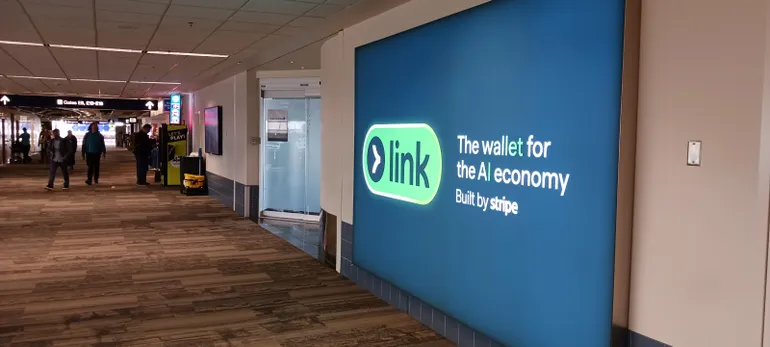
The landscape of digital payments is undergoing a fundamental transformation as artificial intelligence transitions from a tool for information retrieval to an autonomous actor in the global marketplace. Stripe, the San Francisco and Dublin-based payments giant, is aggressively maneuvering its Link digital wallet to serve as the primary financial interface for the next generation of AI agents. By embedding its payment infrastructure directly into the digital assistants of industry titans, Stripe is positioning itself to capture the transactional flow of “agentic commerce”—a model where AI bots execute purchases on behalf of human users.
This strategy reached a significant milestone on September 8, when Meta Platforms announced the integration of Stripe’s Link wallet into “Muse,” its new personal AI agent. This collaboration allows Meta’s assistant to navigate the complexities of online checkout, securely managing payments without requiring the user to manually enter credit card details or navigate merchant sites.
A Rapid Expansion of AI Integrations
The partnership with Meta is the latest in a series of rapid-fire integrations designed to cement Link as the industry standard for AI-driven transactions. Throughout the summer of 2026, Stripe systematically expanded its reach across the AI ecosystem. Last month, the company announced that Link would serve as the payment engine for xAI’s Grok Bot, an integration facilitated by Elon Musk’s SpaceX ecosystem. Simultaneously, Stripe secured a partnership with Instinct, a high-growth AI startup that utilizes phone-texting interfaces to assist users with daily tasks.
These moves represent a pivot for Stripe, which has historically functioned as a back-end service provider for businesses. By integrating directly into consumer-facing AI agents, the company is bridging the gap between its massive merchant network—comprised of over one million businesses—and the rapidly growing population of AI-enabled consumers. Industry analysts estimate that Link currently supports over 300 million global users, a footprint that provides the necessary scale to entice AI developers looking for a frictionless, secure payment layer.
The Evolution of the Digital Wallet
To understand the strategic importance of these integrations, one must look at the shift in how consumers interact with technology. Richard Crone, CEO of the payments advisory firm Crone Consulting LLC, argues that the distinction between a wallet and an agent is rapidly vanishing. “Essentially, the way to think about this is that the agent will be the wallet or the wallet will be the agent,” Crone noted. In this framework, the AI agent does not simply suggest a purchase; it acts as the fiduciary, selecting the payment method, applying discounts, and executing the transaction.
Stripe’s Link functions as a "card-on-file" solution, designed to minimize friction. By competing with established incumbents like Apple Pay, Google Chrome’s autofill, and Early Warning Services’ Paze, Stripe is attempting to solve the primary hurdle of agentic commerce: trust and security. Meta, for example, has highlighted that the Muse integration conceals payment information from the AI bot itself. By generating one-time-use virtual card numbers for every transaction, the system ensures that the AI never gains access to the user’s primary financial credentials, mitigating the risks associated with data breaches or unauthorized AI behavior.
Chronology of Stripe’s Agentic Shift
The current push toward agentic commerce is the culmination of several years of development within Stripe’s product roadmap:
- 2021-2023: Stripe focuses on refining the Link user experience, scaling its merchant network, and building out its global "pay-by-bank" infrastructure.
- April 2026: At its annual developer conference, Stripe officially debuts its dedicated payments suite for AI agents, signaling a transition from human-centered to machine-centered payment processing.
- August 2026: Stripe announces major integrations with xAI’s Grok and the text-based assistant Instinct.
- September 8, 2026: Meta unveils Muse, featuring native support for Stripe’s Link wallet, marking a major entry into the social media and personal assistant space.
- Mid-September 2026: Reports emerge regarding Instinct’s potential $10 billion valuation, underscoring the massive capital flowing into AI agents that Stripe is now powering.
Competitive Dynamics and Industry Implications
The move into agentic commerce is not merely a product update; it is an existential necessity for firms like Stripe. The competitive landscape is dominated by heavyweights that possess both merchant-side infrastructure and deep, pre-existing consumer relationships. PayPal, for instance, has long utilized a "two-sided" network model, maintaining trust with both the buyer and the seller.
PayPal has also been proactive in securing its position within the AI era. The company has already forged technical ties with major large language models (LLMs), including OpenAI’s ChatGPT and Google’s Gemini. Furthermore, PayPal’s ecosystem offers a wider variety of funding sources—ranging from traditional debit cards to buy-now-pay-later (BNPL) schemes and stablecoins—providing AI agents with a diverse set of options to optimize for the best financial outcome for the user.
For a consumer managing multiple payment methods, the cognitive load is high. However, an AI agent can analyze nine different funding sources in milliseconds to determine which provides the best interest rate, the most loyalty points, or the lowest transaction fees. As Crone observes, this "agentic consideration" is where the future of retail is headed. If Stripe fails to capture this layer, it risks being relegated to a mere commodity utility provider, losing the lucrative data and transaction fees associated with the consumer interface.
The Economics of the Agentic Future
The monetization models for these AI agents are still in their infancy, but the potential is vast. Experts suggest that firms like Meta are likely to implement a commission-based structure, where the agent earns a percentage of the sale value or a "savings share" from the user. For instance, if an AI agent successfully identifies a recurring, unused subscription or finds a significant price discount on a product, the AI provider may take a small percentage of those savings.
Stripe’s role in this is to ensure that the payment flow is as seamless as the AI’s decision-making process. By offering "free coverage" for damaged items, price drops, and no-fee returns, Stripe is attempting to build the same level of consumer confidence that banks and credit card issuers have spent decades cultivating.
Challenges and Future Outlook
Despite the momentum, significant challenges remain. Stripe has yet to disclose specific geographical data on its Link users, leaving some analysts to question the depth of its penetration outside of North America and Europe. Furthermore, the regulatory environment surrounding AI-led financial transactions is still evolving. Liability issues, particularly concerning who is responsible if an AI makes a fraudulent or erroneous purchase, remain a point of contention for both consumers and financial institutions.
Stripe’s reliance on its merchant network provides a strong defensive moat, but its ability to compete with Google and Apple—companies that control the operating systems on which these agents reside—will be the true test of its strategy. By integrating with independent agents like Instinct and specialized bots like Grok, Stripe is attempting to stay platform-agnostic, ensuring that no matter which AI assistant a user prefers, their transaction ultimately clears through the Stripe rails.
As the industry moves into the final quarter of 2026, the race to own the "agentic wallet" is accelerating. Whether Stripe can successfully transition from the "plumbing" of the internet to the interface of the AI era will define its role in the global economy for the next decade. For now, the partnerships with Meta, xAI, and Instinct serve as clear evidence that Stripe is not just participating in the AI revolution—it is attempting to become the financial architecture that makes it possible.

