
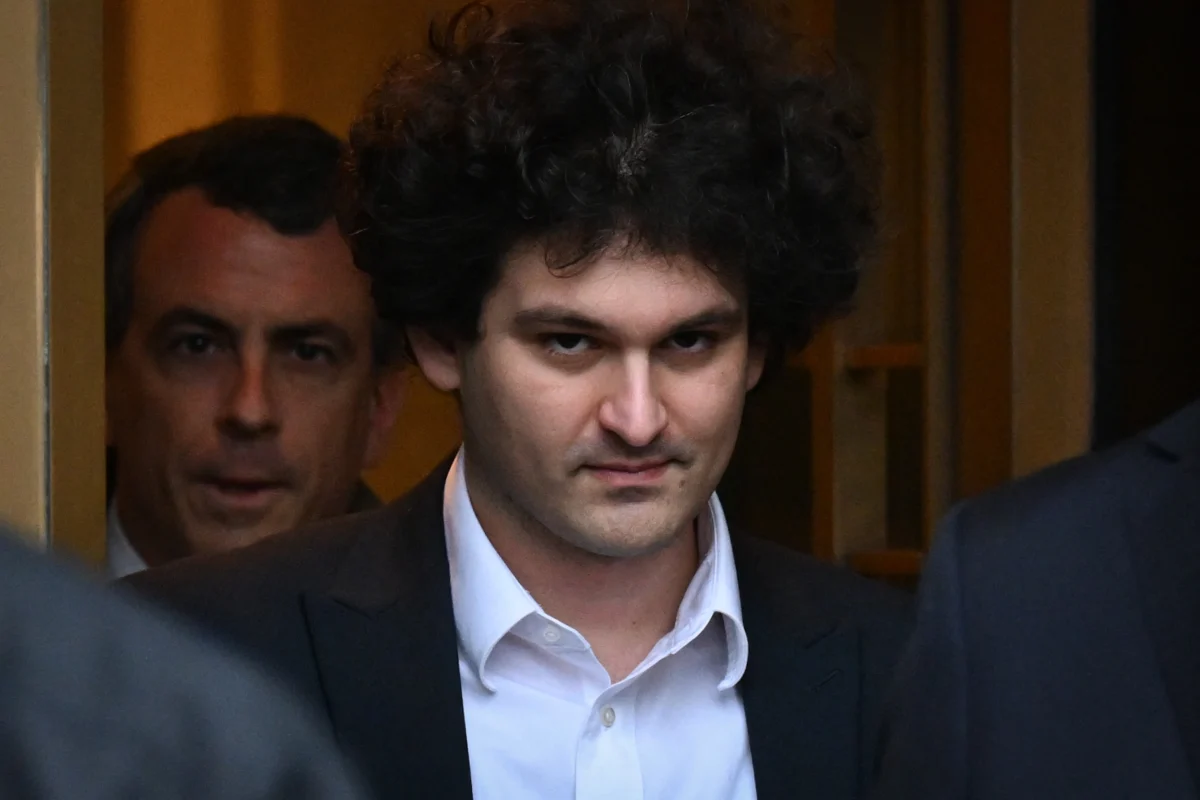
Sam Bankman-Fried, the disgraced co-founder of the now-defunct cryptocurrency exchange FTX, has formally submitted an application for a presidential pardon to President Donald Trump. This significant development, confirmed by the Justice Department’s Pardon Attorney Office website, comes as Bankman-Fried serves a substantial 25-year prison sentence following his conviction on a myriad of fraud and money laundering charges in 2024. The initial report regarding this application was first published by Bloomberg News, bringing into sharp focus the convicted crypto mogul’s latest attempt to navigate his legal predicament.
The filing of a pardon application by Bankman-Fried, a figure who once commanded immense influence in the digital asset space, introduces a complex layer to the ongoing public and legal discourse surrounding his spectacular downfall. It also places his fate, however distant, within the purview of a former president known for his unconventional approach to executive clemency, particularly in cases involving financial crimes and political affiliations.
The Meteoric Rise and Catastrophic Collapse of FTX
To fully comprehend the gravity of Bankman-Fried’s current situation and his bid for clemency, it is essential to revisit the dramatic trajectory of FTX and its charismatic founder. Sam Bankman-Fried, often referred to by his initials SBF, emerged as a prominent figure in the cryptocurrency world in the late 2010s. A graduate of MIT, he founded Alameda Research, a quantitative trading firm, in 2017, quickly establishing a reputation for high-volume trading and arbitrage. Building on this success, he co-founded FTX in 2019, positioning it as a user-friendly and sophisticated cryptocurrency exchange.
FTX rapidly ascended to become one of the largest and most influential crypto platforms globally, attracting millions of users and billions in assets under management. Its valuation soared, reaching an astonishing $32 billion at its peak in early 2022. SBF became a ubiquitous presence in media, a major political donor, and an advocate for crypto regulation, often testifying before Congress. He cultivated an image as a benevolent leader, committed to "effective altruism" and ethical conduct within the volatile crypto industry.
However, this carefully constructed edifice began to crumble in November 2022. A report by CoinDesk revealed a concerning link between FTX and Alameda Research, specifically that Alameda’s balance sheet heavily relied on FTT, the native token of the FTX exchange. This exposure raised red flags about the interconnectedness and potential instability of SBF’s empire. The situation escalated rapidly when Changpeng Zhao, the CEO of rival exchange Binance, announced his intention to liquidate Binance’s holdings of FTT, triggering a massive sell-off and a crisis of confidence.
A deluge of customer withdrawal requests overwhelmed FTX, exposing a critical liquidity shortfall. Within days, FTX, once a titan of the crypto industry, found itself on the brink of collapse. On November 11, 2022, FTX, Alameda Research, and over 100 affiliated companies filed for Chapter 11 bankruptcy in the United States. The subsequent investigations uncovered a staggering misappropriation of customer funds, estimated to be in the billions of dollars, which were allegedly diverted to cover losses at Alameda Research, make risky investments, and fund lavish lifestyles and political donations.
The Legal Saga and Conviction of Sam Bankman-Fried
The implosion of FTX triggered immediate legal and regulatory scrutiny. On December 12, 2022, Sam Bankman-Fried was arrested in the Bahamas, where FTX was headquartered, at the request of the U.S. government. He was subsequently extradited to the United States to face a barrage of federal charges.
The prosecution, led by the U.S. Attorney for the Southern District of New York, painted a picture of calculated deception and large-scale fraud. Bankman-Fried was accused of orchestrating a multi-year scheme to defraud customers and investors of FTX, diverting billions of dollars in customer deposits to Alameda Research for its own use. The charges included wire fraud, conspiracy to commit wire fraud, conspiracy to commit money laundering, and conspiracy to commit securities fraud, among others. Crucially, the prosecution argued that SBF knew his actions were illegal and intentionally misled investors and customers.
During the high-profile trial in late 2023, prosecutors presented compelling evidence, including testimony from former FTX and Alameda executives, such as Caroline Ellison (Alameda CEO) and Gary Wang (FTX co-founder), who had pleaded guilty and cooperated with the government. These witnesses detailed how customer funds were commingled and used without consent, how a secret backdoor allowed Alameda to access FTX customer funds, and how Bankman-Fried directed these illicit activities.
Bankman-Fried’s defense team, while acknowledging poor risk management and oversight at FTX, argued that he never intended to defraud anyone and was merely overwhelmed by the rapid growth and complexity of his businesses. They attempted to portray him as a well-intentioned but ultimately naive entrepreneur who made mistakes. However, the jury was unconvinced. On November 2, 2023, after less than five hours of deliberation, Sam Bankman-Fried was found guilty on all seven counts of fraud and conspiracy brought against him.
The Sentencing: A Landmark Decision
Following his conviction, the focus shifted to sentencing. On March 28, 2024, U.S. District Judge Lewis Kaplan handed down a 25-year prison sentence to Sam Bankman-Fried. The sentence, while less than the 40-50 years sought by prosecutors, was significantly more than the 6.5 years proposed by his defense team. Judge Kaplan emphasized the immense scale of the fraud, the betrayal of trust, and the devastating impact on victims. He stated that Bankman-Fried’s actions constituted a deliberate and knowing scheme to defraud, rejecting the defense’s characterization of his conduct as merely negligent.
Judge Kaplan highlighted several factors contributing to the severe sentence:
- Magnitude of Loss: Billions of dollars were stolen from customers, investors, and lenders.
- Perjury: The judge noted Bankman-Fried’s evasive and untruthful testimony during the trial.
- Lack of Remorse: Kaplan observed Bankman-Fried’s apparent lack of genuine remorse for the harm he caused.
- Deterrence: The sentence was intended to send a strong message to others who might consider engaging in similar financial crimes.
The 25-year sentence cemented Bankman-Fried’s transformation from a crypto visionary to one of the most prominent white-collar criminals in recent memory, marking a definitive end to his reign in the digital asset world.
Presidential Pardons: A Historical Context with Donald Trump
The application for a pardon from President Trump is particularly noteworthy given the former president’s distinctive record on executive clemency. During his single term in office, Donald Trump granted pardons and commutations to hundreds of individuals, often drawing controversy and scrutiny.
An analysis by NBC News in January found that more than half of the individual pardons granted by Trump were for people who committed white-collar crimes, including money laundering, bank fraud, and wire fraud – precisely the types of offenses for which Bankman-Fried was convicted. This pattern included high-profile figures such as Steve Bannon, Roger Stone, and Michael Flynn, as well as a significant number of individuals who had made substantial political donations to his campaigns or had personal connections to his administration.
It is crucial to note that many of these pardons bypassed the traditional review process of the Justice Department’s Pardon Attorney Office, instead being granted directly by the President, often in the final days of his term. The fact that Bankman-Fried has filed an official application through the Justice Department suggests an attempt to follow established protocol, a path less frequently chosen by those who ultimately received Trump’s clemency. While Trump also issued numerous pardons to individuals involved in the January 6, 2021 Capitol riot, his affinity for pardoning financial criminals remains a defining characteristic of his clemency record.
The Mechanics of a Presidential Pardon Application
The process for a presidential pardon involves several stages, though the President ultimately retains sole discretionary power. When an application is filed with the Justice Department’s Pardon Attorney Office, it typically triggers a thorough investigation. This investigation includes reviewing the applicant’s criminal record, the circumstances of the conviction, their conduct since conviction, and often soliciting input from prosecutors, judges, and victims.
The Pardon Attorney then makes a recommendation to the Deputy Attorney General, who in turn advises the President. However, presidents are not bound by these recommendations and can grant pardons or commutations at their own discretion, often without explanation. Pardons are generally granted for federal offenses and restore certain civil rights, such as the right to vote or hold public office, and remove legal disabilities resulting from the conviction. They do not, however, expunge a criminal record or prevent civil lawsuits.
For Bankman-Fried, the timing of his application is significant. With Trump currently a leading contender for the Republican presidential nomination in 2024, the application anticipates a potential return to the White House. Presidential pardons are typically granted towards the end of a president’s term, if at all, making Bankman-Fried’s application a long-term strategic move rather than an immediate solution.
Potential Implications and Reactions
The news of Bankman-Fried’s pardon application is likely to provoke a wide range of reactions across various segments of society:
- Victims of FTX: For the countless individuals and institutions that lost billions in the FTX collapse, the idea of Bankman-Fried receiving a pardon would undoubtedly be met with outrage and a profound sense of injustice. They have spent over a year seeking restitution and accountability, and a pardon could be seen as an undermining of the judicial process.
- Legal Experts: Legal scholars and former prosecutors will likely analyze the merits of the application, the political considerations, and the precedent it could set. The sheer scale of Bankman-Fried’s fraud and the deliberate nature of his actions, as determined by the jury and judge, make him an unlikely candidate for a pardon based on traditional criteria of remorse, rehabilitation, and minor offense severity.
- Political Landscape: Should Trump win the presidency and consider such a pardon, it would undoubtedly become a significant political flashpoint. Bankman-Fried, through FTX and Alameda, was a prolific political donor, contributing tens of millions to both Democratic and Republican campaigns, often through "dark money" channels. While his most public donations favored Democrats, his extensive network and strategic giving could be a point of contention. A pardon for such a high-profile financial criminal could invite criticism from across the political spectrum, particularly given Trump’s own history of financial dealings and legal challenges.
- Crypto Community: Reactions within the cryptocurrency world would likely be divided. Some might view it as an attempt by a powerful figure to escape accountability, further eroding trust in the industry. Others might see it as a reflection of the arbitrary nature of justice or a sign of the deep political connections that continue to influence high-stakes cases.
- Broader Economic Implications: A pardon for Bankman-Fried would not negate the fundamental issues of regulatory oversight and investor protection highlighted by the FTX collapse. However, it could send a mixed message about the seriousness with which white-collar crime is treated at the highest levels of government.
Broader Significance and Future Outlook
Sam Bankman-Fried’s pardon application represents more than just a desperate plea from a convicted felon; it symbolizes a confluence of high-stakes finance, political power, and the complex mechanics of justice. It underscores the enduring influence of political figures in the legal system and raises fundamental questions about the criteria for executive clemency, especially in cases of profound public harm.
The likelihood of such a pardon being granted remains highly speculative. While Donald Trump has demonstrated a willingness to pardon individuals convicted of financial crimes, Bankman-Fried’s case is unique in its scale, its public notoriety, and the recency of his conviction and sentencing. Furthermore, a pardon would likely be perceived as politically risky, potentially alienating voters concerned about financial accountability.
Regardless of the outcome, Bankman-Fried’s application ensures that his name will continue to be associated with significant legal and political discussions, even as he serves his lengthy sentence. For the victims of FTX, the pursuit of justice and recovery remains paramount, with or without a presidential intervention in his criminal conviction. The process itself will serve as a stark reminder of the long shadow cast by the FTX scandal and the ongoing debate surrounding accountability in the rapidly evolving world of digital finance.

