
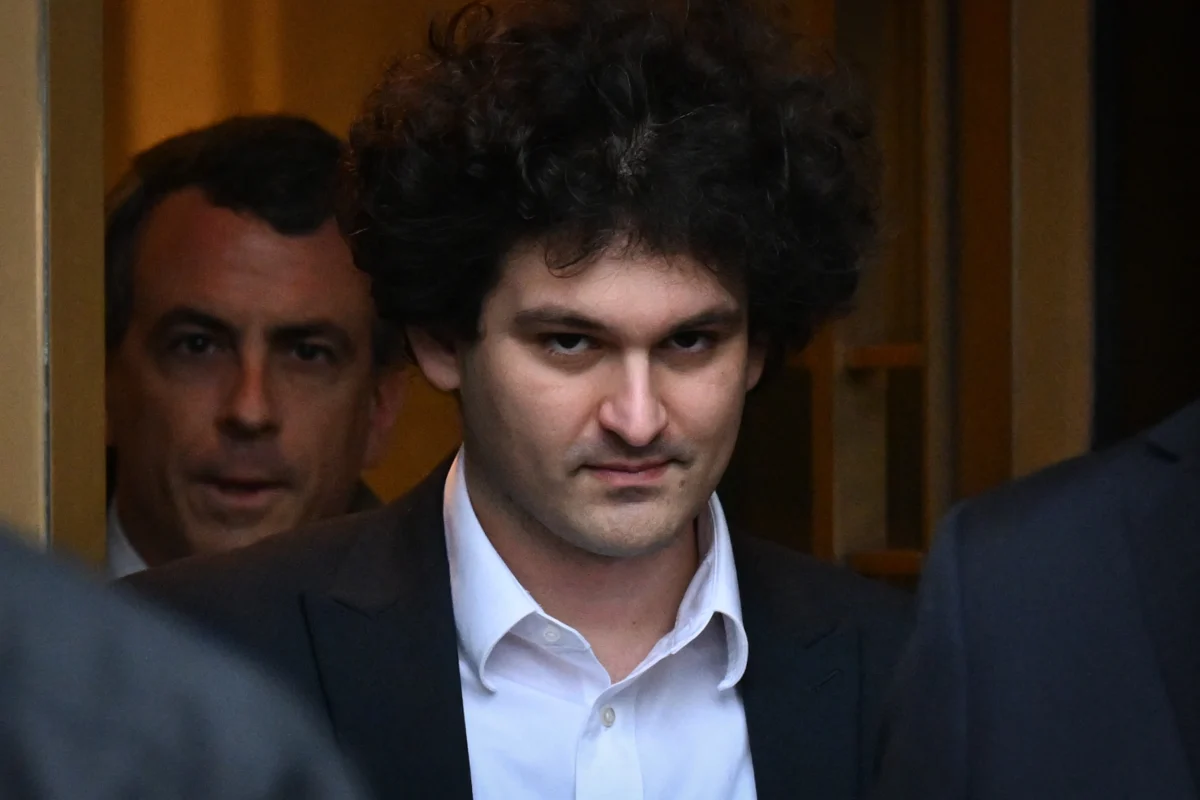
Disgraced FTX co-founder Sam Bankman-Fried has officially submitted an application for an executive pardon to President Donald Trump, according to official entries on the Department of Justice’s Pardon Attorney Office website. The petition marks a dramatic legal and strategic pivot for the former crypto billionaire, who is currently serving a 25-year federal prison sentence following his landmark conviction on multiple counts of wire fraud, securities fraud, and money laundering.
The formal filing, which was initially uncovered and reported by Bloomberg News, places Bankman-Fried among a swelling queue of high-profile federal inmates seeking clemency during the current presidential administration. While a formal petition through the Office of the Pardon Attorney is the traditional administrative route for federal clemency, it stands in stark contrast to the procedural path taken by many beneficiaries of executive relief during Trump’s second term, a significant portion of whom have bypassed standard DOJ channels in favor of direct lobbying or informal appeals.
The Legal Backdrop and Conviction of Sam Bankman-Fried
To understand the weight of Bankman-Fried’s petition, one must examine the staggering collapse of FTX and its affiliated quantitative trading firm, Alameda Research. Once valued at $32 billion, FTX operated as one of the world’s most prominent cryptocurrency exchanges before experiencing a catastrophic liquidity crisis in November 2022. Investigations rapidly revealed that billions of dollars in customer deposits had been misappropriated to plug financial holes at Alameda, fund speculative venture investments, purchase luxury real estate, and bankroll extensive political donations.
In late 2023, a federal jury in the Southern District of New York found Bankman-Fried guilty on all seven criminal counts he faced. Prosecutors successfully argued that he orchestrated a multi-year fraudulent enterprise built on deceit, hollow promises of regulatory compliance, and a systematic looting of customer assets. In March 2024, U.S. District Judge Lewis Kaplan handed down a 25-year prison sentence, noting during the sentencing hearing that Bankman-Fried showed a persistent lack of remorse and an alarming willingness to lie when it suited his interests.
Despite the decisive trial verdict and subsequent appellate hurdles, Bankman-Fried’s defense and advisory network have evidently calculated that an executive pardon represents his most viable—if exceedingly narrow—path toward eventual freedom.
Chronology of Key Events
The trajectory leading to Bankman-Fried’s current clemency bid is defined by a rapid succession of legal, financial, and political milestones:
- November 2022: FTX and Alameda Research file for Chapter 11 bankruptcy protection following a historic bank run and liquidity crunch. Bankman-Fried steps down as CEO.
- December 2022: Bankman-Fried is arrested by Bahamian authorities at the request of the U.S. government and subsequently extradited to the United States, where he is released on a $250 million bond.
- August 2023: Judge Kaplan revokes Bankman-Fried’s bail and sends him to the Metropolitan Detention Center in Brooklyn after finding probable cause that he tampered with witnesses.
- November 2023: A federal jury convicts Bankman-Fried on all seven criminal counts, including wire fraud, conspiracy to commit wire fraud, conspiracy to commit commodities fraud, conspiracy to commit securities fraud, and money laundering.
- March 2024: Judge Lewis Kaplan sentences Bankman-Fried to 300 months (25 years) in federal prison and orders the forfeiture of more than $11 billion in assets.
- June 2026: Bloomberg News reports, and DOJ databases confirm, that Bankman-Fried has formally filed a petition for a presidential pardon with the Justice Department’s Pardon Attorney Office.
The Clemency Landscape of President Trump’s Second Term
Bankman-Fried’s petition arrives during a presidential administration that has utilized executive clemency on a broad and unconventional scale. During his second term, President Trump has pardoned or commuted the sentences of hundreds of individuals. While a large portion of these executive actions have focused on participants in the January 6, 2021, Capitol riot, a striking percentage of the pardons granted have targeted individuals convicted of white-collar and financial crimes.
A comprehensive data analysis published by NBC News in January revealed that more than half of the individual non-riot pardons and sentence commutations granted during this period went to defendants convicted of financial offenses. These include complex cases involving money laundering, bank fraud, wire fraud, healthcare fraud, and tax evasion. The analysis underscored a broader philosophical approach within the administration toward corporate and financial regulation crimes, often viewing heavy-handed federal prosecutions as instances of regulatory overreach.
Furthermore, investigative reporting has highlighted a correlation between executive clemency recipients and individuals or associated entities that have contributed substantial sums to political campaigns supporting Trump or aligned political action committees. However, legal experts note a distinct procedural anomaly in Bankman-Fried’s case: while numerous high-profile figures have secured pardons through informal channels without navigating the bureaucratic machinery of the Justice Department, Bankman-Fried has opted to file the official paperwork through the Pardon Attorney Office.
Reactions and Industry Perspectives
The formal filing of Bankman-Fried’s pardon application has sent ripples through the legal community, the cryptocurrency sector, and political circles. Because of the sheer scale of the FTX collapse and the devastating financial losses inflicted on millions of retail investors worldwide, the case remains a watershed moment for the digital asset industry.
Legal scholars and white-collar defense attorneys view the petition as a long shot, given the severity of the offense, the bipartisan nature of the public outrage surrounding FTX, and the explicit findings of the sentencing judge. "A federal conviction involving billions of dollars in stolen customer funds, coupled with witness tampering charges during the judicial process, places a defendant at the absolute furthest extreme of eligibility for conventional executive clemency," noted one prominent New York-based defense attorney specializing in federal appeals.
Conversely, representatives and advocates within the cryptocurrency ecosystem have expressed mixed reactions. Some industry veterans argue that a pardon would severely undermine the fragile credibility that digital asset markets have fought to rebuild in the wake of the 2022 contagion. Others suggest that the normalization of high-level financial crime pardons creates an unpredictable environment where political influence can overshadow judicial outcomes.
Neither the Department of Justice nor representatives for Bankman-Fried’s immediate legal defense team have issued detailed public statements elaborating on the specific arguments or justifications cited within the formal petition. Typically, federal pardon applications require extensive documentation, evidence of rehabilitation, statements of remorse, and supportive testimonies regarding post-conviction conduct.
Broader Impact and Policy Implications
The decision by a convicted architect of one of the largest corporate frauds in modern American history to petition the executive branch underscores ongoing debates surrounding the scope and application of presidential clemency powers under Article II, Section 2 of the U.S. Constitution.
The Framers of the Constitution envisioned the pardon power as an essential safety valve within the justice system—a mechanism designed to correct judicial errors, mitigate overly harsh mandatory minimum sentences, or reward genuine rehabilitation. However, the increasing frequency of pardons granted to white-collar criminals and political donors has reignited congressional scrutiny and academic discussions regarding potential legislative guardrails. Critics argue that unchecked clemency for major financial fraudsters erodes public trust in the rule of law and diminishes the deterrent effect of federal criminal statutes.
For the victims of FTX, many of whom have endured grueling bankruptcy proceedings to recover a fraction of their locked capital, news of the pardon application brings fresh frustration. While bankruptcy administrators and liquidators have made significant strides in recovering assets to pay back creditors, the psychological and financial scars left by the platform’s collapse remain vivid.
As the Department of Justice’s Pardon Attorney Office begins the administrative review of Sam Bankman-Fried’s file, the ultimate decision rests entirely with President Trump. Whether the administration will entertain clemency for a figure whose corporate empire became synonymous with systemic regulatory failure remains one of the most polarizing questions in contemporary American legal and political discourse.

