• Home
  • About Us
  • Contact Us
  • Cookies Policy
  • Disclaimer
  • DMCA
  • Privacy Policy
  • Terms and Conditions
Dr Crypton
Secure Your Future in Crypto
Cybersecurity & Hacking

RefluXFS: A Critical Linux Kernel Flaw Granting Persistent Root Access Through XFS Filesystem Manipulation

by admin July 23, 2026
written by admin

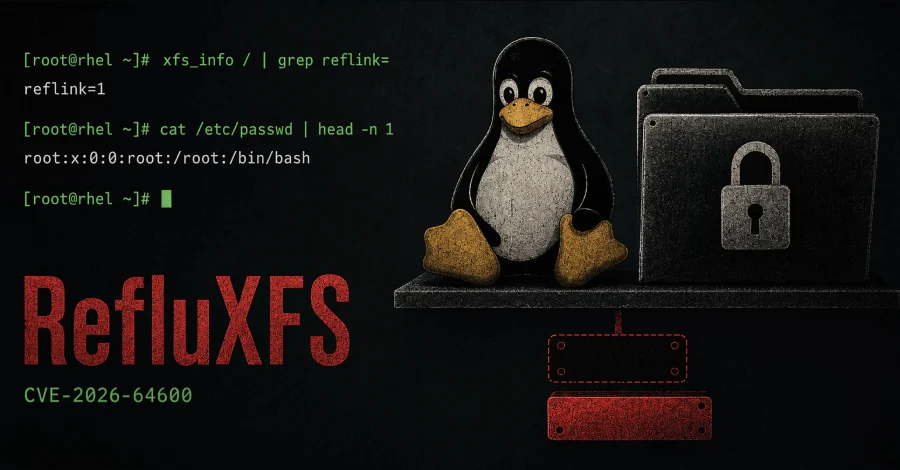
A newly unveiled critical vulnerability within the Linux kernel, dubbed RefluXFS and tracked as CVE-2026-64600, has sent ripples through the cybersecurity community, enabling an unprivileged local user to achieve persistent root access by overwriting root-owned files on XFS filesystems. Disclosed on July 22, this flaw exploits a race condition tied to the XFS reflink feature, a mechanism designed to optimize storage by allowing multiple file references to share the same underlying data blocks. Security research firm Qualys, responsible for the discovery and coordinated disclosure, has highlighted that default installations of several major Linux distributions, including Red Hat Enterprise Linux (RHEL) and its derivatives, Fedora Server, and Amazon Linux, are particularly susceptible to exploitation, underscoring the urgency for system administrators to apply patches and reboot affected systems.

Unpacking RefluXFS: The Mechanics of a Block-Layer Overwrite

At its core, RefluXFS represents a local privilege escalation (LPE) vulnerability that leverages a sophisticated race condition to bypass fundamental security controls. Qualys researchers demonstrated how an attacker can target critical system files, such as /etc/passwd or setuid-root binaries, to achieve their malicious objectives. The most alarming aspect of this vulnerability is its persistence: the overwrite occurs at the block layer of the filesystem, meaning it survives system reboots. Crucially, the target file’s ownership, permissions, timestamps, and setuid bit remain unaltered, ensuring that a modified setuid-root binary continues to execute with root privileges, effectively granting an attacker a backdoor that is both stealthy and resilient.

The vulnerability’s technical underpinning lies in a "stale mapping" error within the XFS copy-on-write (CoW) mechanism, specifically when handling reflink operations and concurrent O_DIRECT writes. Reflinks, introduced to XFS in Linux kernel 4.9, allow for efficient data sharing by creating new files that initially point to the same data blocks as an existing file. When a modification occurs, the CoW mechanism ensures that a new, distinct copy of the modified block is created, preserving the original file’s integrity while allowing the new file to diverge.

An attacker exploits this by first cloning a root-owned file into a scratch file using the FICLONE ioctl, which only requires read access to the source. This initial step causes both the original and the cloned file to reference the same physical disk blocks. The race condition then emerges when concurrent O_DIRECT writes are performed against the cloned file. The kernel, in its handling of xfs_reflink_fill_cow_hole(), reads the data-fork mapping under an inode lock. However, this lock is momentarily cycled to reserve transaction space. During this critical window, a second, precisely timed writer can complete its copy-on-write operation, causing the cloned file to be remapped to a new, distinct block. When the first writer reacquires the lock, it refreshes the copy-on-write fork but erroneously continues to use the old data-fork mapping.

Nine-Year-Old RefluXFS Linux Flaw Gives Local Users Root on Default RHEL Installs

This "stale address" now points directly to a block still owned exclusively by the original, protected root-owned file. XFS, mistakenly perceiving this block as unshared, permits the direct write operation to proceed. Consequently, data intended for the attacker’s disposable clone is inadvertently written into the target root-owned file. Because this bypasses the target inode entirely, none of the file’s metadata—ownership, permissions, or timestamps—are updated, and Qualys researchers confirmed that their tests produced no kernel warnings or log entries, making detection significantly more challenging. The upstream patch, merged on July 16, plainly states the issue: "the mappings are stale as soon as we reacquire the ILOCK." The fix involves snapshotting ip->i_df.if_seq before the lock is dropped and re-reading the data fork with xfs_bmapi_read() if the counter has changed, ensuring the mapping is current.

A Long-Standing Flaw: Tracing RefluXFS Back to 2017

The fix for CVE-2026-64600 was integrated into the Linux kernel on July 16, preceding its public disclosure by less than a week. Intriguingly, the patch itself traces the bug’s origin back to Linux kernel version 4.11, released in 2017. A Fixes: tag referencing commit 3c68d44a2b49 and a stable backport request marked # v4.11 indicate that this subtle race condition has been present in the kernel for approximately nine years. This discovery adds RefluXFS to a growing list of long-dormant kernel vulnerabilities that security researchers have unearthed in recent years, highlighting the deep complexity of operating system kernels and the ongoing challenge of identifying such elusive flaws.

The journey of RefluXFS from obscurity to public disclosure also features a remarkable aspect of modern cybersecurity research: the involvement of artificial intelligence. Qualys revealed that the vulnerability was discovered with the assistance of Anthropic’s restricted-access frontier model, Claude Mythos Preview. Researchers, seeking to validate the AI’s capabilities, reportedly "asked it to find a vulnerability similar to Dirty COW." Dirty COW (CVE-2016-5195), a notorious Linux kernel vulnerability discovered in 2016, also exploited a race condition in the kernel’s copy-on-write mechanism to achieve local privilege escalation. The AI model successfully located the RefluXFS race, proceeded to write a functional root exploit, and even drafted the initial advisory. Qualys researchers then meticulously reproduced the exploit on a stock Fedora Server 44 installation, verified the model’s reasoning, and coordinated the disclosure with upstream maintainers. This marks a significant milestone in the application of AI for vulnerability research, suggesting a future where AI-powered tools become increasingly integral to identifying complex, deep-seated flaws in critical software.

Exposure Landscape: Who is Affected?

Exploitation of RefluXFS hinges on three primary conditions, as outlined by Qualys:

Nine-Year-Old RefluXFS Linux Flaw Gives Local Users Root on Default RHEL Installs
  1. Local User Access: An unprivileged local user must be able to execute arbitrary code on the system. This could be through a shell, a Continuous Integration (CI) job, or a compromised service.
  2. XFS Filesystem with Reflink Enabled: The target filesystem must be XFS with the reflink feature enabled.
  3. Writable Directory Sharing Filesystem with Protected File: An attacker-writable directory must exist on the same XFS filesystem as a root-owned file targeted for overwrite.

Qualys’s advisory explicitly identifies several default installations that commonly meet these conditions. This includes Red Hat Enterprise Linux (RHEL), CentOS Stream, Oracle Linux, Rocky Linux, AlmaLinux, and CloudLinux versions 8, 9, and 10. Fedora Server versions 31 and later are also exposed, as are Amazon Linux 2023 and Amazon Linux 2 images from December 2022 onwards. It is important to note that RHEL 7 filesystems are generally not affected because they predate XFS reflink support.

Distributions like Debian, Ubuntu, SUSE Linux Enterprise Server (SLES), and openSUSE are typically less exposed by default, as they do not commonly use XFS for their root filesystems. However, these systems become vulnerable if an administrator specifically chose XFS with reflink enabled during installation for the root filesystem or any other mounted XFS volume that meets the criteria.

System administrators can easily verify if their XFS filesystems have reflink enabled by executing the command:
xfs_info / | grep reflink=
A result of reflink=1 confirms that the second condition for exploitation is met for the root filesystem. This check should be extended to any other mounted XFS volume where a protected file and an attacker-writable directory might coexist.

Vendor Responses and Patching Chronology

The coordinated disclosure process ensured that major Linux distribution vendors were informed of the vulnerability before the public announcement, allowing them to prepare and release patches. Red Hat, a primary maintainer of XFS and a significantly affected vendor, issued "Important"-rated kernel advisories across its RHEL 8, 9, and 10 streams. The errata began rolling out as early as July 14, eight days prior to the public disclosure. Specific advisories include RHSA-2026:39179 and RHSA-2026:39180 for RHEL 8, and RHSA-2026:39494 for RHEL 10, with extended-support and SAP streams receiving updates through July 17. This proactive release schedule means that organizations that applied these errata on time were protected before RefluXFS was publicly named. Administrators are advised to confirm that an advisory exists for their precise RHEL release and to verify patch dates to ascertain their exposure status. Red Hat’s bug tracker initially filed the flaw under the title "kernel: XFS data corruption using reflink," indicating an early understanding of the issue’s potential impact on data integrity.

Other distributions are also in various stages of patching. As of July 23, Debian’s security tracker listed the fix for trixie-security as kernel 6.12.96-1 and for unstable as 7.1.4-1. However, trixie’s base kernel 6.12.94-1 and forky’s 7.1.3-1 were still marked as vulnerable, as were older stable releases like bookworm and bullseye, including their respective security branches. This highlights a staggered rollout, where some users may still be vulnerable depending on their distribution, version, and update cadence.

Nine-Year-Old RefluXFS Linux Flaw Gives Local Users Root on Default RHEL Installs

Mitigation Challenges and Broader Implications

The nature of RefluXFS presents significant mitigation challenges. Qualys explicitly states that no practical temporary configuration change or mount option exists to disable XFS reflinks after a filesystem has been created. Furthermore, traditional security mechanisms often lauded for their ability to contain local exploits proved ineffective against RefluXFS in Qualys’s testing. SELinux in Enforcing mode, seccomp, kernel lockdown, and container boundaries all failed to prevent successful exploitation. This is attributed to the fact that RefluXFS is a block-layer write operation, not a memory corruption vulnerability, meaning memory protections like Kernel Address Space Layout Randomization (KASLR) and Supervisor Mode Execution Prevention (SMEP) do not apply.

One apparent limitation initially considered was that the race only fires if the target block starts unshared. This implies that a file an administrator had already reflink-copied might be immune. However, the advisory quickly dismisses this as a meaningful protection, noting that an unprivileged user can reset this condition by running a command like chsh. More importantly, critical setuid-root binaries are highly unlikely to have been reflinked in the first place, leaving them squarely in the crosshairs of this vulnerability.

The discovery of RefluXFS, following closely on the heels of other recent Qualys findings—such as a snap-confine flaw in Ubuntu Desktop (CVE-2026-8933) and a nine-year-old bug in the kernel’s ptrace checks—underscores a persistent trend. Aged kernel bugs, often subtle race conditions or logical flaws, continue to surface, demonstrating the immense complexity of maintaining a robust and secure operating system kernel. The fact that an AI model played a pivotal role in this discovery suggests a transformative shift in vulnerability research. While human expertise remains critical for verification and coordination, AI’s ability to sift through vast codebases and identify patterns indicative of vulnerabilities could accelerate the discovery of similar long-standing flaws.

While Qualys did not publish standalone exploit code, Red Hat’s bug tracker noted the availability of a public proof-of-concept on July 22, contained within the advisory posted to the oss-security mailing list. This document fully details the race condition and exploitation steps, making it accessible to those with sufficient technical understanding. At the time of writing, none of the tracking vendors had reported active exploitation of RefluXFS in the wild, providing a critical window for organizations to apply necessary updates.

The immediate call to action for all affected Linux users and administrators is clear: patch, then reboot. Installing the updated kernel package is a crucial first step, but it is insufficient on its own, as the running system will continue to use the vulnerable kernel in memory. A full system reboot is imperative to load the fixed kernel and ensure protection against RefluXFS. Failure to do so leaves systems exposed to a highly potent and persistent local privilege escalation attack that could severely compromise system integrity and data security. The ongoing vigilance and prompt action of the open-source community, security researchers, and distribution vendors remain the strongest defense against such sophisticated threats.

July 23, 2026 0 comment
0 FacebookTwitterPinterestEmail
Cybersecurity & Hacking

New msaRAT malware uses Chrome, Edge browsers to route C2 traffic

by admin July 23, 2026
written by admin

The cybersecurity landscape faces an escalating threat as a novel backdoor, dubbed msaRAT, has been identified in the arsenal of the Chaos ransomware gang. This sophisticated malware, engineered in Rust, employs an innovative technique to conceal its command-and-control (C2) communications by routing them entirely through common web browsers such as Google Chrome and Microsoft Edge. This method significantly complicates detection efforts, presenting a substantial challenge to traditional network security defenses.

The Threat: msaRAT and its Unique Evasion Tactics

Discovered and analyzed by researchers, msaRAT stands out due to its reliance on the Chrome DevTools Protocol (CDP) to manipulate a headless browser session. A headless browser operates without a graphical user interface, making its activity less conspicuous to an unsuspecting user. By leveraging CDP, the malware establishes an encrypted connection to the attacker’s server, effectively embedding malicious traffic within seemingly legitimate browser communications. This strategic maneuver means that msaRAT never makes a direct, overt connection to its C2 infrastructure, thereby drastically reducing the risk of being flagged by firewalls, intrusion detection systems, or other network-level security tools that primarily look for suspicious direct connections or anomalous traffic patterns.

The choice of Rust for developing msaRAT is also noteworthy. Rust, a modern systems programming language, offers advantages such as memory safety, performance, and concurrency, making it increasingly attractive to malware developers seeking to create robust, efficient, and difficult-to-analyze threats. Its growing adoption in legitimate software development also means that security tools may be less adept at detecting Rust-based malicious executables compared to more traditional languages like C++ or C#.

The Chaos Ransomware Group: A Profile

New msaRAT malware uses Chrome, Edge browsers to route C2 traffic

The Chaos ransomware group, which has been making headlines in the cybersecurity community, emerged recently, with reports in late 2023 detailing its activities. It is important to distinguish this iteration of Chaos from an unrelated ransomware family of the same name that operated since 2021. This newer group quickly garnered attention, with the FBI reportedly seizing $2.4 million in Bitcoin from its operations, underscoring its financial motivations and scale.

Further adding to the complexity of the threat landscape, researchers at Rapid7 earlier this year uncovered a disconcerting link between the Chaos ransomware group and MuddyWater, an Iranian state-backed advanced persistent threat (APT) group. MuddyWater was observed leveraging Chaos ransomware not for financial gain in these specific instances, but as a sophisticated decoy. By deploying financially motivated ransomware, the state-sponsored hackers aimed to disguise their true objective: cyber-espionage operations. This tactic allows APTs to blend in with common criminal activities, muddying the waters for attribution and diverting attention from their strategic intelligence-gathering missions. Such a strategy highlights the evolving convergence of cybercrime and state-sponsored cyber warfare, where tools and techniques are shared or repurposed to achieve diverse malicious goals.

Recent attack campaigns attributed to the Chaos ransomware group, as meticulously documented by the Cisco Talos research team, typically initiate through highly effective social engineering tactics. These often involve email-based phishing or voice phishing (vishing) campaigns designed to trick victims into granting initial access. Once a foothold is established within the target environment, attackers proceed to install legitimate remote management software. This critical step ensures persistence, allowing the attackers to maintain access to the compromised system even after reboots or attempts to remove initial infection vectors. The use of legitimate tools further aids in evading detection, as their activity can be mistaken for routine administrative tasks.

The Infection Chain: From Phishing to Persistence

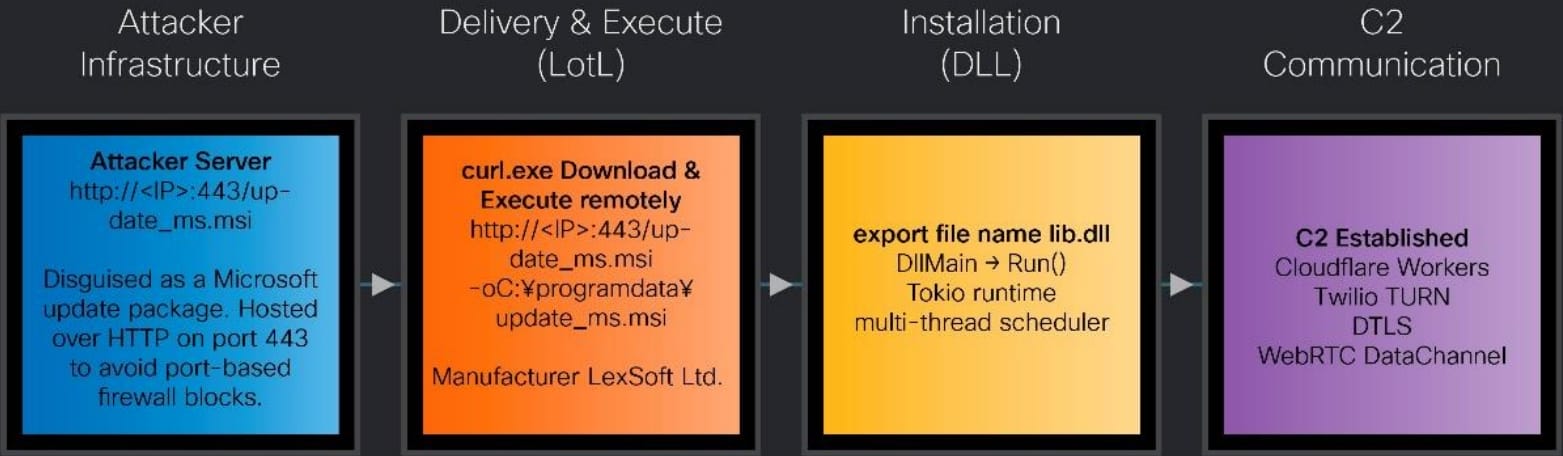
The deployment of msaRAT within a compromised network follows a structured, multi-stage infection chain designed for stealth and effectiveness. After gaining initial access and establishing persistence, the attacker proceeds to download a seemingly innocuous MSI installer. This installer is cleverly disguised, often masquerading as a routine Windows update. This deception exploits users’ trust in system updates and their typical behavior of allowing such installations, which often bypass certain security checks.

Upon execution, this MSI installer does not directly drop an executable file onto the disk in a readily detectable manner. Instead, it is engineered to load the msaRAT payload, specifically identified as lib.dll, directly into the system memory. This "fileless" or "living off the land" technique is a hallmark of advanced persistent threats. By operating primarily in memory, the malware avoids leaving forensic artifacts on the disk, making post-compromise analysis significantly more challenging and allowing it to evade traditional endpoint detection and response (EDR) solutions that rely heavily on disk-based signatures. The memory-resident nature of msaRAT ensures that it can execute its malicious functions without triggering alarms associated with suspicious file creation or modification.

New msaRAT malware uses Chrome, Edge browsers to route C2 traffic

Technical Deep Dive: Browser Hijacking and C2 Establishment

The core innovation of msaRAT lies in its sophisticated browser hijacking mechanism. Once launched in memory, msaRAT systematically searches for installed web browsers, prioritizing Google Chrome or Microsoft Edge. It then initiates the selected browser in a "headless" mode. This headless operation means the browser process starts and functions in the background without displaying any visible window or user interface elements. From a user’s perspective, no browser application appears to be open, making the malicious activity completely invisible.

Following the launch of the headless browser, msaRAT activates the browser’s remote debugging interface. This interface, normally used by developers to inspect and debug web applications, becomes the malware’s control point. msaRAT connects to this interface using the Chrome DevTools Protocol (CDP). CDP is a powerful, low-level API that allows external tools to inspect, debug, and profile Chromium-based browsers. By leveraging CDP, msaRAT gains full programmatic control over the browser’s functionalities.

The next critical step involves opening a new, equally invisible, browser tab. Into this tab, msaRAT injects custom JavaScript code using CDP commands. This injected JavaScript is meticulously crafted to perform several crucial functions:

  1. Building the Communication Channel: It lays the groundwork for the secure C2 communication.
  2. Bypassing Content Security Policy (CSP): Content Security Policy is a browser security feature designed to prevent cross-site scripting (XSS) and other code injection attacks by specifying which dynamic resources are allowed to load. msaRAT’s injected JavaScript includes mechanisms to circumvent or neutralize the browser’s CSP, ensuring its malicious code can execute without hindrance and communicate externally.
  3. Registering CDP Bindings: It establishes specific bindings within CDP that facilitate the subsequent encrypted communications with the attacker’s infrastructure.

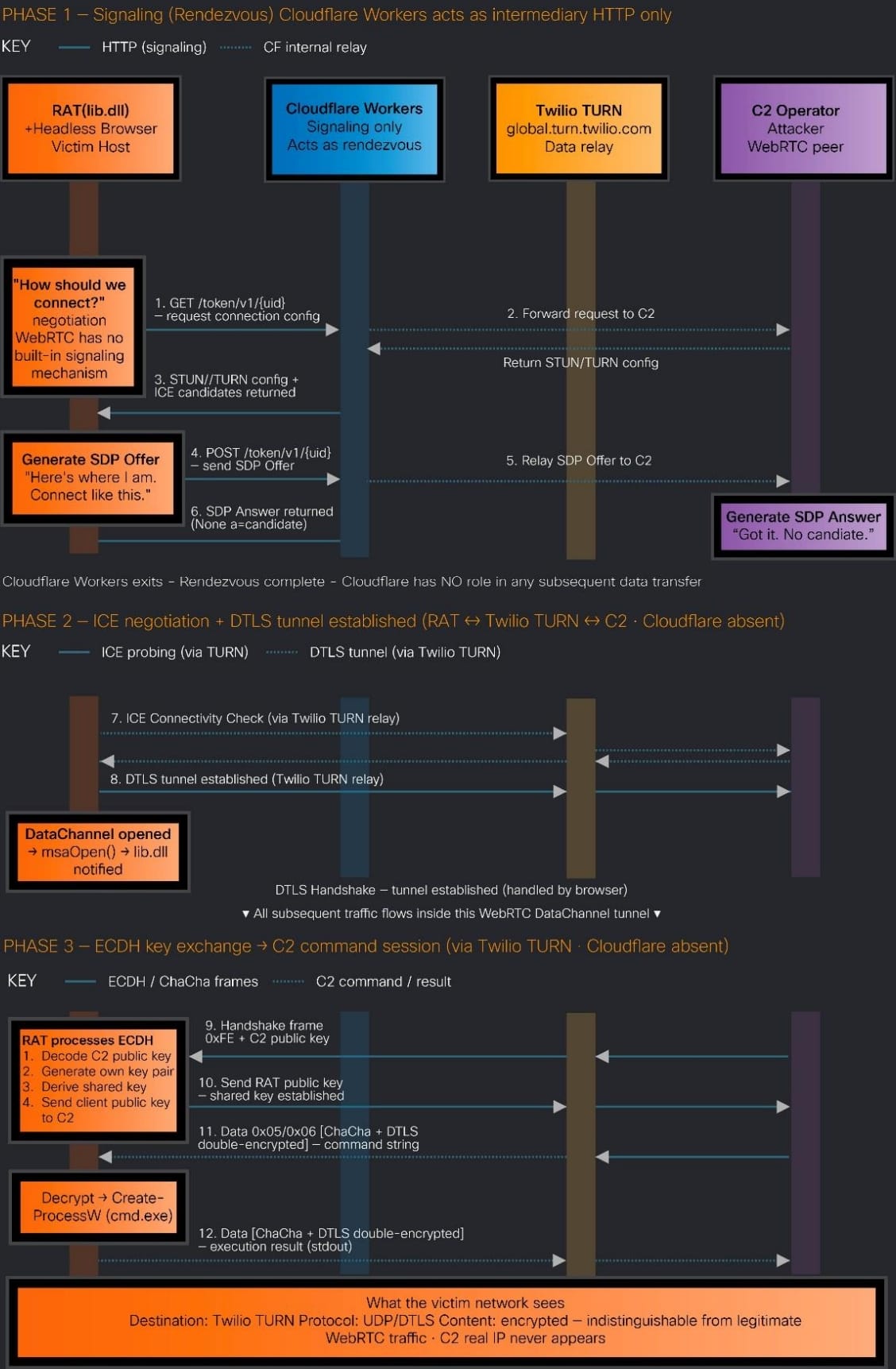
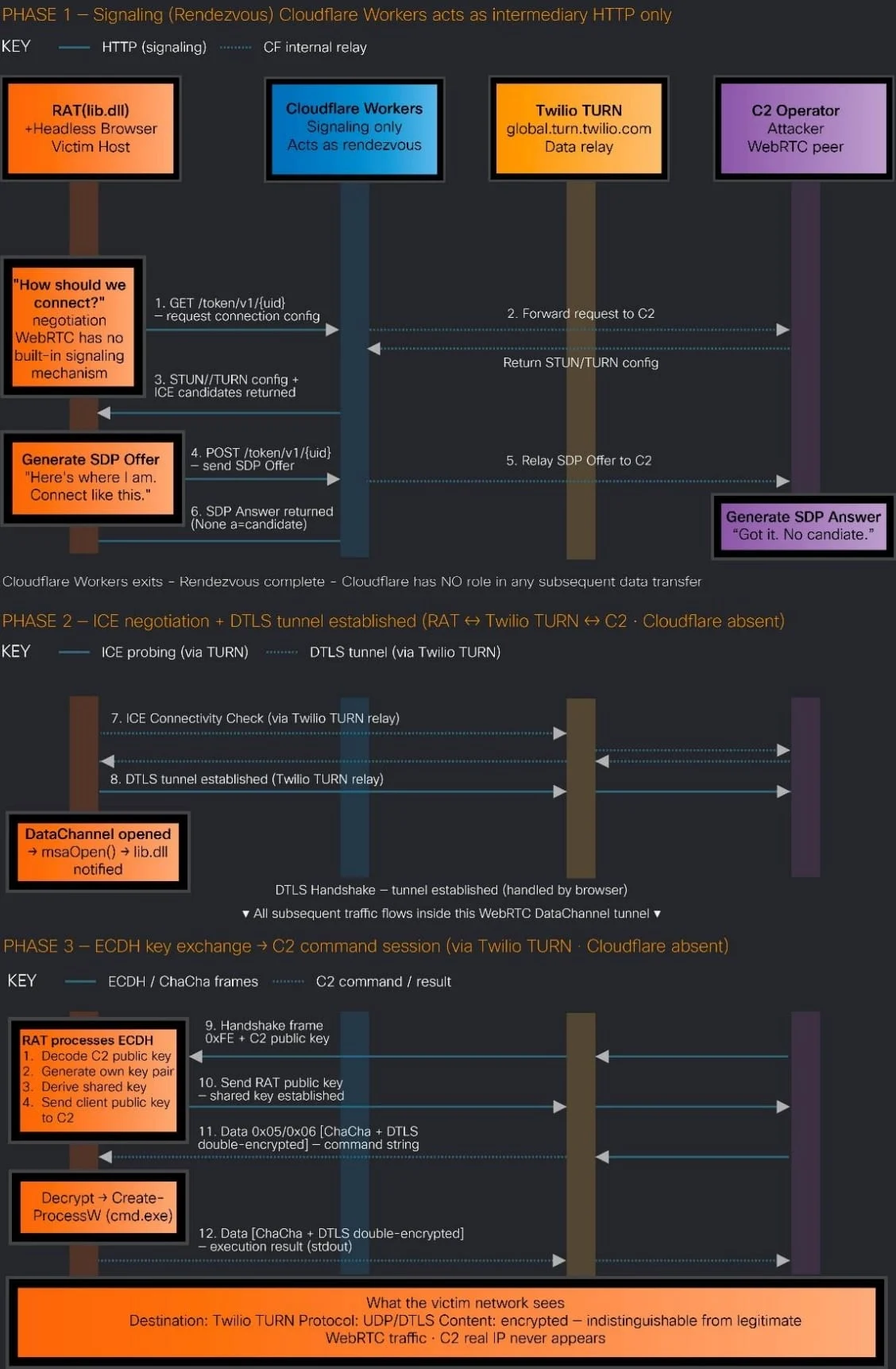
Once this intricate initial setup is complete, the compromised browser, under msaRAT’s control, initiates contact with a Cloudflare Workers endpoint (specifically, is-01-ast[.]ols-img-12[.]workers[.]dev). Cloudflare Workers are serverless execution environments that allow developers to run JavaScript code at Cloudflare’s edge network, close to users. In this context, the Cloudflare Workers endpoint serves as a crucial signaling relay. Its primary role is to provide the WebRTC connection information necessary for establishing a robust and encrypted channel.

WebRTC (Web Real-Time Communication) is a collection of APIs and protocols that enables real-time communication between browsers and mobile applications. msaRAT exploits WebRTC’s capabilities to create its secure C2 tunnel. The communication established through this mechanism benefits from two distinct layers of encryption:

New msaRAT malware uses Chrome, Edge browsers to route C2 traffic
  1. WebRTC DTLS (Datagram Transport Layer Security): This layer is automatically provided by the browser’s inherent WebRTC implementation, securing the transport of data.
  2. ChaCha20-Poly1305 + ECDH Key Exchange: Implemented directly by msaRAT, this is a strong, modern cryptographic suite that adds a second, application-level layer of encryption. ChaCha20-Poly1305 is an authenticated encryption algorithm, offering both confidentiality and integrity, while Elliptic Curve Diffie-Hellman (ECDH) ensures secure key exchange. This dual-layer encryption significantly enhances the confidentiality and integrity of the C2 communications, making them exceptionally difficult to intercept and decrypt.

Double-Layered Evasion: Cloudflare Workers and Twilio TURN

The design of msaRAT’s communication scheme demonstrates a profound understanding of network infrastructure and evasion techniques. Beyond the Cloudflare Workers signaling, communication is further relayed through Twilio TURN (Traversal Using Relays around NAT) servers. TURN servers are legitimate network components used in WebRTC to facilitate communication between peers that are behind Network Address Translators (NATs) or firewalls, acting as relays when a direct peer-to-peer connection is not possible.

Crucially, Cisco Talos researchers observed that msaRAT intentionally omits the Interactive Connectivity Establishment (ICE) candidates that are typically present in standard WebRTC communications. ICE is a framework that allows WebRTC to find the best possible path for two peers to connect, often prioritizing direct P2P connections. By deliberately excluding these candidates, msaRAT forces all communications to be routed exclusively through TURN servers. This design decision serves a critical evasion purpose: it prevents direct peer-to-peer connections from ever being established.

The implications of this forced relay through Twilio’s legitimate service are profound for threat detection. As Cisco Talos elucidates, "By routing traffic through Twilio’s legitimate service, the real IP address of the attacker’s server never appears in the network traffic, and the dual-layer infrastructure combining Twilio with Cloudflare Workers makes it significantly difficult to trace the attacker’s infrastructure." This means that network defenders attempting to trace the origin of suspicious traffic will only see connections to Twilio’s legitimate, high-reputation IP addresses, effectively masking the actual C2 server’s location.

The use of Cloudflare Workers as the initial signaling relay further bolsters the attacker’s anonymity and resilience. Cloudflare’s infrastructure acts as a protective shield, assigning its own IP addresses to the worker endpoints. Consequently, any network traffic analysis or firewall logs will show connections to Cloudflare IPs, which are generally trusted and whitelisted. Blocking an entire Cloudflare IP range or the *workers.dev free subdomain (which is assigned to developers) would be impractical for most organizations, as it would disrupt legitimate Cloudflare Workers deployments and affect numerous benign services. This creates a significant dilemma for network defenders, forcing them to choose between blocking essential services or allowing potentially malicious traffic.

The Data Exchange Protocol: Frames and Commands

New msaRAT malware uses Chrome, Edge browsers to route C2 traffic

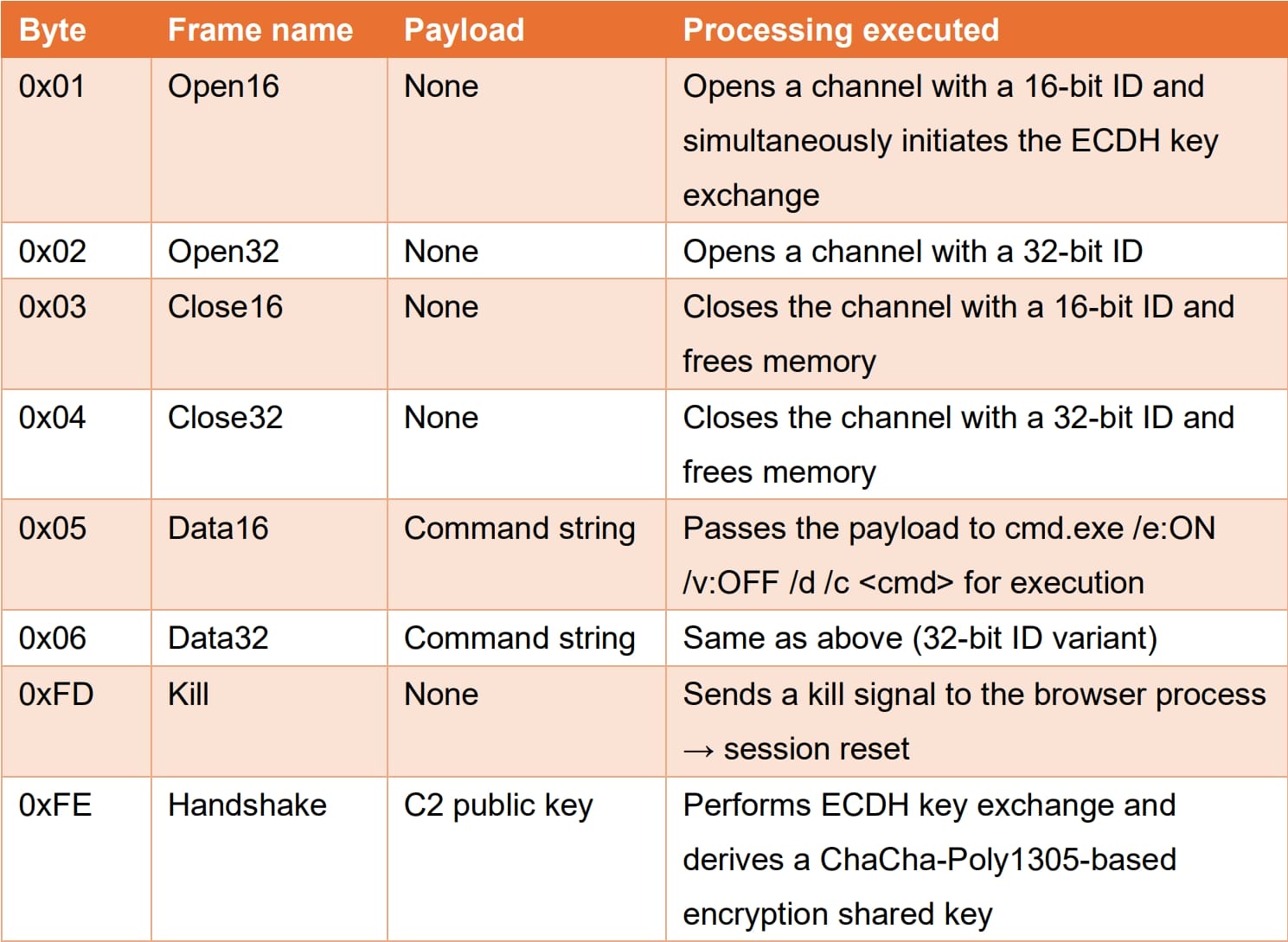
Cisco Talos meticulously documented the data exchange system employed by msaRAT, breaking down the communication into discrete units called "frames." These frames are the fundamental building blocks of the C2 communication, each serving a specific purpose within the malicious operation. Examples of documented frames include:

  • Key Exchanges: Used to establish and refresh the cryptographic keys for the dual-layered encryption.
  • Channel Opening/Closing: Commands to initiate or terminate communication channels for specific tasks.
  • Session Resets: Mechanisms to reset the communication session, possibly to clear state or evade detection.
  • Windows Command Execution: The most critical frames, allowing the attackers to issue arbitrary commands to the compromised Windows system, enabling data exfiltration, further malware deployment, or system manipulation.

This granular control over communication, encapsulated within encrypted frames and relayed through legitimate services, allows msaRAT to execute a wide range of post-exploitation activities without ever directly exposing the attacker’s true infrastructure.

Expert Perspectives and Broader Implications

Cybersecurity analysts universally agree that msaRAT represents a significant evolution in C2 evasion techniques. The integration of headless browsers, CDP, WebRTC, and legitimate cloud services like Cloudflare Workers and Twilio TURN marks a new level of sophistication. Industry experts emphasize that this approach makes traditional signature-based network detection tools largely ineffective. "When C2 traffic is indistinguishable from normal web browsing, it essentially renders perimeter defenses blind," notes one prominent security researcher. "Organizations must shift their focus to advanced endpoint detection, behavioral analytics, and robust threat intelligence to combat such stealthy threats."

The implications extend beyond just network security. Endpoint Detection and Response (EDR) and Extended Detection and Response (XDR) solutions must become more adept at identifying anomalous browser behavior, even in headless mode. This includes monitoring for unusual CDP activity, unexpected WebRTC connections, and JavaScript injection within legitimate browser processes. The blurring lines between legitimate and malicious traffic necessitates a deeper, context-aware analysis of all network activity.

Mitigation Strategies and Recommendations

New msaRAT malware uses Chrome, Edge browsers to route C2 traffic

Combating sophisticated threats like msaRAT requires a multi-layered and proactive security posture. Organizations should consider the following mitigation strategies:

  1. Enhanced Endpoint Security: Implement advanced EDR/XDR solutions capable of behavioral analysis to detect unusual process execution, memory injection, and browser manipulation, even if it mimics legitimate activity. Focus on solutions that can monitor and alert on CDP usage by non-developer tools.
  2. Network Segmentation and Micro-segmentation: Isolate critical assets and systems to limit the lateral movement of attackers once initial access is gained. Even if msaRAT establishes a C2 channel, robust segmentation can prevent it from reaching high-value targets.
  3. Browser Hardening and Management: Enforce strict browser security policies. While blocking CDP entirely might be impractical for developers, monitoring its usage and restricting its capabilities for non-privileged users or applications can be beneficial. Regular patching and updates for browsers are also essential.
  4. User Education and Awareness Training: Since initial access often relies on phishing, continuous training for employees on identifying and reporting suspicious emails, links, and vishing attempts is paramount.
  5. Proactive Threat Hunting: Security teams should actively hunt for indicators of compromise (IoCs) provided by threat intelligence reports (like those from Cisco Talos). This includes scanning for specific domain names (e.g., is-01-ast[.]ols-img-12[.]workers[.]dev), unusual WebRTC traffic patterns, and the presence of msaRAT artifacts in memory.
  6. Zero Trust Architecture: Adopt a Zero Trust model, which mandates strict identity verification for every user and device attempting to access resources, regardless of whether they are inside or outside the network perimeter. This minimizes the impact of a compromised endpoint.
  7. Deep Packet Inspection and TLS/SSL Decryption: While challenging due to encryption, deep packet inspection, where legally and technically feasible, could potentially identify anomalous patterns within encrypted traffic, even if the destination is a legitimate cloud service.
  8. Regular Security Audits and Penetration Testing: Periodically assess the effectiveness of existing security controls against the latest threat vectors to identify and remediate weaknesses.

The comprehensive list of indicators of compromise (IoCs) associated with msaRAT backdoor attacks, shared by Cisco Talos (available on their GitHub repository), is an invaluable resource for organizations to bolster their defenses and enhance detection capabilities.

Conclusion

The emergence of msaRAT, leveraging sophisticated browser-based C2 communication and legitimate cloud services, underscores the relentless innovation of malicious actors. The Chaos ransomware group, potentially operating with state-sponsored backing in some instances, is employing tactics that directly challenge the efficacy of traditional cybersecurity defenses. As threats continue to evolve, blending seamlessly with legitimate network traffic, the cybersecurity industry must adapt by embracing advanced behavioral analytics, robust endpoint security, proactive threat intelligence, and a holistic, multi-layered defense strategy. The fight against such stealthy malware demands constant vigilance and a continuous re-evaluation of security paradigms.

July 23, 2026 0 comment
0 FacebookTwitterPinterestEmail
Bitcoin & Altcoins

Ethereum’s Platform Team Articulates a Unified Vision for L1 and L2 Scaling

by admin July 23, 2026
written by admin

The Ethereum Foundation’s Platform team has unveiled a comprehensive vision for the future of the Ethereum ecosystem, emphasizing a cohesive scaling strategy that integrates Layer 1 (L1) and Layer 2 (L2) solutions. This strategic alignment aims to foster confident adoption by all users by clarifying the distinct yet complementary roles of each layer, ultimately positioning Ethereum as the premier platform for a decentralized global economy. This initiative marks a significant evolution from previous scaling roadmaps, reflecting the maturation of L2 technologies and the growing diversity of the Ethereum ecosystem.

The Evolving L1-L2 Landscape: A New Paradigm for Ethereum

For the past five years, the Ethereum ecosystem has witnessed the emergence of a vibrant network of independent chains, many of which are designed to leverage Ethereum’s foundational security and decentralization. These chains, ranging from rollups that inherit full security guarantees (Stage 2) to those that adopt a subset of these properties (validiums, prividiums), and even EVM-compatible chains that build upon the common standard, represent a significant expansion beyond the original L1. Many of these projects, initially conceived as standalone entities, are progressively integrating more deeply with Ethereum’s mainnet.

This dynamic growth has necessitated a re-evaluation of the relationship between Ethereum L1 and its burgeoning network of L2s. The last comprehensive update to this model, the rollup-centric roadmap, was first proposed approximately five years ago, signaling a pivotal shift towards scaling Ethereum through off-chain computation and data availability. Since that seminal proposal, the technological landscape has transformed dramatically. Technologies enabling L2s to share Ethereum’s security and liquidity, and to interoperate seamlessly with the mainnet, have matured significantly. The distinct competitive advantages and user value propositions of L2 solutions have become increasingly apparent. Moreover, L2s themselves have evolved into substantial ecosystems with dedicated communities. Concurrently, the L1 scaling roadmap has been refined and sharpened. The Ethereum Foundation’s latest vision acknowledges these profound changes, aiming to learn from the collective successes and challenges encountered by the ecosystem.

The core of this new vision, developed over many months of deliberation and discussion within the Ethereum community, centers on fostering mutually reinforcing relationships between Ethereum L1 and any chain that seeks to become an integral part of the Ethereum ecosystem. This document aims to elucidate this vision in detail and chart a course for its implementation.

Defining Roles: L1 as the Secure Foundation, L2s as Specialized Hubs

At the heart of this strategy lies a clear delineation of responsibilities between Ethereum L1 and its L2 counterparts. Ethereum L1 is unequivocally recognized as the world’s preeminent programmable blockchain. Its unparalleled adoption, developer engagement, decentralization, resilience, and inherent "hardness"—its resistance to censorship and modification—position it as the bedrock of the decentralized finance (DeFi) ecosystem, boasting the deepest liquidity pools.

Crucially, Ethereum L1 now possesses a well-defined path to scaling while steadfastly preserving its core values of decentralization and security. The rapid advancements in Zero-Knowledge (ZK) technology, driven by the collective efforts of numerous teams across the Ethereum ecosystem, have exceeded earlier expectations. Projections indicate that within the next few years, Ethereum L1 will achieve scalability improvements of several orders of magnitude, all while remaining true to its foundational principles.

However, the Platform team acknowledges that even a significantly scaled L1 will be unable to accommodate the full spectrum of needs presented by a global onchain economy. Even in a future where Ethereum L1 scales by a factor of 1000 and retains its status as the world’s leading blockchain, the existence of diverse, specialized chains will remain essential. These L2s and other related chains offer customization and specialization that a single monolithic L1 cannot feasibly provide. This presents a compelling opportunity for Ethereum L1 and its L2 network to cultivate mutually beneficial relationships, each focusing on its unique strengths.

The Allure of L2 Integration: Benefits for External Chains

The question arises: why should other chains opt to become L2s on Ethereum? The advantages are multifaceted and increasingly compelling. Firstly, by integrating with Ethereum L1, these chains gain access to an unparalleled level of security and decentralization. This inheritance shields them from the complexities and costs associated with establishing and maintaining robust security independently. Secondly, becoming an L2 opens up access to Ethereum’s vast liquidity and user base, significantly accelerating adoption and growth. This integration also fosters interoperability, enabling seamless asset and data transfer between L1 and L2, creating a more unified and user-friendly experience.

Furthermore, the Ethereum ecosystem actively supports the development and integration of L2 solutions through various initiatives, including research, funding, and tooling. This supportive environment reduces the technical and economic barriers to entry for chains seeking to align with Ethereum. The increasing sophistication of L2 scaling solutions, such as optimistic rollups and ZK-rollups, offers a clear pathway to achieving high throughput and low transaction costs, making these chains highly attractive to developers and users alike.

L1’s Strategic Advantage: Reinforcing Ethereum’s Centrality

From the perspective of Ethereum L1, its strategic positioning at the nexus of a burgeoning L2 network offers substantial benefits, reinforcing ETH and Ethereum’s unique role within the global onchain economy. This network effect amplifies Ethereum’s dominance and value proposition.

One of the primary advantages is the strengthening of Ethereum’s narrative as the ultimate settlement layer for the decentralized web. By serving as the secure anchor for a multitude of L2s, Ethereum L1 solidifies its position as the most trusted and robust foundation for a diverse array of applications and economic activities. This enhances the perceived value and security of ETH itself, as it becomes the primary asset for transacting and securing this expansive ecosystem.

Moreover, the development and adoption of L2s drive innovation and technological advancement across the entire Ethereum stack. L2 solutions often push the boundaries of cryptography, consensus mechanisms, and virtual machine design, leading to cross-pollination of ideas and improvements that can eventually benefit L1. This continuous cycle of innovation ensures Ethereum remains at the forefront of blockchain technology.

The interconnectedness fostered by L1-L2 relationships also contributes to a more resilient and decentralized network. By distributing transaction processing and state management across multiple L2s, the burden on L1 is reduced, enhancing its overall throughput and stability. This distributed architecture also mitigates single points of failure, making the entire Ethereum ecosystem more robust.

Finally, the growth of L2s expands the addressable market for Ethereum-based applications. By offering specialized functionalities and catering to diverse user needs, L2s attract new users and developers who might otherwise not engage with the L1 directly. This broadens the scope of economic activity within the Ethereum ecosystem, further solidifying its position as a global economic platform.

It is imperative to acknowledge that these benefits are not guaranteed and require continuous effort and validation. Some of these advantages are subjects of ongoing debate within the community, while others represent long-term theses that necessitate rigorous experimentation, data analysis, and community consensus. Ultimately, the success of the L1-L2 relationship hinges on its mutual benefit. The initial five years of this symbiotic evolution have yielded significant achievements and laid critical groundwork for the future.

Implications for L2s: A Path Forward

The refined L1-L2 vision has significant implications for L2s, their development teams, and their respective communities. The Ethereum Foundation’s guidance suggests a strategic focus on several key areas:

  • Prioritizing L1 Security Integration: L2s are encouraged to deepen their integration with Ethereum L1, particularly concerning security mechanisms. This includes exploring options like inheriting L1 data availability, leveraging L1 for robust dispute resolution, and ensuring seamless asset bridging. The goal is to maximize the security guarantees derived from L1, reinforcing the overall trust and reliability of the L2.
  • Fostering Interoperability and Composability: A critical aspect of the vision is enhancing interoperability and composability between L2s and with L1. This involves developing standardized communication protocols and bridging solutions that allow for seamless asset transfers and smart contract interactions across different layers. This will create a more fluid and integrated user experience, akin to a single, unified blockchain.
  • Commitment to Decentralization: L2s are urged to maintain and strengthen their commitment to decentralization. This entails distributing validator sets, promoting open access to sequencer roles, and actively engaging their communities in governance. Decentralization is a cornerstone of Ethereum’s ethos, and its preservation on L2s is paramount for long-term success.
  • Focus on User Experience and Accessibility: The overarching goal of enabling confident adoption by all users necessitates a relentless focus on user experience. L2 teams should prioritize simplifying onboarding processes, reducing transaction costs, and enhancing the overall usability of their platforms. This includes abstracting away technical complexities and providing intuitive interfaces.
  • Strategic Alignment and Collaboration: L2 projects are encouraged to align their roadmaps with the broader Ethereum scaling vision. This involves active participation in community discussions, contributing to shared infrastructure, and collaborating with other L2s and L1 development teams. A coordinated approach will accelerate progress and ensure a more cohesive ecosystem.

The Ethereum Foundation’s Role in Building the Future

The Ethereum Foundation recognizes its pivotal role in facilitating this ambitious vision. To support the development of a robust and unified L1-L2 ecosystem, the EF is actively engaged in several key initiatives:

  • Research and Development: The EF continues to invest heavily in fundamental research, particularly in areas like ZK technology, data availability solutions, and novel scaling mechanisms. This research underpins the technological advancements required for both L1 and L2 scaling.
  • Infrastructure Development: The Foundation is committed to building and improving shared infrastructure that benefits the entire ecosystem. This includes developing robust client software, enhancing developer tooling, and creating standardized protocols for interoperability and security.
  • Community Engagement and Education: The EF plays a crucial role in fostering a collaborative community by facilitating communication, organizing events, and providing educational resources. This ensures that developers, users, and stakeholders are well-informed and actively involved in shaping the future of Ethereum.
  • Funding and Grants: Through various grant programs, the EF supports promising projects and research initiatives that align with its strategic objectives. This financial support is vital for accelerating innovation and enabling the development of critical L2 infrastructure and applications.
  • Standardization Efforts: The Foundation actively participates in and leads standardization efforts to ensure interoperability and compatibility across the Ethereum ecosystem. This includes defining standards for smart contracts, bridging, and data formats.

By undertaking these actions, the Ethereum Foundation aims to empower the ecosystem to collectively deliver a global, permissionless onchain economy and solidify Ethereum’s position as the preeminent platform for all users. This strategic alignment between L1 and L2, driven by a shared vision and collaborative effort, promises to usher in a new era of scalability, adoption, and innovation for the decentralized web.

July 23, 2026 0 comment
0 FacebookTwitterPinterestEmail
Web3 & DApps

Cardano Wallet SecondFi to Cease Operations Following Sophisticated Private Key Exploitation

by admin July 23, 2026
written by admin

The cryptocurrency wallet service SecondFi has announced its impending shutdown, marking a significant development in the aftermath of a substantial security breach that saw millions in ADA tokens stolen. This decision comes nearly a month after attackers exploited a vulnerability to derive private keys from publicly available transaction data on the Cardano blockchain, impacting hundreds of users. The shutdown will also affect the Yoroi wallet, which SecondFi had previously taken over. Affected users are still awaiting promised recovery tools, fueling frustration and uncertainty within the affected community.

The security incident, which occurred approximately one month prior to the shutdown announcement, resulted in the theft of roughly 16.1 million ADA, valued at approximately $2.6 million USD at the time of the attack. The exploit targeted 374 distinct wallets. SecondFi confirmed its decision to wind down operations in a recent update, stating that it would not be resuming normal services, even with the identified vulnerability now patched. This decisive move underscores the severity of the breach and the significant challenges in restoring user confidence and operational stability.

The Anatomy of the Attack: Exploiting Public Data

At the core of the breach was a critical flaw within SecondFi’s software that allowed attackers to reconstruct users’ private keys. This was achieved by analyzing transaction data that was already publicly visible on the Cardano blockchain. This method of attack is particularly concerning as it leverages the transparent nature of blockchain technology in an unprecedented way, highlighting a potential blind spot in security protocols that rely solely on the immutability of public ledger data.

It is crucial to note that SecondFi has emphasized that the Cardano network itself remained secure and was not compromised. Furthermore, users who utilized hardware wallets, known for their enhanced security features, were unaffected by this particular exploit. This distinction is vital, as it clarifies that the vulnerability lay within the wallet software’s handling of transaction data, rather than a fundamental weakness in the underlying blockchain infrastructure.

In a testament to the swift action taken by SecondFi in the initial hours of the incident, the company managed to secure approximately 129 million ADA before the attackers could gain access to these funds. This proactive measure, while not preventing the initial losses, mitigated further damage and demonstrated a rapid response to the unfolding crisis.

Chronology of the Incident and Response

The timeline of events leading to SecondFi’s shutdown paints a picture of escalating concern and delayed resolution for affected users.

  • Initial Exploitation: The precise date of the initial exploitation is not publicly detailed, but the impact became apparent when users began reporting significant losses of their ADA holdings.
  • Discovery and Public Announcement: SecondFi acknowledged the security incident, confirming the theft of 16.1 million ADA from 374 wallets. The company disclosed that attackers had derived private keys from public transaction data.
  • June 27, 2026 (approx.): In an effort to reassure users and provide a path forward, SecondFi publicly stated that recovery tools would be made available within approximately two weeks. This timeline created an expectation of relatively swift restitution for those affected.
  • Mid-July 2026 (approx.): As the promised two-week window passed without the release of recovery tools, user frustration began to mount. The delay in providing promised solutions became a significant point of contention.
  • July 22, 2026: SecondFi officially announced its decision to wind down its operations. In its update, the company detailed its plans for a zero-knowledge recovery tool and a wallet export function, both slated for release in August. EMURGO, the developer of the Yoroi wallet, was also noted to have funded an asset recovery wallet.
  • Present: SecondFi is now in the process of ceasing its operations, leaving users in a precarious position as they await the promised recovery mechanisms.

Investigations Point to a Sophisticated Threat Actor

The complexity and execution of the attack prompted an independent investigation, commissioned by Yoroi developer EMURGO. Blockchain intelligence firm Groom Lake was tasked with analyzing the breach. Their findings suggest that the primary attacker was highly sophisticated and possessed significant financial resources.

While the investigation has not definitively attributed the attack to any specific group, certain indicators have led to speculation that North Korea’s notorious Lazarus Group may be involved. This potential attribution, though unconfirmed, aligns with the group’s history of large-scale, technologically advanced cyber-heists targeting the cryptocurrency space. The investigation also identified a separate, albeit less impactful, attacker who targeted a different set of wallets during the same period, suggesting a broader, more opportunistic landscape of malicious actors exploiting the vulnerability.

SecondFi to Wind Down After $2.6 Million ADA Theft Tied to Wallet Flaw

User Frustration and the Lingering Promise of Recovery

The decision to shut down has exacerbated the distress of affected users, many of whom had placed their trust in SecondFi’s assurances of recovery. The delay in delivering the promised recovery tools has been a significant point of frustration. One user, in response to SecondFi’s latest update, expressed their disappointment, stating, "But many of us were told our funds could be recovered within two weeks. Now we’re being asked to wait even longer." This sentiment reflects a broader feeling of betrayal and uncertainty within the community.

SecondFi’s latest update indicates a shift in strategy, with the development of a "zero-knowledge recovery tool" and a "wallet export function," both tentatively scheduled for August. Additionally, EMURGO has stepped in to fund an asset recovery wallet, a move aimed at facilitating the restitution process. However, the company has strongly cautioned users against taking independent recovery actions, warning that such moves could "create additional risks" and jeopardize the official claims process. This advice, while prudent, does little to assuage the immediate concerns of users who have been waiting for a resolution for an extended period.

Broader Implications for the Cardano Ecosystem and Wallet Security

The SecondFi incident serves as a stark reminder of the persistent security challenges within the cryptocurrency industry, even on established and reputable blockchains like Cardano. The ability of attackers to derive private keys from public transaction data, a method that bypasses traditional blockchain security assumptions, raises critical questions about wallet design and the security of user data.

This event is likely to prompt a thorough re-evaluation of security protocols among wallet providers operating on Cardano and potentially other blockchain networks. Developers may need to explore more advanced cryptographic techniques or implement stricter data handling practices to prevent similar vulnerabilities in the future. The incident also highlights the importance of user education regarding the inherent risks associated with digital asset management and the critical role of hardware wallets in safeguarding funds.

The involvement of a sophisticated attacker, potentially linked to state-sponsored hacking groups, also underscores the evolving threat landscape. The financial incentives offered by the cryptocurrency market continue to attract highly organized criminal enterprises, necessitating a constant evolution of defense mechanisms and threat intelligence.

The shutdown of SecondFi, coupled with the ongoing delays in recovery for its users, will undoubtedly have a reputational impact on the broader Cardano ecosystem. While the network itself remains secure, incidents involving wallet providers can erode user confidence and potentially deter new entrants into the market. The successful and transparent resolution of the recovery process, however protracted it may be, will be crucial in rebuilding trust and mitigating long-term damage.

The Road Ahead: Uncertainty and the Need for Transparency

As SecondFi prepares to cease operations, the focus remains squarely on the delivery of the promised recovery tools. The August timeline, while offering a glimmer of hope, is met with cautious optimism given the previous delays. The success of the zero-knowledge recovery tool and the wallet export function will be critical in determining the extent of financial restitution for affected users.

The incident also raises questions about the future of the Yoroi wallet, which was integrated into SecondFi’s operations. The continued development and security of Yoroi will be closely watched by its user base. EMURGO’s financial backing for an asset recovery wallet demonstrates a commitment to assisting in the resolution, but the ultimate outcome will depend on the effectiveness of the tools and the transparency of the recovery process.

In the interconnected world of cryptocurrency, the security of individual wallets is paramount to the integrity of the entire ecosystem. The SecondFi incident serves as a critical case study, emphasizing the need for continuous vigilance, robust security practices, and a commitment to user protection in the face of evolving threats. The coming weeks will be pivotal in understanding the full ramifications of this breach and the effectiveness of the recovery efforts that are currently underway.

July 23, 2026 0 comment
0 FacebookTwitterPinterestEmail
FinTech Innovations

The Payments Industry Enters a New Era: AI, Stablecoins, and Global Connectivity Redefine Success

by admin July 23, 2026
written by admin

The payments industry is demonstrably entering its next evolutionary phase. The landscape of 2026, shaped by the ascendance of stablecoins, sophisticated advancements in artificial intelligence, and the ubiquitous adoption of real-time payment systems, stands in stark contrast to the comparatively nascent payment ecosystem of 2012. In this new paradigm, the keys to sustained success are no longer solely transactional speed or cost-efficiency. Instead, the future belongs to entities that can achieve significant scale, cultivate deep specialization, and establish robust, efficient settlement infrastructure.

This past summer, a trifecta of high-impact announcements within the payments sector has not only corroborated the existence of this transformative era but has also provided crucial insights into its trajectory. These pivotal developments, detailed below, are poised to exert considerable influence on the industry in the coming months and years.

Ant International Secures $1.2 Billion to Fuel Cross-Border Payments and Agentic Commerce Expansion

The Development:
Singapore-based Ant International, a global technology powerhouse with deep roots in digital payments, announced in July 2026 the successful closure of a $1.2 billion Series A funding round. This significant capital infusion is earmarked for accelerating the company’s global expansion initiatives, bolstering its cross-border payment infrastructure, and making strategic investments in AI-powered merchant services and the burgeoning field of agentic commerce.

Background and Scope:
Ant International, an entity closely associated with the Chinese fintech giant Ant Group, has already established a formidable presence in the digital payments arena. Through its portfolio of businesses, including the widely recognized Alipay+, its payment processing arm Antom, and its international remittance service WorldFirst, the company currently facilitates connections between an estimated 150 million merchants and over 2 billion user accounts globally. This substantial existing network provides a powerful foundation for its ambitious expansion plans.

Strategic Implications:
The company’s explicit focus on international expansion and the enhancement of its cross-border payment capabilities signals a two-pronged strategic imperative. Firstly, it underscores the escalating value and potential of robust infrastructure for agentic and cross-border payments, even in a market where consumers may not yet fully embrace a future led by AI agents. This suggests a proactive approach to building the necessary plumbing for future transactional models.

Secondly, Ant International’s aggressive growth strategy strongly hints at preparations for a potential Initial Public Offering (IPO). Rumors circulating within financial circles indicate that Ant International is considering an IPO on the Hong Kong Stock Exchange as early as late 2026. Such a move, if successful, could position Ant International as a formidable new global payments heavyweight, capable of competing with established players across diverse markets. The infusion of capital provides the necessary runway to execute these strategic objectives.

Failed $53 Billion Bid for PayPal: A Sign of Market Consolidation and Evolving Valuations

The Event:
In a development that sent ripples through the financial world in mid-July 2026, reports emerged of a joint bid by payment processing leader Stripe and private equity firm Advent International to acquire PayPal Holdings. The proposed acquisition, valued at over $53 billion, aimed to take the publicly traded PayPal private.

Rationale Behind the Bid:
The strategic rationale behind this audacious offer was multifaceted. For Stripe, a company that has rapidly grown to become a dominant force in online payment processing for businesses, the acquisition of PayPal would have offered immediate and substantial scale. More importantly, it would have granted Stripe access to PayPal’s significant advancements in the decentralized finance (DeFi) space, including its proprietary stablecoin, PYUSD. This integration would have allowed Stripe to leverage PayPal’s existing user base and its burgeoning digital asset capabilities.

PayPal’s Response and Industry Implications:
Despite the significant valuation, PayPal’s Board of Directors reportedly rejected the bid, citing that the offer undervalued the company. This rejection, however, does not diminish the broader implications of the reported offer.

The bid itself serves as a powerful indicator that major payment platforms continue to be viewed as highly valuable strategic assets within the financial technology landscape. It suggests that established players are increasingly being assessed not just on their traditional strengths – their extensive merchant and consumer networks, and their long-standing reputation and trusted consumer relationships – but also on their embrace and development of emerging capabilities. These include their progress in areas such as stablecoins, advanced digital wallets, and AI-driven commerce solutions. The sheer scale of the proposed acquisition, even if unsuccessful, highlights a potential trend towards consolidation within the payments sector as companies seek to bolster their competitive positions and adapt to rapidly evolving market demands.

Launch of the Open USD Consortium: A Collaborative Push for Interoperable Digital Dollar Payments

The Initiative:
In a landmark move towards standardization and interoperability in digital currency, a coalition of over 140 companies, including industry titans such as Visa, Mastercard, Stripe, and Coinbase, formally launched the Open USD Consortium in July 2026. This collaborative effort is dedicated to the development and promotion of Open USD, a stablecoin specifically designed to facilitate business-to-business (B2B) payments using an open and interoperable digital dollar. The consortium has appointed Open Standard to manage the operations of Open USD, ensuring that decision-making processes prioritize the collective interests of the participants rather than those of a single entity.

Background and Objective:
The creation of Open USD stems from a growing recognition within the enterprise payments space that a standardized, interoperable digital dollar could unlock significant efficiencies and cost savings. Traditional cross-border B2B payments often involve multiple intermediaries, complex reconciliation processes, and extended settlement times, leading to increased costs and operational friction. Stablecoins, pegged to the value of traditional fiat currencies like the US dollar, offer a potential solution by enabling faster, cheaper, and more transparent transactions.

Impact and Potential:
The Open USD Consortium’s primary objective is to provide businesses with a standardized and interoperable mechanism for minting and redeeming Open USD. Crucially, this framework aims to eliminate reliance on a single issuer or payments provider, thereby mitigating concerns about vendor lock-in. By bringing together prominent competitors such as Visa, Mastercard, Stripe, and Coinbase under a common initiative, the consortium has the potential to significantly accelerate the enterprise adoption of stablecoins. This adoption is expected to span critical business functions including cross-border payments, treasury management, and settlement operations, while simultaneously addressing industry-wide anxieties surrounding centralized control and proprietary systems. This collaborative approach signifies a maturing understanding of how digital assets can be integrated into the mainstream financial infrastructure.

Reading Between the Headlines: A Paradigm Shift in Payments

While each of these developments can be analyzed in isolation, their collective impact paints a clear picture of a fundamental transformation underway in the payments industry. The industry’s historical focus on transactional speed and cost has given way to a new set of success criteria. In 2026 and beyond, the dominant players will be those that meticulously construct the most intelligent, interconnected, and globally interoperable payment ecosystems.

For banks, fintech startups, and established payments providers, navigating the future successfully will demand more than simply keeping pace with the relentless march of new technologies. It necessitates a profound rethinking of how money moves in an era characterized by AI-native commerce, expansive global payment networks, and the foundational infrastructure of digital dollars. Organizations that proactively embrace agentic capabilities, strategically integrate stablecoin-based settlement where it demonstrably adds value, and prioritize the principles of interoperability will be best positioned to anticipate and meet the evolving expectations of their customers in 2027 and the years that follow. The era of siloed payment solutions is rapidly receding, replaced by a vision of a seamlessly connected global financial fabric.

July 23, 2026 0 comment
0 FacebookTwitterPinterestEmail
FinTech Innovations

Navigating the Data Deluge: Payments Firms Prioritize Trustworthy Financial Foundations Over AI Hype

by admin July 23, 2026
written by admin

The allure of artificial intelligence (AI) may be captivating boardroom discussions across industries, but for many payments companies, a more fundamental challenge demands immediate attention: transforming vast troves of financial data into actionable insights that finance teams can genuinely trust. This critical theme anchored the latest installment of the PYMNTS Summer School series, a recurring educational program designed to equip finance professionals with cutting-edge knowledge. The session featured insights from Ben Catterall, global head of solutions engineering at Fynapse, a prominent finance Enterprise Resource Planning (ERP) solutions provider. Catterall emphasized that true strategic advantage in the payments sector will not stem from merely accumulating more data than competitors, but rather from building robust financial foundations that meticulously preserve the integrity and meaning behind every transactional event.

"Every payment company has tons of data," Catterall stated during the PYMNTS Summer School session, highlighting a ubiquitous reality. "But data without context is not particularly useful." He elaborated on the imperative to understand not just what the data represents, but crucially, "what happened in the real world to generate that data." This nuanced perspective underscores a growing realization within the finance community: raw data, irrespective of its volume, holds limited value without proper contextualization and validation.

The complexity of modern payment ecosystems exacerbates this challenge. Each payment method – from traditional cards and burgeoning digital wallets to the increasingly popular buy now, pay later (BNPL) schemes, recurring subscriptions, and app store purchases – generates distinct financial records. The global nature of commerce further complicates matters, introducing multiple currencies, settlement variations, and a multitude of payment gateways. This intricate web of transactions, coupled with ever-climbing transaction volumes, presents a formidable reconciliation and accounting hurdle.

For decades, legacy finance systems, designed for a pre-cloud era of batch processing and summarized data, have struggled to keep pace with this escalating complexity. These systems often operate on a delayed basis, providing a retrospective view rather than a real-time understanding of financial operations. The consequences of this data deficiency extend far beyond mere operational inefficiencies.

Catterall recounted a pertinent example of a multinational payments client that processed transactions across nearly 18 countries. While the company’s consolidated financial statements appeared balanced at a high level, a deeper dive into transaction-level records revealed a significant issue: foreign exchange spreads that, on average, amounted to approximately 2%. This seemingly small percentage translated into millions of dollars in lost revenue, impacting roughly $100 million in cross-border payment volume annually. "If you apply that to $100 million of cross-border payments being processed, that could be $2 million a year that’s lost," Catterall calculated, underscoring the profound impact of granular data oversight.

This revelation serves as a stark reminder for finance leaders that transaction-level visibility is not merely an accounting exercise; it is a strategic imperative. It provides the essential lens through which to identify where revenue is being eroded, where payment costs are disproportionately accumulating, and where targeted operational adjustments can yield tangible improvements in financial performance.

Building the Foundation Before Deploying AI

The same principle of foundational data integrity applies directly to the discourse surrounding AI adoption in finance. While many financial institutions have enthusiastically launched AI proofs-of-concept over the past two years, a relatively small fraction have successfully transitioned these initiatives into full production. Catterall identified the underlying obstacle as frequently residing not within the AI models themselves, but in the quality and structure of the data upon which they are trained.

"If you’re relying on batched, aggregated, summarized data, and you put an AI tool on top of that, all that AI tool can learn from is the summary view," Catterall explained. "It doesn’t have enough to go on." This limitation effectively hobbles AI’s potential, preventing it from uncovering nuanced patterns or providing truly predictive insights. Research corroborates this sentiment, with Catterall noting that a significant 46% of AI proofs of acceptance fail to reach production due to poor data quality that undermines their effectiveness.

This philosophy directly informs the design of Aptitude’s platform, which is engineered to capture financial events as they occur, rather than attempting to reconstruct them retrospectively at the close of a reporting period. The primary objective is not merely to expedite the month-end close process, but to empower finance teams with continuous, real-time visibility into margins, payment costs, and overall business performance. This proactive insight enables finance professionals to drive informed, real-time business decisions.

Catterall advocated for a paradigm shift, urging finance organizations to treat financial data as a core infrastructural asset, rather than a mere byproduct of payment processing activities. He emphasized, "Making that available to the business is a differentiator." Companies that meticulously preserve detailed transaction records and make this granular information accessible across treasury, pricing, forecasting, and risk management functions are inherently better positioned to support growth initiatives without compromising financial control. This is the essence of achieving "financial truth" for payments, a capability that Fynapse delivers to a diverse range of clients, including telecommunications giant T-Mobile. The latter now processes an astonishing 200 million journal lines per hour in real time, a testament to the scalability and efficacy of a modernized data architecture.

As the landscape of payment methods continues to diversify and AI assumes an increasingly significant operational role, this discipline of robust data management may well emerge as finance’s most enduring competitive advantage. The firms that proactively invest in modernizing their finance data architecture today will be far better equipped to comprehend, rather than simply record, the complexities of tomorrow’s transactions.

What Finance-Grade Data Unlocks

A modernized approach to financial data fundamentally entails three critical shifts in perspective and practice. Firstly, the data must reflect individual transactions, eschewing the limitations of aggregated totals. This granular view allows for deep dives into specific events, rather than providing only a high-level overview.

Secondly, the detailed attributes behind each transaction must be meticulously preserved and accessible. This includes vital information such as the payment method employed, the currency used, any associated fees or charges, and the parties involved in the transaction. This comprehensive metadata is crucial for accurate analysis, reconciliation, and dispute resolution.

Finally, and perhaps most critically in today’s fast-paced business environment, this rich transactional data must be available immediately. It should not be a resource that is only pieced together later during a laborious close process. Real-time accessibility empowers finance teams to act decisively and proactively, rather than reactively.

The implications of embracing such a finance-grade data approach are far-reaching. For instance, in the realm of e-commerce, granular data can illuminate the precise reasons behind cart abandonment, allowing businesses to optimize checkout processes and marketing campaigns. In subscription services, it can reveal churn drivers by analyzing payment failures, subscription tier changes, and customer engagement patterns. For BNPL providers, detailed transaction data is indispensable for accurate risk assessment, fraud detection, and compliance with evolving regulatory frameworks.

Furthermore, the integration of AI on a foundation of clean, contextualized data can unlock transformative capabilities. AI algorithms can leverage this rich data to predict future cash flows with greater accuracy, identify anomalous transactions indicative of fraud, personalize customer offers based on spending habits, and automate complex reconciliation processes that currently consume significant human resources. The potential for AI to drive operational efficiency, enhance customer experiences, and improve financial forecasting is directly proportional to the quality of the data it consumes.

The PYMNTS Summer School series, by bringing together industry leaders and providing a platform for knowledge sharing, aims to bridge the gap between the aspirational goals of AI adoption and the practical realities of data management in the payments sector. The emphasis on building a solid data foundation before embarking on advanced technological implementations is a recurring theme, underscoring its foundational importance for any organization seeking to thrive in the digital economy.

The complete PYMNTS Summer School interview with Ben Catterall offers a deeper dive into these critical topics, providing actionable strategies and case studies for finance professionals looking to navigate the complexities of modern financial data. As the payments landscape continues its rapid evolution, the ability to trust and leverage financial data will undoubtedly be a defining characteristic of successful and resilient organizations. The journey towards AI-powered finance begins not with the algorithms, but with the data – meticulously crafted, thoroughly understood, and readily accessible.

July 23, 2026 0 comment
0 FacebookTwitterPinterestEmail
FinTech Innovations

Convicted Frank Founder Charlie Javice Reportedly Seeks Presidential Pardon Amidst Growing Clemency Requests

by admin July 23, 2026
written by admin

Charlie Javice, the founder of the now-defunct fintech startup Frank, who was convicted of defrauding JPMorgan Chase, is reportedly making efforts to secure a presidential pardon. Sources indicate that Javice’s legal team and associates have been discreetly engaging with individuals connected to the former Trump administration, according to a report by The Wall Street Journal. While these overtures are reportedly underway, her name has not yet appeared on any formal clemency request submitted to the Department of Justice. This development comes at a time when the administration is reportedly considering a significant number of pardons to commemorate America’s 250th anniversary, leading to a surge in clemency applications from various high-profile white-collar defendants, including Sam Bankman-Fried, the founder of the collapsed cryptocurrency exchange FTX.

Background of the Frank Fraud Case

The allegations against Charlie Javice stem from her conviction last September, where she was found guilty of fabricating customer data to inflate the perceived value of her company, Frank. Frank, which aimed to simplify the college financial aid application process, was sold to JPMorgan Chase in 2021 for $175 million. Prosecutors argued that Javice provided JPMorgan with falsified information about Frank’s user base, claiming millions of active users when, in reality, the number was significantly lower. This alleged deception was central to the bank’s decision to acquire the company at a substantial valuation.

Following her conviction, Javice was sentenced to over seven years in prison. She is currently appealing the verdict, with her defense team asserting that the case against her was fundamentally unfair and that key evidence was mishandled. The legal battle has been closely watched within the financial and tech industries, representing a significant fallout from the boom-and-bust cycle that characterized many fintech startups in recent years.

JPMorgan Chase’s Position and Potential Concerns

The news of Javice’s potential pursuit of a pardon is unlikely to be welcomed by JPMorgan Chase, the institution that acquired Frank and subsequently became the victim of the alleged fraud. The bank’s substantial investment was based on the data provided by Javice, and the revelation of falsified customer accounts led to significant reputational damage and financial repercussions for the banking giant. JPMorgan’s acquisition of Frank was part of a broader strategy to expand its digital offerings and reach a younger demographic, making the outcome of this case particularly sensitive for the bank.

Furthermore, the situation is potentially complicated by the existing strained relationship between JPMorgan Chase and former President Donald Trump. In early 2021, shortly after the January 6th Capitol riot, JPMorgan Chase closed several accounts associated with Trump and his businesses. Trump publicly decried this action as political "debanking" and subsequently filed a $5 billion lawsuit against JPMorgan Chase and its CEO, Jamie Dimon, alleging political retribution. While JPMorgan has consistently denied any political motivation behind its decision, the lawsuit and the public commentary surrounding it have created a contentious backdrop. If Javice were to receive a pardon, it could be perceived as a move that indirectly benefits entities that have been at odds with the bank, potentially adding another layer of complexity to an already sensitive situation.

The Broader Landscape of Clemency Requests

The timing of Javice’s alleged efforts to secure a pardon is significant, coinciding with reports that the Trump administration is contemplating a substantial number of pardons. With America’s 250th birthday approaching, there is speculation that as many as 250 clemency grants could be issued this summer. This potential wave of pardons has reportedly spurred a significant influx of requests from individuals convicted of white-collar crimes, a category that often includes complex financial fraud cases.

The mention of Sam Bankman-Fried, another high-profile figure convicted of financial crimes related to his cryptocurrency empire, alongside Javice, underscores the trend. Bankman-Fried was found guilty of orchestrating a massive fraud scheme involving FTX and Alameda Research, leading to billions of dollars in losses for investors and customers. His reported interest in clemency further highlights the intense scrutiny and legal pressures faced by founders and executives in the rapidly evolving tech and finance sectors. The sheer volume and high-profile nature of these requests suggest a potential pattern of individuals seeking to mitigate the consequences of significant financial misdeeds through executive clemency.

Startup CEO Charlie Javice is reportedly angling for a Trump pardon

Powerful Connections and Influential Support

Charlie Javice’s quest for a pardon is reportedly bolstered by influential connections within the business and political spheres. Marc Rowan, the CEO of Apollo Global Management and an early investor in Frank, has emerged as a notable supporter. Rowan testified on Javice’s behalf during her trial, indicating his belief in her character and the legitimacy of her venture, despite the eventual legal outcome.

Rowan’s political engagement is also noteworthy. He has been a significant donor to Donald Trump’s political campaigns and has contributed substantial funds to Republican congressional groups since Trump’s election. This level of financial and personal support from prominent figures like Rowan could provide Javice’s camp with valuable access and influence in their efforts to lobby for clemency. Such connections are often crucial in navigating the complex and often opaque process of presidential pardons, where personal relationships and perceived political alignment can play a significant role. The involvement of early investors and industry leaders in advocating for convicted figures can also reflect broader debates within the startup ecosystem about risk-taking, innovation, and the line between ambitious entrepreneurship and fraudulent conduct.

The Pardon Process and Legal Implications

The path to a presidential pardon is typically arduous and involves a thorough review process. While President Trump has historically been known to grant pardons, particularly to allies and individuals who have expressed loyalty, the criteria for such grants can vary. The Department of Justice’s Office of the Pardon Attorney plays a crucial role in vetting clemency requests, conducting investigations, and providing recommendations to the President.

For Javice, a formal pardon would require her to submit a detailed application, outlining the grounds for clemency. This would likely involve demonstrating remorse, acknowledging wrongdoing, and presenting arguments for why her sentence should be commuted or waived. Her ongoing appeal against her conviction could also complicate any pardon request, as the two processes are distinct. A successful appeal could overturn her conviction entirely, rendering a pardon unnecessary. However, if the appeal is unsuccessful, a pardon would represent an alternative avenue for avoiding or reducing her prison sentence.

The broader implications of granting pardons in high-profile white-collar cases are significant. Such actions can spark debate about fairness, accountability, and the integrity of the justice system. Critics might argue that pardons could undermine deterrence and send a message that financial crimes are not subject to full consequences. Conversely, proponents might emphasize the potential for rehabilitation, the complexity of business dealings, or perceived injustices in the legal proceedings. The Trump administration’s approach to clemency has often been characterized by its discretionary nature, with pardons frequently seen as a tool to reward loyalty or to correct what the President perceives as unfair sentencing.

Future Outlook and Industry Impact

The unfolding situation surrounding Charlie Javice’s reported pursuit of a presidential pardon highlights the ongoing scrutiny faced by fintech founders and the potential for significant legal and financial repercussions in the event of fraud. The outcome of her efforts, whether successful or not, will likely be closely monitored by investors, regulators, and other entrepreneurs in the tech and finance sectors.

For JPMorgan Chase, the situation serves as a stark reminder of the risks associated with high-value acquisitions, particularly in rapidly evolving industries where valuations can be heavily influenced by user data and projected growth. The bank will likely continue to focus on strengthening its due diligence processes and risk management protocols to prevent similar incidents in the future.

The broader trend of high-profile clemency requests also raises questions about the role of executive power in the justice system and the potential for political influence to impact legal outcomes. As the nation approaches its 250th anniversary, the decisions made regarding clemency requests will undoubtedly be subject to public and media scrutiny, shaping narratives about justice, accountability, and the balance of power in the American legal framework. The Javice case, intertwined with the political dynamics surrounding former President Trump and JPMorgan Chase, adds another layer of complexity to this already significant public discourse.

July 23, 2026 0 comment
0 FacebookTwitterPinterestEmail
FinTech Innovations

The Consumer Bankers Association Executive Banking School: A Transformative Journey for Banking Leaders

by admin July 23, 2026
written by admin

Six years into his banking career, Quincy Miller, then a regional retail branch manager at M&T Bank, harbored ambitions for professional growth and advanced education. It was 2002 when his then-boss, Bob Rivers, offered a prescient piece of advice: "Before you decide to do your MBA, it may be more beneficial to do something that’s industry specific. Why don’t you go see what’s out there?" This suggestion ignited a search that led Miller to the Consumer Bankers Association’s (CBA) Executive Banking School (EBS), a rigorous three-year continuing education program meticulously designed for retail banking professionals. Today, as the President and Chief Operating Officer of Boston-based Eastern Bank, Miller unequivocally states that his experience in the EBS was "transformational for my understanding of our industry, and ultimately [made me] able to grow my career."

The EBS program, currently holding its annual summer session at Furman University in Greenville, South Carolina, is structured as a three-year journey, with each year featuring a concentrated 10-day in-person session. This immersive format allows participants to delve deeply into critical aspects of banking leadership, away from the day-to-day demands of their roles. The curriculum is strategically designed to build knowledge progressively, mirroring the career trajectory of a banking executive.

A Curriculum Designed for Strategic Banking Leadership

The first year of the EBS program lays a foundational understanding of retail banking management. Participants engage in sessions focused on the core tenets of acquiring, segmenting, and retaining customers – the lifeblood of any retail banking operation. This includes critical discussions on product development, ensuring that offerings meet evolving market demands, and tailoring marketing strategies to effectively reach and resonate with diverse customer segments. This initial phase equips future leaders with the tools to build and manage robust retail portfolios, emphasizing customer-centric strategies that drive loyalty and profitability.

As students advance into their second year, the focus sharpens on the financial health and strategic execution of a bank. The curriculum delves into sophisticated financial data analysis, enabling participants to interpret complex metrics and make informed decisions. A significant portion of this year is dedicated to assessing and managing risk – a paramount concern in the highly regulated and dynamic financial services industry. This module equips leaders with the foresight to identify potential pitfalls, develop mitigation strategies, and ensure the long-term stability and resilience of their institutions.

The third and final year of the EBS program elevates participants to the strategic C-suite level. The coursework centers on the complexities of managing a bank from the top down. This includes in-depth examinations of critical decision-making processes, such as evaluating analyst recommendations, understanding market dynamics, and formulating overarching corporate strategies. The aim is to prepare individuals for the ultimate responsibility of guiding an entire organization, fostering a holistic perspective that integrates all functional areas of a bank.

Each EBS class typically comprises around 130 students, a cohort of ambitious banking professionals who are generally sponsored by their employers. This employer sponsorship underscores the perceived value of the program and its direct impact on an individual’s ability to contribute at higher levels within the organization. The collaborative environment, where peers from different institutions share insights and challenges, further enriches the learning experience.

The Transformative Impact of Immersive Learning

Quincy Miller’s enduring connection to the EBS program, which has led him to maintain active involvement to this day, stems from a deep appreciation for its unique pedagogical approach. In a candid interview, Miller elaborated on the profound impact of the program: "I loved the fact that I had this immersive opportunity, that was an executive-level learning, but it was very specific for banking, and that the learning was coming from actual bank executives and leaders who have done the jobs and lived the experience." This hands-on, experience-driven instruction, he noted, was so comprehensive that he "never really needed to get my MBA."

A cornerstone of the EBS curriculum is its exclusive reliance on two sophisticated simulations: MarketSim and BankCom. These simulations offer participants a unique opportunity to test their strategic acumen in a risk-free, yet highly realistic, environment. MarketSim allows students to develop and implement retail banking strategies, focusing on the optimal placement and integration of branches, ATMs, call centers, and digital delivery channels. This simulation provides a tangible understanding of how market decisions translate into customer acquisition, engagement, and retention.

Complementing MarketSim, BankCom enables students to navigate complex financial scenarios and observe the performance of their simulated bank under various market conditions. This simulation provides a powerful tool for understanding the interplay of financial management, risk assessment, and strategic decision-making in the face of economic fluctuations and competitive pressures. The ability to make decisions, witness their immediate and long-term consequences, and then refine strategies is an invaluable learning experience that directly translates to real-world banking challenges.

Beyond the simulations and classroom instruction, the EBS program places a significant emphasis on fostering cross-divisional collaboration. Participants are encouraged to work in areas of the bank they have not previously experienced and to engage with colleagues from divisions with whom they might not typically interact. Miller highlighted the significance of this aspect: "You just don’t get the experience to work collaboratively across divisions [elsewhere]. Those learnings really help you." This exposure to different functional perspectives breaks down silos and cultivates a more integrated and comprehensive understanding of how a bank operates as a cohesive entity.

Broadening Perspectives and Cultivating Regulators’ Partnerships

The benefits of this cross-divisional exposure are particularly evident when considering the diverse backgrounds of EBS participants. Miller shared an example from the previous year, where he sent Eastern Bank’s data analytics and sales reporting lead to EBS. The intention was to provide him with a "more holistic" understanding of the bank’s operations. Miller explained the transformative impact: "If you’re in charge of data analytics, you don’t spend a lot of time thinking about the regulatory environment except protecting your data. But you’ll come out of this program with a completely different perspective on the importance of working together with our regulators, as an example." This demonstrates how the program broadens perspectives, fostering an appreciation for the interconnectedness of various banking functions and the crucial role of regulatory compliance.

The EBS program further enhances its practical relevance by featuring direct engagement with prominent C-suite executives from across the banking industry. These seasoned leaders serve as guest speakers, sharing their experiences, insights, and lessons learned. This year’s in-person sessions include notable figures such as Jay Brogdon, CEO of Simmons Bank, and Jimmy Stead, Frost Bank’s Chief Consumer Banking and Technology Officer. Last year’s roster boasted leaders like Chuck Kim, CFO of Commerce Bank, Greg Seibly, CEO of EverBank, and John Levitsky, Mastercard U.S. Co-President. These interactions provide students with invaluable insights into the strategic thinking and leadership styles of those at the forefront of the industry.

A Legacy of Leadership Development

Quincy Miller is far from an isolated example of an EBS alumnus ascending to senior leadership positions. Over its 75-year history, the CBA has hosted more than 6,000 students in the EBS program. These participants are typically senior-level bankers with an average of 18 years of experience, indicating the program’s long-standing commitment to nurturing experienced professionals. The caliber of EBS alumni is a testament to the program’s effectiveness. Notable graduates include Archie Brown, CEO of First Financial, who completed the program in 1996, and Andy Harmening, CEO of Associated Bank, who graduated ten years later. Rich Bynum, PNC’s former Chief Corporate Responsibility Officer, also honed his leadership skills at EBS, graduating in 2012. This extensive network of influential alumni underscores the program’s significant and enduring contribution to the leadership pipeline within the U.S. banking sector. The sustained success and the continued prominence of its graduates in key leadership roles speak volumes about the EBS’s enduring relevance and its ability to shape the future of the banking industry.

July 23, 2026 0 comment
0 FacebookTwitterPinterestEmail
NFT & Digital Assets

Rarible Protocol Launches Model Context Protocol Server to Enable Natural Language Access to NFT Data for AI-Driven Development

by admin July 23, 2026
written by admin

The digital asset landscape has reached a significant milestone in the convergence of blockchain technology and artificial intelligence with the official release of the Rarible Model Context Protocol (MCP) Server. This new development tool is designed to eliminate the historical barriers to accessing Non-Fungible Token (NFT) data by allowing developers and users to query complex blockchain information using natural language. By bridging the gap between Large Language Models (LLMs) and the Rarible Protocol’s extensive data index, the MCP Server facilitates a more intuitive approach to building decentralized applications, market dashboards, and AI-driven trading agents.

Historically, the process of retrieving NFT data—such as floor prices, ownership history, and trending collections—has been characterized by significant technical friction. Developers have traditionally been required to construct elaborate front-end architectures or write multifaceted API queries to extract structured data from various blockchain networks. The Rarible MCP Server addresses this inefficiency by integrating directly with LLMs like Anthropic’s Claude and the AI-powered code editor Cursor. This integration allows the LLM to act as a translator, converting a user’s plain-English questions into precise, structured queries that pull real-time data from the Rarible Protocol.

The Evolution of NFT Data Accessibility

To understand the impact of the Rarible MCP Server, it is necessary to examine the evolution of blockchain data retrieval. In the early stages of the NFT market, data was largely siloed and required direct interaction with smart contracts via remote procedure calls (RPCs). As the ecosystem matured, platforms like Rarible developed robust APIs to index this data, making it easier for developers to build marketplaces. However, as the industry enters the "AI-agent" era, even standard APIs can present a hurdle for rapid prototyping and autonomous systems.

Introducing the Rarible MCP Server

The introduction of the Model Context Protocol represents a shift toward "AI-native" infrastructure. MCP is an open standard that enables developers to provide context to LLMs in a secure and structured manner. By adopting this protocol, Rarible is positioning its protocol not just as a source of data, but as a conversational utility. This move aligns with broader industry trends where the value of data is increasingly tied to its "discoverability" and ease of use by non-human agents, such as autonomous trading bots or automated research assistants.

Technical Specifications and Supported Networks

The Rarible MCP Server is currently in its beta phase, offering a production-grade, type-safe TypeScript SDK. This ensures that developers can integrate the tool into their existing workflows with high reliability and minimal debugging. The SDK is designed to be modular, supporting both browser-based and server-side environments, and is compatible with both CommonJS and ES Modules. This versatility is crucial for developers working with different tech stacks or those who need to maintain tight code bundles for performance optimization.

At launch, the MCP Server provides comprehensive support for a variety of blockchain ecosystems. This includes all major Ethereum Virtual Machine (EVM) chains—such as Ethereum mainnet, Polygon, and Base—as well as specialized networks like Eclipse and Flow. The inclusion of Eclipse is particularly noteworthy, as it represents the first Layer 2 solution that brings the Solana Virtual Machine (SVM) to Ethereum, highlighting Rarible’s commitment to cross-chain interoperability. Flow, known for its high throughput and consumer-centric NFT applications, also benefits from this integration, allowing for easier analysis of its unique ecosystem.

Empowering the Next Generation of Web3 Developers

The primary beneficiaries of the Rarible MCP Server are developers who require rapid access to NFT data without the overhead of building custom backend layers. The SDK is particularly optimized for:

Introducing the Rarible MCP Server
  1. AI Tool Builders: Developers creating AI assistants that need to provide real-time market advice or portfolio tracking.
  2. Marketplace Operators: Teams looking to add "search-by-intent" features to their platforms, allowing users to find NFTs using descriptive phrases rather than just filters.
  3. Data Analysts: Professionals who can now use LLMs to generate complex reports on collection rankings, floor price volatility, and wallet movements through simple prompts.
  4. Prototypers: Hackathon participants and startup founders who need to validate ideas quickly by connecting their front-end designs to live data in minutes.

The SDK translates prompts such as "What are the top five collections on Base by volume today?" or "Show me all NFTs owned by this specific wallet on Ethereum" into safe, structured API calls. This reduces the "time-to-market" for new applications and lowers the technical barrier for entry into the Web3 space.

Integration with Claude Desktop and Professional Workflows

A standout feature of the Rarible MCP Server is its seamless integration with Claude Pro via the Claude Desktop application. This setup allows the LLM to call live endpoints from the Rarible Protocol directly during a conversation. By modifying a local configuration file (claude_desktop_config.json), users can authorize Claude to act as a powerful interface for the Rarible Protocol.

This integration eliminates the need for manual data entry or copy-pasting API responses. When a user asks Claude about the floor price of a specific collection, the LLM recognizes the "tool" provided by the MCP server, executes the query in the background, and presents the structured result within the chat interface. This workflow represents a significant leap in productivity for researchers and developers who use LLMs as their primary workspace.

To facilitate this, Rarible has streamlined the authentication process. Developers can request an API key through the official Rarible website, which is then used to sign requests made through the MCP server. This ensures that while the data is easily accessible via natural language, the underlying infrastructure remains secure and compliant with standard API usage policies.

Introducing the Rarible MCP Server

Supporting Data and Market Context

The launch of the MCP Server comes at a time when the demand for real-time blockchain data is surging, despite fluctuations in overall NFT trading volumes. According to industry reports, the number of active developers in the Web3 space has remained resilient, with an increasing focus on "AI-Web3" synergies. By providing a tool that caters specifically to this intersection, Rarible is tapping into a high-growth niche.

Furthermore, the complexity of the NFT market has grown with the proliferation of Layer 2 solutions. Tracking a single asset’s history across multiple chains has become a daunting task. Rarible’s ability to aggregate this data into a single, queryable interface via the MCP server provides a significant competitive advantage. It simplifies the multi-chain experience, which is often cited as one of the biggest hurdles to mainstream blockchain adoption.

Analysis of Broader Implications

The release of the Rarible MCP Server is more than just a technical update; it is a strategic move toward the "democratization" of blockchain data. When data is hidden behind complex code, it is effectively restricted to a small group of highly skilled individuals. By enabling natural language queries, Rarible is moving toward a future where a much broader range of professionals—from marketers to financial advisors—can interact with blockchain data directly.

Moreover, this development signals a shift in how blockchain protocols compete. In the past, competition was based on liquidity and user count. In the future, competition may shift toward "developer experience" (DX) and how well a protocol integrates with the AI tools that developers are already using. By being an early adopter of the Model Context Protocol, Rarible is setting a standard for other protocols to follow.

Introducing the Rarible MCP Server

From a technical perspective, the move to a type-safe, modular SDK reflects a maturing industry. The "move fast and break things" era of early DeFi and NFTs is being replaced by a focus on "production-grade" infrastructure. This transition is necessary for attracting institutional interest and building applications that can scale to millions of users.

Future Outlook and Community Engagement

As the Rarible MCP Server remains in beta, the protocol team has emphasized the importance of community feedback. They have established dedicated channels on Discord and Telegram to support developers and gather insights on potential improvements. Future updates are expected to include support for additional blockchain networks and more granular data endpoints, such as deeper trait analysis and historical bidding patterns.

The long-term vision for the Rarible MCP Server is to become the "connective tissue" between the vast world of NFTs and the rapidly evolving capabilities of artificial intelligence. As LLMs become more sophisticated at reasoning and executing tasks, the availability of structured, real-time data will be the deciding factor in the utility of AI-driven Web3 applications.

In conclusion, the Rarible MCP Server represents a vital step forward in making NFT data accessible, actionable, and AI-ready. By simplifying the interaction between human intent and blockchain data, Rarible is not only helping developers save time but is also laying the groundwork for a new generation of intelligent, data-aware decentralized applications. As the industry continues to monitor the beta phase, the impact of this tool on the speed and creativity of Web3 development is expected to be substantial.

July 23, 2026 0 comment
0 FacebookTwitterPinterestEmail
Tech & Startup News

ServiceNow Strengthens Global Banking Push with Forty Million Dollar Strategic Investment in BusinessNext

by admin July 23, 2026
written by admin

ServiceNow, the California-based leader in digital workflow automation, has announced a significant $40 million strategic investment in BusinessNext, an Indian enterprise software specialist dedicated to the financial services sector. This capital injection values the Noida-headquartered firm at approximately $700 million, representing a nearly fourfold increase from its previous valuation of $181 million in 2021. By acquiring a roughly 5% stake in the 22-year-old firm, ServiceNow is positioning itself to capture a larger share of the global banking technology market, a sector currently undergoing a massive transition from legacy infrastructure to artificial intelligence-driven operations. The deal is not merely a financial transaction but a deep-seated strategic partnership designed to merge ServiceNow’s formidable back-office workflow capabilities with BusinessNext’s specialized customer-facing banking solutions.

A Strategic Pivot Toward Autonomous Banking

The investment comes at a time when the global banking industry is facing a critical juncture. Traditional financial institutions are struggling to balance the need for rapid digital innovation with the stringent requirements of regulatory compliance and data security. BusinessNext, which operated under the name CRMNext until a major rebranding in 2022, has spent the last two decades building a platform specifically tailored to these unique pressures. Its core offering has evolved from a standard customer relationship management (CRM) tool into what CEO and founder Nishant Singh describes as an "autonomous banking" platform.

This autonomous banking model utilizes specialized AI agents to automate complex banking workflows, such as loan processing, account opening, and fraud detection, while ensuring that sensitive customer data remains within private AI infrastructures. This focus on data sovereignty is particularly attractive to central banks and large-scale commercial lenders who are often hesitant to move critical data to public cloud environments due to privacy laws and national security concerns. By integrating this expertise with ServiceNow’s expansive enterprise platform, the two companies aim to provide an end-to-end solution that handles everything from the initial customer interaction to the final back-office reconciliation.

Strengthening the Global Sales Machinery

For BusinessNext, the primary value of the deal lies in access to ServiceNow’s "go-to-market machinery." While BusinessNext has established a dominant position in India and Southeast Asia, expanding into the lucrative North American and European markets requires a level of sales infrastructure that is difficult to build organically. ServiceNow, with its massive global sales network and deep relationships with Fortune 500 companies, provides the perfect vehicle for this expansion.

Nishant Singh noted that the company intentionally chose ServiceNow over traditional financial investors, such as private equity firms or venture capital groups. The logic was simple: while a VC could provide capital, ServiceNow provides a direct bridge to global enterprise clients. This "strategic partnership cemented with funding" allows BusinessNext to leverage ServiceNow’s credibility and reach in markets where its brand presence is currently limited. In exchange, ServiceNow gains a specialized partner that can help it move beyond its traditional strongholds in IT service management (ITSM) and HR operations, directly into the high-stakes world of core banking operations.

Financial Performance and Market Footprint

Despite its relatively low profile in the Western tech press until recently, BusinessNext is a robust and profitable enterprise. In its latest financial year, the company generated approximately $32 million in revenue, with a significant portion of that growth coming from international markets. Currently, about 50% of the firm’s revenue is generated outside of India, a figure that is expected to rise as the ServiceNow partnership takes hold.

The company’s client list includes some of the most influential financial institutions in the world. In India, it serves the Reserve Bank of India (the nation’s central bank), as well as the State Bank of India and HDFC Bank—the country’s largest public- and private-sector lenders, respectively. Beyond the subcontinent, BusinessNext serves more than 70 banks across Southeast Asia, the Middle East, and the United States. With a workforce of over 1,300 employees, the company has the scale necessary to support large-scale digital transformations for global tier-one banks.

The Evolution of BusinessNext: From CRM to AI

The history of BusinessNext reflects the broader evolution of the enterprise software industry. Founded in 2002, the company initially focused on solving the CRM challenges of the banking industry. However, as cloud computing and AI began to reshape the landscape, the leadership realized that traditional CRM was becoming a commodity. To stay relevant, the company underwent a fundamental architectural shift.

In 2022, the company rebranded from CRMNext to BusinessNext, signaling its intent to manage entire business processes rather than just customer relationships. This transition involved rewriting a significant portion of its software stack to place AI at the core of the platform. Unlike many legacy software vendors who have attempted to "bolt on" AI features in response to the current hype cycle, BusinessNext maintains that its platform was rebuilt to be AI-native. This architectural advantage allows for more seamless automation and better handling of the complex, multi-step workflows inherent in modern banking.

ServiceNow’s Broader AI Strategy

ServiceNow’s investment in BusinessNext is a tactical move within a much larger strategic roadmap. Under the leadership of CEO Bill McDermott, ServiceNow has been on an aggressive path to become the "AI platform for business transformation." The company has been consistently expanding its portfolio through a combination of internal development—most notably its recent "Xanadu" platform update which integrated generative AI across its entire suite—and strategic investments.

The banking sector is a key pillar of this strategy. Financial services organizations are among the highest spenders on technology, yet they often suffer from fragmented systems where the front-office (customer-facing) and back-office (operations) are disconnected. Kulmeet Bawa, ServiceNow’s group vice president and managing director for India and SAARC, emphasized that the Indian financial sector is at an "inflection point." Institutions are moving away from small-scale digital experiments and toward full-scale, AI-led operational models. By partnering with BusinessNext, ServiceNow can offer a unified platform that bridges the gap between customer experience and operational efficiency.

Chronology of Key Events and Funding

The trajectory of BusinessNext highlights a steady climb in the enterprise tech ecosystem:

  • 2002: Founded as CRMNext, focusing on specialized CRM solutions for banks.
  • 2014: Secured early-stage funding to expand operations across Southeast Asia and the Middle East.
  • 2021: Raised capital at a valuation of $181 million, with backing from Avataar Ventures, Norwest Venture Partners, and Ascent Capital.
  • 2022: Rebranded to BusinessNext and launched its "autonomous banking" platform, signaling a shift toward AI-centric operations.
  • 2023: Reached a revenue milestone of $32 million, maintaining profitability while scaling international operations.
  • 2024: ServiceNow announces a $40 million investment at a $700 million valuation, establishing a global strategic partnership.

To date, BusinessNext has raised more than $60 million in external funding. The presence of blue-chip investors like Norwest Venture Partners and now ServiceNow suggests a high degree of confidence in the company’s long-term viability and technical superiority in the banking niche.

Market Context and Competitive Landscape

The deal arrives as the enterprise software market faces a "moment of reckoning." Many traditional Software-as-a-Service (SaaS) providers are seeing their valuations pressured as customers begin to question the ROI of legacy tools in the age of generative AI. There is a growing trend of "vendor consolidation," where enterprises prefer to work with a few powerful platforms rather than a patchwork of disparate tools.

ServiceNow’s move to invest in a specialized player like BusinessNext is a direct response to this trend. It allows ServiceNow to offer "verticalized" AI—solutions that are pre-configured for the specific regulatory and operational needs of the banking industry. This puts ServiceNow in more direct competition with industry giants like Salesforce and Oracle, both of whom have their own specialized financial services clouds. However, BusinessNext’s deep roots in the Indian market—a global laboratory for fintech innovation—gives the ServiceNow partnership a unique edge in emerging markets and high-growth economies.

Implications for the Future of Financial Services

The partnership between ServiceNow and BusinessNext is likely to accelerate the adoption of "agentic" AI in banking. Unlike basic chatbots, the AI agents developed by BusinessNext are designed to perform complex tasks, such as verifying documents for a mortgage application or conducting "Know Your Customer" (KYC) checks, with minimal human intervention.

For the banking industry, the implications are profound. Successful implementation of these technologies could lead to:

  1. Reduced Operational Costs: Automating high-volume, low-complexity tasks allows banks to reduce headcount or redirect staff to higher-value activities.
  2. Improved Customer Experience: Real-time processing of applications and inquiries can significantly reduce the "time to yes" for banking products.
  3. Enhanced Compliance: AI systems can monitor transactions and workflows in real-time, identifying potential regulatory breaches more accurately than manual audits.
  4. Data Sovereignty: By utilizing private AI infrastructure, banks can innovate without running afoul of strict data protection laws like GDPR or India’s Digital Personal Data Protection Act.

As ServiceNow and BusinessNext begin their joint sales efforts, the industry will be watching closely to see if this hybrid approach—combining a global horizontal platform with a specialized vertical expert—becomes the new blueprint for enterprise software investments in the AI era. For now, the $40 million bet signals that the future of banking will not just be digital, but autonomous, and that the road to that future may very well run through Noida.

July 23, 2026 0 comment
0 FacebookTwitterPinterestEmail
Newer Posts
Older Posts

Recent Posts

  • Ethereum Foundation’s Trillion Dollar Security initiative explores native transaction assertions to combat blind signing and outcome uncertainty.
  • Outlier Ventures and Injective Unveil the Injective Ecosystem Builder Catalyst Cohort to Accelerate Institutional-Grade Decentralized Finance
  • Outlier Ventures and Injective Unveil the Injective Ecosystem Builder Catalyst Cohort to Accelerate Institutional-Grade Decentralized Finance
  • Dutch Authorities Arrest Convicted Cybercriminal Linked to ShinyHunters as International Hackers Launch Unprecedented Retaliation
  • Web3 Venture Capital Surges to $7.2 Billion in September 2025 as Late-Stage Deals and Token Megarounds Dominate the Landscape

Recent Comments

No comments to show.
  • Facebook
  • Twitter

@2021 - All Right Reserved. Designed and Developed by PenciDesign


Back To Top
Dr Crypton
  • Home
  • About Us
  • Contact Us
  • Cookies Policy
  • Disclaimer
  • DMCA
  • Privacy Policy
  • Terms and Conditions

We are using cookies to give you the best experience on our website.

You can find out more about which cookies we are using or switch them off in .

Dr Crypton
Powered by  GDPR Cookie Compliance
Privacy Overview

This website uses cookies so that we can provide you with the best user experience possible. Cookie information is stored in your browser and performs functions such as recognising you when you return to our website and helping our team to understand which sections of the website you find most interesting and useful.

Strictly Necessary Cookies

Strictly Necessary Cookie should be enabled at all times so that we can save your preferences for cookie settings.