
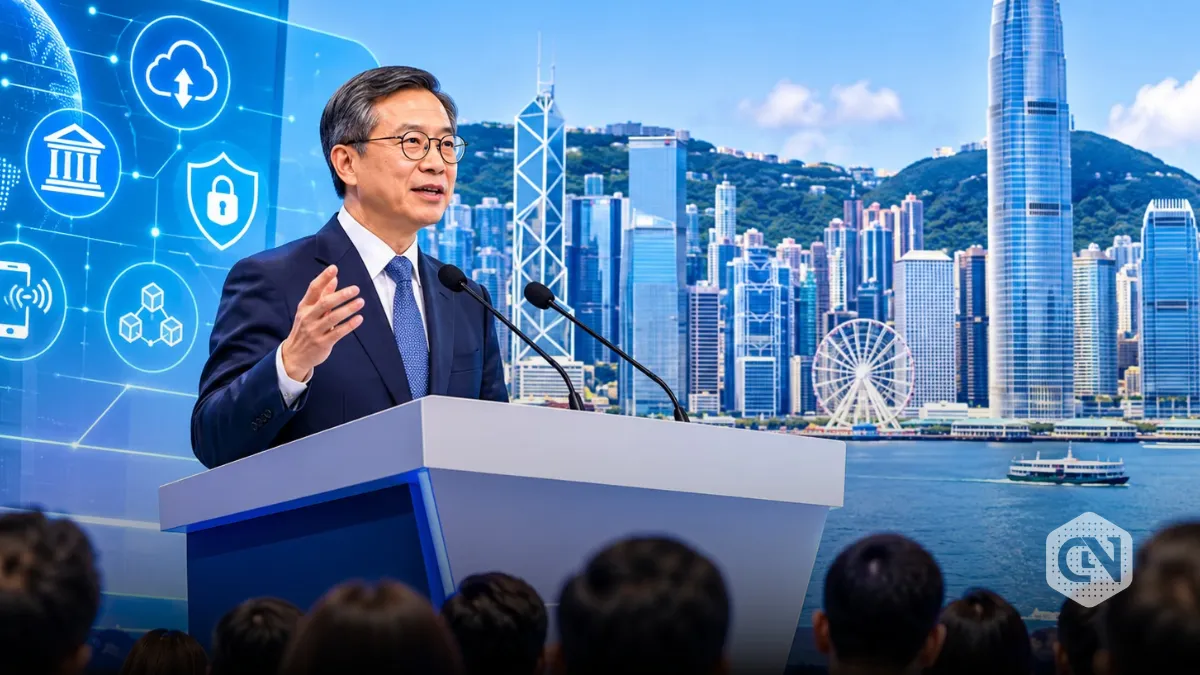
Hong Kong has reaffirmed its position as a preeminent global financial hub by unveiling a comprehensive suite of regulatory and technological initiatives during the 2026 Hong Kong Fintech Week. Held on November 2, the eleventh iteration of this prestigious event served as the backdrop for the Hong Kong Monetary Authority (HKMA) to advance its "Fintech 2030" strategy. By focusing on the DART framework—comprising Data and Payment, Artificial Intelligence (AI), Resilience, and Tokenization—the city is actively fostering an ecosystem that balances rapid technological adoption with robust governance and security.
A Decade of Evolution: The Growth of Fintech Week
The 2026 edition of Hong Kong Fintech Week marks eleven years of sustained collaboration between the HKMA and InvestHK. Since its inception in the mid-2010s, the event has transitioned from a niche gathering of banking technologists into a critical forum for global policymakers, venture capitalists, and institutional financial leaders. This year’s summit saw record-breaking attendance, reflecting the city’s post-pandemic recovery and its aggressive push into the digital economy.
The timing of this year’s announcements is particularly significant. With the "Fintech 2030" strategy reaching its first-year milestone, the HKMA is moving from conceptual research to practical, large-scale implementation. The DART framework serves as the blueprint for this transition, ensuring that as Hong Kong’s financial institutions move toward autonomous AI and decentralized ledger technology, they remain compliant with international standards for risk management.
Navigating the Frontier of Agentic AI
Perhaps the most ambitious component of the recent announcements is the formalization of the "SAGE" project—Searching Agentic Finance with Governance and Enablement. Unlike traditional generative AI, which functions primarily as a conversational interface or data aggregator, agentic AI represents a paradigm shift where software agents can execute complex financial tasks—such as rebalancing portfolios, executing cross-border settlements, or performing automated risk assessment—with minimal human intervention.
Recognizing the dual potential for efficiency and systemic risk, the HKMA has established a cross-sector expert panel to oversee SAGE. The objective is to provide a "regulatory sandbox" where financial firms can test these autonomous agents in controlled environments. By issuing a discussion paper on AI governance simultaneously, the HKMA is inviting industry feedback to shape a framework that prevents algorithmic bias and "flash" operational errors while encouraging the adoption of sophisticated automation. Analysts suggest that if successful, SAGE could reduce operational costs for Hong Kong’s retail and corporate banks by an estimated 15% to 20% over the next five years.
Fortifying Against the Post-Quantum Threat
While AI dominates the conversation regarding growth, the HKMA is equally focused on the existential threats posed by emerging computing capabilities. The rise of quantum computing poses a significant challenge to RSA and ECC encryption standards, which currently underpin the global banking system. If left unaddressed, the potential for a "Q-Day" event—where quantum computers could decrypt historical financial data—remains a critical concern for regulators.
In a proactive measure, the HKMA has partnered with the Hong Kong University of Science and Technology (HKUST) to launch a dedicated Post-Quantum Cryptography (PQC) Toolkit. This toolkit is not merely a theoretical exercise; it provides banks with a roadmap for migrating legacy systems to quantum-resistant algorithms. By standardizing the transition path, the HKMA aims to prevent fragmented security protocols across the industry. This move aligns Hong Kong with the efforts of the US National Institute of Standards and Technology (NIST), positioning the city as a regional leader in cybersecurity preparedness.
The Ensemble Project: Scaling Tokenized Finance
Tokenization remains the centerpiece of the HKMA’s digital asset agenda. Through the "Ensemble" project, the authority is pushing for a 24/7, real-time settlement environment. The significance of this cannot be overstated: current financial systems often rely on batch processing and interbank clearing cycles that can take days. A tokenized deposit system allows for atomic settlement—where the exchange of assets and cash occurs simultaneously and instantaneously.
Recent pilot programs involving the secondary market trading of tokenized Exchange Fund Bills have demonstrated the viability of this model. By expanding the scope of the Ensemble project to include regulated stablecoins, the HKMA is effectively building an "on-chain" version of the traditional financial system. Furthermore, the launch of the tConnect Launchpad—a joint effort with Cyberport—creates a physical and digital bridge between traditional financial institutions (TradFi) and the Web3 startup ecosystem. This infrastructure is designed to foster "innovation sprints," where banks and tech startups co-create institutional-grade applications for digital assets.
Enhancing Connectivity: The FPS-UnionPay Integration
Beyond high-level institutional infrastructure, the HKMA is addressing the retail and cross-border payment experience. By the end of 2026, the local Faster Payment System (FPS) will integrate with UnionPay International, linking Hong Kong’s dominant payment infrastructure with one of the world’s largest merchant networks.
The implications for this integration are vast. Currently, Hong Kong residents and visitors often face friction when making cross-border payments due to fragmented QR code standards and currency conversion hurdles. The FPS-UnionPay link will provide seamless access to over 100 million merchants across mainland China and more than 40 international markets. This is expected to significantly boost the transaction volume of Hong Kong’s digital payment ecosystem and reinforce the city’s role as the primary financial gateway between mainland China and the rest of the world.
Official Perspectives and Economic Implications
In his keynote address, HKMA Chief Executive Eddie Yue underscored the necessity of a "balanced" approach. "Innovation without security is a liability, and security without innovation is a stagnation," Yue noted, summarizing the core philosophy behind the current initiatives. His remarks reflect a broader government mandate to transform Hong Kong into a "smart city" where fintech is not a separate vertical, but the foundational layer of the entire economy.
Economic analysts observe that these initiatives serve a dual purpose: retaining international banking talent and attracting capital from the burgeoning digital asset sector. By providing a clear, transparent, and sophisticated regulatory framework, Hong Kong is differentiating itself from jurisdictions that have either taken a hostile stance toward digital assets or have allowed unchecked volatility.
Future Outlook: Building a Resilient Digital Infrastructure
The chronology of these developments suggests that the HKMA is operating on a precise, multi-year roadmap. With the foundations laid by Fintech 2030, the period between 2026 and 2030 is likely to see the integration of these disparate projects. The synergy between AI-driven decision-making, quantum-secure infrastructure, and tokenized liquidity pools will likely create a financial landscape that is significantly more efficient than the current model.
The coming months will be critical, as the industry begins to digest the regulatory papers regarding agentic AI and begins the process of implementing the PQC toolkit. For international financial institutions operating in Hong Kong, the message from the HKMA is clear: the city is committed to staying ahead of the technological curve. As the global financial system continues its inevitable shift toward digitization, Hong Kong’s proactive regulatory stance may well serve as the gold standard for other global hubs to follow.
In conclusion, the 2026 Fintech Week announcements represent more than just a list of new projects; they signify a structural transformation of Hong Kong’s financial services sector. By addressing the most pressing challenges of the next decade—AI governance, quantum security, and asset tokenization—the HKMA is ensuring that Hong Kong remains not just a participant, but a leader in the evolution of global finance.

