
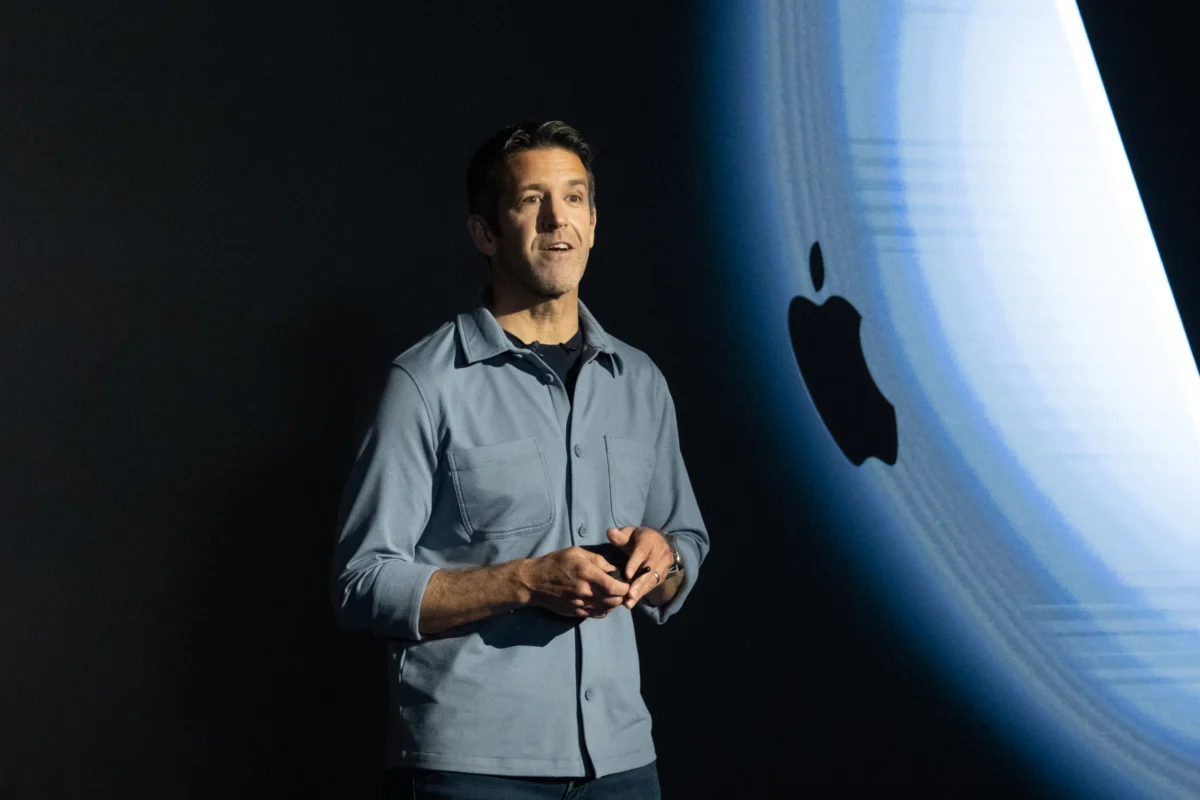
Apple stands at a defining crossroads in its corporate history. As the technology sector races headlong into the era of artificial intelligence, industry pundits, Wall Street analysts, and competitors have increasingly questioned the longevity of the smartphone. Critics argue that the form factor has matured to its absolute limits and that the next paradigm shift will inevitably be driven by ambient computing, augmented reality glasses, or autonomous wearable devices. However, during his landmark first keynote address as Chief Executive Officer, John Ternus delivered a definitive rebuttal to these prognostications. By firmly anchoring Apple’s product roadmap to its most iconic hardware, Ternus signaled that the iPhone is not fading into obsolescence; rather, it is evolving to become the undisputed center of the artificial intelligence ecosystem.
The centerpiece of Ternus’s address was a bold, declarative thesis that redefines how consumers and developers should view mobile technology in the coming decade. “There’s no product in the world better designed to be your intelligent personal hub than iPhone,” Ternus told the assembled audience, positioning the device as the primary physical vessel for Apple’s sophisticated on-device intelligence architecture. This strategic pivot represents a notable philosophical departure from the tenure of his predecessor, Tim Cook. Throughout his leadership, Cook frequently sought to diversify Apple’s revenue streams and convince skeptical markets that the company was progressively transforming into a services and ecosystem giant, intentionally trying to loosen Wall Street’s psychological reliance on hardware upgrade cycles. Ternus, by contrast, is leaning directly back into the core hardware strength that built modern Apple, arguing that the integration of localized AI computing makes the smartphone more vital today than at any point in its nearly twenty-year history.
Echoes of 2001: The Mac, the Digital Hub, and the Ghost of Steve Jobs
To fully contextualize the strategic weight of Ternus’s remarks, industry historians must look back more than two decades to a remarkably similar moment under Apple’s co-founder, Steve Jobs. In July 2001, at a Macworld conference in New York City, Apple faced an existential narrative from technology commentators who believed the personal computer was a dying medium. At the time, the market was rapidly proliferating with standalone digital gadgets—camcorders, MP3 players, early digital cameras, and DVD players—prompting many analysts to declare that the desktop computer was being squeezed out of relevance.
During that keynote, Jobs famously flashed an image of a tombstone bearing the words “Beloved PC” behind him on the stage. He explicitly called out skeptical industry voices, including influential journalist Walt Mossberg and executives from legacy computer manufacturers like Compaq and Gateway. Jobs countered that the PC was not dying, but rather entering its “third great age.” His vision was to transform the personal computer into a “digital hub” that would connect, manage, and add indispensable value to the constellation of peripheral digital devices surrounding it.
Less than ten months after outlining this digital hub strategy, Jobs pulled the first iPod out of his pocket. The pocket-sized music player was ostensibly designed to answer the lingering question of why consumers still needed a home computer, yet it paradoxically required a Mac to function at its peak. The iPod became an unprecedented financial triumph, laying the vital groundwork for the software architecture, supply chain mastery, and consumer trust that ultimately culminated in the launch of the iPhone in 2007.
Today, as the iPhone approaches its twentieth anniversary, CEO John Ternus is executing a parallel strategic playbook. While management has not explicitly confirmed whether Ternus is quietly incubating a revolutionary wearable hardware accessory akin to the 2001 iPod launch, his messaging is unmistakable. He is actively neutralizing the narrative that the smartphone is a legacy technology past its prime, framing the iPhone not as a standalone gadget nearing a dead end, but as the foundational anchor for the next generation of ambient and contextual computing.
Hardware Supremacy in the Compute-Hungry AI Era
The rationale behind Ternus’s hardware-centric strategy is deeply rooted in the physical and computational realities of modern artificial intelligence. Deploying advanced large language models, generative image tools, and real-time contextual awareness engines requires immense processing power, specialized neural circuitry, reliable thermal management, and persistent high-speed connectivity.
When evaluating the technological landscape, Ternus posed a fundamental architectural question to the audience: “If you were designing the ideal version of this hub from scratch, how would you do it?” The answer, he implied, already exists in billions of pockets worldwide. Modern flagship smartphones are marvels of integrated engineering, housing ultra-fast system-on-chips—such as Apple’s cutting-edge A-series processors—alongside high-resolution multi-lens camera arrays, advanced biometric sensors, secure enclave chips, and ubiquitous 5G networking capabilities.
Furthermore, the iPhone possesses an unmatched psychological and behavioral advantage over emerging product categories. While various technology startups and established consumer electronics giants have invested heavily in standalone AI pins, smart pendants, and intelligent glasses over recent years, none have managed to capture mainstream consumer adoption. These alternative devices frequently suffer from battery life limitations, thermal constraints, lack of versatile displays, and the sheer friction of introducing an entirely new daily habit to users.
The smartphone, conversely, enjoys absolute integration into daily human behavior. While consumers frequently leave their laptops at the office, forget their tablet devices on coffee tables, or decline to wear auxiliary accessories, the mobile phone remains an extension of the individual. Market research consistently demonstrates that for a significant percentage of the global population, the smartphone is the primary and often sole computing device they rely upon. By marrying this ubiquitous portability with on-device artificial intelligence, Apple is capitalizing on an installed hardware base that no competitor can easily replicate.
Implications for the Competitive Landscape and Software Ecosystem
The implications of Ternus’s keynote extend far beyond Apple Park, signaling a major shift in how the broader technology sector views the intersection of mobile hardware and software intelligence. For years, the narrative in Silicon Valley has dictated that hardware innovation had plateaued, shifting the primary battleground entirely to cloud-based software services. Companies rushed to build cloud architectures, betting that thin clients and lightweight wearables would offload heavy computation to remote server farms.
Apple’s renewed commitment to the iPhone as the definitive AI hub challenges this cloud-only orthodoxy. By emphasizing on-device processing capabilities, advanced Neural Engines, and tightly integrated local machine learning models, Apple is prioritizing user privacy, reduced latency, and offline functionality. This strategy suggests that the winning AI devices of the future will not be stripped-down, cloud-dependent accessories, but rather deeply powerful, general-purpose computers that fit comfortably in the palm of a hand.
For software developers, application creators, and enterprise partners, Ternus’s vision clarifies Apple’s long-term platform expectations. Rather than fracturing development efforts across speculative new form factors, third-party creators can continue to build and optimize for the robust, standardized ecosystem of iOS. The integration of advanced artificial intelligence directly into the operating system core empowers developers to leverage deep system hooks, camera pipelines, and localized machine learning frameworks that run natively with maximum efficiency.
Market Analysis: Wall Street and Consumer Response
Initial market reactions to Ternus’s first keynote as CEO suggest a stabilizing confidence among investors. While Wall Street spent much of Tim Cook’s later years obsessing over unit sales metrics and services revenue growth as indicators of post-smartphone transition, Ternus’s confident embrace of the iPhone reframes the device not as a mature product facing inevitable decline, but as a compounding platform entering a lucrative upgrade super-cycle driven by generative intelligence features.
Financial analysts note that the average replacement cycle for smartphones has lengthened in recent years due to incremental hardware improvements. However, the introduction of demanding, hardware-intensive artificial intelligence features fundamentally alters this calculus. Consumers who might have otherwise held onto older device models for four or five years are now encountering software capabilities that explicitly require the advanced neural silicon found in the latest generations of hardware. Consequently, Ternus’s strategy could successfully catalyze a massive wave of hardware replacements, securing Apple’s hardware revenues while simultaneously driving adoption of its high-margin digital services ecosystem.
Looking Ahead: The Next Era of Apple Innovation
As John Ternus concludes his inaugural keynote presentation and settles into his role as Chief Executive Officer, he has successfully set the tone for Apple’s immediate and medium-term trajectory. By drawing a direct parallel to Steve Jobs’s famous 2001 digital hub address, Ternus has positioned himself not as a cautious caretaker of a legacy portfolio, but as a strategic architect willing to defend and reinvent the company’s foundational pillars.
The smartphone industry will undoubtedly continue to evolve, and speculative new hardware categories will continue to emerge on the horizon. Yet, by securing the iPhone at the dead center of the artificial intelligence revolution, Apple has asserted that the future of personal computing will not require abandoning the devices we know best. Instead, through visionary engineering and relentless software optimization, the most successful computer of the twenty-first century is poised to become even more indispensable, proving that the best AI device is the one you already have in your hand.

