
Four years after NASA executed its daring DART mission—a planetary defense experiment that saw a spacecraft collide with an asteroid to alter its path—the European Space Agency (ESA) has arrived at the scene to document the true extent of the destruction. The arrival of the Hera spacecraft at the Didymos binary asteroid system marks a pivotal new chapter in space exploration, transforming an initial proof-of-concept test into a comprehensive forensic investigation. By surveying the impact site up close, scientists hope to solve the mysteries of how such a collision physically reshaped a celestial body, potentially securing Earth’s future against the threat of rogue asteroids.
A Chronology of a Cosmic Collision
The journey to understand planetary defense began in earnest on November 24, 2021, when NASA launched the Double Asteroid Redirection Test (DART) mission from Vandenberg Space Force Base in California. The objective was simple yet technically daunting: to prove that human technology could nudge an asteroid off its course. The target was Dimorphos, a small moonlet orbiting the larger asteroid Didymos.
On September 26, 2022, DART achieved its terminal objective. Moving at approximately 13,700 miles per hour (6.14 kilometers per second), the refrigerator-sized probe slammed into Dimorphos, releasing roughly 10 billion joules of energy. The impact was a success by all standard metrics. Ground-based telescopes confirmed that the collision shortened Dimorphos’s 12-hour orbit around Didymos by about 33 minutes—a figure 25 times greater than the most conservative success criteria established by mission planners.
However, the event remained shrouded in mystery. Because DART was a suicide mission, it was destroyed upon impact. While a small CubeSat released by DART managed to capture a brief flash of the impact, the rest of the data was inferred from light-curve changes observed from Earth. Astronomers knew they had altered the orbit, but the physical reality of the surface—the cratering, the structural deformation, and the ejected debris—remained a subject of intense scientific debate.
Hera’s Arrival and the New Data
In October 2024, after a two-year transit following its launch from Florida, ESA’s Hera spacecraft finally reached the binary system. On Wednesday, the mission released the first high-resolution imagery revealing the aftermath of the DART collision. These images depict a scene of surprising violence: the spacecraft did not merely nudge the asteroid; it carved out a massive crater, essentially reshaping the 500-foot-wide (151 meters) object.
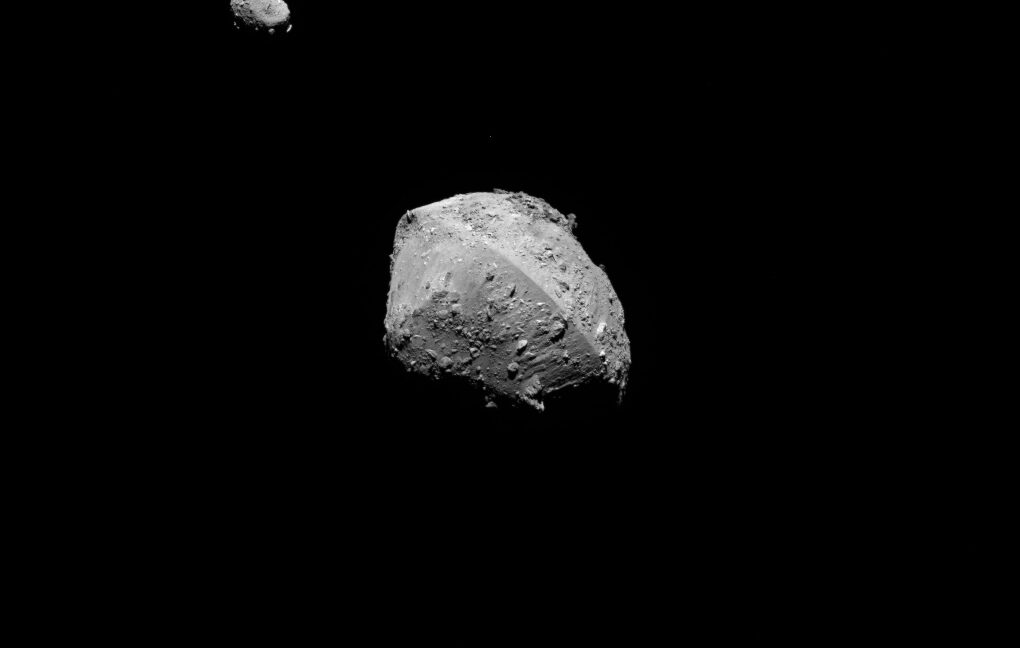
The data suggests that the impact was far more transformative than initial models predicted. Patrick Michel, the mission’s principal investigator from the Côte d’Azur Observatory in France, noted that scientists were essentially torn between two hypotheses: that the mission would create a localized crater, or that it would cause a total structural reconfiguration of the asteroid. The imagery confirms both. The crater is so vast relative to the size of the moonlet that it has fundamentally altered the asteroid’s overall silhouette.
Furthermore, Hera has confirmed that Dimorphos is currently tumbling in a chaotic, unstable orbit. This finding is critical for planetary defense, as it demonstrates that our current models for asteroid composition—which generally assume these bodies are solid, monolithic rocks—may be fundamentally flawed. Instead, Dimorphos appears to be a "rubble pile," a loosely bound collection of rocks and dust held together by gravity rather than internal cohesion.
The Mystery of the Debris Cloud
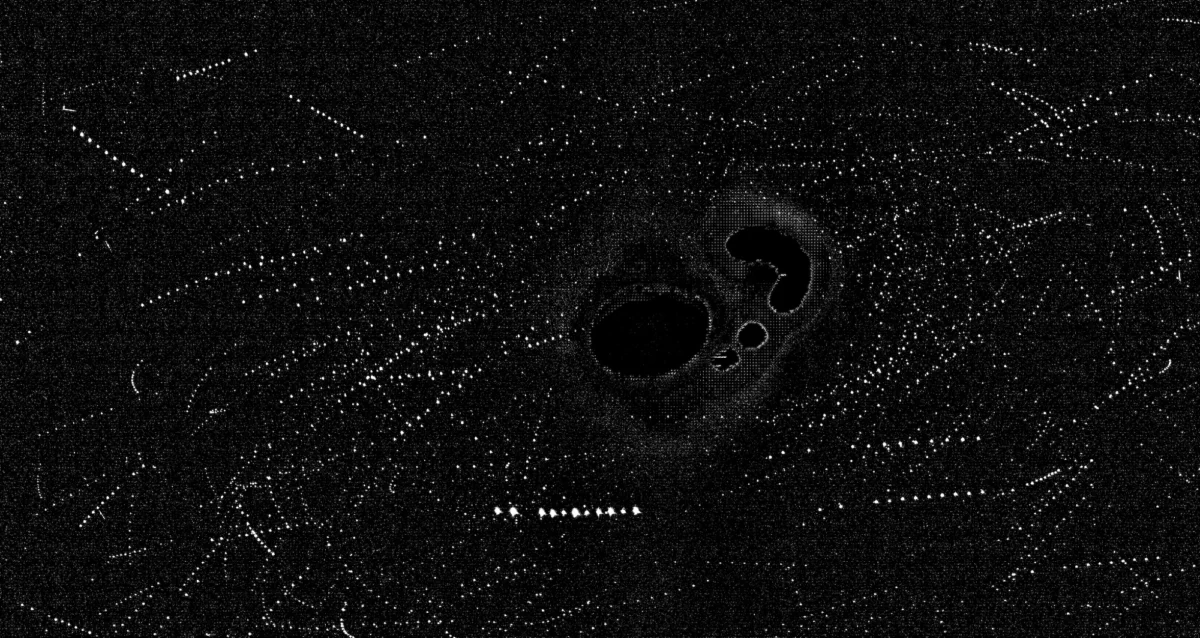
One of the most startling revelations from Hera’s initial reconnaissance is the sheer volume of debris surrounding the binary system. As the spacecraft approached the asteroids, sensors detected hundreds of boulders and fragments of varying sizes—some as small as a football and others the size of a household washing machine—trailing in the wake of the system.
While the Hubble Space Telescope had previously spotted a cloud of material, the detail provided by Hera’s hyperspectral camera is unprecedented. By digitally removing the primary asteroids from composite long-exposure images, mission scientists have revealed a chaotic swarm of ejecta. Naomi Murdoch, a planetary scientist involved in the project, described the scene as unexpected. "Hera came to visit two asteroids, and we found hundreds of companions," she stated.
The scientific community is now working to determine the origin of this debris. While it is highly likely that these fragments were blasted off during the DART impact, researchers are also considering the possibility that some of this material could be ancient, dating back to the formation of the Dimorphos-Didymos system itself. Understanding the ratio of new impact debris to ancient surface material is vital for calibrating the physics of future kinetic impactors.
The Significance for Planetary Defense
The primary goal of the Hera mission is to provide the "ground truth" that will allow scientists to move from successful experimentation to reliable planetary defense. If a future, genuine asteroid threat is detected, humanity will need to know exactly how much force is required to deflect an object of a specific density and composition.
"Once we understand the physics of this impact, we have a breakthrough, which really solves planetary defense," Patrick Michel explained in an interview. By analyzing the mass of Dimorphos, its internal structure, and the exact nature of the crater left behind, scientists will be able to refine the computer models used to predict the outcomes of future asteroid deflections.
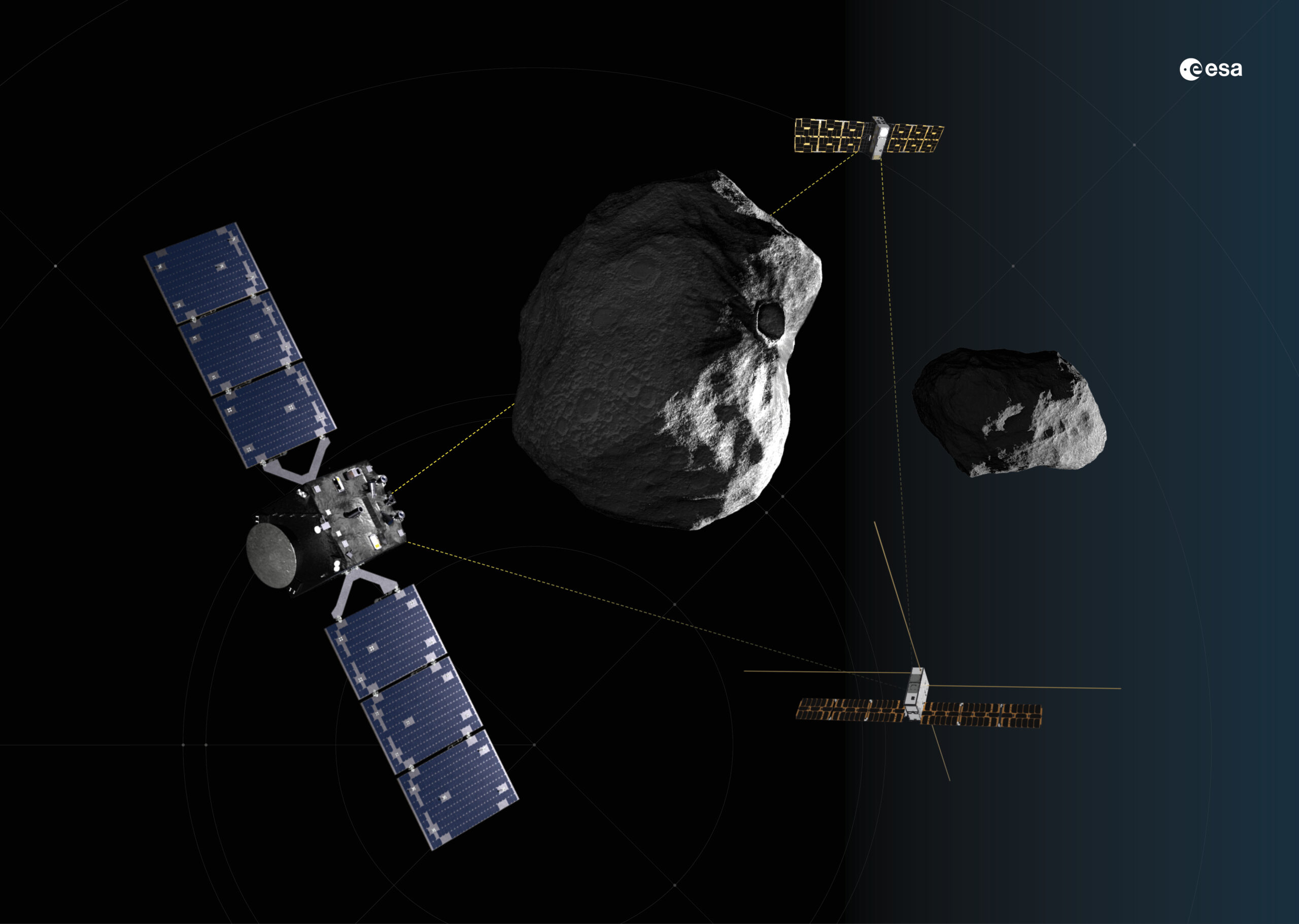
The next six months will be the most intensive phase of the mission. Hera will perform a series of close flybys, eventually deploying two smaller CubeSats—named Juventas and Milani—to attempt proximity operations and potentially even touch down on the surface of Dimorphos. These secondary probes will conduct seismic and gravitational measurements, providing the final pieces of the puzzle that the DART mission could not collect.
Implications for Future Missions
The success of the DART-Hera collaboration represents a landmark achievement in international space cooperation. While DART was a NASA-led mission, Hera serves as the European contribution, proving that the threat of Near-Earth Objects (NEOs) is a global concern requiring a unified scientific approach.
Beyond the immediate goal of deflection, the research conducted by Hera has profound implications for our understanding of the early solar system. Asteroids are the "building blocks" of planets, and by studying the interior structure of Dimorphos, researchers are effectively looking back in time to the processes that created the Earth and its neighbors.
The implications are also economic and strategic. As the global space industry shifts toward potential asteroid mining and resource utilization, understanding the structural integrity of these bodies is essential. An asteroid that behaves like a pile of loose gravel requires different handling and extraction techniques than one that is a solid, metallic mass.
As the mission progresses, the data returned by Hera will likely become the foundational standard for asteroid studies for decades to come. By documenting the scars left by DART, humanity is not only learning how to protect the planet from future impacts but is also uncovering the fundamental secrets of the small, rocky bodies that have shaped the history of our solar system. The "mess" left by DART, as scientists have colloquially termed it, is arguably the most valuable piece of celestial real estate currently being studied by humanity, offering a roadmap for survival in an unpredictable cosmos.

