
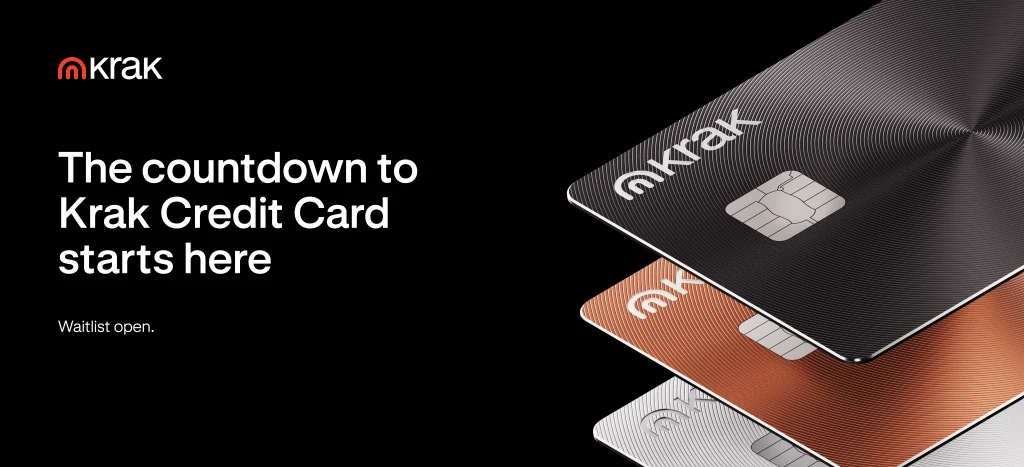
Financial technology platform Krak is expanding its product ecosystem with the upcoming launch of two credit offerings: the Krak Credit Card and the Krak Secured Card. Set to begin shipping to U.S. consumers in early 2027, the new products represent a strategic push by the company to integrate traditional credit mechanics with digital asset management. Built on the Visa network as a Visa Signature card, the flagship card aims to differentiate itself in a crowded financial market by offering up to 4% cashback—paid in either fiat currency or bitcoin—alongside a physical card crafted from 16 grams of recycled stainless steel.
The announcement comes at a time of widespread consumer dissatisfaction with legacy financial rewards structures. Market research conducted by the company in July 2026 indicates that approximately 64% of surveyed Americans feel frustrated by the inherent complexity and stringent expiration policies associated with traditional credit card rewards programs. Furthermore, 57% of respondents expressed a clear preference for straightforward cashback over points-based systems. By aligning its product design with these consumer preferences, Krak is attempting to capture market share from traditional financial institutions that rely on convoluted tiered point redemptions.
Structure of the Krak Credit Card and Rewards Mechanics
The Krak Credit Card operates on a dynamic cashback tier system that scales upward in correlation with the user’s overall balance on the platform, officially designated as Assets on Platform (AOP). Cardholders begin at a baseline cashback rate of 1% when their Krak account balance remains under $1,000. As the account balance grows, the rewards rate increases incrementally, reaching a maximum of 4% for accounts holding $150,000 or more.
To maintain fiscal sustainability, the higher reward tiers—specifically the 3%, 3.5%, and 4% rates—apply exclusively to the first $10,000 in eligible monthly purchases, with a 2% rate applied to spending thereafter. Crucially, the platform bypasses standard point redemption portals, allowing users to receive their earned rewards directly in U.S. dollars or bitcoin, depending on personal preference.
In addition to standard cashback mechanics, the card functions as a Visa Signature product, extending luxury perks to cardholders. These include access to the Visa Signature Luxury Hotel Collection, event partnerships such as Sofar Sounds, and a dedicated concierge service. Security features include standard Zero Liability Protection and comprehensive Travel and Emergency Assistance.
The Role of Krakpass in the Ecosystem
Access to the Krak Credit Card is restricted to members of Krakpass, a paid subscription service required to open and maintain the account. Krakpass is priced at $6.99 per month for monthly billing, or $75.48 annually, which reduces the effective cost to approximately $6.29 per month.
The subscription model serves as the gatekeeper for the credit product, integrating various platform benefits into a single recurring fee. According to company disclosures, the subscription is offered free of charge through February 1, 2027, for early adopters who successfully open a Krak Credit Card or Krak Secured Card. However, maintaining an active Krakpass membership is a strict prerequisite; if a user cancels or allows their subscription to lapse, the associated credit card may be suspended and ultimately closed.
Accommodating Credit Builders with the Krak Secured Card
Recognizing that a segment of its potential user base may lack established credit histories, Krak is simultaneously launching a waitlist for the Krak Secured Card. This product is engineered to help individuals build or repair their credit scores through responsible usage.
To secure a credit limit, users must lock a specified amount of USD Coin (USDC) as a security deposit within their Krak account. Distinct from traditional secured cards where cash deposits sit idly, Krak’s model enrolls the locked USDC in an auto-earn feature, yielding up to 4% Annual Percentage Yield (APY) while serving as collateral. On-time payments made with the secured card are reported to major credit bureaus—TransUnion, Experian, and Equifax—potentially improving the cardholder’s credit profile over time, provided payments are managed responsibly.
Partnerships, Issuance, and Regulatory Framework
The operational framework behind the Krak Credit Card and Krak Secured Card relies on a collaborative partnership between financial technology entities and chartered banking institutions. The cards are offered through Payward Interactive, Inc.—doing business as Kraken—in coordination with Cardless, Inc., and are issued by First Electronic Bank pursuant to a licensing agreement with Visa U.S.A. Inc.
Cryptocurrency and digital asset services on the platform are managed by Payward Interactive, Inc., a registered money services business with the Financial Crimes Enforcement Network (FinCEN). Meanwhile, the existing Krak debit card program operates independently via an issuance partnership with Lead Bank.
Geographic and Eligibility Restrictions
While the waitlist is currently open to eligible U.S. residents through the Krak app, availability is subject to strict regional and regulatory constraints. Applications are restricted to individuals at least 18 years of age who maintain a Krak account in good standing and an active Krakpass membership.
Due to state-specific regulatory environments, the credit cards are not available in Indiana, Maine, Massachusetts, or New York. Furthermore, the Krak Secured Card is explicitly unavailable in the District of Columbia. Credit approval is not guaranteed for all waitlist applicants and remains contingent upon standard underwriting criteria and credit checks.
Broader Industry Implications and Timeline
The introduction of a crypto-linked credit card by a digital asset ecosystem reflects a broader industry trend toward bridging decentralized finance principles with everyday consumer banking. By offering rewards paid directly in bitcoin alongside traditional cash, platforms are lowering the barrier to entry for retail cryptocurrency adoption, allowing users to accumulate digital assets through routine consumer spending rather than direct exchange purchases.
Looking ahead, Krak has structured a measured rollout strategy. The waitlist is currently active within the mobile application, allowing prospective users to secure a position in line. Official application processing and physical card shipments are scheduled to commence in early 2027. As the launch date approaches, industry analysts will be monitoring how traditional banking competitors respond to alternative reward structures that seamlessly integrate fiat and digital currency payouts.

