
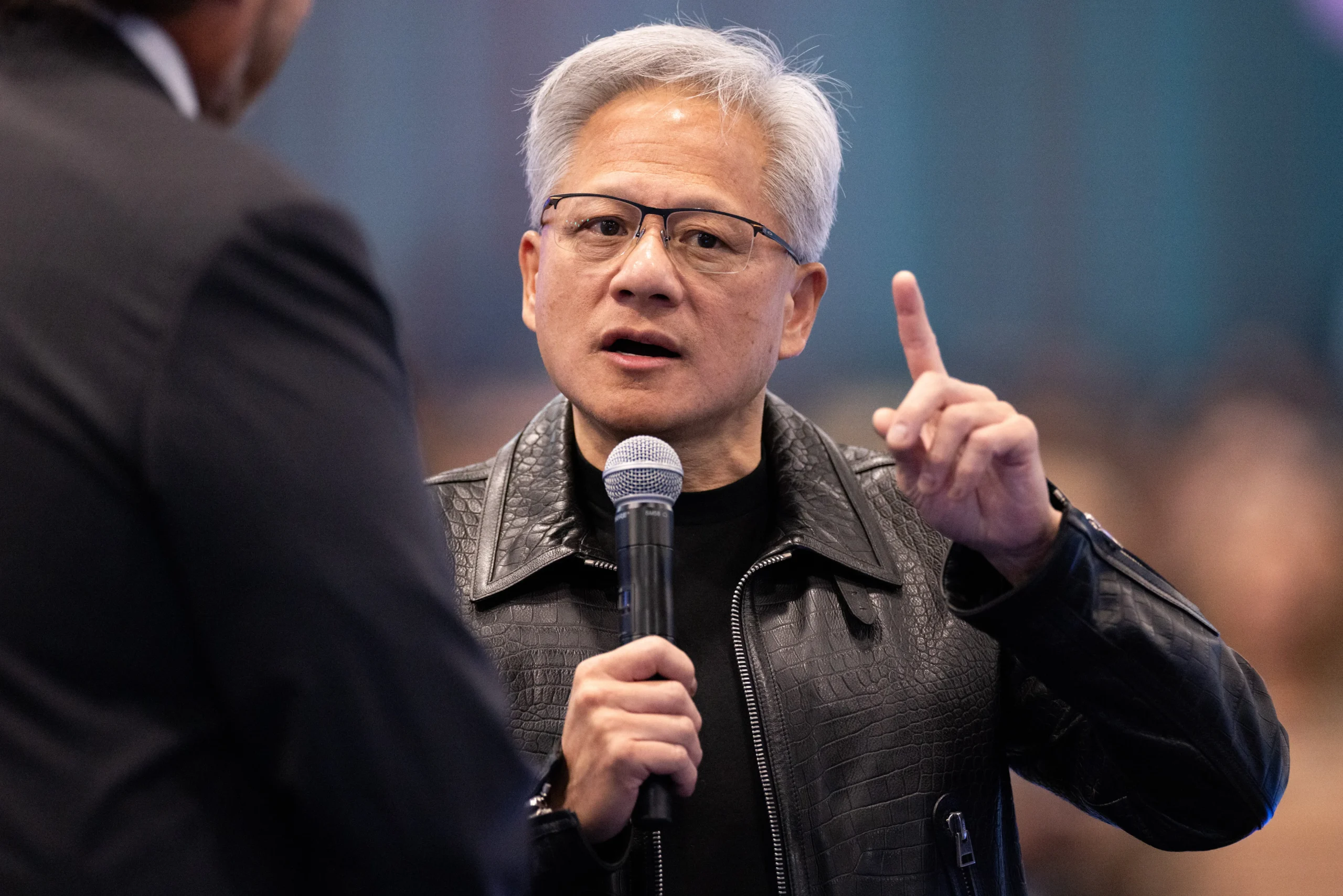
An intelligence memo circulated earlier this year has drawn intense global scrutiny after revealing allegations that technology executive Alice Huang was recruited by China’s Ministry of State Security to gather intelligence on Nvidia CEO Jensen Huang. The explosive claims, which have surfaced through leading international publications, intersect two major geopolitical flashpoints: the ongoing race for global artificial intelligence dominance and the escalating technological cold war between the United States and China.
The document, purportedly compiled from assessments by U.S. intelligence agencies, suggests a sophisticated espionage attempt targeting one of the most influential figures in modern computing. As Jensen Huang steers Nvidia through an era of unprecedented market capitalization and technological expansion, the convergence of national security, corporate espionage, and personal entanglements highlights the profound vulnerabilities facing top-tier executives in the semiconductor and artificial intelligence sectors.
Genesis of the Leak and Key Allegations
The existence of the intelligence memo first came to light publicly following investigative reporting by The New York Times. According to the initial reports, U.S. intelligence assessments indicated that Alice Huang—an executive at Megaspeed, a Singapore-based technology firm—had been targeted and successfully recruited by Chinese intelligence operatives within the Ministry of State Security (MSS). The primary objective of her recruitment, as outlined in the document, was to cultivate access to and extract sensitive information from Nvidia’s chief executive.
Subsequent reporting by The Financial Times deepened the narrative by revealing that the memo detailed a personal connection between Alice Huang and Jensen Huang, alleging that the two shared a romantic relationship. In the shadowy world of state-sponsored intelligence operations, personal relationships are frequently weaponized as vectors for compromise, coercion, or steady information-gathering.
While the allegations remain framed by intelligence assessments rather than public criminal indictments, the involvement of the MSS underscores Beijing’s intense strategic interest in Nvidia. As the undisputed global leader in the design and manufacture of high-performance graphics processing units (GPUs) essential for training large language models and advanced AI systems, Nvidia sits at the absolute center of the contemporary technology ecosystem. Consequently, its executive leadership is viewed by foreign intelligence agencies as a high-value target.
Institutional Responses and Official Stances
In the wake of these revelations, representatives for Nvidia have moved quickly to address the narrative while managing corporate exposure. Responding to inquiries from the media, an official Nvidia spokesperson characterized Jensen Huang’s interactions with Alice Huang as "not unusual." Furthermore, the spokesperson forcefully pushed back against any insinuation that proprietary corporate secrets, intellectual property, or classified material had been compromised, emphasizing that Nvidia does not share classified information with its commercial customers or external associates.
Regarding the broader geopolitical environment and compliance with strict U.S. export controls, the spokesperson reiterated Nvidia’s commitment to national security and domestic market priority. "We sell the first, best and most of our technology in America," the spokesperson stated, highlighting the company’s alignment with Washington’s strategic priorities amid tightening regulatory frameworks.
Neither Alice Huang nor representatives for Megaspeed have issued extensive public rebuttals addressing the specific espionage claims outlined in the U.S. intelligence memo, leaving the public record primarily dependent on leaks, investigative reporting, and corporate damage control.
The Broader Puzzle: Front Companies and Advanced Chip Compliance
The intelligence memo concerning Jensen Huang did not exist in a vacuum; it emerged alongside parallel journalistic investigations scrutinizing how advanced American semiconductor technology flows across international borders. In a separate report published by The New York Times, investigative reporters examined New Matrix, a Chinese corporate entity that had received explicit authorization from the U.S. Department of Commerce to purchase advanced Nvidia artificial intelligence chips.
Despite holding legal clearance under current export control laws, the reality on the ground told a drastically different story. When journalists visited the official office address listed for New Matrix in corporate filings, they found nothing more than "a hollow gray shell." The complete absence of standard corporate infrastructure, operational staff, or commercial activity at the designated location immediately raised alarms among trade watchdogs and national security experts.

The discovery strongly suggests that New Matrix may be operating as a front company designed to bypass U.S. export restrictions. Such shell entities are frequently established by blacklisted private equity firms, military contractors, or intelligence-linked fronts in mainland China to acquire restricted high-end processors—such as Nvidia’s H100 and newer architectures—through third-party jurisdictions like Singapore or the United Arab Emirates, thereby evading the watchful eye of the Bureau of Industry and Security (BIS).
Background and Context: The Geopolitical High Stakes of AI
To fully understand the gravity of the intelligence memo and the New Matrix investigation, one must examine the high-stakes environment governing the semiconductor industry in 2026. Over the past several years, artificial intelligence has transitioned from a specialized academic discipline into the primary engine of global economic growth and military capability.
Advanced GPUs are the digital oil of the twenty-first century. Without them, nations cannot train frontier AI models capable of autonomous warfare, advanced surveillance, cybersecurity defense, or cutting-edge scientific research. Recognizing this dynamic, the United States government has implemented successive waves of aggressive export controls designed to starve China of cutting-edge chip technology and semiconductor manufacturing equipment.
These sweeping restrictions have turned Nvidia into a geopolitical focal point. Jensen Huang, once celebrated almost entirely as a visionary entrepreneur and designer of gaming hardware, has increasingly found himself operating as an unwilling participant in statecraft. Nvidia’s chip designs dictate the pace of global technological advancement, making the company and its leadership prime targets for aggressive foreign intelligence operations seeking to bridge the technology gap imposed by Washington.
Fact-Based Analysis of Implications
The convergence of an alleged MSS recruitment operation targeting a major tech CEO and the uncovering of suspected front companies like New Matrix carries profound implications for corporate governance, national security, and international commerce.
-
Heightened Executive Security: Technology executives operating on the global stage, particularly those whose companies deal in critical dual-use technologies, will likely face intense pressure to overhaul their personal and professional security protocols. Intelligence agencies are expected to issue broader warnings regarding foreign recruitment tactics aimed at Silicon Valley leadership.
-
Stricter Export Control Enforcement: The New Matrix revelation exposes vulnerabilities in the U.S. Commerce Department’s vetting processes for overseas buyers. Lawmakers in Washington are anticipated to demand more rigorous end-user verification, on-site inspections, and tighter tracking of advanced chips shipped to intermediate hubs like Singapore and Southeast Asia.
-
Corporate Compliance and Due Diligence: Multinational technology firms will be forced to implement unprecedented levels of counter-intelligence due diligence not only regarding their supply chains and corporate customers, but also concerning the personal networks of their C-suite executives.
-
Accelerated Decoupling: Incidents of this magnitude reinforce the ongoing technological decoupling between the United States and China. As trust continues to erode, compliance barriers will rise, making it increasingly difficult for American semiconductor firms to navigate international markets without running afoul of domestic national security mandates.
As investigations continue and intelligence agencies reassess the vulnerabilities of the American technology sector, the allegations surrounding the memo serve as a stark reminder that the battle for technological supremacy is fought not only in research laboratories and legislative chambers, but also in the complex, shadowy corridors of international espionage.

