
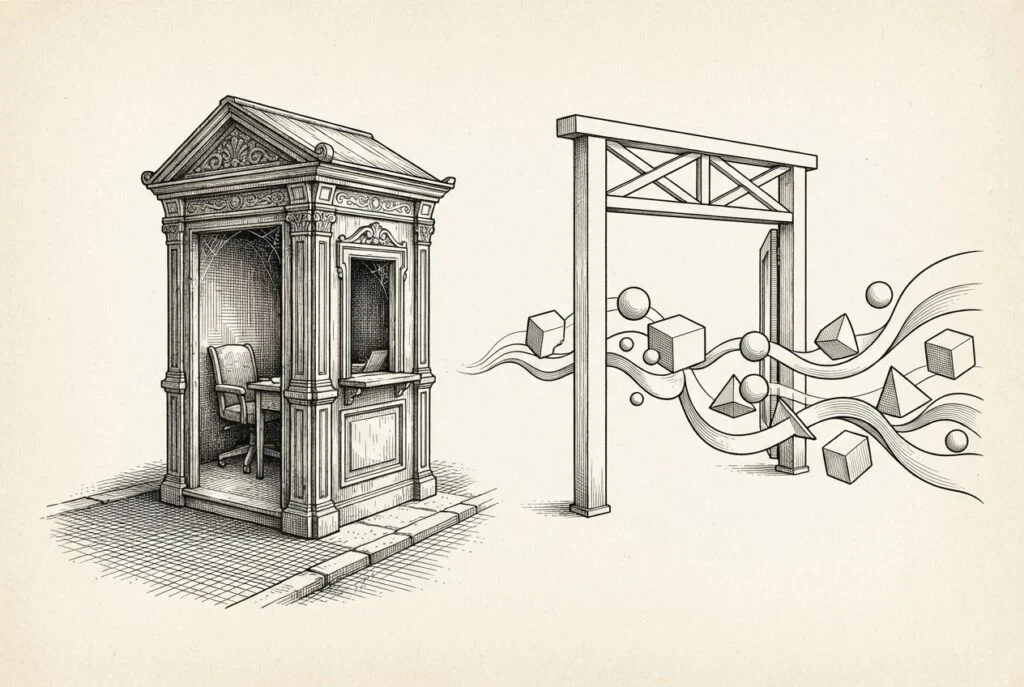
At Dreamforce 2026, Salesforce unveiled AIforce, a strategic umbrella brand that marks the most significant architectural and commercial pivot in the company’s history. By transitioning from a traditional dashboard-centric interface to an agent-led workflow, Salesforce is effectively decentralizing its software. This evolution enables business logic, CRM data, and enterprise-grade governance to operate seamlessly within external environments—specifically Anthropic’s Claude, Slack, and the native Lightning interface. This move signals a broader industry transition: the "Agentic Enterprise," where the user interface is no longer a static page but a dynamic, intelligent agent capable of autonomous execution.
The Architectural Evolution: From Dashboards to Agents
The technical backbone of AIforce is the "Headless Toolkit," a sophisticated framework that exposes Salesforce elements via APIs and Model Context Protocols (MCPs). This infrastructure allows developers and enterprise users to call upon business logic without forcing employees to navigate the complex, often cumbersome Salesforce ecosystem. By embedding this intelligence directly into the tools where employees spend the majority of their workday, Salesforce is attempting to eliminate the "toggle tax"—the productivity loss associated with switching between business applications.
Crucially, the platform operates under a "Zero Data Retention" (ZDR) policy. In an era of heightened concerns regarding corporate espionage and data privacy, this guarantee is a strategic necessity. By ensuring that customer data is neither stored nor utilized to train external foundation models, Salesforce is positioning AIforce as the secure, compliant choice for highly regulated industries such as finance, healthcare, and government.
Chronology of the Shift
The road to AIforce was paved by several pivotal developments over the past two years:
- Mid-2024: Salesforce significantly ramped up its investment in autonomous agents, moving beyond simple chatbots to "Agentforce," a platform designed for task execution rather than just information retrieval.
- Early 2025: Anthropic and Salesforce deepened their partnership, focusing on integrating "frontier intelligence" into the CRM giant’s vast data repositories.
- August 2026: The formal announcement of "Claudeforce," a direct integration allowing Claude to act as a surrogate for Salesforce workflows.
- September 2026 (Dreamforce): The official launch of AIforce, consolidating the various agentic initiatives under one brand, accompanied by a fundamental overhaul of the company’s pricing structure.
The Pricing Paradigm Shift: The End of the "Seat"
For over two decades, the SaaS industry has operated on the per-seat model. It provided predictable recurring revenue for vendors and a clear, albeit sometimes bloated, cost structure for enterprises. AIforce disrupts this model entirely. As agents begin to perform the heavy lifting—such as processing leads, drafting contracts, and managing support tickets—the utility of a "human seat" becomes ambiguous.
Salesforce has introduced a tiered pricing strategy to address this:
- Entry Level: A base fee of $5 per user per month for light interactions.
- Enterprise Tier: A comprehensive suite starting at $550 per user, catering to organizations that require high-level governance and custom agent training.
- Consumption-Based Pricing: The most radical departure, offering a $2 per-conversation rate or a bulk "Flex Credit" model ($500 for 100,000 credits).
This transition acknowledges that the value generated by an agent is not tied to a human login but to the volume of work processed. However, this creates a complex financial challenge for the CFO’s office. For a mid-market team of 30 users, the "Total Cost of Ownership" (TCO) for an AIforce deployment—including license fees, integration, and high-volume consumption credits—can range from $200,000 to $450,000 in the first year alone. The shift effectively moves IT spend from a fixed, predictable line item to a variable cost that scales with the company’s operational velocity.
Industry Perspectives and Market Reaction
The market’s reception of the agent-as-UI model has been characterized by both enthusiasm and caution. Salesforce reported that 100,000 users activated the "Agentforce Coworker" within the first 35 days, a metric that underscores the urgent demand for AI-driven productivity.
Dario Amodei, CEO of Anthropic, emphasized the synergy between model intelligence and enterprise context. "Salesforce in Claude brings this same frontier intelligence into the systems where much of the world’s commercial activity happens," Amodei noted during the Dreamforce keynote. By pairing Anthropic’s reasoning capabilities with Salesforce’s "Golden Record" of customer data, the integration aims to reduce the hallucination rates common in general-purpose AI models, as the agent is grounded in real-time business logic.
Analysts, however, point to the "complexity trap." While the interface is designed to be frictionless, the underlying financial and operational management is becoming increasingly opaque. Enterprises now face the "distributed network" problem: as AI agents proliferate, tracking the total expenditure across various departments becomes significantly harder.
Strategic Implications for the Enterprise
The shift toward AIforce forces a reconsideration of the "Agentic Enterprise." Decision-makers are no longer simply purchasing software licenses; they are procuring a metered, intelligent service. This leads to three distinct strategic implications:
1. Governance and Compliance at Scale
As agents gain the ability to perform actions—sending emails, updating opportunity stages, or triggering payments—the governance model must evolve. The ZDR policy is a starting point, but enterprises will need to implement "Human-in-the-loop" protocols to ensure that autonomous agents do not execute unauthorized or erratic actions.
2. The Return on Intelligence (ROI)
Unlike software, where the value is binary (either you have the feature or you don’t), the value of an agent is tied to its intelligence. Companies will likely begin evaluating vendors based on the "accuracy per dollar" of their agents. If a $2 conversation results in a closed deal, the ROI is high; if it results in an incorrect customer response that requires human intervention to fix, the cost becomes a liability.
3. Shift in IT Skillsets
The IT department of the future will spend less time on user provisioning and password management and more time on "Agent Orchestration." This involves monitoring consumption logs, refining agent prompts, and managing the "flex credit" budgets. Salesforce’s move essentially turns every IT administrator into a commodity trader, balancing the performance of AI agents against their operational costs.
Looking Ahead: The 2027 Outlook
The coming year will serve as the proving ground for AIforce. Success will not be measured by the number of activations, but by the reliability of the agents in handling edge cases. Salesforce has clearly staked its future on the idea that the "interface revolution" will move the CRM out of the browser tab and into the daily flow of work.
However, the transition to consumption-based pricing remains the company’s biggest hurdle. Customers are notoriously resistant to volatile billing. If Salesforce can demonstrate that for every $2 spent on a conversation, the company gains $20 in efficiency or revenue, the model will likely become the industry standard. If, however, companies find themselves blindsided by runaway consumption costs without a corresponding increase in output, we may see a pushback against the "Agentic Enterprise" model.
Ultimately, AIforce represents a turning point in the commoditization of AI. Salesforce is betting that by integrating with the likes of Claude and Slack, they can remain the "central nervous system" of the enterprise, even as the user interface itself becomes increasingly invisible. Whether this results in a more streamlined, automated future or a fragmented and costly IT landscape is the defining question for the enterprise technology sector through 2027. The era of the human-led seat is fading; the era of the metered agent has arrived.

