
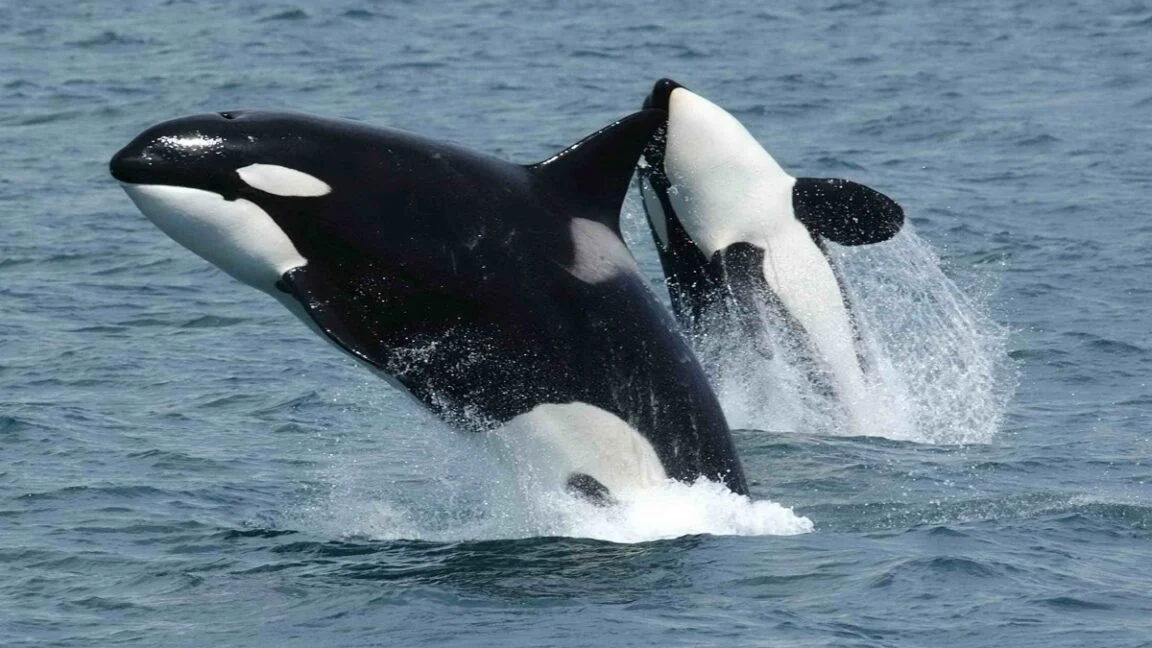
In the crystal-clear waters of the Gulf of California, a phenomenon has been captured on film that is reshaping the scientific understanding of apex predator behavior and social learning. Researchers have documented a group of orcas (Orcinus orca) employing a highly coordinated and violent hunting technique referred to as "ram-to-fragment" behavior. This tactic involves the whales using their massive body weight and speed to strike prey with such force that the carcasses literally explode into smaller, more manageable pieces. While orcas have long been known for their intelligence and cooperative hunting strategies, this specific method—targeting the world’s heaviest bony fish, the ocean sunfish—suggests an evolution in cultural learning and perhaps a playful, albeit lethal, dimension to their social interactions.
The discovery, detailed in a new study published in the journal Frontiers in Ethology, adds a significant chapter to the growing body of evidence regarding orca "fads" and culturally transmitted behaviors. Led by Kathryn Ayres, a researcher with the nonprofit organization Beneath The Waves, the study provides a granular look at how these marine mammals are adapting their techniques to maximize efficiency and involve younger members of the pod in the feeding process.
The July 2024 Observation: A Chronology of the Hunt
The primary evidence for this behavior stems from a series of events recorded in July 2024 off the coast of San Jose del Cabo, Mexico. The Gulf of California, often referred to as the "aquarium of the world," served as the backdrop for a display of tactical precision involving a pod consisting of three adult females, one adult male, and one juvenile.
The sequence began when a tourism operator encountered the pod as they were finishing a hunt of a spine-tail devil ray. While the consumption of rays is well-documented among orca populations in this region, what followed was an unprecedented display of physical force. Shortly after the ray hunt, the pod shifted its attention to a large sunfish (Mola mola).
According to the footage and subsequent analysis, one of the adult females held the carcass of the sunfish in her jaws. The fish appeared to have already been partially processed, with its viscera (internal organs) likely removed—a standard first step in orca sunfish consumption. As the female held the prey steady, the adult male backed away, positioned himself, and then accelerated toward the carcass at high speed.
Seconds before impact, the female released the sunfish. The male struck the carcass with his rostrum (snout) with such momentum that an audible "thud" could be heard through the water and above the surface. The impact caused the sunfish to fragment into dozens of smaller pieces of flesh and bone, which dispersed into the surrounding water column. Immediately following the explosion of the carcass, the juvenile orca moved in to consume the smaller fragments, while the adults shared the remaining larger sections of the split body.
The Mechanics of the Ram-to-Fragment Strategy
Traditionally, orcas hunting sunfish follow a three-step mechanical process. First, they target the pectoral fins to immobilize the slow-moving fish. Second, they use their teeth to slash the body and remove the nutrient-rich internal organs. Finally, they use their beaks to pick at the remaining muscle tissue.
The "ram-to-fragment" method appears to be a sophisticated refinement of this process. By using kinetic energy to shatter the prey, the orcas eliminate the need for tedious "picking" at the tough, leathery skin of the sunfish. This is particularly beneficial for juveniles, whose smaller teeth and less developed jaw strength might make it difficult to tear through the hide of a full-grown sunfish, which can weigh upwards of 2,000 pounds.
Kathryn Ayres and her co-authors suggest that this behavior serves multiple purposes. "We think this may help younger orcas feed more easily, or it could also just be for fun," Ayres stated. "Orcas are known for playing with their food, and the social bonding that occurs during these high-energy interactions is a vital part of their pod structure."
Cultural Learning and the "Fad" Phenomenon
The discovery of the ram-to-fragment technique comes at a time when orca behavior is under intense global scrutiny. In recent years, a sub-population of orcas in the Strait of Gibraltar has gained international notoriety for ramming and occasionally sinking sailing vessels. Scientists believe the boat-ramming behavior is a "cultural fad"—a behavior that starts with one or two individuals and is then imitated by others through social learning.
The ramming of sunfish in the Gulf of California appears to fall into a similar category of learned behavior. Orcas are among the few non-human animals known to possess distinct cultures, where different pods develop unique dialects, dietary preferences, and hunting techniques that are passed down from mothers to offspring.
In the Gulf of California, orcas have been observed using various specialized strategies:
- Whale Shark Hunting: Orcas have been seen ramming whale sharks to flip them over, inducing "tonic immobility" (a state of temporary paralysis) before feeding on their livers.
- Stingray Herding: Pods work together to herd rays into shallow water or against rocky reefs to trap them.
- Wave-Washing: In Antarctic regions, orcas coordinate their swimming to create large waves that wash seals and penguins off ice floes.
The introduction of the "ram-to-fragment" technique suggests that the Gulf of California pods are continuing to innovate. The fact that an adult male performed the ramming while a female held the prey indicates a high level of role-specialization and communication.
Supporting Data: The Biological Context of the Sunfish
The ocean sunfish (Mola mola) is an ideal subject for such a display of force. As the heaviest bony fish in the world, they are slow-moving and lack the defensive capabilities of sharks or the speed of rays. However, their skin is incredibly thick and reinforced with a dense layer of collagen, making them a "difficult" meal to process through standard biting alone.
Data from marine biologists suggests that sunfish populations in the Gulf of California are seasonal, appearing more frequently during periods of upwelling when cooler, nutrient-rich waters rise to the surface. The ability of orcas to efficiently exploit this food source through fragmentation allows them to minimize the energy expended during feeding, providing a caloric advantage to the pod, particularly the growing juveniles.
Expert Analysis and Implications for Marine Ecology
The implications of this study extend beyond a simple observation of a new hunting tactic. It highlights the role of "play" in the development of predatory skills. In the animal kingdom, play is often a low-stakes way for juveniles to practice the coordination and timing required for survival. However, in orcas, the line between play and hunting is frequently blurred.
"Orcas are highly social and highly intelligent," says Ayres. "When we see them engaging in these high-force interactions, we are seeing the peak of marine mammalian cognitive ability. They are calculating speed, timing, and the physical properties of their prey."
The "ram-to-fragment" behavior also raises questions about the impact on local ecosystems. If orcas are becoming more efficient at hunting sunfish, it could lead to a shift in the local food web. However, given the opportunistic nature of orcas, they are more likely to rotate their prey based on seasonal availability rather than over-exploiting a single species.
Official Responses and Conservation Perspectives
While the study has been met with excitement in the scientific community, it also underscores the need for continued protection of the Gulf of California. Organizations like Beneath The Waves emphasize that understanding these complex behaviors is essential for conservation. If orcas rely on specific "cultural" knowledge to survive, the loss of key pod members—such as the matriarchs who lead these hunts—could have devastating effects on the survival of the entire group.
Tourism operators in Mexico have also reacted to the findings. Many are being encouraged to follow strict "no-interference" guidelines to ensure that these natural behaviors can continue without human disruption. The footage that led to this discovery was only possible because of the proximity of respectful observers, but researchers warn that increased boat traffic could stress the pods and alter their social dynamics.
Conclusion: A Window into the Orca Mind
The "ram-to-fragment" behavior documented in the Gulf of California is more than just a brutal display of nature; it is a testament to the sophistication of the orca mind. It shows a species capable of innovation, cooperation, and perhaps even a sense of amusement in the hunt.
As researchers continue to monitor the pods in the Sea of Cortez, the focus will remain on how these behaviors spread. Will other pods in the region adopt the ramming technique? Will it be used on other species, or is it a specialized tool reserved for the unique anatomy of the sunfish? For now, the "exploding sunfish" remains one of the most vivid examples of the ever-evolving culture of the ocean’s most formidable predator. The study serves as a reminder that even in an age of satellite tracking and deep-sea submersibles, the natural world still holds secrets that can only be revealed through patient observation and the occasional stroke of luck on the open sea.

