
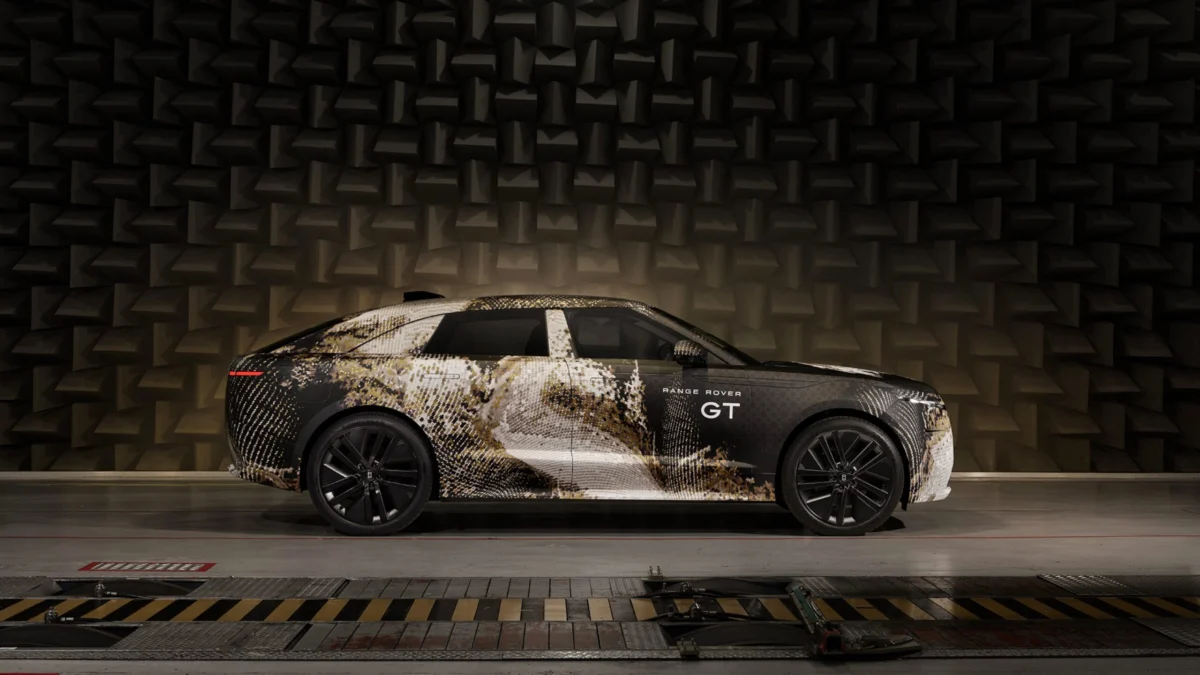
Range Rover has officially signaled a transformative shift in its product lineage with the announcement of its first-ever dedicated grand tourer, a vehicle designed to bridge the gap between the brand’s legendary off-road heritage and the high-performance world of luxury electric sedans. This new model, currently referred to as the Range Rover GT, represents a significant departure from the boxy, high-riding silhouettes that have defined the marque for over half a century. Built upon the company’s sophisticated Electrified Modular Architecture (EMA), the GT is poised to become the most aerodynamic and road-focused vehicle in the brand’s history, while maintaining the "go-anywhere" capability that remains a non-negotiable pillar of the Range Rover identity.
Martin Limpert, the managing director of Range Rover, emphasized that this project is the culmination of several years of intensive research and development aimed at redefining the grand touring formula for a modern, electrified era. According to Limpert, the engineering team has worked obsessively on the fundamentals of the GT, ensuring that the vehicle offers a sophisticated reinterpretation of the Range Rover DNA. The result is a vehicle that Limpert describes as the most "car-like" Range Rover ever created, a move intended to capture a segment of the market currently occupied by high-end electric grand tourers such as the Porsche Taycan, the Audi e-tron GT, and the Lucid Air.
The EMA Platform: A Foundation for Electrification
The upcoming Range Rover GT is built on the EMA (Electrified Modular Architecture), which serves as one of the three core pillars of Jaguar Land Rover’s (JLR) overarching electrification strategy. While the company’s larger SUVs currently utilize the Flexible Modular Longitudinal Architecture (MLA)—which supports internal combustion, hybrid, and fully electric powertrains—the EMA is a "digital-first, EV-native" platform. This architecture has been specifically engineered to maximize the benefits of electric propulsion, including optimized floor packaging for large battery arrays, increased interior space, and a lower center of gravity to enhance handling dynamics.
The EMA platform is distinct from the JEA (Jaguar Electrified Architecture), which is being developed exclusively for the Jaguar brand. Jaguar is currently preparing its own four-door grand tourer, known internally as the Type 01, which is expected to debut later this year. By utilizing the EMA for the Range Rover GT, JLR is creating a clear distinction between the driving dynamics of its two primary luxury brands. While the Jaguar JEA models will focus on exuberant performance and avant-garde design, the Range Rover EMA models will prioritize "effortless" EV performance, long-haul refinement, and the sophisticated all-terrain capability that customers expect from the brand.
Industry analysts note that the introduction of the EMA platform is a critical component of JLR’s "Reimagine" strategy, a multi-billion-pound investment designed to transition the company into an electric-first luxury manufacturer. The EMA is expected to underpin several future models, potentially including the next generation of the Range Rover Velar and the Range Rover Evoque, making the GT a crucial pioneer for the technology that will define the brand’s volume-selling models in the coming decade.
Interior Philosophy: Minimalism Meets Regulatory Compliance
Inside the cabin, the Range Rover GT introduces a design language that departs significantly from the current SUV lineup. Early previews of the interior reveal an "ultraminimalist" aesthetic that prioritizes clean lines and high-quality sustainable materials over traditional clutter. However, this move toward minimalism is balanced by a pragmatic approach to ergonomics and safety.
In a move that distinguishes it from some competitors who have moved almost entirely to touch-sensitive interfaces, Range Rover has confirmed that the GT will retain physical controls for essential functions. This decision is largely driven by evolving safety regulations in Europe and Australia. Organizations such as Euro NCAP have recently signaled that from 2026, vehicles must have physical buttons, dials, or stalks for critical tasks—such as turn signals, windshield wipers, and hazard lights—to receive a maximum five-star safety rating. Range Rover’s design team has integrated these physical elements into a sleek dashboard that features two primary OLED screens: a driver’s instrument display and a central infotainment touchscreen.
Furthermore, the brand has opted against the growing trend of a third "passenger screen." Designers argued that such screens often detract from the calming, "sanctuary-like" environment they aim to create. Instead, the GT will feature a standard high-definition head-up display (HUD), ensuring that the driver remains focused on the road while receiving vital navigation and performance data. The goal, as stated by the design team, is to create a "modern grand tourer" interior that feels spacious and serene, reducing the cognitive load on the driver during long-distance travel.
A Chronology of Development and the "House of Brands" Strategy
The development of the Range Rover GT must be viewed through the lens of JLR’s structural reorganization. In 2023, the company announced it would move toward a "House of Brands" approach, elevating Range Rover, Defender, Discovery, and Jaguar into four distinct brands under the JLR corporate umbrella. This shift allowed Range Rover to expand its reach beyond traditional SUVs without diluting its core identity.
- 2021: JLR announces the "Reimagine" strategy, committing to the electrification of all brands by 2030.
- 2022: Development of the EMA platform begins in earnest at the company’s Gaydon engineering center.
- 2023: JLR confirms a £15 billion investment over five years into its industrial footprint, vehicle programs, and autonomous technologies.
- Early 2024: The first camouflaged prototypes of the Range Rover GT are spotted during cold-weather testing in the Arctic Circle and high-speed trials at the Nürburgring.
- Mid-2024: Range Rover provides the first official glimpses of the GT’s interior and confirms the use of the EMA architecture.
- Late 2024 (Projected): The full global reveal of the Range Rover GT is expected, alongside the debut of the Jaguar Type 01.
This timeline suggests a rapid acceleration of JLR’s electric vehicle (EV) pipeline. The Range Rover GT is not just a new model; it is a proof-of-concept for how the brand can survive and thrive in a market where traditional off-road utility is increasingly being supplemented by a demand for high-speed, long-range electric efficiency.
Market Implications and Competitive Analysis
The entry of Range Rover into the grand tourer market is a calculated risk that reflects changing consumer preferences in the ultra-luxury segment. As global cities implement stricter emissions zones and luxury buyers pivot toward sustainability, the demand for high-end EVs has surged. However, many current electric sedans struggle to offer the sense of "command driving position" and robustness associated with the Range Rover name.
By positioning the GT as a "capable" grand tourer, Range Rover is attempting to occupy a unique niche. While it will sit lower to the ground than a traditional Range Rover, the EMA architecture allows for advanced air suspension and all-wheel-drive systems that can handle light off-roading and inclement weather with greater ease than a standard sports sedan. This "all-terrain capability" is a key differentiator that Limpert believes will appeal to existing Range Rover owners who want a more aerodynamic, "car-like" experience for highway cruising without sacrificing the brand’s signature ruggedness.
From a financial perspective, the GT is expected to carry a premium price tag, likely starting well into the six-figure range. This high-margin vehicle will help offset the massive R&D costs associated with the EMA platform. Furthermore, the GT serves as a halo car for the upcoming electric versions of the Range Rover and Range Rover Sport, setting a high bar for performance and interior technology.
Technical Expectations and Performance Metrics
While specific technical specifications remain under wraps, industry insiders expect the Range Rover GT to feature an 800-volt charging architecture, a standard that is becoming mandatory for luxury EVs to ensure rapid charging times. This would allow the GT to replenish its battery from 10% to 80% in under 20 minutes at high-speed charging stations, a necessity for a vehicle designed for "first-class long-haul refinement."
Range estimates are expected to exceed 300 miles (480 km) on a single charge, aided by a low drag coefficient and efficient motor management. In terms of performance, the dual-motor setup likely to be used in the GT could produce upwards of 600 horsepower, allowing for a 0-60 mph acceleration time in the sub-four-second range. This level of performance would place the Range Rover GT firmly in competition with established grand tourers, while its unique suspension tuning would provide the "calm" and "effortless" ride quality that Martin Limpert highlighted as a core attribute of the project.
Conclusion and Future Outlook
The Range Rover GT represents more than just a new body style; it is a manifestation of JLR’s ambition to reinvent itself for the 21st century. By leveraging the EMA architecture, the company is proving that it can translate the values of a 50-year-old SUV brand into a sleek, electrified grand tourer. The focus on physical controls amidst a minimalist interior shows a brand that is listening to both regulators and customers, valuing safety and usability as much as aesthetic appeal.
As the automotive world awaits the full reveal later this year, the Range Rover GT stands as a bold statement of intent. It challenges the notion that a Range Rover must be a "box," suggesting instead that the brand’s true essence lies in its "pure" blend of performance, luxury, and capability—regardless of the silhouette. If successful, the GT could pave the way for a new generation of Range Rovers that are as comfortable on a high-speed motorway as they are on a rugged mountain pass, ensuring the brand’s relevance in an increasingly electrified luxury landscape.

