
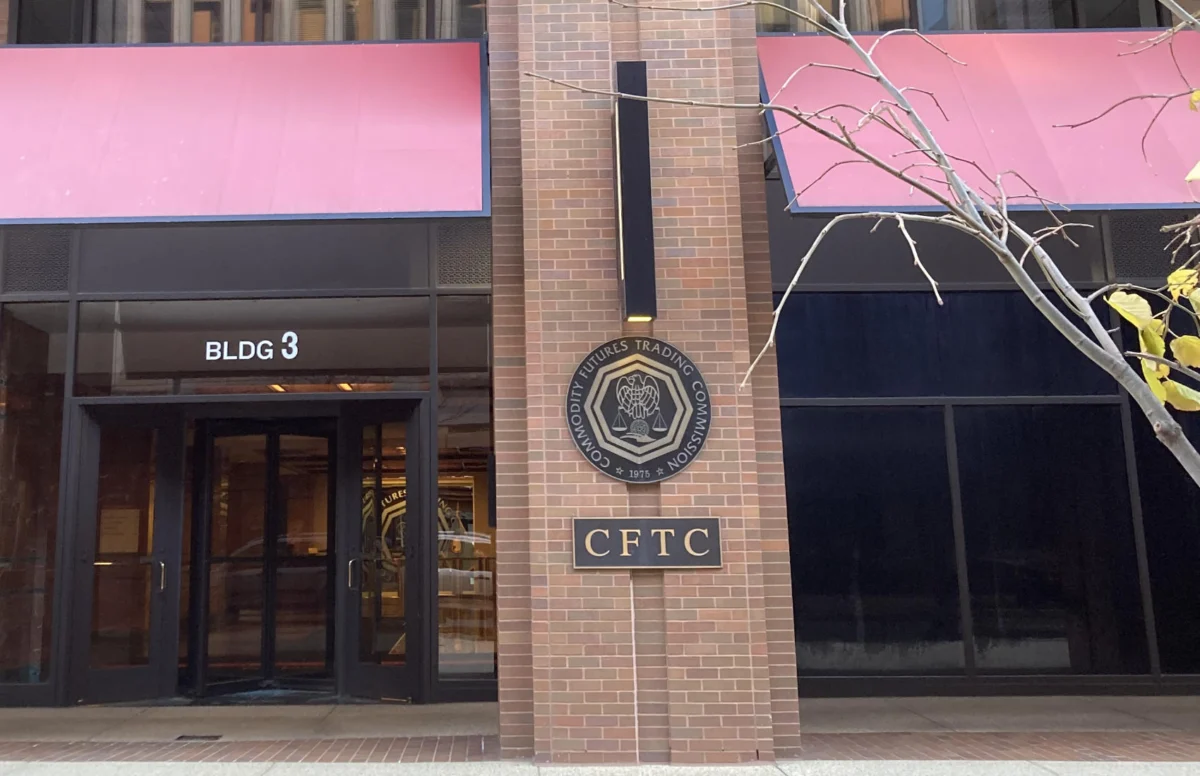
The Commodity Futures Trading Commission (CFTC) has recently finalized a significant rule change regarding margin requirements for uncleared swaps, a move set to broaden the scope of money market funds (MMFs) eligible for use as initial margin. This regulatory adjustment removes previous restrictions on MMFs that engage in reverse repurchase agreements (reverse repo), repurchase agreements (repo), and securities lending, thereby expanding the pool of collateral available for these critical financial instruments. Given the substantial market activity dominated by over-the-counter (OTC) derivatives such as interest rate swaps and foreign exchange (FX) swaps, this decision carries considerable implications for a vast segment of the financial market.
Understanding Uncleared Swaps and Margin Requirements
Swaps are derivative contracts through which two parties exchange financial instruments or cash flows. They are often used by corporations and financial institutions to manage interest rate, currency, or commodity price risks. "Uncleared swaps," also known as over-the-counter (OTC) swaps, are those not processed through a central clearinghouse. Unlike cleared swaps, which benefit from the risk-mitigating functions of a central counterparty (CCP) that effectively steps in as buyer to every seller and seller to every buyer, uncleared swaps expose parties directly to bilateral counterparty credit risk.
Following the 2008 global financial crisis, which highlighted systemic risks associated with interconnectedness and opaque OTC markets, international regulators, including those in the United States, embarked on a comprehensive reform agenda. A cornerstone of these reforms, particularly under the Dodd-Frank Wall Street Reform and Consumer Protection Act in the U.S., was the mandate for increased clearing of derivatives and, for those remaining uncleared, the requirement to exchange initial and variation margin. Margin acts as a financial safeguard, ensuring that if one party defaults, the other party has collateral to cover potential losses. Initial margin, in particular, is collected upfront to cover potential future exposure over a specified liquidation period, typically ranging from a few days to several weeks, depending on the asset class.
The original CFTC regulations permitted MMFs as collateral, but with stringent conditions: they could only invest in cash and government securities. Crucially, MMFs that utilized reverse repo, repo, and securities lending were explicitly excluded. This exclusion stemmed from a cautious approach, seeking to minimize potential liquidity and credit risks associated with these activities, even when backed by government securities.
The Role of Money Market Funds in Collateral Management
Money Market Funds (MMFs) are open-end mutual funds that invest in highly liquid, short-term debt instruments. They are a vital component of the short-term funding markets, providing liquidity to financial institutions and corporations while offering investors a relatively safe, low-yield investment option. MMFs are typically categorized into "government MMFs," "prime MMFs," and "tax-exempt MMFs," each defined by the types of securities they hold.
Government MMFs, the focus of this rule change, primarily invest in cash, U.S. Treasury securities, and securities issued by U.S. government agencies. Many of these funds also engage heavily in the repurchase agreement (repo) market. In a reverse repo transaction, an MMF lends cash to a counterparty (often a bank or dealer) in exchange for receiving government securities as collateral, with an agreement to sell them back at a later date at a slightly higher price. Conversely, in a repo transaction, the MMF receives cash by temporarily selling its government securities with an agreement to repurchase them. Securities lending involves an MMF lending out securities it owns in exchange for cash or other collateral, generating additional income.
These activities are generally considered low-risk when backed by high-quality government securities. If the cash borrower in a reverse repo goes bankrupt, the MMF retains possession of the government securities, significantly limiting its exposure. The Office of Financial Research (OFR) data, cited by the CFTC, underscores the scale of MMF participation in these markets, noting that U.S. MMFs were involved in approximately $1.7 trillion in Treasury repo transactions as of October 2025. This substantial volume highlights the integral role these funds play in the functioning of the Treasury market and broader financial system.
CFTC’s Rationale: Balancing Risk and Market Efficiency
The CFTC’s decision to drop the restriction on MMFs engaged in repo and securities lending reflects a nuanced understanding of market dynamics and a re-evaluation of the associated risks. The Commission’s rationale is multi-faceted:
-
Risk Assessment: The CFTC determined that the risks associated with government MMFs utilizing reverse repo, repo, and securities lending are sufficiently mitigated, especially when these transactions are collateralized by high-quality government securities. The distinction between government MMFs and prime MMFs is critical here. Prime MMFs, which invest in a broader range of corporate and non-government securities, remain ineligible as collateral under the CFTC rule. This distinction is informed by historical MMF crises, such as those in 2008 and 2020, which primarily impacted prime MMFs due to their exposure to less liquid or higher-risk assets, leading to "breaking the buck" (when a fund’s net asset value falls below $1 per share). Government MMFs, by contrast, have historically proven more resilient.
-
Market Liquidity and Efficiency: The previous exclusion created an artificial constraint on the supply of eligible collateral, potentially increasing funding costs for market participants engaging in uncleared swaps. By expanding the range of eligible MMFs, the CFTC aims to enhance market liquidity, reduce collateral fragmentation, and potentially lower the operational burden and costs for firms. This change allows a wider array of high-quality, highly liquid assets to be used, thereby making the collateralization process more efficient without, in the Commission’s view, unduly increasing systemic risk.
-
Regulatory Harmonization (Implicit): While not explicitly stated as a primary driver, regulatory bodies often seek to harmonize rules where appropriate to avoid regulatory arbitrage and ensure a level playing field. Other jurisdictions and regulatory frameworks might have different eligibility criteria for MMFs, and this move could bring the CFTC’s stance closer to other accepted practices for low-risk collateral.
Notably, the Commission explicitly declined to impose additional conditions suggested during the public comment period, such as capping the volume of repo activity, applying an additional haircut (a discount applied to the value of collateral), or mandating central clearing for the funds’ repo transactions. The CFTC justified this by acknowledging that the Securities and Exchange Commission (SEC) has already pushed back its Treasury clearing compliance date for repo to June 30, 2027. This indicates a recognition of ongoing regulatory developments and a desire not to preempt or complicate efforts in other areas of financial market reform.
The Evolution of MMF Regulation and Historical Context
The regulatory landscape for Money Market Funds has undergone significant transformations, largely in response to financial crises. Prior to 2008, MMFs were often perceived as cash equivalents, and their vulnerabilities were not fully appreciated. The collapse of Lehman Brothers in September 2008, and the subsequent "breaking the buck" by the Reserve Primary Fund, triggered a mass exodus from prime MMFs, threatening the stability of the short-term funding markets. This event prompted the SEC to implement a series of reforms under Rule 2a-7 of the Investment Company Act of 1940, tightening liquidity requirements, imposing redemption gates, and introducing fees for non-government MMFs during times of stress.
Further reforms were enacted in 2014 and 2016, and again in 2023, aimed at bolstering MMF resilience. These reforms included moving away from stable net asset values (NAVs) for institutional prime and tax-exempt MMFs to floating NAVs, and enhancing liquidity requirements. The CFTC’s latest rule change is a continuation of this iterative regulatory process, where lessons learned from past crises are balanced against the need for market efficiency and liquidity. The distinction between the relative safety of government MMFs and the higher risk profile of prime MMFs, which hold corporate debt, remains a core tenet of current regulatory thinking.
Industry Reactions and Market Implications
The financial industry is expected to largely welcome this rule change. Market participants, particularly banks and other financial institutions that engage in a high volume of uncleared swaps, will benefit from increased flexibility in managing their collateral portfolios.
- Increased Collateral Supply: By expanding the universe of eligible MMFs, the rule effectively increases the supply of high-quality, liquid assets that can be used as initial margin. This can help ease potential collateral shortages and reduce the cost of funding for firms.
- Operational Efficiency: Firms may find it easier to source and manage collateral, potentially streamlining their back-office operations related to margin calls.
- Reduced Funding Costs: A broader pool of eligible collateral can lead to lower funding costs for market participants. If more assets are deemed acceptable, firms face less pressure to hold specific, scarce assets solely for collateral purposes, freeing up capital for other uses.
- Impact on MMFs: The rule could increase demand for certain government MMFs, particularly those that actively participate in the repo market. This could marginally enhance their attractiveness to investors seeking both safety and the potential for their holdings to serve as eligible collateral for institutional needs.
- Risk Management: While the CFTC has deemed the risk acceptable, some market observers might still point to the inherent interconnectedness within the financial system. However, the focus on government MMFs, backed by U.S. Treasury securities, is a key mitigating factor, aligning with the industry’s general preference for ultra-safe assets as collateral.
From a regulatory perspective, this adjustment reflects a continued effort to fine-tune post-crisis reforms. Regulators constantly grapple with the challenge of making markets safer without inadvertently stifling liquidity or imposing excessive costs that could push activity into less regulated corners. This rule appears to be an attempt to strike that balance by recognizing the low-risk nature of specific MMF activities.
The Broader Landscape: Tokenized Collateral and Future Trends
The CFTC’s rule change also intersects with broader discussions in financial technology, particularly regarding "tokenized collateral." There has been significant discourse around the potential for blockchain and distributed ledger technology (DLT) to revolutionize collateral management by enabling the tokenization of assets, including money market fund shares, for margin purposes.
Tokenized collateral promises several benefits:
- Increased Efficiency: Automation of collateral transfers, reconciliation, and reporting.
- Reduced Settlement Risk: Near real-time settlement of margin calls.
- Improved Transparency: A clear, immutable record of collateral movements.
- Broader Access: Potentially making collateral available from a wider range of sources.
Money market funds have been central to these discussions because their underlying assets (cash, government securities) are ideal candidates for tokenization due to their high liquidity and low credit risk. This CFTC rule, by significantly expanding the range of eligible MMFs for uncleared margin in the United States, indirectly supports the conceptual framework for tokenized collateral. If more MMFs are deemed eligible, it logically follows that their tokenized representations, assuming regulatory acceptance of the tokenization method, could also become more viable as collateral.
However, it is crucial to distinguish between eligibility for uncleared margin and eligibility for cleared margin. Central counterparties (CCPs) typically have their own stringent rules for eligible collateral, often even more conservative than those for uncleared bilateral trades. While the CFTC’s move is a step towards broader acceptance of MMFs in the collateral ecosystem, eligibility for cleared margin remains a separate and more complex matter, requiring careful consideration of CCP risk management frameworks and operational capabilities for handling tokenized assets.
As the financial industry continues its digital transformation, regulatory bodies will face the ongoing task of adapting existing rules and developing new frameworks to accommodate innovative technologies while upholding market stability and investor protection. The CFTC’s latest rule change represents a pragmatic adjustment to current market realities and a recognition of the evolving nature of risk management in the derivatives landscape, potentially paving the way for future advancements in collateral management, including the eventual integration of tokenized assets. The "Article continues…" prompt in the original text hints at the depth of ongoing discussions and the need for continuous analysis in this dynamic field.

