
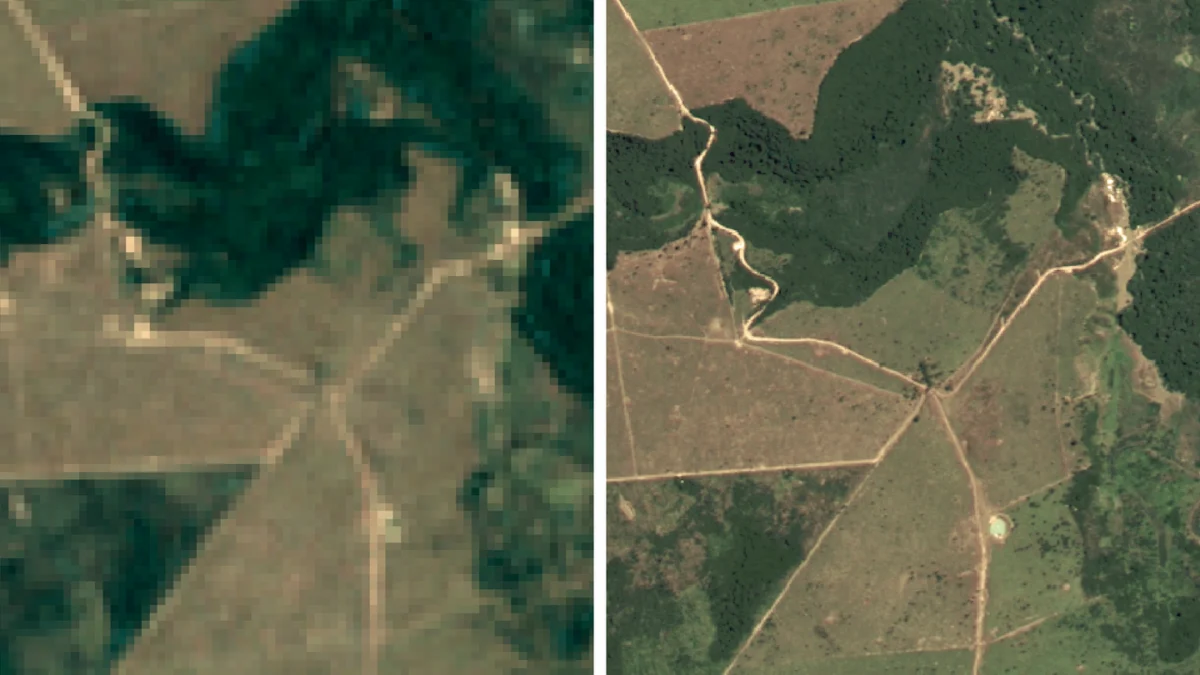
The technological landscape of environmental conservation has undergone a significant transformation with the announcement of a new partnership between Google and the Brazilian government, aimed at providing unprecedented clarity regarding the historical state of the Amazon rainforest. In a move designed to bolster the enforcement of the country’s environmental laws, Google has released a highly detailed satellite imagery map of Brazil’s landscape as it appeared in 2008. This initiative provides a critical baseline for measuring deforestation and reforestation efforts, utilizing historical data that has been processed to a level of precision previously unavailable to the public or local authorities. By leveraging the computational power of Google Earth and Earth Engine, the project offers a sophisticated tool for transparency, allowing for the accurate monitoring of land-use changes over the past decade and a half.
The release of this data comes at a time when Brazil continues to grapple with the complexities of managing the world’s largest tropical rainforest. The 2008 baseline is not an arbitrary date; it serves as a legal cornerstone for the Brazilian Forest Code, the primary piece of legislation governing land use and conservation on private properties. With this new imagery, which is up to six times more precise than previous datasets, authorities and researchers can now identify small-scale forest loss and regrowth that were once invisible to older satellite sensors. This development marks a pivotal moment in the intersection of big data, cloud computing, and environmental policy, providing a factual foundation for legal accountability and conservation strategy.
Historical Context: Brazil’s Battle Against Deforestation
To understand the significance of the 2008 mapping project, one must look back at the environmental crisis Brazil faced in the early 2000s. During this period, the Amazon experienced some of its highest recorded rates of forest loss. In 2004 alone, deforestation reached a staggering peak of approximately 27,772 square kilometers, an area nearly the size of Belgium. This destruction was driven largely by the expansion of cattle ranching, soybean production, and illegal logging, leading to a massive loss of biodiversity and a significant increase in carbon emissions.
The international community and domestic activists pressured the Brazilian government to take drastic action. In response, the government implemented a series of rigorous environmental policies, including the creation of new protected areas, increased policing by the Brazilian Institute of Environment and Renewable Natural Resources (IBAMA), and the use of satellite monitoring systems like PRODES (Program for Monitoring the Brazilian Amazon Forest by Satellite). These efforts led to a dramatic decline in deforestation rates by the late 2000s. However, the legal framework remained a point of contention between the powerful agricultural lobby and environmentalists.
The 2012 Forest Code and the 2008 Baseline
The tension between economic development and conservation culminated in the 2012 revision of the Brazilian Forest Code. This legislation required landowners in the Amazon biome to maintain 80% of their property as "Legal Reserve" (forest cover). However, the law also included controversial provisions that granted a form of amnesty for certain types of deforestation that occurred before July 22, 2008. Under these rules, landowners who cleared forest prior to this date were allowed to join the Rural Environmental Registry (CAR) and commit to restoration programs rather than facing immediate, heavy fines or criminal prosecution.
Because the 2008 date serves as the legal "cutoff" for these regulations, having an accurate, high-resolution map of the forest cover from that specific period is essential for the rule of law. Until now, the available imagery from 2008 often lacked the resolution to distinguish between different types of vegetation or to identify small clearings. By providing a clear snapshot of the 2008 landscape, the Google partnership allows the Brazilian government to verify claims made by landowners in the CAR system, ensuring that those who cleared land illegally after the deadline are held accountable while providing a clear path for those seeking to comply with restoration requirements.
Technological Innovation: Processing the Past
The creation of this map was a massive undertaking that required the synthesis of thousands of historical satellite images. The primary challenge in mapping tropical regions like the Amazon is persistent cloud cover. For decades, satellite "snapshots" were often obscured by clouds, making it difficult to get a continuous and clear view of the ground. To overcome this, Google utilized Earth Engine’s cloud-computing capabilities to process vast archives of Landsat and other satellite data.
The technical process involved several sophisticated steps:
- Data Aggregation: Google engineers gathered every available satellite image of Brazil from the target period.
- Cloud Removal: Using advanced algorithms, the system identified pixels obscured by clouds or shadows and replaced them with clear pixels from images taken at different times during the same period. This "temporal mosaicking" resulted in a seamless, cloud-free view of the entire country.
- Color Correction and Calibration: To ensure the map was visually accurate and scientifically useful, the colors were calibrated to represent the true state of the vegetation, allowing for a clearer distinction between primary forest, secondary regrowth, and agricultural land.
- Resolution Enhancement: By integrating various data sources and applying modern image-processing techniques, the resulting imagery offers a level of detail that is significantly higher than the standard 30-meter resolution provided by older Landsat 7 imagery.
The resulting dataset is now integrated into Google Earth, making it accessible to any citizen with an internet connection, and into Earth Engine, where scientists and policymakers can run complex spatial analyses.
Supporting Data: The Scale of the Amazon Challenge
The Amazon rainforest spans approximately 5.5 million square kilometers, an area so vast that ground-based monitoring is impossible. Satellite technology has always been the backbone of Brazil’s environmental strategy. According to data from the National Institute for Space Research (INPE), the Amazon has lost roughly 20% of its original forest cover since the 1970s.
The precision of the new Google map is particularly relevant for monitoring "degradation" as opposed to "deforestation." While deforestation refers to the complete clearing of a forest patch, degradation involves the thinning of trees due to selective logging or understory fires. Degradation is often a precursor to total forest loss but is much harder to detect with low-resolution satellites. The sixfold increase in precision provided by this new initiative allows authorities to spot these early warning signs, potentially intervening before a forest patch is lost entirely.
Reactions and Official Perspectives
While official statements from the Brazilian Ministry of the Environment have emphasized the importance of technological partnerships in achieving climate goals, environmental NGOs have also weighed in on the implications of this data release. Organizations such as Imazon and the World Resources Institute (WRI) have long advocated for "radical transparency" in land-use data.
Experts suggest that the availability of this high-resolution baseline will reduce the number of legal disputes regarding land use. In the past, a landowner might claim that a specific area was cleared before 2008 to avoid penalties. Without high-quality imagery, prosecutors often struggled to prove otherwise. This map effectively functions as a "digital witness," providing objective evidence that can be used in courtrooms and administrative hearings.
Furthermore, the partnership signals a shift in how tech giants interact with sovereign governments on environmental issues. By providing the tools rather than just the raw data, Google is enabling the Brazilian government to exercise its regulatory power more effectively. This collaborative model is expected to be replicated in other ecologically sensitive regions, such as the Congo Basin and Southeast Asia.
Broader Impact and Global Implications
The implications of this mapping project extend far beyond the borders of Brazil. The Amazon is a vital "carbon sink," absorbing billions of tons of carbon dioxide and playing a crucial role in regulating the Earth’s climate. Its destruction would not only result in a loss of irreplaceable biodiversity but would also make it nearly impossible to meet the goals of the Paris Agreement.
By strengthening the enforcement of the Forest Code, this project directly contributes to global climate mitigation. When landowners are held to the 80% forest cover requirement, it ensures the preservation of vast tracts of carbon-sequestering vegetation. Additionally, the map facilitates the "Carbon Market" by providing a reliable baseline for REDD+ (Reducing Emissions from Deforestation and Forest Degradation) projects. Investors in carbon offsets require high-confidence data to ensure that the forests they are paying to protect are actually standing.
Moreover, this initiative highlights the growing importance of "Open Science." By making the data available in Google Earth Engine, the partnership allows the global scientific community to study the long-term impacts of land-use policy in Brazil. Researchers can now compare the 2008 baseline with current imagery to quantify the success of various conservation initiatives, identifying which strategies work and which do not.
Conclusion: A New Era of Environmental Accountability
The launch of the 2008 high-resolution map represents a milestone in the digital age of conservation. It bridges the gap between historical policy and modern enforcement, providing a clear and indisputable record of the Brazilian landscape at a critical legal juncture. As Brazil continues to navigate the path toward sustainable development, the integration of advanced satellite imagery into its regulatory framework offers a powerful deterrent against illegal deforestation.
The success of this partnership between the Brazilian government and Google serves as a blueprint for how technology can be harnessed to protect the planet’s most vital ecosystems. In an era where climate change poses an existential threat, the ability to accurately measure, monitor, and protect our natural resources is more than just a technological achievement—it is a necessity for the survival of the global environment. Through this initiative, the "lungs of the planet" are now under a more watchful and precise eye than ever before, ensuring that the progress made in fighting deforestation is not just a temporary trend, but a permanent shift toward transparency and restoration.

